Understanding the Role of a Youth Counselor
A youth counselor plays a critical role in the lives of young people, providing guidance, support, and resources to help them navigate challenges and achieve their full potential. The position demands a unique blend of empathy, patience, and professional expertise. Youth counselors work with children and adolescents facing a variety of issues, from academic difficulties and family problems to mental health concerns and behavioral challenges. The job involves creating a safe and supportive environment where young people feel comfortable sharing their experiences and exploring solutions.
Key Responsibilities of Youth Counselors
The responsibilities of a youth counselor are diverse and multifaceted. Primarily, they provide individual and group counseling sessions to address emotional, social, and behavioral issues. They assess the needs of young people, develop individualized treatment plans, and implement interventions to promote positive change. Counselors also collaborate with families, schools, and other professionals to create a comprehensive support system for the youth. This might involve attending meetings, making referrals to other services, and advocating for their clients’ needs. Furthermore, counselors are responsible for maintaining detailed records, adhering to ethical guidelines, and staying current with best practices in the field of counseling.
Essential Skills for Youth Counselors

To excel as a youth counselor, certain skills are essential. Strong communication and interpersonal skills are crucial for building rapport, actively listening, and effectively conveying information. Empathy and compassion are necessary to understand and connect with young people facing difficult circumstances. Problem-solving skills help in identifying issues and developing appropriate interventions. Counselors must also be adept at conflict resolution, crisis management, and cultural sensitivity. The ability to maintain confidentiality, adhere to ethical standards, and work collaboratively with others are also important skills.
Crafting Your Cover Letter for Youth Counselor Positions
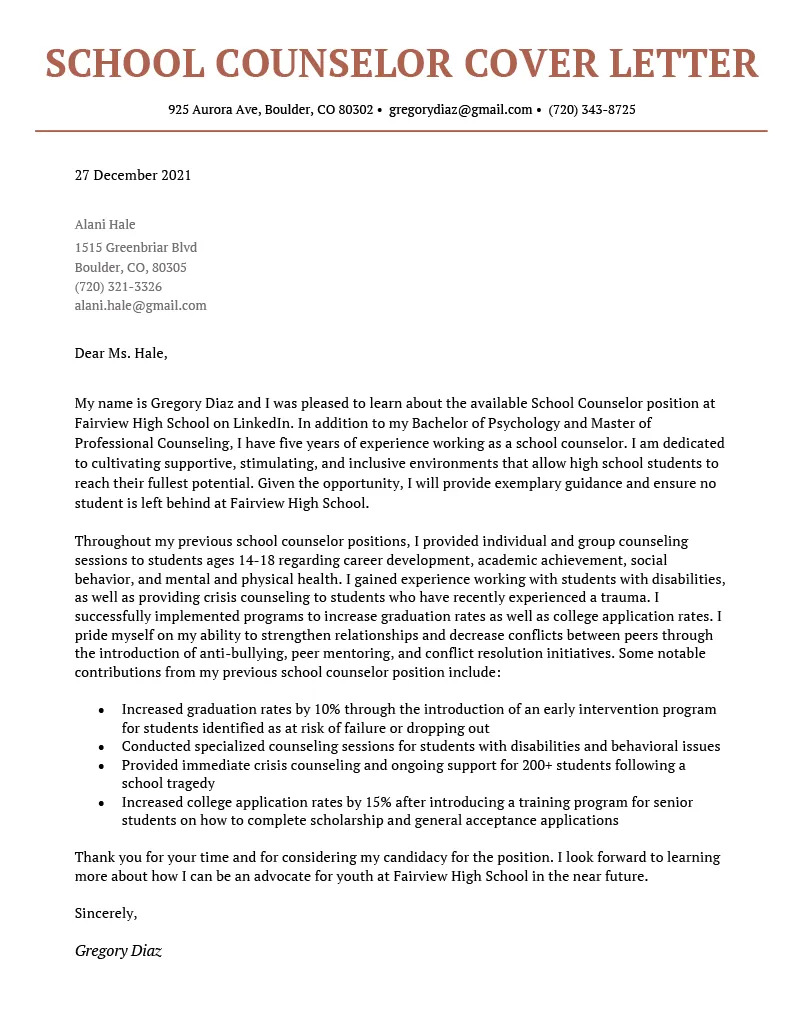
Your cover letter is your first opportunity to make a positive impression on a potential employer. It should be a well-written and compelling document that highlights your qualifications, skills, and passion for working with young people. A cover letter should not simply reiterate your resume; instead, it should provide context, showcase your personality, and explain why you are the ideal candidate for the position. A well-crafted cover letter can set you apart from other applicants and significantly increase your chances of getting an interview.
Formatting Your Cover Letter Correctly
Proper formatting is essential for creating a professional and readable cover letter. Use a standard font like Times New Roman or Arial, with a font size of 11 or 12 points. Maintain consistent margins (typically 1 inch on all sides) and use single spacing within paragraphs and double spacing between paragraphs. The letter should be concise and easy to scan. Avoid large blocks of text, and break up paragraphs to improve readability. Proofread carefully for any grammatical errors or typos, as these can undermine your credibility.
Header and Contact Information

Start your cover letter with a header that includes your name, address, phone number, and email address. This information should be clearly presented and easily accessible. If you are applying for a specific position, include the date and the hiring manager’s name and title (if known) and the organization’s address. This demonstrates that you have taken the time to research the organization and are paying attention to detail.
Professional Salutation
Use a professional salutation, such as “Dear Mr./Ms./Mx. [Last Name]” or “Dear Hiring Manager,” if you do not know the name of the person. Avoid generic greetings like “To Whom It May Concern.” If the job posting specifies a contact person, be sure to address the letter to that individual. Personalizing the salutation shows that you have tailored your application to the specific opportunity.
The Introduction: Grabbing Attention
The introduction is your chance to capture the reader’s attention. State the position you are applying for and briefly explain how you learned about the opportunity. Then, make a strong statement that highlights your passion for youth counseling or your relevant experience. Consider including a brief anecdote or statement that showcases your key qualifications or what motivates you. The goal is to grab the reader’s interest and make them want to read the rest of your letter.
Highlighting Your Passion and Experience

In the introduction, briefly state your passion for youth counseling and your understanding of the role. Explain your relevant experience and how it aligns with the job requirements. Show enthusiasm for the position, and indicate what specifically attracts you to the organization and the opportunity. You can mention previous experiences such as volunteering at a community center or working with children in a summer camp setting.
Showcasing Relevant Skills and Qualifications
The body of your cover letter should highlight your key skills and qualifications. Match your skills to those listed in the job description. Provide specific examples of how you have used those skills in the past. This section is where you elaborate on your experience, skills, and accomplishments. Use concrete examples to illustrate your points and demonstrate your ability to make a positive impact on young people’s lives.
Emphasizing Experience with Youth
Detail any experience you have working with children and adolescents. This might include volunteer work, internships, previous job roles, or any other relevant experiences. Clearly describe your responsibilities in each role and what you accomplished. Show a strong commitment to helping young people. Mentioning experience in schools, community centers, or other youth-oriented settings is highly beneficial.
Detailing Accomplishments and Achievements

Provide specific examples of your accomplishments. Focus on achievements that demonstrate your skills and abilities as a youth counselor. Quantify your achievements whenever possible by using data or metrics. For example, you could mention how you improved attendance rates in a program or successfully mediated conflicts between students. The more specific and detailed your accomplishments, the more impressive your letter will be.
Quantifying Your Impact
Use numbers and statistics to demonstrate the impact of your work. Instead of saying “I improved student engagement,” say, “I increased student engagement by 20% through the implementation of new group activities.” Numbers provide tangible evidence of your effectiveness and make a more compelling case. Always try to include data and examples that prove your skills and abilities as a youth counselor.
Tailoring Your Cover Letter to the Job Description
It’s crucial to tailor your cover letter to each job you apply for. Carefully read the job description and identify the key skills and qualifications the employer is seeking. Then, in your cover letter, highlight your relevant skills and experiences and explain how they meet the specific requirements of the position. This demonstrates that you understand the needs of the organization and are the perfect candidate.
Researching the Organization

Before writing your cover letter, research the organization to show you understand their mission and values. Visit their website, read about their programs, and learn about their clients. Understanding the organization will help you tailor your letter and demonstrate your genuine interest. Including a sentence or two about what you admire about the organization can go a long way.
Matching Skills to Requirements
Carefully review the job description and identify the keywords and phrases used to describe the required skills and qualifications. Then, use these keywords and phrases in your cover letter to show that you possess the skills the employer is looking for. Describe specific situations where you used these skills and achieved positive outcomes.
The Closing: Making a Strong Impression
Your closing should leave a positive and lasting impression on the reader. Thank the hiring manager for their time and consideration, reiterate your interest in the position, and express your enthusiasm for the opportunity. Make it clear that you are eager to learn more about the role and the organization.
Expressing Enthusiasm and Availability
In your closing paragraph, reiterate your enthusiasm for the position and your eagerness to contribute to the organization. State that you are available for an interview at their earliest convenience. This conveys your genuine interest in the role and your proactive approach. Let them know that you are very interested in the opportunity and that you would be thrilled to discuss your qualifications further.
Including a Call to Action
End your cover letter with a clear call to action. This tells the hiring manager what you want them to do next. For example, you could say, “I am eager to discuss my qualifications in an interview” or “I look forward to hearing from you soon.” Providing a call to action encourages the reader to take the next step and move your application forward.
Proofreading and Editing Your Cover Letter
Before submitting your cover letter, proofread it carefully for any errors in grammar, spelling, or punctuation. Errors can detract from your professionalism and make a negative impression. Read the letter aloud, and ask a friend or colleague to review it as well. Make sure the letter is clear, concise, and free of any typos. Ensure your writing flows smoothly and that your message is easy to understand.
Your cover letter is a vital tool in your job search. By following these guidelines, you can craft a compelling cover letter that will capture the attention of hiring managers and increase your chances of landing your dream job as a youth counselor. Good luck!