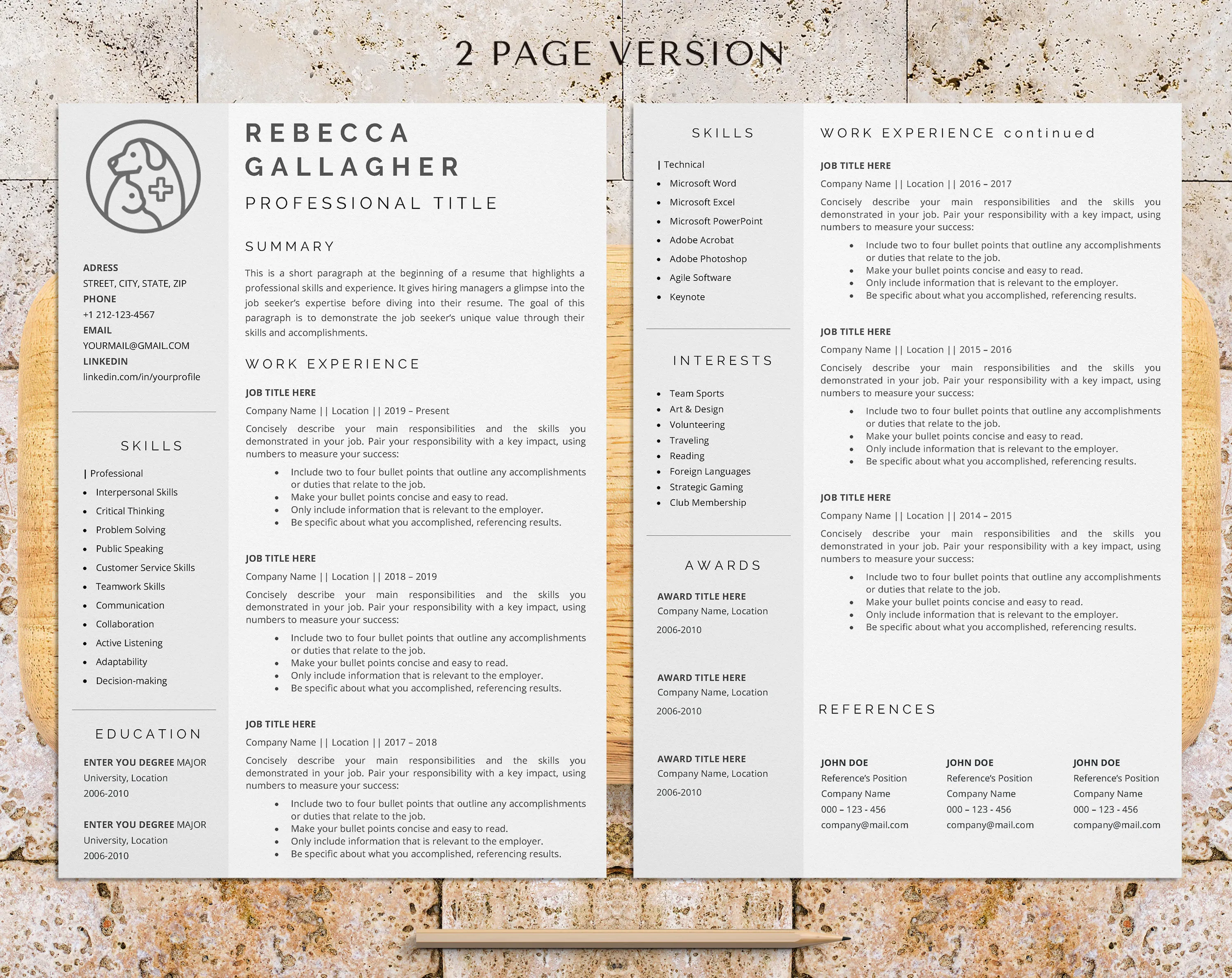
Crafting a Standout Vet Tech Resume
Your vet tech resume is your first impression on potential employers. It’s a crucial document that summarizes your skills, experience, and qualifications. A well-crafted resume not only lists your accomplishments but also highlights your passion for animal care and your commitment to the veterinary profession. It’s the key to getting your foot in the door and securing an interview. This guide will walk you through the essential steps to create a resume that grabs attention and sets you apart from other candidates. Remember, the goal is to showcase why you’re the ideal vet tech for the job. A compelling resume is the first step to achieving your career goals and making a positive impact in the world of animal health.
Highlighting Your Skills and Experience
Your vet tech resume needs to do more than just list your work history it must highlight the skills and experience that make you a valuable asset. Focus on quantifiable achievements and provide concrete examples of your abilities. Instead of simply stating your job duties, describe how you excelled in those roles. For instance, if you assisted with surgeries, mention the specific procedures you were involved in and the outcomes. Did you contribute to a higher patient recovery rate? Did you improve clinic efficiency? These details make your resume compelling. A strong skills section and a well-detailed experience section are the cornerstones of a successful vet tech resume, so allocate your time wisely.
Skills to Showcase

As a vet tech, you possess a diverse set of skills essential to providing excellent patient care and supporting veterinarians. Your resume should prominently feature these skills, categorized for clarity. Clinical skills should include venipuncture, medication administration, anesthesia monitoring, and surgical assisting. Technical skills include proficiency in using various medical equipment, such as X-ray machines and ultrasound devices. Additionally, emphasize soft skills like communication, empathy, and teamwork, as these are critical for interacting with pet owners and colleagues. Tailor your skills section to the specific job requirements, highlighting the skills that best match the position you are applying for. Consider adding a skills matrix to highlight your proficiency level in each skill.
Experience Section Optimization
Your experience section should detail your previous vet tech roles, emphasizing your responsibilities and accomplishments. Use action verbs to start each bullet point, such as “Administered,” “Assisted,” “Monitored,” and “Managed.” For each position, include the clinic’s name, location, dates of employment, and a concise description of your duties. Quantify your achievements whenever possible. Did you reduce the number of medication errors by implementing a new protocol? Did you improve client satisfaction scores by enhancing communication strategies? These specific examples demonstrate your value to potential employers. Make sure your experience section is easy to read, well-organized, and tailored to the types of positions you are seeking.
Cover Letter Essentials for Vet Techs
A well-written cover letter is as important as your resume. It provides an opportunity to introduce yourself, express your interest in the position, and elaborate on your qualifications. Customize your cover letter for each job application, mentioning the specific clinic and position you are applying for. Highlight the skills and experiences that align with the job requirements, using examples from your past roles. Express your passion for veterinary medicine and your commitment to providing exceptional care. A cover letter is not merely a repetition of your resume it’s a chance to showcase your personality, your enthusiasm, and your understanding of the role and the clinic’s values.
Personalizing Your Cover Letter

Generic cover letters often fail to make a lasting impression. Personalize your cover letter by researching the clinic and tailoring your letter to its specific needs. Mention the clinic’s name, and if possible, reference a recent event, achievement, or service that resonates with you. Highlight how your skills and experience can benefit their team, and explain why you are excited about the opportunity to work there. Demonstrate that you understand the clinic’s values and mission. Personalization shows that you’ve taken the time to learn about the organization and are genuinely interested in joining their team, increasing your chances of getting an interview.
Showcasing Your Passion
Veterinary medicine is a field driven by passion for animals, so it is crucial that you convey your enthusiasm in your cover letter. Share a brief anecdote or story that reflects your love for animals and your commitment to their well-being. Discuss why you are drawn to veterinary medicine, and what aspects of the profession excite you the most. Mention any volunteer work, extracurricular activities, or personal experiences that demonstrate your passion. By expressing your genuine interest, you will create a positive impression and show the hiring manager that you are more than just qualified you are a dedicated professional who truly cares.
Addressing the Employer’s Needs
Carefully review the job description and address the employer’s specific needs in your cover letter. Identify the key requirements and highlight how your skills and experience align with those needs. Provide examples of how you have successfully handled similar responsibilities in the past. If the job description mentions specific software or equipment, make sure to mention your proficiency with those tools. By demonstrating that you understand the employer’s needs and that you have the necessary qualifications, you can significantly increase your chances of being selected for an interview. Show that you are a solution provider, ready to contribute to the clinic’s success from day one.
Resume Formatting for Vet Techs

Effective formatting is essential to ensure your resume is easy to read and visually appealing. A well-formatted resume makes it easier for employers to quickly grasp your qualifications and experience. Choose a clean, professional font, such as Arial or Times New Roman, and maintain consistent formatting throughout the document. Use clear headings and subheadings to organize your information. Bullet points are a great way to present your accomplishments and responsibilities concisely. Avoid using excessive colors or graphics, as they can distract from the content. The goal is to create a professional document that showcases your skills and experience in a clear and organized manner.
Choosing the Right Template
Select a resume template that is appropriate for the veterinary field. Look for a template that is clean, modern, and easy to read. Avoid templates that are overly complex or cluttered, as they can be distracting. Consider a reverse-chronological format, which lists your work experience in reverse order, starting with your most recent position. This format is preferred by many employers because it quickly highlights your current skills and experience. If you have limited experience, you may consider a functional or combination resume, which emphasizes your skills rather than your work history. Ensure your chosen template is ATS-friendly to avoid any compatibility issues.
Formatting Tips
Use consistent formatting throughout your resume to maintain a professional appearance. Use the same font size, style, and spacing for all sections. Use bolding or italics sparingly, to highlight key information. Ensure the margins are consistent, and the document is well-organized. Proofread your resume carefully to eliminate any typos or grammatical errors. Keep your resume concise and focused, ideally no more than one to two pages, unless you have extensive experience. Use a PDF format when possible, as it preserves your formatting across different devices and operating systems. Professional formatting can significantly improve the readability and overall impact of your resume.
Keywords to Include

Keywords are critical for ensuring your resume gets noticed, particularly if the employer uses an Applicant Tracking System (ATS). Research the job description and identify the key skills, responsibilities, and qualifications listed. Include those keywords throughout your resume, particularly in your skills section and work experience descriptions. Use a variety of keywords, including technical skills, soft skills, and industry-specific terms. Avoid keyword stuffing, which is the practice of excessively including keywords in an unnatural way. Instead, incorporate keywords naturally and strategically, ensuring your resume is both keyword-rich and readable. This will help your resume rank higher and increase your chances of being selected for an interview.
Using Action Verbs
Action verbs are essential for making your resume more impactful and engaging. Start each bullet point in your work experience section with a strong action verb, such as “Administered,” “Assisted,” “Monitored,” “Managed,” or “Developed.” Choose action verbs that accurately describe your responsibilities and accomplishments. For example, instead of writing “Responsible for patient care,” write “Provided compassionate patient care, including administering medications and monitoring vital signs.” Using action verbs creates a vivid picture of your role and the contributions you made in your previous positions. A well-crafted resume filled with powerful action verbs will make your experience more memorable and demonstrate your capabilities.
Review and Proofread
Before submitting your resume and cover letter, carefully review and proofread both documents. Typos, grammatical errors, and formatting inconsistencies can damage your credibility and reduce your chances of getting an interview. Check for spelling errors, punctuation mistakes, and incorrect word usage. Ensure your sentences are clear and concise, and your formatting is consistent throughout the document. Ask a friend, family member, or career counselor to review your documents as a second pair of eyes. Proofreading is the final step to ensuring your resume and cover letter are professional, polished, and ready to impress potential employers. Accuracy is key to making a strong positive impression.
Ensuring Accuracy

Accuracy is paramount when preparing your vet tech resume and cover letter. Double-check all the information, including dates of employment, clinic names, and contact information. Ensure your contact details are correct and up-to-date. Verify the spelling of the employer’s name and the job title. Review the job description carefully and make sure your resume and cover letter accurately reflect your qualifications and skills. Presenting accurate information is vital for building trust with potential employers and showcasing your attention to detail. A resume with errors can immediately disqualify you from consideration, so take the time to ensure everything is accurate and up-to-date.
Seeking Feedback
Get feedback from others to improve your resume and cover letter. Ask a career counselor, mentor, or experienced vet tech to review your documents and provide constructive criticism. Seek their opinions on your formatting, content, and overall presentation. Ask for feedback on the clarity of your writing and the effectiveness of your skills and experience sections. Consider joining a professional organization or online forum for vet techs, and share your resume for peer review. Feedback from others can help you identify areas for improvement and ensure your resume and cover letter are as effective as possible. Use this valuable input to refine your documents and increase your chances of securing an interview.