Crafting a Teacher Resume Cover Letter
A well-crafted teacher resume cover letter is your first opportunity to make a lasting impression on a potential employer. It serves as a crucial introduction, showcasing your qualifications, experience, and passion for education. Unlike your resume, which provides a factual overview of your career, a cover letter allows you to tell a story, highlighting your unique skills and explaining why you’re the ideal candidate for the position. This guide will walk you through the essential components of a compelling teacher cover letter, helping you secure that all-important interview. By paying close attention to detail and focusing on your strengths, you can significantly increase your chances of landing your dream teaching job. The resume cover letter acts as your voice and personality.
Understanding the Importance of a Cover Letter
The teacher cover letter isn’t just a formality; it’s a vital tool in your job application arsenal. It allows you to personalize your application, demonstrating to the hiring manager that you’ve taken the time to understand the school’s needs and tailor your application accordingly. A strong cover letter conveys professionalism and attention to detail, traits highly valued in educators. It offers a space to elaborate on your resume entries, providing context and showcasing achievements in a way that a resume alone cannot. It demonstrates your enthusiasm for the role and the institution, setting you apart from other applicants. In today’s competitive job market, a well-written cover letter can be the deciding factor in whether or not you move to the next stage of the hiring process.
Highlighting Relevant Skills and Experience

Your teacher cover letter is the perfect place to showcase the skills and experiences that make you an excellent educator. Focus on the qualifications that align with the specific requirements of the job description. If the school emphasizes classroom management, highlight your successful strategies for creating a positive learning environment. If they value collaborative teaching, provide examples of your teamwork and experience working with other teachers. Be specific, providing quantifiable results whenever possible. For instance, instead of saying ‘Improved student test scores,’ state ‘Increased student test scores by 15% in the past year through implementing differentiated instruction.’ Use strong action verbs like ‘developed,’ ‘implemented,’ ‘managed,’ and ‘achieved’ to bring your accomplishments to life. By focusing on the experiences most relevant to the position, you demonstrate that you’re a good fit.
Formatting a Teacher Cover Letter
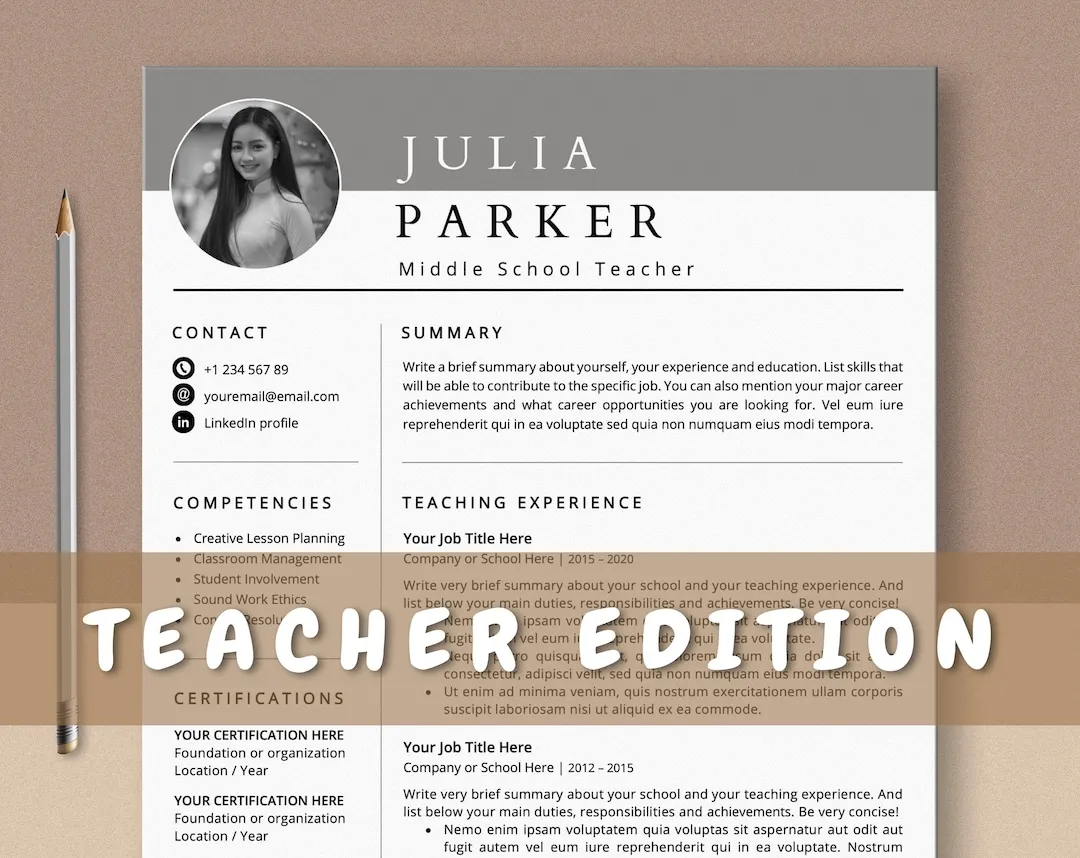
A well-formatted teacher cover letter is easy to read and visually appealing, reflecting professionalism. Begin with your contact information in the header, including your name, phone number, email address, and LinkedIn profile (optional). Then, include the date and the school’s or hiring manager’s contact information. The body of your cover letter should be divided into concise paragraphs, with clear headings. Use a standard, easy-to-read font like Times New Roman or Arial, with a font size between 11 and 12 points. Maintain consistent margins and spacing throughout the document. Ensure there are no grammatical errors or typos; proofread carefully before submitting. A clean, organized format makes a positive first impression and shows attention to detail.
Contact Information and Header
The header of your teacher cover letter sets the tone and provides the necessary contact information. Include your full name, professional title (e.g., ‘Elementary School Teacher’), phone number, and email address. If you have a professional online presence, such as a LinkedIn profile or a personal website, include the link. This allows the hiring manager to easily reach you and learn more about your professional background. Ensure your email address is professional and appropriate. Use a clear and concise format, and avoid any unnecessary graphics or designs in your header. This section should be easy to find and review.
Professional Greeting

The greeting is the first thing the hiring manager reads after the header, so it’s crucial to get it right. Whenever possible, address the letter to a specific person. Research the hiring manager’s name (or the principal’s name) and use ‘Dear Mr./Ms./Dr. [Last Name]’. If you cannot find a specific name, use a general greeting, such as ‘Dear Hiring Committee’ or ‘Dear [School Name] Hiring Team’. Avoid generic greetings like ‘To Whom It May Concern.’ A personalized greeting demonstrates that you’ve taken the time to learn about the school and its hiring process. If you are applying online and don’t know who will see the letter, try to find the person in charge in the job’s portal.
Body Paragraphs
The body paragraphs form the core of your teacher cover letter, where you showcase your qualifications, experience, and passion. Start with a strong opening paragraph that states the position you are applying for and how you learned about the opportunity. The following paragraphs should provide compelling evidence of your skills and accomplishments. Use the STAR method (Situation, Task, Action, Result) to describe specific examples of your experience and achievements. For each point, explain the situation, the task you faced, the actions you took, and the positive results you achieved. Tailor your body paragraphs to match the specific requirements and expectations outlined in the job description. Demonstrate to the hiring manager what you can offer the school.
Emphasizing Achievements
Instead of simply listing your responsibilities, focus on your achievements. Quantify your accomplishments whenever possible. For example, instead of saying ‘Implemented new teaching strategies,’ write ‘Implemented differentiated instruction, resulting in a 15% increase in student engagement and improved test scores.’ Highlight any awards, recognitions, or positive feedback you’ve received from students, parents, or colleagues. Provide concrete examples of how you’ve made a positive impact on student learning and the school environment. This demonstrates your value and potential. Remember, your achievements are a solid proof of your capabilities.
Tailoring Your Cover Letter

One of the biggest mistakes is sending a generic cover letter to every school. A successful cover letter needs to be tailored to each specific job application. This involves carefully reviewing the job description and identifying the key skills, experiences, and qualities that the school is seeking. Then, adjust your cover letter to align with these requirements. Mention the school’s specific programs, values, or initiatives that resonate with you. Demonstrate that you understand the school’s mission and how your skills can contribute to its success. By showing that you’ve taken the time to understand their needs, you increase your chances of standing out and getting an interview.
Researching the School or District
Before writing your cover letter, research the school or district. Visit their website to learn about their mission, values, and programs. Read any news articles or social media posts to get a sense of their culture and priorities. Identify any specific initiatives or projects they are involved in. If the school has a particular focus, such as STEM education, special needs, or arts integration, make sure to highlight any relevant experience or skills. By showing that you are familiar with the school, you demonstrate your genuine interest and increase your chances of making a favorable impression.
Matching Skills to Requirements
Carefully review the job description and identify the key skills and qualifications that the school is seeking. Then, use your cover letter to directly address these requirements. For each skill or qualification, provide specific examples of how you have demonstrated it in the past. Use keywords from the job description to ensure your letter is easily scanned by the hiring manager and any applicant tracking systems. Make sure your skills and experiences match what the school is looking for. If the job description emphasizes classroom management, include examples of how you manage a classroom environment.
Using Action Verbs
Use action verbs to make your cover letter more engaging and dynamic. Action verbs describe your accomplishments and demonstrate your initiative and skills. Instead of passive phrases, use active verbs to clearly convey your abilities. For example, instead of ‘Was responsible for lesson planning,’ write ‘Developed and implemented engaging lesson plans that…’ Some effective action verbs include ‘created,’ ‘managed,’ ’led,’ ‘developed,’ ‘implemented,’ ‘collaborated,’ ‘assessed,’ ‘achieved,’ ‘motivated,’ and ‘mentored.’ Avoid clichés and choose verbs that accurately reflect your accomplishments. Using strong verbs can make your accomplishments more impactful.
Proofreading and Editing
Proofreading and editing are essential steps in the cover letter writing process. Errors in grammar, spelling, and punctuation can undermine your credibility and make you appear unprofessional. After writing your cover letter, read it carefully multiple times, looking for any mistakes. Use a grammar checker and spell checker, but don’t rely on them entirely. Read the letter aloud to catch any awkward phrasing or sentence structure. Ask a friend or colleague to review your cover letter and provide feedback. A fresh pair of eyes can often catch errors you may have missed. Ensure your cover letter is polished and error-free before submitting it.
Reviewing and Refining
After proofreading, review your cover letter for clarity, conciseness, and impact. Make sure each paragraph has a clear purpose and that your writing style is appropriate for a professional context. Check the length of your cover letter; it should typically be no more than one page. Ensure the letter is easy to read and that your key achievements are highlighted effectively. Simplify any complex sentences and use clear, concise language. Delete any unnecessary information and focus on the most important aspects of your qualifications. Review and refine your cover letter until you are confident that it is a compelling and professional representation of your skills and experiences.
The Closing and Call to Action

The closing paragraph of your teacher cover letter should reiterate your interest in the position and express gratitude for the reader’s time and consideration. Reiterate your enthusiasm for the role and school and express your eagerness to discuss your qualifications further. Include a clear call to action, such as ‘I am eager to learn more about this opportunity and discuss how my skills and experiences can benefit your school. I look forward to hearing from you soon.’ Provide your contact information again, making it easy for the hiring manager to reach you. A strong close leaves a lasting positive impression.
Expressing Enthusiasm and Interest
In the closing paragraph, express your genuine enthusiasm and interest in the teaching position. Show that you have researched the school and are excited about the opportunity to contribute to its mission. Refer to specific aspects of the school or the job description that appeal to you. Demonstrate your passion for education and your commitment to student success. Your enthusiasm will make you more memorable and signal that you are a good fit for the school’s culture. Conveying your passion is critical to making a great first impression.
Providing Contact Information
Make it easy for the hiring manager to contact you by providing your contact information. Repeat your phone number and email address in the closing paragraph. If you have a professional website or LinkedIn profile, you can also include a link. Ensure that your contact information is accurate and up to date. Checking to make sure your voicemail is set up and that you have enough free space in your inbox is also critical. Make it as easy as possible for the hiring manager to contact you and avoid any delays in the process.
Submitting Your Cover Letter

Once you’ve written and refined your cover letter, it’s time to submit it with your teacher resume. Ensure you follow the application instructions provided by the school or district. If the application process is online, carefully read the instructions for submitting your cover letter and resume. Some applications may require you to upload your documents as a PDF or Word file. Always save your documents with a clear and professional file name, such as ‘Your Name_Cover Letter’ and ‘Your Name_Resume’. Before submitting your application, review all the materials to ensure they are complete, accurate, and formatted correctly.
File Format and Delivery
Pay close attention to the file format and delivery instructions. Unless specified otherwise, it is generally recommended to save your cover letter and resume as PDF files. This ensures that the formatting remains consistent across different devices and operating systems. If the application requires a different format, such as a Word document, follow the instructions carefully. If you are submitting your application via email, include a brief and professional subject line, such as ‘Application for [Position Name] - [Your Name]’. Attach your cover letter and resume to the email, and ensure that your contact information is included in the body of the email as well. Following the correct format and delivery method will enhance your application and increase your odds of being considered.
Following Up
After submitting your application, it’s important to follow up with the hiring manager. Typically, you should send a brief thank-you email within a week or two of submitting your application. In your email, reiterate your interest in the position, express your appreciation for the opportunity, and briefly mention your key qualifications. Keep the email concise and professional. You can also inquire about the timeline for the hiring process. Following up demonstrates your continued interest and professionalism, but avoid being overly persistent.
Best Practices for Teachers
In addition to the general guidelines for writing a cover letter, there are specific best practices that can enhance your application as a teacher. Emphasize your experience with different age groups and learning styles. Highlight any specialized training or certifications you possess, such as special education or early childhood education certifications. Showcase your understanding of curriculum development and assessment strategies. Mention any experience with technology integration in the classroom. Focus on student success and your ability to create an engaging and supportive learning environment.
Showcasing Teaching Philosophy
Your teaching philosophy is a key element in your cover letter. Briefly describe your beliefs about education, your approach to teaching, and your goals for your students. Explain how you create a positive classroom environment, promote student engagement, and foster a love of learning. Tailor your teaching philosophy to align with the school’s values and mission. Show that you are committed to creating a student-centered learning environment. Your teaching philosophy provides a glimpse into your approach.
Addressing Potential Gaps
If you have any potential gaps in your experience, such as a career change or a period of unemployment, briefly address them in your cover letter. Frame any gaps positively, focusing on what you have learned and how you have grown. Explain why you are excited about the opportunity and how your skills and experiences make you a strong candidate. Always be honest and transparent. Addressing any potential gaps can help you control the narrative and demonstrate your resilience and adaptability.
Highlighting Professional Development
Highlight any professional development activities you’ve undertaken to improve your skills and knowledge. This could include workshops, conferences, courses, or certifications. Mention any training you’ve received in new teaching methods, technologies, or curriculum areas. Showcase your commitment to continuous learning and your desire to stay current with the latest developments in education. Professional development shows that you are invested in your career.
Demonstrating Passion for Education
Above all, demonstrate your passion for education throughout your cover letter. Show your enthusiasm for teaching, your love for working with students, and your dedication to creating a positive learning environment. Share why you became a teacher, what motivates you, and what makes you excited about the prospect of joining the school. Let your passion shine through in your writing. Your passion is what can set you apart. By showing your commitment, you will enhance your cover letter and increase your odds of being considered.