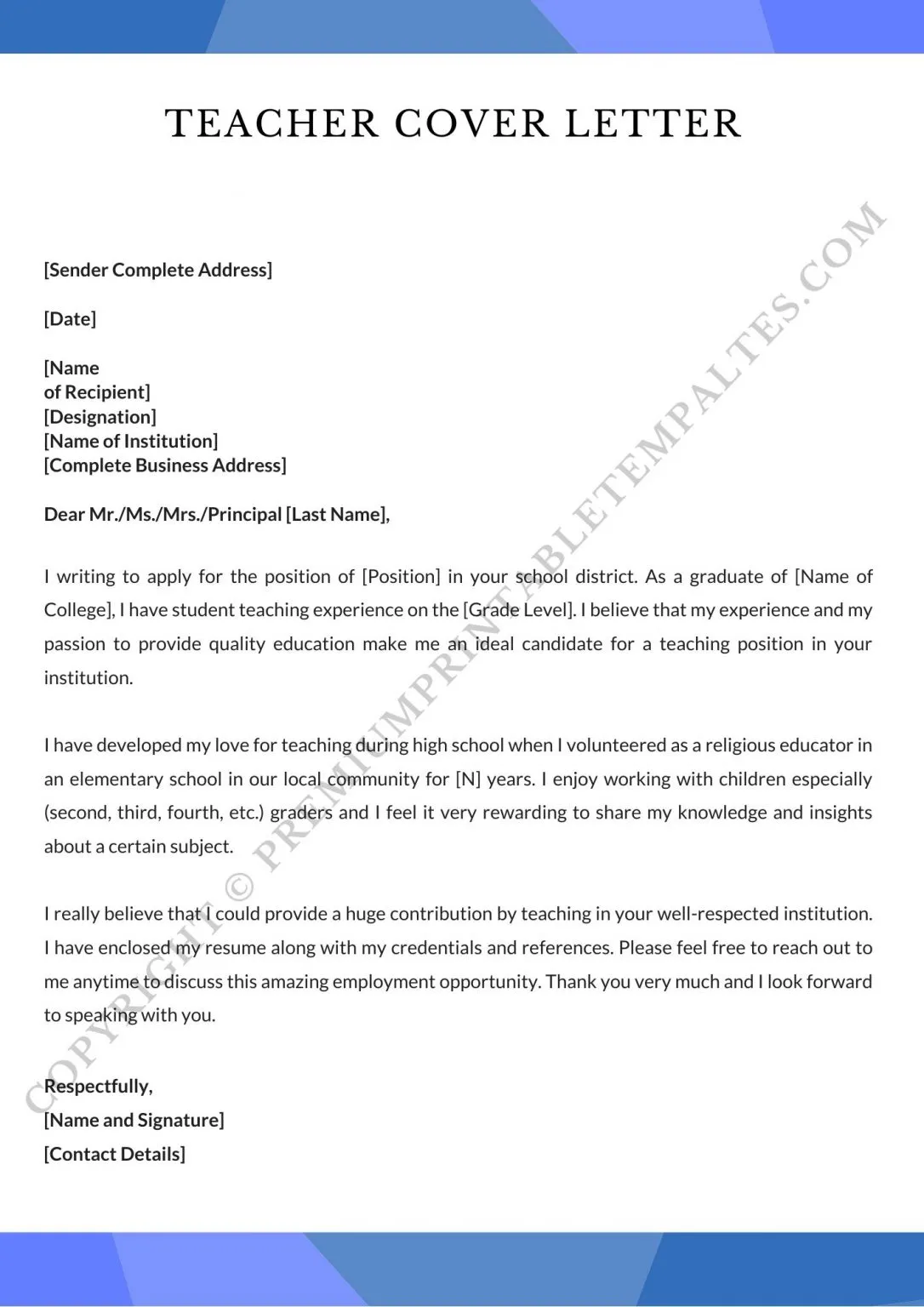
Crafting a Teacher Cover Letter
A well-crafted cover letter is your first opportunity to make a positive impression on a potential employer. It’s more than just a formality; it’s your chance to showcase your personality, enthusiasm, and qualifications, setting you apart from other applicants. Given the high competition in the teaching field, a generic cover letter simply won’t do. You need to demonstrate that you’ve researched the school, understand their needs, and are genuinely excited about the opportunity. Your cover letter should complement your resume, expanding on your key skills and experiences, while also highlighting your unique value proposition. It should be clear, concise, and free of errors. Remember, this document reflects your attention to detail and commitment to excellence, qualities highly valued in educators.
Highlighting Your Skills
Your cover letter is the perfect place to highlight your teaching skills and how they align with the job requirements. Don’t just list your skills; illustrate them with specific examples. If the job description emphasizes classroom management, share an instance where you successfully implemented a strategy to improve student behavior or create a positive learning environment. If they are looking for someone who is good with technology, provide examples of how you use educational technology in your lessons. Quantify your achievements whenever possible. Instead of saying you improved student test scores, specify by how much. This provides concrete evidence of your abilities and makes a stronger case for your candidacy. Focus on the skills that are most relevant to the position and tailor your examples to match the school’s needs and values.
Quantify Your Achievements

Quantifying your achievements is a powerful way to demonstrate your impact as a teacher. Instead of general statements, provide specific data and measurable results that show the tangible outcomes of your work. For example, instead of saying, “Improved student engagement,” state, “Increased student participation in classroom activities by 30% through the implementation of interactive learning strategies.” Similarly, if you implemented a new literacy program, mention the percentage increase in reading comprehension scores. By using numbers and statistics, you provide concrete evidence of your effectiveness, making your accomplishments more credible and memorable. This also shows that you are results-oriented and focused on student success. Think about what data you have available from previous teaching experiences and use it to strengthen your cover letter.
Showcasing Your Passion
Teaching is more than just a job; it’s a calling. Your cover letter should convey your passion for education and your genuine enthusiasm for working with students. Share what inspires you about teaching, whether it’s fostering a love of learning, helping students overcome challenges, or contributing to their personal growth. Demonstrate your understanding of the school’s mission and values and explain why you are drawn to their specific educational approach. This helps the hiring committee see that you’re not just looking for any teaching position, but that you are specifically interested in their school and its community. Let your enthusiasm shine through your writing; your passion will be contagious and make a lasting impression. A sincere and heartfelt cover letter can often set you apart from other candidates who may seem less invested in the role.
Tailoring Your Letter
One of the biggest mistakes job seekers make is sending out generic cover letters. Each cover letter you send should be tailored to the specific school and position you are applying for. Research the school thoroughly: visit their website, read their mission statement, and learn about their programs and values. Then, use this information to customize your letter. Address the hiring manager by name if possible, and mention specific aspects of the school that appeal to you. Show how your skills and experience align with their needs and how you can contribute to their educational goals. This level of personalization demonstrates your genuine interest and initiative, making you a more attractive candidate. The more effort you put into tailoring your letter, the more likely it is to make a positive impact.
Proofreading and Editing

Before you submit your cover letter, proofread it carefully. Typos, grammatical errors, and formatting mistakes can create a negative impression, suggesting a lack of attention to detail. Read your cover letter aloud to catch any awkward phrasing or errors that you might miss when reading silently. Ask a friend, colleague, or mentor to review it as well. A fresh pair of eyes can often spot errors that you’ve overlooked. Pay close attention to the tone and flow of your writing, making sure it is professional, engaging, and error-free. Proofreading is an essential step in the application process and demonstrates your commitment to producing high-quality work. A polished cover letter reflects well on your professionalism and increases your chances of securing an interview.
Formatting Your Cover Letter
The format of your cover letter is just as important as its content. A well-formatted letter is easy to read and visually appealing, making a positive first impression. Use a professional font, such as Times New Roman, Arial, or Calibri, and maintain a consistent font size throughout the document. Use clear headings, subheadings, and bullet points to organize your information and make it easy for the reader to scan. Ensure that your margins are consistent and that there is ample white space to prevent the document from appearing cluttered. Keep your paragraphs concise and to the point, breaking up large blocks of text. A well-formatted cover letter shows that you are organized and detail-oriented. It also helps the hiring manager quickly grasp your key qualifications and understand why you are a good fit for the role. Remember that the cover letter should be easy to read and free of distractions.
Choosing the Right Font and Layout
The font and layout you choose for your cover letter can significantly impact its readability and overall presentation. Select a font that is clear, legible, and professional. Avoid overly decorative or unusual fonts, as they can distract from the content. Standard fonts like Times New Roman, Arial, or Calibri are safe and professional choices. The layout of your letter should be clean and organized, with clear headings, ample white space, and consistent margins. Use a standard business letter format, with your contact information at the top, the date, the hiring manager’s name and title, and a formal closing. Keep the letter concise, ideally within one page. Proper formatting makes your cover letter easy to read and highlights the most important information, improving your chances of getting noticed.
Keeping it Concise and Engaging

Hiring managers are busy, so it’s essential to keep your cover letter concise and engaging. Aim to convey your key qualifications and enthusiasm in a clear and succinct manner, ideally within one page. Avoid long, rambling paragraphs; instead, break up your text into short, focused sections with clear headings and bullet points. Use strong action verbs to describe your accomplishments and skills, and avoid jargon or overly technical language. Start with a compelling opening that grabs the reader’s attention and immediately highlights your interest in the position. Throughout the letter, focus on what you can offer the school and how your skills and experience align with their needs. A concise and engaging cover letter will capture the reader’s interest and make a memorable impression.
Adding a Call to Action
Conclude your cover letter with a clear and confident call to action. Express your enthusiasm for the opportunity and reiterate your interest in an interview. Make it easy for the hiring manager to take the next step by including your contact information and a suggestion for how they can reach you. For example, you could say, “I am eager to discuss how my skills and experience can benefit your students. Thank you for your time and consideration. I can be reached at [phone number] or [email address]. I look forward to hearing from you.” By ending with a call to action, you signal your proactive approach and make it more likely that you will receive a response. This also shows the hiring manager that you are confident in your abilities and are ready to move forward in the hiring process.