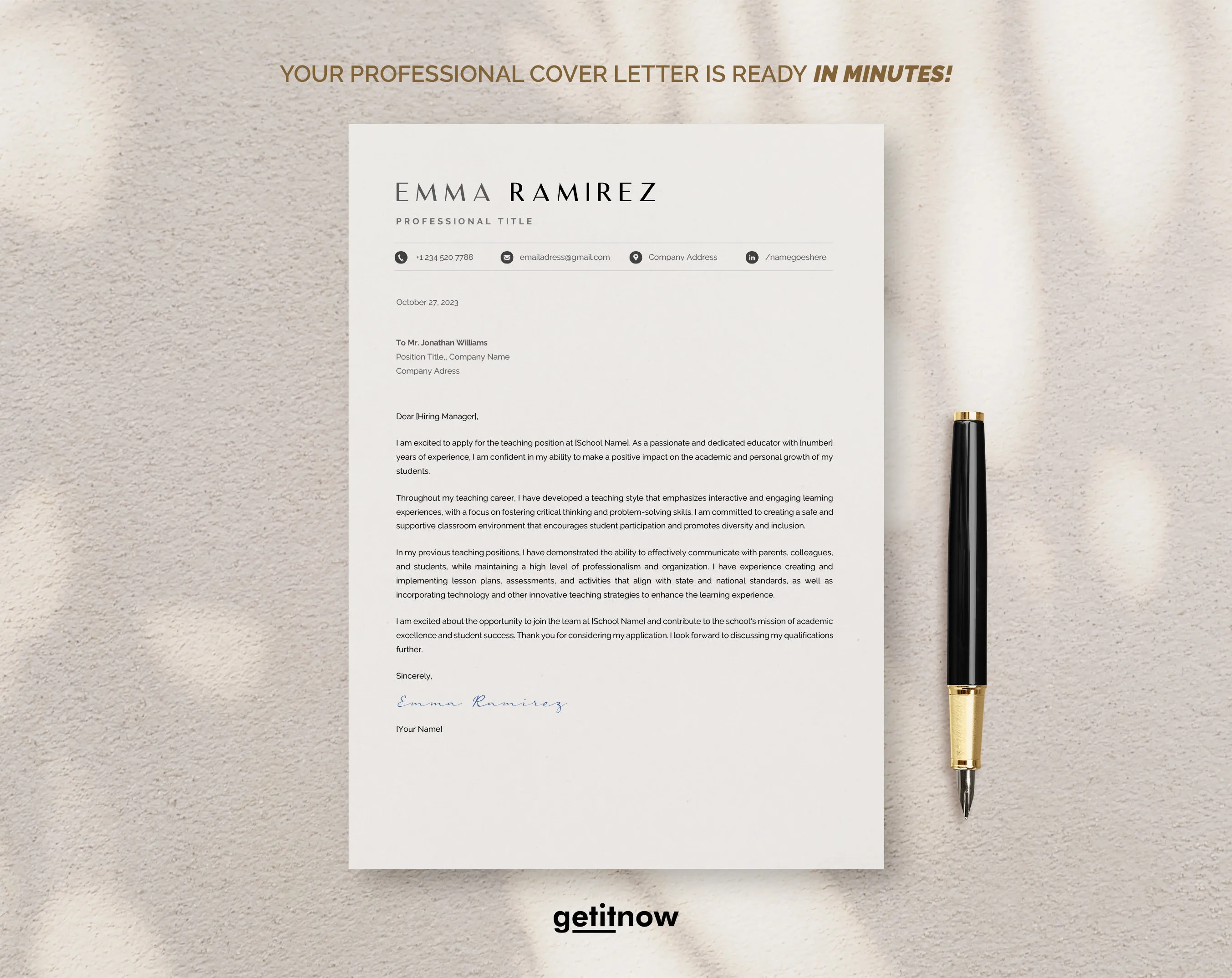
The Purpose of a Teacher Cover Letter
A teacher cover letter serves as your initial introduction to a potential employer, providing a glimpse into your personality, skills, and teaching philosophy. It’s your chance to go beyond the resume and connect with the hiring manager on a more personal level. The primary objective of a cover letter is to secure an interview by demonstrating your suitability for the position. Unlike a resume, which lists facts and experiences, a cover letter allows you to articulate why you are the best fit for the specific role and school. It highlights your passion for teaching and showcases your unique qualities that make you stand out from other applicants. A well-crafted cover letter can significantly increase your chances of getting noticed and landing your dream teaching job. Make sure your teacher cover letter is clear, concise, and tailored to each application.
Highlighting Your Qualifications
When highlighting your qualifications, focus on the skills and experiences that directly align with the job requirements. Review the job description carefully and identify the key skills and qualifications the school is seeking. Then, provide specific examples from your experience that demonstrate your proficiency in those areas. For instance, if the job description emphasizes classroom management skills, provide an instance where you successfully managed a challenging classroom environment. If they require experience with a specific curriculum or teaching method, explain your familiarity and success using that method. Quantify your accomplishments whenever possible. Instead of saying ‘improved student test scores,’ state ‘increased student test scores by 15%’. This adds credibility and impact to your claims. Always back up your claims with concrete evidence and be prepared to discuss these examples in more detail during the interview. Use keywords from the job description to show that you have what the employer is looking for.
Showcasing Your Experience

Your teaching experience is a critical part of your cover letter. Detail the specific roles you’ve held, including the grade levels, subjects taught, and the schools where you worked. Instead of simply listing your responsibilities, focus on the impact you made. Describe how you used your skills to improve student learning, create engaging lesson plans, or build positive relationships with parents and colleagues. Consider including any special programs or initiatives you spearheaded or participated in, such as leading a club, developing a new curriculum, or implementing innovative teaching strategies. It is important to showcase your ability to adapt to different educational environments and student needs. If you have experience with diverse student populations, mention this and highlight how you fostered inclusivity and catered to different learning styles. Remember to tailor your experience to the specific job requirements, emphasizing the experience that is most relevant to the position. Provide concise summaries of your responsibilities and quantify your achievements whenever possible.
Tailoring Your Letter
A generic cover letter rarely makes a strong impression. Tailor your cover letter to each specific job application. This demonstrates your genuine interest in the position and shows that you’ve taken the time to understand the school’s needs. Start by researching the school. Visit their website, read their mission statement, and learn about their values and programs. Then, customize your cover letter to align with the school’s culture and the specific requirements of the job. Reference specific programs, initiatives, or values that resonate with you. Address the hiring manager by name if possible; this shows you’ve done your homework. Make sure your letter directly addresses the key skills and qualifications outlined in the job description. This shows the hiring manager that you have taken the time to read and understand what the school is looking for. Small details like this can set you apart from candidates who are using a generic, one-size-fits-all cover letter.
Structuring Your Teacher Cover Letter
Header and Contact Information

Your header should clearly display your contact information. Include your full name, phone number, email address, and optionally, your LinkedIn profile URL. Ensure this information is accurate and easy to read. The header should be at the top left or right of the page, creating a professional appearance. Following the header, include the date and the hiring manager’s name, title, and the school’s address. If you do not know the hiring manager’s name, research the school’s website or call to find out. Addressing the letter to a specific person increases the chances of getting noticed. Make sure to double-check all contact information for accuracy, as any errors can prevent the school from reaching you. Proper formatting in the header sets the tone for the rest of your letter, showing attention to detail and professionalism. Ensure that your email address sounds professional; avoid using nicknames or unprofessional usernames.
Salutation
The salutation is your opening greeting. Use ‘Dear Mr./Ms./Mx. [Last Name]’ if you know the hiring manager’s name. If you are unsure of the name, you can use ‘Dear Hiring Manager’ or ‘Dear [School Name] Hiring Committee.’ Avoid using generic greetings like ‘To Whom It May Concern,’ which can make your letter feel impersonal. Researching the hiring manager’s name demonstrates your initiative and attention to detail. This personalized touch immediately captures the reader’s attention. Ensure the salutation matches the tone of the rest of your cover letter—professional, courteous, and engaging. A well-chosen salutation sets a positive tone for the rest of your letter, indicating your respect for the reader and your professionalism. Proofread the salutation to make sure the name and title are correct.
Body Paragraphs
The body paragraphs are where you highlight your qualifications, experience, and enthusiasm for the role. Start with a strong opening paragraph that states the position you are applying for and where you saw the advertisement. Immediately capture the reader’s attention by conveying your enthusiasm and briefly mentioning your key qualifications. The subsequent paragraphs should elaborate on your skills and experience, providing specific examples to support your claims. Use the STAR method (Situation, Task, Action, Result) to describe your experiences. This method helps you provide a clear and concise account of your accomplishments. In each paragraph, connect your skills and experiences to the specific requirements of the job, demonstrating why you are an ideal candidate. Aim for 3-4 well-structured paragraphs that tell a cohesive story about your qualifications and why you’re a good fit. Ensure each paragraph focuses on a specific aspect of your skills or experience, making the content easy to read and understand.
Closing and Signature

The closing paragraph should reiterate your interest in the position and express gratitude for their consideration. Summarize your key qualifications and restate your enthusiasm for the opportunity. Include a clear call to action, such as stating that you are available for an interview and can be reached at your phone number or email address. Thank the hiring manager for their time and consideration. End the letter with a professional closing, such as ‘Sincerely,’ or ‘Best regards,’ followed by your typed name. Below your typed name, you can add a digital signature, if desired. The closing should be polite and professional, leaving a lasting positive impression. Proofread the entire letter, paying special attention to the closing, to make sure the tone is consistent with the rest of the document.
Content of a Teacher Cover Letter
Expressing Enthusiasm
Your enthusiasm for the teaching profession and the specific school is vital to your cover letter. Start by expressing your genuine interest in the role and the school. Show that you’ve done your research and are excited about the school’s mission, values, or programs. Use passionate language and let your personality shine through. Share your teaching philosophy and explain how it aligns with the school’s approach to education. This helps the hiring manager understand your dedication and commitment to the role. Mention any specific aspects of the school that attract you to demonstrate your genuine interest. Your enthusiasm should be evident throughout the letter, from the introduction to the conclusion, making a positive impression. Remember, hiring managers are looking for educators who are passionate about their work.
Highlighting Key Skills

Focus on the skills that are most relevant to the job description. Identify the key skills the school is seeking and provide evidence of your proficiency in those areas. Examples of important skills include classroom management, lesson planning, curriculum development, differentiated instruction, communication, and collaboration. Provide specific examples that showcase how you’ve utilized those skills in the past. Instead of merely stating that you have strong classroom management skills, describe a time when you successfully managed a challenging classroom environment. Quantify your achievements whenever possible, such as increasing student engagement or improving test scores. Tailor the skills you highlight to the specific needs of the school. Research the school’s values and programs to understand the skills they prioritize. Use keywords from the job description throughout your letter to demonstrate that you have the skills they are looking for.
Mentioning Accomplishments
Your cover letter should highlight your accomplishments and the impact you’ve made in previous roles. Go beyond listing your responsibilities and showcase what you have achieved. Quantify your achievements whenever possible. For example, instead of saying you ‘improved student engagement,’ state that you ‘increased student engagement by 20%’. Use the STAR method to describe specific situations, the tasks you performed, the actions you took, and the results you achieved. Mention any awards, recognition, or positive feedback you’ve received. Highlighting these accomplishments demonstrates your ability to succeed. Your accomplishments show your value to the hiring manager. When describing your accomplishments, focus on the impact you had on students, colleagues, or the school community. Show how your skills and experiences have led to positive outcomes, such as improved student performance or a more positive learning environment.
Formatting and Presentation
Font and Readability

Choose a professional and readable font, such as Times New Roman, Arial, or Calibri. The font size should be between 10 and 12 points to ensure readability. Use consistent formatting throughout the document, including the same font, size, and spacing. Use headings and subheadings to break up large blocks of text and make the letter easier to read. Keep your paragraphs concise and to the point, making sure the document is easy to scan. Maintain a professional appearance with appropriate margins (1 inch is standard) and adequate spacing between lines and paragraphs. A well-formatted cover letter shows attention to detail and enhances readability. Proofread the entire document to ensure there are no formatting inconsistencies, such as different font sizes or spacing. Choose a font that is clear and easy on the eyes, allowing the hiring manager to focus on your content.
Proofreading and Editing
Proofreading and editing are critical steps in creating a successful cover letter. Errors in grammar, spelling, or punctuation can undermine your credibility. Before submitting your cover letter, carefully review it for any mistakes. Use a spell checker and grammar checker, but do not rely solely on these tools. Have a friend, colleague, or career advisor review your letter. They may catch errors you missed. Read the letter aloud to catch any awkward phrasing or grammatical issues. Ensure that the letter is clear, concise, and easy to understand. Verify all names, dates, and contact information. A polished, error-free cover letter demonstrates your professionalism and attention to detail. This helps you make a positive first impression, and increases your chances of getting an interview.
Common Mistakes to Avoid
Generic vs Specific Letters

One of the most common mistakes is submitting a generic cover letter. These letters lack personalization and fail to highlight your specific qualifications for the job. Generic letters often sound the same, making it difficult for you to stand out. Always tailor your letter to the specific job and school. Research the school and address the hiring manager by name. Customize your letter to directly address the requirements of the job description, demonstrating your understanding of the school’s needs. Use keywords from the job posting to show you are a good fit. Ensure you tailor each cover letter to the specific position and school. This effort proves your interest in the role and increases your chances of being selected for an interview. A generic cover letter shows a lack of interest, potentially leading to the rejection of your application. A tailored letter demonstrates to the hiring manager that you are a serious candidate for the role.
Overused Phrases
Avoid using overused phrases that make your cover letter sound cliché and unoriginal. Phrases like ‘I am writing to express my interest…’ or ‘I am a highly motivated individual…’ are common and lack impact. Instead, use strong, action-oriented language to highlight your skills and experiences. Focus on what you can offer the school, rather than simply stating that you are interested. Use a unique and engaging opening to capture the reader’s attention from the start. Demonstrate your skills and experience with specific examples. Using strong action verbs, such as ‘developed,’ ‘implemented,’ ‘managed,’ and ‘achieved,’ helps showcase your accomplishments. By avoiding these clichés and using fresh, specific language, you’ll make your cover letter stand out and show the hiring manager that you are a good candidate.
Call to Action
Asking for an Interview

Your cover letter should include a clear call to action. This directs the hiring manager on the next steps to be taken. Explicitly state that you are available for an interview and provide your contact information. Make it easy for the hiring manager to reach you. Reiterate your interest in the position and emphasize why you are a good fit. Suggest a specific time frame for an interview, such as ‘I am available for an interview next week.’ This shows initiative and makes it easier for the hiring manager to schedule an interview. Be confident and enthusiastic in your call to action. Your goal is to secure an interview, so make sure your cover letter clearly reflects this. Do not leave the reader guessing about what you want. Ensure that your call to action is easy to find and understand.
Expressing Gratitude
Always end your cover letter by expressing gratitude. Thank the hiring manager for their time and consideration. This shows your respect for their efforts and leaves a positive impression. Briefly reiterate your enthusiasm for the position and the school. Indicate your anticipation of hearing from them. Express your gratitude in a professional and sincere manner. A simple ‘Thank you for your time and consideration’ is sufficient. Your closing should be polite and professional, leaving a lasting positive impression. Proper etiquette is critical in your teacher cover letter. This is a professional way to end your letter, leaving a positive image.