Why Student Cover Letters Matter
As a student, the job market can seem daunting. You might think that because you lack extensive work experience, your application won’t stand out. However, a well-crafted cover letter is your secret weapon. It’s your opportunity to showcase your personality, highlight your skills, and demonstrate your enthusiasm for the specific role and company. Unlike a resume, which provides a static overview of your experience, a cover letter allows you to tell a story, connecting your skills and experiences to the requirements of the job. It’s your chance to make a memorable first impression and persuade the hiring manager that you’re the right fit. Mastering the art of cover letter writing is an invaluable skill, essential for internships, part-time jobs, and entry-level positions, paving the way for a successful career.
Cover Letter Structure
A well-structured cover letter is easy to read and immediately conveys your key qualifications. The standard structure includes a header, greeting, opening paragraph, body paragraphs, closing paragraph, and professional closing. Each section plays a vital role in presenting your credentials effectively and engaging the reader. Following this structure ensures that you cover all the essential elements of a cover letter, allowing you to create a persuasive narrative that captures the hiring manager’s attention and increases your chances of getting an interview. Understanding the purpose of each section helps you craft a compelling letter that highlights your strengths and aligns with the job requirements.
Header Section

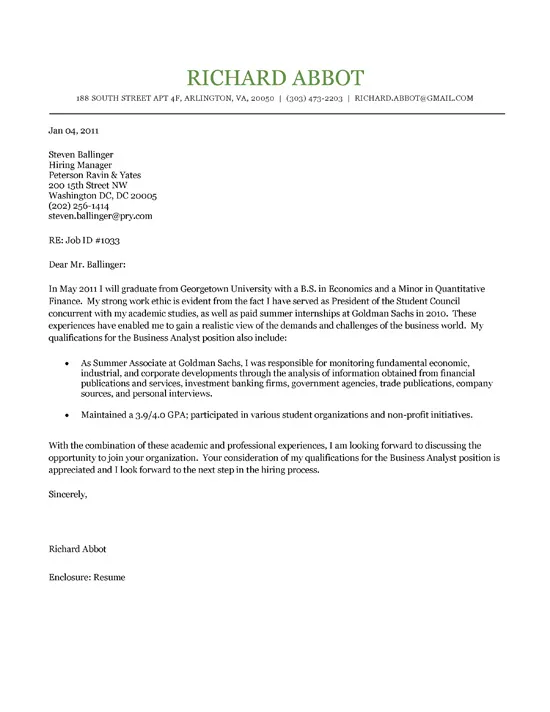
The header is the first thing a hiring manager sees, so it should be professional and easy to read. Include your full name, contact information (phone number and email address), and the date. If you’re sending a physical letter, include the company’s address as well. Ensure your email address is professional-sounding (e.g., firstname.lastname@email.com) rather than something casual. Accuracy is crucial here; a misplaced digit or an incorrect email address can mean your application never reaches the intended recipient. The header sets the tone for the entire letter, conveying professionalism and attention to detail. See the image above for an example of how to format your header to make it stand out.
Greeting
Start with a formal greeting. If you know the hiring manager’s name, use it (e.g., “Dear Mr./Ms./Mx. Smith”). Researching the hiring manager’s name demonstrates initiative and personalization. If you can’t find a name, use a general greeting such as “Dear Hiring Manager” or “Dear [Company Name] Hiring Team.” Avoid generic greetings like “To Whom It May Concern” as they feel impersonal. The greeting sets the tone for your interaction and shows that you’ve taken the time to personalize your application. See the example image of different types of greetings to help you write your own cover letter.
Opening Paragraph
The opening paragraph is your hook; it needs to grab the reader’s attention. State the position you are applying for and briefly mention where you found the job posting. Immediately highlight your strongest qualification or a key skill that matches the job requirements. Express your enthusiasm for the opportunity and the company. This paragraph sets the stage for the rest of your letter, so make sure it’s concise, engaging, and clearly states your purpose for writing. The goal is to make the hiring manager want to read more and learn about you.
Body Paragraphs

The body paragraphs are where you connect your skills and experiences to the job requirements. This is the meat of your cover letter, so focus on demonstrating how your qualifications align with the role. Use specific examples from your academic projects, extracurricular activities, volunteer work, or any previous part-time jobs to illustrate your skills. Each paragraph should address a key requirement or responsibility mentioned in the job description. This section needs to be well-organized and easy to follow, making it clear why you’re a good fit for the position.
Highlighting Skills and Experience
Identify the key skills the employer seeks and show how your skills match those requirements. Use action verbs (e.g., “managed,” “led,” “created,” “organized”) to describe your experiences and accomplishments. Instead of just listing your skills, provide concrete examples of how you’ve used those skills in the past. This could be from group projects, volunteer roles, or any relevant experiences. By connecting your skills directly to your experiences, you prove to the hiring manager that you possess the abilities the job demands. Using keywords from the job description helps tailor your letter to each position, making it more relevant and appealing.
Quantifying Achievements
Whenever possible, quantify your achievements to make them more impactful. Instead of saying, “Improved customer service,” say, “Improved customer service scores by 15% through implementing a new training program.” Providing specific numbers and data demonstrates the real impact of your actions. This is especially effective when discussing project results, sales figures, or any improvements you’ve contributed to. Quantifying your accomplishments shows the hiring manager your ability to make a tangible difference and provides concrete evidence of your capabilities, leaving a lasting impression.
Tailoring to the Job
Customize each cover letter to the specific job you’re applying for. Review the job description carefully and identify the key skills and requirements. Align your skills and experiences with these requirements, highlighting the most relevant information for that particular role. Avoid using a generic cover letter template; instead, show that you understand the company and the position. Demonstrating this level of personalization will set your application apart. Tailoring your cover letter shows your genuine interest and demonstrates that you have carefully considered the specific needs of the company.
Closing Paragraph
The closing paragraph is your final chance to reinforce your interest and make a lasting impression. Summarize your qualifications and reiterate your enthusiasm for the opportunity. Express your confidence that your skills and experience align with the job requirements. Include a call to action, such as inviting the hiring manager to contact you for an interview. Make sure your closing paragraph is confident, enthusiastic, and leaves the reader with a positive impression.
Call to Action
Include a clear call to action to prompt the hiring manager to take the next step. Request an interview or express your eagerness to discuss your qualifications further. Make it easy for them to contact you by including your phone number and email address again if necessary. A call to action encourages the reader to respond, which is essential for moving your application forward. Examples include asking for an interview, requesting a phone call, or expressing your anticipation for hearing from them.
Professional Closing

Close with a professional and polite sign-off. Common options include “Sincerely,” “Best regards,” or “Thank you.” Avoid informal closings. Always proofread your cover letter again before sending it to ensure there are no grammatical errors or typos. A professional closing sets the tone for the next stage of the application process and leaves a polished impression. Using a professional sign-off reflects your attention to detail and respect for the hiring manager.
Formatting and Design
The formatting and design of your cover letter are just as important as its content. A well-formatted cover letter is easy to read, making it more likely to be reviewed favorably. Choose a professional font, maintain consistent spacing, and use clear headings to organize your information. The layout needs to look clean and uncluttered. A well-designed cover letter demonstrates your attention to detail and commitment to presenting yourself professionally.
Font and Readability
Select a professional font such as Times New Roman, Arial, or Calibri. Use a font size between 10 and 12 points. Ensure your text is easy to read and well-spaced. Avoid using unusual fonts or excessive formatting that might distract from the content. Readability is a key factor in how well your cover letter is received. A simple, clear font makes the cover letter more accessible and shows that you respect the reader’s time. Keeping your cover letter easy to read is important for making the best impression possible.
File Format

Always save your cover letter as a PDF file before sending it. This ensures that the formatting remains consistent across different devices and operating systems. PDF files are universally compatible and preserve your layout, preventing any unintentional changes. Unless specifically requested otherwise, a PDF is the best format to send your cover letter. This simple step demonstrates your professionalism and protects the integrity of your document.
Cover Letter Samples
Reviewing cover letter samples can provide valuable insights into effective writing. Consider what a good cover letter includes. Looking at different examples can inspire ideas and help you to see how to structure your own letter. Tailor the samples to match your own experiences and the specific job you’re applying for.
Sample Cover Letter for Internship
A cover letter for an internship should highlight your relevant coursework, skills, and any previous experience (even if it’s volunteer work or school projects). Mention your enthusiasm for the field and the specific company, demonstrating why you’re interested in the internship. Tailor the letter to match the internship requirements, emphasizing the skills and experiences that align with the position. Highlight transferable skills if you have limited direct experience. Emphasize any projects, experiences, and learning that shows the best of your abilities.
Sample Cover Letter for Part-Time Job

For a part-time job, highlight your availability, reliability, and any relevant experience. Tailor your cover letter to show how your skills and availability meet the job requirements. Focus on your willingness to learn, your ability to work well with others, and any customer service or similar experience. Demonstrate your ability to manage your time effectively and balance work with your studies. Present your relevant skills in a way that shows you can easily perform the requirements of the job.
Sample Cover Letter for Entry-Level Position
When applying for an entry-level position, highlight your relevant skills, educational background, and any internships or volunteer experiences. Show your enthusiasm for the company and the position. Focus on transferable skills if you lack extensive work experience. Customize your letter by mentioning your ability to learn quickly, and your eagerness to contribute to the team. Emphasize your willingness to grow and learn within the role. Mention any projects or coursework that prove your capabilities.
Common Mistakes to Avoid
Avoiding common mistakes is crucial to ensure your cover letter makes a positive impression. Carefully reviewing your letter before submission can prevent these errors and improve your chances of landing an interview. These mistakes range from simple typos to more significant content issues. Attention to detail will help your cover letter stand out and improve your chances of success.
Typos and Grammatical Errors
Typos and grammatical errors can undermine your credibility and make you appear careless. Always proofread your cover letter carefully before submitting it. Use a spell checker and grammar checker, but don’t rely solely on them. Have a friend or family member review your cover letter as a second pair of eyes. Make sure all names, dates, and contact information are accurate. Taking the time to proofread thoroughly demonstrates your attention to detail and commitment to producing high-quality work.
Generic Content
Avoid using generic content that could apply to any job. Tailor each cover letter to the specific position you are applying for and the company’s requirements. Show that you’ve researched the company and understand the role. Highlighting your skills and relevant experiences makes your cover letter stand out and proves your interest in the company. Tailoring your cover letter shows the hiring manager that you care about the position and are the right fit.
Length and Brevity
Keep your cover letter concise and to the point. Aim for one page, unless specifically instructed otherwise. Use clear and direct language. Avoid overly long paragraphs or excessive details. Respect the hiring manager’s time by presenting your information efficiently. Ensure that every sentence adds value and supports your application. The cover letter should highlight your qualifications without being overly wordy.