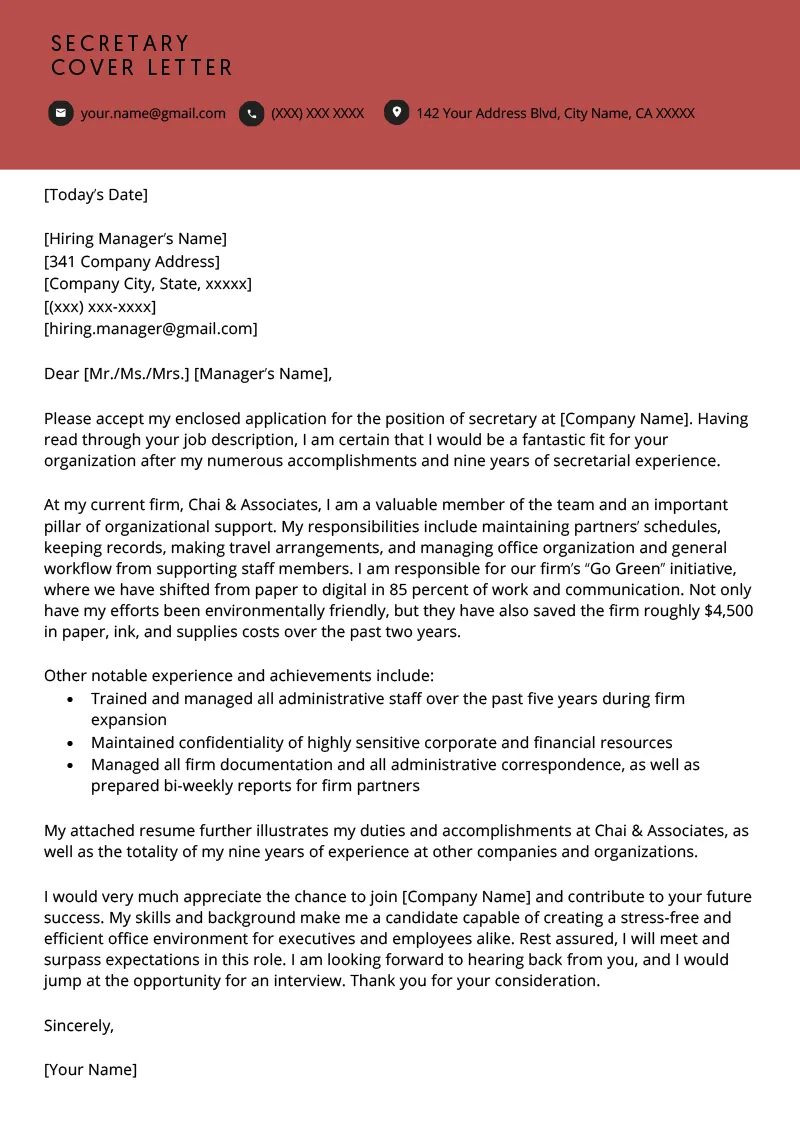
Crafting the Perfect Secretary Cover Letter
A well-crafted cover letter is your first introduction to a potential employer, and for a secretary, it’s a vital tool. This document provides a concise overview of your skills and experiences and your personality. It supplements your resume by providing context and demonstrating your enthusiasm for the role. The secretary cover letter allows you to showcase your unique qualifications and makes a strong impression on the hiring manager. By following these tips, you can create a compelling cover letter that gets you noticed and land the job you’re aiming for.
Understanding the Purpose of a Cover Letter
The primary function of a secretary cover letter is to highlight your suitability for the position. It’s not just a formality; it’s an opportunity to connect with the hiring manager on a personal level. It lets the hiring manager understand why you are a good fit for the job and the company. You should use it to elaborate on specific skills, experiences, and accomplishments mentioned in your resume. The cover letter serves as a personal advertisement, differentiating you from other candidates by demonstrating your writing skills, communication abilities, and personality.
Highlighting Relevant Skills and Experience

In the cover letter, prioritize skills and experiences most relevant to the secretary role. For example, demonstrate your proficiency in administrative tasks like managing schedules, handling correspondence, and coordinating meetings. Emphasize any experience with software, databases, and office equipment. Show how your past experiences, such as handling sensitive information, contributing to team success, or improving office efficiency, have prepared you for the job. Include details like specific accomplishments or quantifiable results to strengthen your claims. For example, mention how you streamlined a filing system, improving information access. This will help to make the recruiter understand how you can add value to the organization.
Researching the Company
Before you start writing, research the company and the specific role. This information will show how the role aligns with your values and career goals. Go to the company’s website, read news articles, and check social media accounts to understand their mission, values, and culture. Use this information to tailor your letter. Mention specific projects, initiatives, or goals relevant to the role and the company. Demonstrate your enthusiasm for the company and why you want to work there. This will make your cover letter unique and increase your chances of getting an interview. Understanding their specific needs helps you showcase how your skills can address them.
Structuring Your Secretary Cover Letter
Header and Contact Information

Begin your cover letter with a professional header, including your contact information. Include your name, phone number, email address, and possibly your LinkedIn profile URL. Ensure your header is easily accessible and matches the formatting of your resume. You should also include the date and the hiring manager’s name and title (if known), and the company address. This section provides easy access to your contact details and ensures the hiring manager can quickly contact you.
Greeting the Hiring Manager
Use a formal and professional greeting to address the hiring manager. Use “Dear Mr./Ms./Mx. Last Name” if you know the name of the person reviewing your application. If you cannot find a specific name, use “Dear Hiring Manager” or “Dear [Company Name] Hiring Team.” Avoid generic greetings such as “To Whom It May Concern.” Use the appropriate title and be sure to spell the name correctly. This personal touch shows that you have taken the time to research the company and pay attention to detail.
Opening Paragraph Hook
Start your cover letter with a strong opening paragraph that immediately grabs the reader’s attention. Begin with a brief and engaging statement that highlights your interest in the position and the company. Mention where you found the job posting. You might also include a key achievement that aligns with the role. This hook will immediately draw the hiring manager in and make them want to read more. In your opening paragraph, demonstrate your enthusiasm, and briefly explain your understanding of the company’s needs.
Body Paragraphs Emphasizing Skills

Use the body paragraphs to emphasize your relevant skills, experience, and achievements. Structure these paragraphs to highlight specific skills and accomplishments that align with the job description. Provide examples of how you have demonstrated these skills in past roles. Use action verbs to showcase your achievements. Quantify your accomplishments whenever possible. For example, mention how you improved office efficiency. Each paragraph should focus on a specific skill or accomplishment, backed up with evidence. This approach will make your cover letter focused, easy to read, and effective.
Closing Paragraph and Call to Action
Conclude your cover letter with a strong closing paragraph and a clear call to action. Summarize your interest in the position and reiterate your key qualifications. Thank the hiring manager for their time and consideration. End with a direct call to action, such as “I look forward to hearing from you soon” or “I am available for an interview at your earliest convenience.” Include your contact information again to make it easier for the hiring manager to reach you. This professional and confident closing will leave a lasting positive impression.
Key Skills to Include in Your Cover Letter
Communication and Interpersonal Skills

Effective communication and strong interpersonal skills are essential for a secretary. Highlight your ability to communicate clearly, both verbally and in writing. Demonstrate your experience in managing phone calls, emails, and correspondence. Emphasize your ability to build and maintain relationships with colleagues, clients, and vendors. Mention any experience in conflict resolution or handling sensitive information. Show that you have excellent listening skills and are able to convey information accurately and professionally. Provide examples of how your communication skills have improved teamwork or customer satisfaction.
Organizational and Time Management Skills
Organizational and time management skills are crucial for a secretary. Emphasize your ability to manage multiple tasks simultaneously and prioritize effectively. Highlight your experience in scheduling appointments, managing calendars, and organizing meetings. Show your proficiency in creating and maintaining organized filing systems, both physical and digital. Demonstrate your attention to detail and ability to meet deadlines. Provide examples of how you have improved efficiency or implemented time-saving strategies in the past. Mention your proficiency in using project management tools or other organizational software.
Technical Skills Proficiency
Technical proficiency is vital for a modern secretary. Include your skills in Microsoft Office Suite, including Word, Excel, PowerPoint, and Outlook. Mention your experience with specific office equipment such as printers, scanners, and phone systems. Highlight any experience with data entry, database management, and office software. If you have experience with any industry-specific software, mention it. Demonstrate your ability to quickly learn new software. Keep this section up-to-date with the latest tech trends. You can also show how you helped in implementing a new software system at your previous job.
Tailoring Your Cover Letter for Secretary Roles

Matching Skills to the Job Description
Carefully review the job description and tailor your cover letter to match the specific requirements. Identify the keywords and key skills mentioned in the job posting and make sure you address them in your letter. Focus on the skills and experiences that directly align with the role. Show how your skills and experience have prepared you to excel in this specific role. This will demonstrate that you have carefully read the job description and understand what the employer is looking for. Ensure that the examples you provide in your letter are relevant to the job requirements.
Using Keywords Effectively
Use keywords strategically throughout your cover letter. Use keywords naturally and without stuffing. This will help your application pass through applicant tracking systems (ATS). Include relevant keywords from the job description. Incorporate these keywords into the skills section, and throughout the body paragraphs. Focus on the keywords in a way that looks genuine. Be sure to incorporate these keywords in context, showing how you have applied these skills in your work. Do not overuse keywords, as this can make your letter sound unnatural.
Demonstrating Passion for the Role

Show your enthusiasm for the role and the company. Express your genuine interest in the position. Mention what interests you about the job. Describe why the company’s mission, values, or culture resonates with you. Showcase your passion for the secretarial field. Talk about your career goals, and how the role fits into your career path. Demonstrate your motivation for the role and why you are the best candidate. Share how you will contribute to the company’s goals. This enthusiasm will make a lasting impression.
Formatting and Proofreading Your Cover Letter
Choosing the Right Font and Format
Choose a professional and easy-to-read font, such as Times New Roman, Arial, or Calibri. Keep the font size between 10 and 12 points. Use clear and concise formatting with proper spacing, bullet points, and headings to make the letter easy to read. Use a standard business letter format. Make sure your cover letter is visually appealing. Maintain consistency in your formatting. This is an important skill for any secretary. A clean and well-formatted cover letter demonstrates your professionalism and attention to detail.
Proofreading for Errors

Proofread your cover letter carefully for any spelling, grammatical, or punctuation errors. Mistakes can be a huge turn-off. Run your letter through a grammar checker. Read the letter aloud to catch any awkward phrasing. Ensure the correct use of the name and titles. Ask a friend or colleague to review your cover letter. They can help you identify any errors you may have missed. A polished and error-free cover letter will enhance your credibility and show your attention to detail. Be meticulous in your proofreading. It will show the recruiter that you care about the details of the job.
Seeking Feedback from Others
Ask for feedback from trusted sources. Have friends, family members, career advisors, or previous colleagues review your cover letter. They can offer valuable insights. Ask for their opinions on the content, clarity, and overall effectiveness of your letter. Consider all feedback that can help you improve your letter. Revise the letter based on the feedback you get. Their feedback can help you refine your cover letter. This will increase your chances of getting an interview.