Why a Strong Scientist Cover Letter Matters
In the competitive world of scientific careers, a well-crafted cover letter can be your most potent weapon. It serves as your first formal introduction to a potential employer, providing an opportunity to showcase not just your skills and experience but also your personality, passion, and suitability for the role. A strong cover letter goes beyond simply reiterating your resume; it tells a compelling story that grabs the reader’s attention and makes them want to learn more about you. In this era of advanced technology and digital communication, it allows you to make a personal connection that your resume alone cannot. A well-written cover letter can be the deciding factor in whether you land an interview, ultimately opening doors to exciting new opportunities in your scientific field. It offers an opportunity to distinguish yourself from other candidates, and to explain any gaps or unusual aspects of your CV that may need clarification.
Highlighting Your Skills and Experience
When writing a scientist cover letter, the most crucial aspect is to highlight your relevant skills and experience. Analyze the job description carefully and identify the key requirements. Then, craft your letter to directly address these needs. Detail specific instances where you have utilized these skills. Use strong action verbs to describe your accomplishments. For example, instead of saying “I worked on a research project,” say “Led a research team in the development of a new…”, or “Analyzed complex datasets using…”. Show how your past roles and achievements align with the specific responsibilities outlined in the job description. Tailor your letter to each application; never use a generic template. This personalization shows that you are genuinely interested in the position and have taken the time to understand what the employer is looking for. Focus on the impact you have made in previous roles.
Quantify Your Achievements

Numbers speak louder than words. Wherever possible, quantify your achievements to demonstrate your impact. Instead of saying “Improved lab efficiency,” state “Improved lab efficiency by 15% by implementing a new…”. Instead of “Managed a research project,” specify “Managed a $250,000 research project from inception to completion, resulting in…”. This approach not only showcases your capabilities but also adds credibility to your claims. Think about metrics like publications, presentations, grants won, patents filed, or any other measurable results that highlight your contributions. Using quantifiable data provides concrete evidence of your abilities and gives the hiring manager a clear understanding of your value. Providing these specific examples, rather than broad, general statements, will set your cover letter apart.
Tailoring Your Letter to the Job
Each scientist cover letter should be tailored to the specific job you are applying for. This means carefully reviewing the job description and aligning your skills and experience to meet the employer’s needs. Research the company and the specific research group or team you would be joining. Show that you understand the company’s mission, values, and goals. This demonstrates that you are genuinely interested in the opportunity and have taken the initiative to learn about the organization. Mentioning specific projects, research areas, or company achievements can show your understanding of the role and company. Make sure your cover letter reads as if it was specifically written for that position, and avoid generic statements that could apply to any job. This personalized approach will help you make a strong impression and increase your chances of getting an interview.
Showcasing Your Passion for Science
A scientist cover letter is your opportunity to showcase your passion for science. Share what excites you about the field, the specific research area, or the company’s work. Explain what motivates you and what you hope to achieve in your career. This enthusiasm can be contagious and will help you connect with the hiring manager on a personal level. Share any relevant personal projects, collaborations, or volunteer experiences that demonstrate your dedication. If you are passionate about a certain scientific problem, explain why and how you have contributed or plan to contribute to its solution. Let your excitement for science shine through your writing. This makes you memorable. Demonstrate that you’re not just looking for a job but a place where you can apply your passion and contribute to meaningful scientific advancements.
Formatting Your Scientist Cover Letter

Contact Information and Salutation
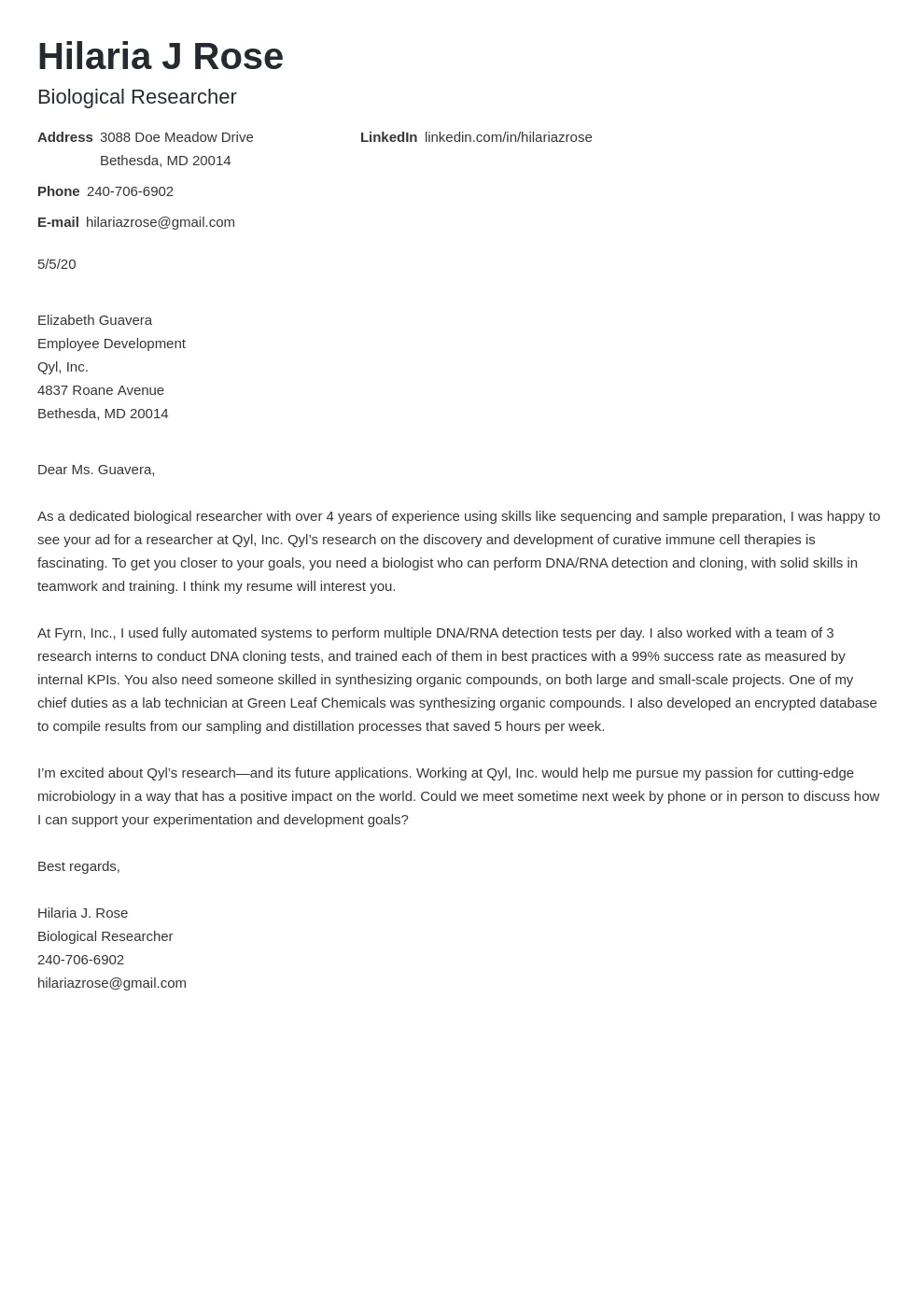
Your cover letter should begin with your contact information, including your full name, phone number, email address, and LinkedIn profile (if applicable). Following this, include the date and the hiring manager’s name and title (if known). The salutation should be professional, such as “Dear Dr. [Last Name]” or “Dear Hiring Manager”. If you are unsure of the hiring manager’s name, a general greeting like “Dear Hiring Committee” is acceptable. Making sure the correct person’s name is used makes a good impression, showing that you did your research. This is also the place to list the job you’re applying for, or the job number or job title. Ensure this is correct to help your application be directed to the correct place within the organization. The tone should be professional and respectful.
Body Paragraphs Structure
The body of your cover letter should consist of well-structured paragraphs that highlight your skills, experience, and passion. Start with a strong opening that captures the reader’s attention and states the position you are applying for. Use the subsequent paragraphs to address the key requirements of the job description and demonstrate how your skills and experience align with those requirements. Break up long blocks of text with shorter paragraphs to improve readability. Each paragraph should focus on a specific point, supported by relevant examples and quantifiable achievements. The tone should be professional and engaging, showcasing your personality and communication skills. Each paragraph must lead the reader to the next, creating a narrative that highlights your value to the company. Organize your paragraphs logically and consistently, creating a smooth flow that is easy to follow.
Closing and Call to Action

The closing of your cover letter should reiterate your interest in the position and express your enthusiasm for the opportunity. Thank the hiring manager for their time and consideration. Include a call to action, such as “I am eager to discuss my qualifications further in an interview” or “I look forward to hearing from you soon.” Provide your contact information once more. Avoid generic closings; instead, personalize your closing to reflect your interest in the specific job and company. Make it clear that you are proactive and eager to move forward in the hiring process. The closing should reinforce your desire to contribute to the organization’s mission and goals.
Proofreading and Editing
Before submitting your cover letter, proofread it carefully for any grammatical errors, spelling mistakes, or typos. These errors can undermine your credibility and give the impression that you lack attention to detail. Read your letter aloud to catch any awkward phrasing or sentence structures. Ask a friend, colleague, or mentor to review your cover letter and provide feedback. They can catch errors that you may have missed. Make sure the formatting is consistent and professional. This ensures that your cover letter reflects your professionalism and attention to detail. A polished, error-free cover letter is a clear reflection of the quality of your work.
Scientist Cover Letter Example: Key Takeaways
A successful scientist cover letter should go beyond simply repeating the information in your resume. It should demonstrate your ability to communicate effectively, showcase your passion for science, and highlight your skills and experience in a way that aligns with the job requirements. Tailor your letter to each job, quantifying your achievements, and showcasing your enthusiasm for the specific role and company. Remember to proofread carefully. It’s your chance to stand out from other candidates. By following these tips and example, you can significantly increase your chances of securing an interview and advancing your career in science. Think of the cover letter as a pitch, or a sales document about yourself. Be sure to use action words and clear, concise language.
Example Cover Letter Structure

Begin with your contact information, followed by the date and the hiring manager’s name and title. Start the body with a compelling opening statement. In the next paragraph, highlight your skills, experience, and accomplishments, focusing on the key requirements of the job. Then, explain your specific experience with the research area or job requirements, providing clear and quantifiable examples. Close your letter by expressing your interest in the position and your enthusiasm for the opportunity. Thank the hiring manager for their time and consideration, and include a call to action. Always proofread your letter thoroughly before submitting it. Be sure to include your contact information in both the header and the closing. This structure provides a good model for all scientist cover letters.
Final Thoughts
A well-crafted scientist cover letter is a critical tool for showcasing your qualifications and securing your next job in the scientific field. By following the tips and using the example cover letter structure, you can create a compelling letter that captures the attention of hiring managers and increases your chances of landing an interview. Remember to highlight your skills and experience, quantify your achievements, tailor your letter to the job, and showcase your passion for science. Proofread your letter carefully before submitting it. Good luck with your job search.