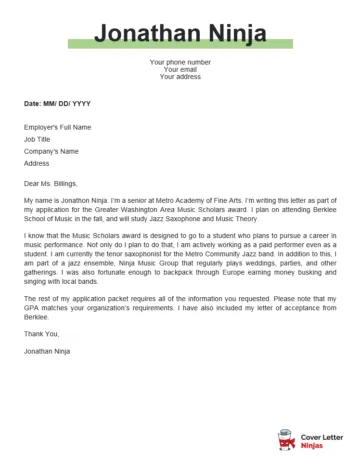
What is a Scholarship Cover Letter?
A scholarship cover letter is a formal document that you submit along with your scholarship application. Its primary purpose is to introduce yourself to the scholarship committee and provide additional context beyond what is included in your application form. It serves as a personalized introduction, allowing you to showcase your personality, aspirations, and why you are a deserving candidate. It is your chance to make a strong first impression and set yourself apart from other applicants. A well-written cover letter can significantly increase your chances of being awarded the scholarship.
Why is a Scholarship Cover Letter Important?
The importance of a scholarship cover letter cannot be overstated. It is often the first thing the selection committee reads, providing them with a snapshot of who you are and what you bring to the table. A compelling cover letter demonstrates your genuine interest in the scholarship and the organization offering it. Moreover, it allows you to highlight specific achievements, experiences, and skills that make you an ideal candidate. Unlike the application form, the cover letter gives you the flexibility to explain your story in your own words, connecting your aspirations to the scholarship’s objectives. By showcasing your passion, determination, and alignment with the scholarship’s values, you significantly increase your chances of success. It’s an opportunity to differentiate yourself and make a lasting impression.
Key Elements of a Scholarship Cover Letter

A successful scholarship cover letter incorporates several key elements to create a strong and persuasive argument for your candidacy. These elements work together to create a cohesive and compelling narrative. Each section contributes to your overall presentation, showcasing your strengths, aspirations, and alignment with the scholarship’s mission. Adhering to a well-defined structure ensures that you cover all necessary aspects and leave a lasting impression on the selection committee, which is critical to securing your scholarship.
Your Contact Information
Start with your contact information at the top of the letter. This should include your full name, address, phone number, and email address. Ensure that the email address is professional and appropriate. This allows the scholarship committee to easily contact you if needed. Clear and readily available contact details reflect professionalism and attention to detail, which are important in any application.
Date
Below your contact information, include the date. The date helps the committee know when the letter was written. Standard formatting for the date is important for the overall presentation of your application.
Scholarship Provider’s Information

Include the name and address of the scholarship provider. If you know the name of the person reviewing the applications, include their name and title. This level of detail shows that you have taken the time to research and personalize your application, which can make a positive impression. Address the letter to a specific person if possible; otherwise, use a general salutation (see next section).
Salutation
Use a professional salutation such as “Dear Mr./Ms. [Last Name]” if you know the name of the person. If you don’t know the name, use “Dear Scholarship Committee” or “To Whom It May Concern.” The salutation sets the tone for your letter, and a formal tone is generally recommended.
The Opening Paragraph
The opening paragraph is your first opportunity to grab the reader’s attention. It should be concise, impactful, and clearly state your purpose for writing. This is the hook that encourages the reader to continue reading your cover letter. You must immediately establish your intention of applying for the scholarship. It needs to show your understanding of the scholarship’s purpose and how it aligns with your goals.
Express Your Interest

Start by expressing your sincere interest in the scholarship. Show enthusiasm and excitement about the opportunity. Your tone sets the stage for the rest of the letter, indicating your level of engagement. Demonstrate that you are genuinely interested in being considered for this scholarship.
Mention the Scholarship
Specifically mention the name of the scholarship and its purpose. Make sure you clearly identify the specific scholarship you are applying for to avoid any confusion. Tailor your opening to the specific scholarship and briefly explain why you believe it’s a good fit for you.
Body Paragraphs Highlighting Your Qualifications
The body paragraphs are the core of your cover letter. This is where you expand on your qualifications and demonstrate why you are a strong candidate. Focus on showcasing your relevant skills, experiences, and achievements that align with the scholarship criteria. Providing specific examples is crucial to substantiate your claims and make your application stand out. Use this space to create a compelling narrative.
Academic Achievements

Highlight your academic accomplishments. Include your GPA, any honors, awards, or academic recognitions you have received. Provide specific examples of your academic success, such as exceptional grades in relevant courses. Mention any academic projects, research, or presentations that are relevant to your field of study.
Extracurricular Activities
Describe your involvement in extracurricular activities. Mention any clubs, organizations, volunteer work, or leadership roles you have held. Explain how these activities have helped you develop valuable skills such as teamwork, leadership, and communication. Showcase your ability to balance your academics with your other commitments.
Skills and Experiences
Highlight any relevant skills and experiences. These can include skills you’ve gained from coursework, internships, or part-time jobs. Examples include computer skills, language proficiency, or project management skills. Describe how these skills and experiences align with the scholarship’s goals. Explain how these skills and experiences have prepared you for your future studies and career.
Quantify Your Accomplishments

Whenever possible, quantify your accomplishments to make them more impactful. Use numbers to demonstrate your achievements. This makes your claims more credible. For example, mention the percentage increase in sales you achieved or the number of volunteer hours you completed. Providing quantifiable results demonstrates your impact and effectiveness.
Closing the Cover Letter
The closing paragraph should be concise and leave a lasting impression. This is your final chance to reiterate your enthusiasm and express your gratitude. A well-written closing paragraph wraps up your cover letter in a professional and memorable way.
Reiterate Your Interest
Reiterate your interest in the scholarship and your enthusiasm for the opportunity. Restate why you believe you are a strong candidate and what you hope to achieve with the scholarship. Summarize your key qualifications and reiterate your commitment to your goals.
Express Gratitude

Express your gratitude for the scholarship committee’s time and consideration. Thank them for reviewing your application. A show of appreciation demonstrates your respect for their efforts and leaves a positive impression.
Call to Action
Include a call to action, such as mentioning your availability for an interview or expressing your willingness to provide more information. This helps to move the application process forward and shows your proactive approach. End with a professional closing, such as “Sincerely” or “Best regards,” followed by your full name.
Formatting and Proofreading
Pay close attention to the formatting and proofreading of your cover letter to ensure a polished and professional presentation. A well-formatted and error-free letter shows that you care about the details. These steps are essential to making a good impression and highlighting your professionalism, and it demonstrates your attention to detail.
Font and Style

Choose a professional font, such as Times New Roman, Arial, or Calibri, with a font size between 10 and 12 points. Use standard margins (1 inch on all sides) and single-space the body of the letter. The font and style should be easy to read. Keep it simple and clean, avoiding overly decorative fonts or excessive use of bolding or italics.
Proofread for Errors
Proofread your cover letter carefully for any grammatical errors, spelling mistakes, and typos. Use a spell checker and grammar checker, but also read the letter yourself to catch any errors that these tools might miss. Have someone else read your letter to provide a fresh perspective. A polished, error-free letter reflects your professionalism and attention to detail.
Tone and Style
Maintain a formal and professional tone throughout your cover letter. Use clear and concise language, avoiding slang or overly casual expressions. Be enthusiastic but avoid sounding desperate or overly flattering. Your tone should reflect your genuine interest in the scholarship and your confidence in your abilities. The style should match the tone of the scholarship provider’s values.
Final Checklist
Before submitting your cover letter, go through a final checklist to ensure that you have included all necessary elements and that your letter is polished and ready. Make sure to have every section covered and address all the elements. By following this checklist, you can increase your chances of success.
- Contact information is accurate and up-to-date.
- The date and scholarship provider’s information are correctly included.
- The salutation is appropriate.
- The opening paragraph expresses your interest and mentions the scholarship.
- Body paragraphs highlight your qualifications, academic achievements, extracurricular activities, and skills.
- Accomplishments are quantified whenever possible.
- The closing paragraph reiterates your interest, expresses gratitude, and includes a call to action.
- The font, style, and formatting are professional and easy to read.
- The cover letter is free of grammatical errors, spelling mistakes, and typos.
- The tone and style are formal and professional.
- You have tailored the letter to the specific scholarship.