Why a Sales Cover Letter is Crucial
In the competitive world of sales, a cover letter is not just an optional extra—it’s your first opportunity to make a lasting impression and secure an interview. Think of it as your personal sales pitch to the hiring manager. Unlike a resume, which primarily lists your experiences and qualifications, a cover letter allows you to connect with the reader on a more personal level, demonstrating your enthusiasm, personality, and understanding of the specific role and company. It’s where you can truly articulate why you are the best fit for the position and explain how your skills and experiences align with the company’s needs and goals. A well-crafted cover letter can significantly increase your chances of getting noticed and moving forward in the hiring process, setting you apart from other applicants who may only submit a resume.
Demonstrating Your Sales Skills in a Cover Letter
Your cover letter is your chance to showcase your key sales skills, even before you step into the interview room. Focus on demonstrating qualities that are essential for sales success, such as communication, persuasion, and relationship-building. Highlight your ability to actively listen, understand customer needs, and tailor your approach accordingly. Illustrate your ability to handle objections and navigate complex sales cycles effectively. Emphasize your negotiation skills and your capacity to close deals. When describing your skills, it’s not enough to simply list them; provide specific examples of how you’ve utilized these skills to achieve positive outcomes in previous roles. Show, don’t just tell, the reader what you are capable of doing. This way, the hiring manager will see your value and the potential you bring to the team.
Highlighting Your Achievements

The best cover letters highlight achievements rather than just duties. Instead of describing your responsibilities, focus on what you accomplished in your previous roles. This could involve exceeding sales targets, acquiring new clients, or implementing successful sales strategies. Provide concrete examples and quantify your achievements whenever possible. This approach gives the hiring manager a clear understanding of your capabilities and your ability to deliver results. When you showcase your achievements, use the STAR method (Situation, Task, Action, Result) to provide context and demonstrate the impact of your actions. For example, rather than stating “Managed client relationships,” you could say, “Managed and grew a portfolio of 50+ client relationships, resulting in a 20% increase in repeat business within one year.”
Quantify Your Success
Quantifying your accomplishments is a critical step in writing a cover letter that wows. Use numbers, percentages, and specific figures to illustrate the impact of your actions. For example, instead of saying you “increased sales,” state that you “increased sales by 30% in one quarter.” Instead of saying you “improved customer satisfaction,” indicate that you “increased customer satisfaction scores by 15% through proactive communication and follow-up.” These metrics provide tangible evidence of your abilities and make your achievements more credible and persuasive. Quantifiable data adds credibility to your claims and helps the hiring manager quickly grasp the value you brought to previous positions. The more specific you are, the more memorable your cover letter will become.
Showcasing Your Sales Experience
When describing your sales experience, be clear and concise. Focus on the roles and responsibilities that align with the requirements of the job you are applying for. Highlight any relevant industry experience or product knowledge. If you have experience using specific sales methodologies or CRM software, be sure to mention it. Provide details about the types of products or services you have sold and the target markets you have worked with. This information helps the hiring manager understand your experience and how it relates to the position at hand. Tailor your experience section to match the language and requirements outlined in the job description; this immediately demonstrates to the reader you understand the role and have what it takes to be successful.
Tailoring Your Cover Letter to the Job

A generic cover letter is a surefire way to get your application tossed aside. Always tailor your cover letter to the specific job you are applying for. Read the job description carefully and identify the key skills and qualifications the employer is seeking. Then, customize your cover letter to highlight how your skills and experience align with those requirements. This includes using keywords from the job description and addressing the specific needs of the company. This demonstrates that you’ve done your homework and are genuinely interested in the opportunity. It also shows the hiring manager that you are a good fit for the role and that you have taken the time to understand their needs. By tailoring your cover letter, you significantly increase your chances of getting an interview.
Researching the Company
Before you write your cover letter, research the company. Understand their products or services, their target market, and their company culture. This information allows you to demonstrate your genuine interest in the company and tailor your cover letter to their specific needs. Mentioning specific company values or initiatives shows that you have taken the time to learn about the organization and that you share their goals. Incorporate company-specific language and terminology to demonstrate that you understand the company’s business and are prepared to contribute. This effort reflects your interest and shows the hiring manager you want the job and are prepared to contribute from day one.
Using Keywords Effectively
Many companies use Applicant Tracking Systems (ATS) to screen cover letters and resumes. To increase your chances of getting past the initial screening, incorporate relevant keywords from the job description into your cover letter. These keywords may relate to specific skills, software, or industry knowledge. However, don’t stuff your cover letter with keywords, as this can make it appear unnatural and forced. Instead, integrate the keywords seamlessly into your sentences and paragraphs. Use synonyms and related terms to maintain a natural flow while still optimizing your cover letter for ATS. By strategically using keywords, you can ensure your application gets noticed by the hiring manager and increases your chances of getting an interview.
Formatting Your Cover Letter for Impact

The formatting of your cover letter is just as important as its content. Use a professional and easy-to-read font, such as Arial or Times New Roman, and maintain a consistent font size. Keep your letter concise and to the point, ideally no more than one page in length. Use clear headings and subheadings to break up the text and make it easier to read. Use bullet points to highlight key achievements and skills, making them stand out. Ensure your letter has adequate margins and spacing for a clean and organized look. Proofread your cover letter carefully to avoid any typos or grammatical errors; attention to detail is paramount in the sales world. A well-formatted cover letter reflects your professionalism and attention to detail, traits that are critical in any sales position.
Making a Strong Opening
Your opening paragraph is your first and best opportunity to grab the hiring manager’s attention. Start with a strong hook that immediately captures the reader’s interest. This could be a brief summary of your key selling point, a statement about your excitement for the opportunity, or a reference to a mutual connection. Avoid generic openings such as “I am writing to express my interest…” Instead, make it clear why you are a good fit for the role. State the specific position you are applying for and briefly explain why you are interested in the company. Briefly highlight your most relevant qualifications and demonstrate your enthusiasm for the opportunity. The goal is to make a positive first impression that encourages the reader to continue reading the rest of your cover letter.
Writing a Compelling Body
The body of your cover letter is where you provide more details about your qualifications and experience. Use this section to showcase your skills, highlight your achievements, and demonstrate how you can contribute to the company’s success. Structure your paragraphs logically, using strong topic sentences and supporting evidence. Provide specific examples to illustrate your skills and quantify your accomplishments whenever possible. Relate your skills and experiences directly to the job requirements. Show your understanding of the company’s needs and goals, and explain how you can help them achieve their objectives. By carefully crafting the body of your cover letter, you build a strong case for why you deserve an interview.
Creating a Powerful Closing

Your closing paragraph should leave a lasting impression and encourage the hiring manager to take action. Reiterate your interest in the position and summarize your key qualifications. Express your enthusiasm for the opportunity and reiterate why you are a good fit for the role. Include a call to action, such as asking for an interview. Make it clear that you are available for an interview at their earliest convenience. Thank the hiring manager for their time and consideration. End with a professional closing, such as “Sincerely” or “Best regards,” followed by your name. A strong closing demonstrates your professionalism, reinforces your value, and makes it easy for the hiring manager to take the next step.
Cover Letter Samples to Inspire You
Reviewing cover letter samples can provide valuable insights and inspiration. Look for examples that are relevant to your field and level of experience. Pay attention to the structure, language, and content of the samples. Consider how they showcase skills, highlight achievements, and tailor the cover letter to the specific job and company. Use these samples as a starting point, but be sure to customize your cover letter to reflect your unique skills, experience, and personality. By studying these samples, you can learn best practices and gain ideas for creating your own compelling cover letter. Adapt the strategies and content to create a document that is authentic to you and aligns with the job requirements.
Sample Cover Letter 1 Entry-Level Sales Representative
This sample cover letter is designed for entry-level sales professionals with little to no experience. It should focus on transferable skills, education, and any relevant internships or volunteer work. It should highlight enthusiasm, strong work ethic, and eagerness to learn. The opening should clearly state the position being sought, followed by a brief explanation of what the applicant can bring to the table. The body should focus on demonstrating key sales skills and the value that you can provide, backed up with examples from related experiences like customer service, retail, or any other relevant customer-facing roles. The closing should reiterate the applicant’s interest and readiness for an interview, mentioning availability and enthusiasm to start.
Sample Cover Letter 2 Experienced Sales Professional

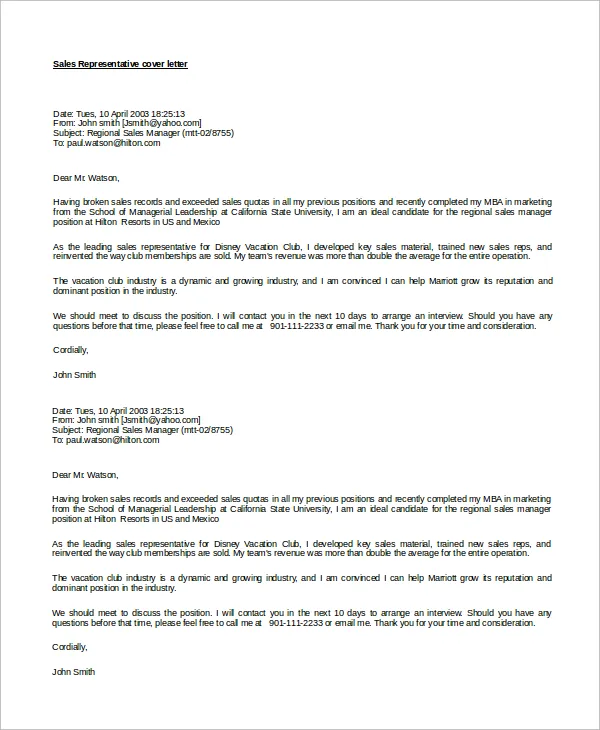
This sample is geared towards experienced sales representatives with a proven track record. It should begin by immediately highlighting the applicant’s most significant sales accomplishments. The body should then delve into specific sales strategies used, including quantifiable results, emphasizing experience with sales methodologies. Detail expertise in target markets, customer relationship management, and industry knowledge. The letter should demonstrate a deep understanding of the employer’s business and explain the applicant’s ability to significantly contribute to the company’s success. The closing should clearly state how the applicant’s experience translates into value for the company and invite the hiring manager to discuss the application further.
Sample Cover Letter 3 Sales Manager
This sample cover letter suits sales managers or those applying for leadership roles. The opening should focus on the applicant’s experience in managing and leading successful sales teams. Highlight the applicant’s ability to drive sales growth, increase revenue, and improve team performance. The body should emphasize skills in recruitment, training, and performance management. Focus on the applicant’s ability to implement effective sales strategies, analyze sales data, and identify opportunities for improvement. Include specific examples of how the applicant has successfully managed sales teams and delivered strong results. The closing should emphasize the applicant’s leadership skills, commitment to fostering a high-performance sales culture, and readiness to contribute to the organization’s overall growth.
Common Mistakes to Avoid
There are common pitfalls that can undermine your cover letter and reduce your chances of securing an interview. Understanding these mistakes can help you avoid them and improve the quality of your cover letter. These mistakes range from simple errors like typos and grammar errors to more complex issues such as providing too much or too little information. Failing to tailor your cover letter to the job description is another critical mistake. Remember, it is important to proofread meticulously and ensure you are targeting the specific needs of the employer and the requirements of the sales role. Attention to detail and personalization are keys to a successful cover letter.
Generic Cover Letters

Submitting a generic cover letter that could apply to any job is a critical mistake. Generic cover letters signal a lack of interest and understanding of the specific role and company. They fail to demonstrate that you have taken the time to tailor your application to the job. Generic cover letters fail to highlight your unique skills, experiences, and how these skills and experience align with the employer’s needs. Always tailor your cover letter to the specific job. Research the company, identify the key requirements, and showcase how your skills and experience match the requirements. This shows the hiring manager that you are genuinely interested in the opportunity and increases your chances of getting an interview.
Focusing on Yourself Too Much
While your cover letter should showcase your skills and experience, focusing too much on yourself can be a turnoff. The cover letter needs to clearly communicate your value and how you can contribute to the company’s success. It is always important to demonstrate your ability to meet the company’s needs. Instead of just stating what you want from the job, focus on what you can bring to the job. This is done by relating your skills to the company’s needs. Focus on what the company can gain by hiring you. Explain how your skills can help the company achieve its goals, solve its problems, and increase its revenue. Demonstrate that you understand the company’s challenges and are well-positioned to address them.
Ignoring the Job Description
Ignoring the job description is a serious mistake that can disqualify your application. The job description provides essential information about the position, including the required skills, qualifications, and experience. It is a roadmap that helps you tailor your cover letter to the specific requirements of the job. Failing to address the key requirements in the job description shows a lack of attention to detail. It also indicates that you are not a good fit for the role. When you write your cover letter, carefully review the job description and identify the most important requirements. Then, customize your cover letter to highlight how your skills and experience meet those requirements. Use keywords and phrases from the job description. This will ensure that your application gets noticed and increases your chances of an interview.
Proofreading Your Cover Letter

Typos, grammatical errors, and formatting inconsistencies can undermine your credibility and make a negative impression on the hiring manager. Proofreading is essential to ensure that your cover letter is free of errors and presents you in a professional light. Take the time to proofread your cover letter carefully before submitting it. Use a spell checker and grammar checker, but don’t rely on them entirely. Read your cover letter aloud to catch any awkward phrasing or sentence structure. Ask a friend or colleague to review your cover letter and provide feedback. This will help you identify any errors that you might have missed. A polished and error-free cover letter demonstrates your attention to detail and commitment to excellence, which are valuable qualities in any sales position.