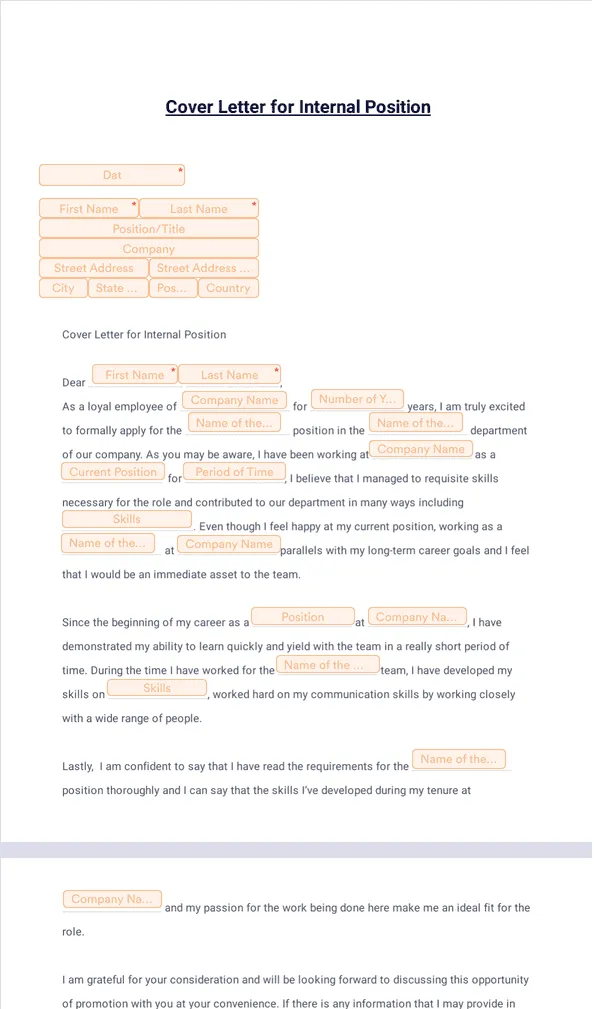
Understanding the Importance of a Resume Cover Letter for Internal Positions
Applying for an internal position can be a strategic career move, but it requires a different approach than external applications. One of the most critical components of this approach is the resume cover letter. While your internal reputation and work history are known, a well-crafted cover letter provides an opportunity to articulate your interest, highlight relevant skills, and demonstrate your suitability for the new role. It’s your chance to make a compelling case, setting you apart from other internal candidates and showcasing your value to the company in a new capacity. The cover letter acts as a bridge, connecting your past experiences with the requirements of the desired position and illustrating how you can contribute to the team’s success in a new role, solidifying your position and increasing your chances of success.
Highlighting Relevant Skills and Experience
Your resume already lists your skills and experience, but the cover letter is where you bring them to life. Focus on the skills and experiences most relevant to the internal position you’re pursuing. This means carefully reviewing the job description and identifying the key requirements. Then, connect your past accomplishments to those requirements, using specific examples and quantifiable results to demonstrate your capabilities. Don’t simply list your responsibilities; instead, showcase how you excelled in your previous roles and how those successes translate to the new position. This targeted approach helps the hiring manager quickly see your potential to succeed.
Identify Key Skills

Begin by carefully analyzing the job description to identify the skills the hiring manager is seeking. These might include technical skills, soft skills like communication and teamwork, or leadership abilities. Make a list of these key skills and consider how your previous experiences have allowed you to develop and refine them. Think about projects you’ve led, problems you’ve solved, and instances where you’ve demonstrated these skills effectively. This will provide the foundation for showcasing your abilities in the subsequent sections of your cover letter, making sure that the hiring manager sees that you are the best fit.
Showcasing Achievements and Quantifiable Results
Once you’ve identified the key skills, it’s time to provide concrete evidence of your abilities. This is where you highlight your achievements and quantify your results whenever possible. Instead of merely stating what you did, explain how your actions impacted the company. For instance, if you improved a process, mention the percentage by which you increased efficiency or the amount of money you saved. If you led a project, describe the outcomes and how they contributed to the organization’s goals. Providing measurable results demonstrates your value and makes a more compelling case than generic statements about your skills. It’s a way to show, not just tell, the hiring manager that you are a high-performing employee.
Tailoring Your Cover Letter to the Specific Position
A generic cover letter is unlikely to impress the hiring manager. To stand out, you must tailor your letter to the specific internal position. This requires researching the job description and the company culture to understand the role’s requirements and the organization’s values. By demonstrating that you understand the specific needs of the position and how your skills align, you increase your chances of getting noticed. Customization shows that you are truly interested and that you’ve taken the time to learn more about the opportunity, making you a more desirable candidate.
Researching the Position and Company Culture

Begin by thoroughly reviewing the job description. Pay close attention to the required skills, responsibilities, and any specific qualifications mentioned. Then, delve deeper by researching the company’s mission, values, and recent achievements. Understand the team you would be joining and the department’s goals. If possible, speak to current employees or use platforms like LinkedIn to learn more about the team and the hiring manager. This research will help you tailor your cover letter and demonstrate your understanding of the role and the company culture, making you a stronger candidate.
Matching Your Skills to the Job Requirements
Once you’ve researched the position, carefully match your skills and experience to the job requirements. Instead of simply listing your skills, connect them to the specific needs of the role. For each requirement, provide an example of how you have demonstrated that skill in the past. Use the STAR method (Situation, Task, Action, Result) to structure your examples and highlight your achievements. This helps the hiring manager quickly see how your skills align with the position and the value you can bring to the team. The goal is to create a clear, compelling narrative that proves you are a perfect fit for the role.
Expressing Your Interest and Enthusiasm
Internal applications often involve less formal communication than external ones, but expressing genuine interest and enthusiasm remains crucial. It demonstrates your commitment to the company and your desire to contribute to its success in a new capacity. Showing your passion for the role and the company can make a significant difference. Your enthusiasm will not only catch the hiring manager’s attention but also give them confidence that you are a motivated and engaged employee who will thrive in the new position.
Demonstrating Your Commitment to the Company

Use your cover letter to reinforce your commitment to the company’s mission and values. Explain why you are excited about this new opportunity and how it aligns with your career goals within the organization. This could involve mentioning specific projects you admire, highlighting your understanding of the company’s strategic direction, or expressing your eagerness to contribute to its continued success. It will strengthen your application and show that you are invested in the company’s long-term goals and are committed to helping it achieve them.
Mentioning Career Goals and Future Aspirations
Sharing your career goals and aspirations can showcase your ambition and your vision for the future. Explain how this internal position fits into your broader career path. Be specific about what you hope to achieve in the role and how it will contribute to your professional growth. This demonstrates your proactive approach to career development and helps the hiring manager understand your long-term commitment to the company. Show that you are not just looking for a job but a career and that this new role will help you reach your ambitions and make a meaningful contribution to the team.
Formatting and Proofreading Your Cover Letter
Presentation matters, so it’s essential to format and proofread your cover letter carefully. A well-formatted letter is easy to read and visually appealing, while flawless grammar and spelling demonstrate professionalism and attention to detail. Proofreading can eliminate any distracting errors, demonstrating your professionalism and ensuring your message is clear and well-received. This final step is critical for making a positive impression and ensuring that your cover letter effectively communicates your qualifications.
Using a Professional and Readable Format

Choose a clean, professional format that is easy to read. Use a standard font, such as Times New Roman or Arial, and ensure that the font size is appropriate (typically 11 or 12 points). Maintain consistent formatting throughout your letter, including headings, bullet points, and spacing. Avoid excessive use of bolding, italics, or underlining. Use clear headings to organize your thoughts, and keep paragraphs concise and focused. A well-formatted letter shows that you pay attention to detail and respect the hiring manager’s time. Also, ensure that the layout is visually appealing and easy to navigate, making your key points readily accessible.
Proofreading for Errors and Typos
Before submitting your cover letter, proofread it carefully for any errors in grammar, spelling, and punctuation. Read your letter multiple times, and consider asking a colleague or friend to review it as well. Even minor errors can detract from your credibility and make you appear less professional. Use spell-check and grammar-check tools, but don’t rely on them entirely. Sometimes these tools miss subtle errors. Proofreading is the final step in ensuring that your cover letter is polished and reflects positively on your skills and qualifications. It’s the last chance to make a great impression.
Follow-up and Next Steps
After submitting your cover letter and resume, take the initiative to follow up on your application. This demonstrates your continued interest in the position and your dedication to the company. Additionally, be prepared for the next steps in the hiring process, such as interviews and further assessments. Knowing the process and being ready to answer questions and discuss your qualifications will give you a significant advantage.