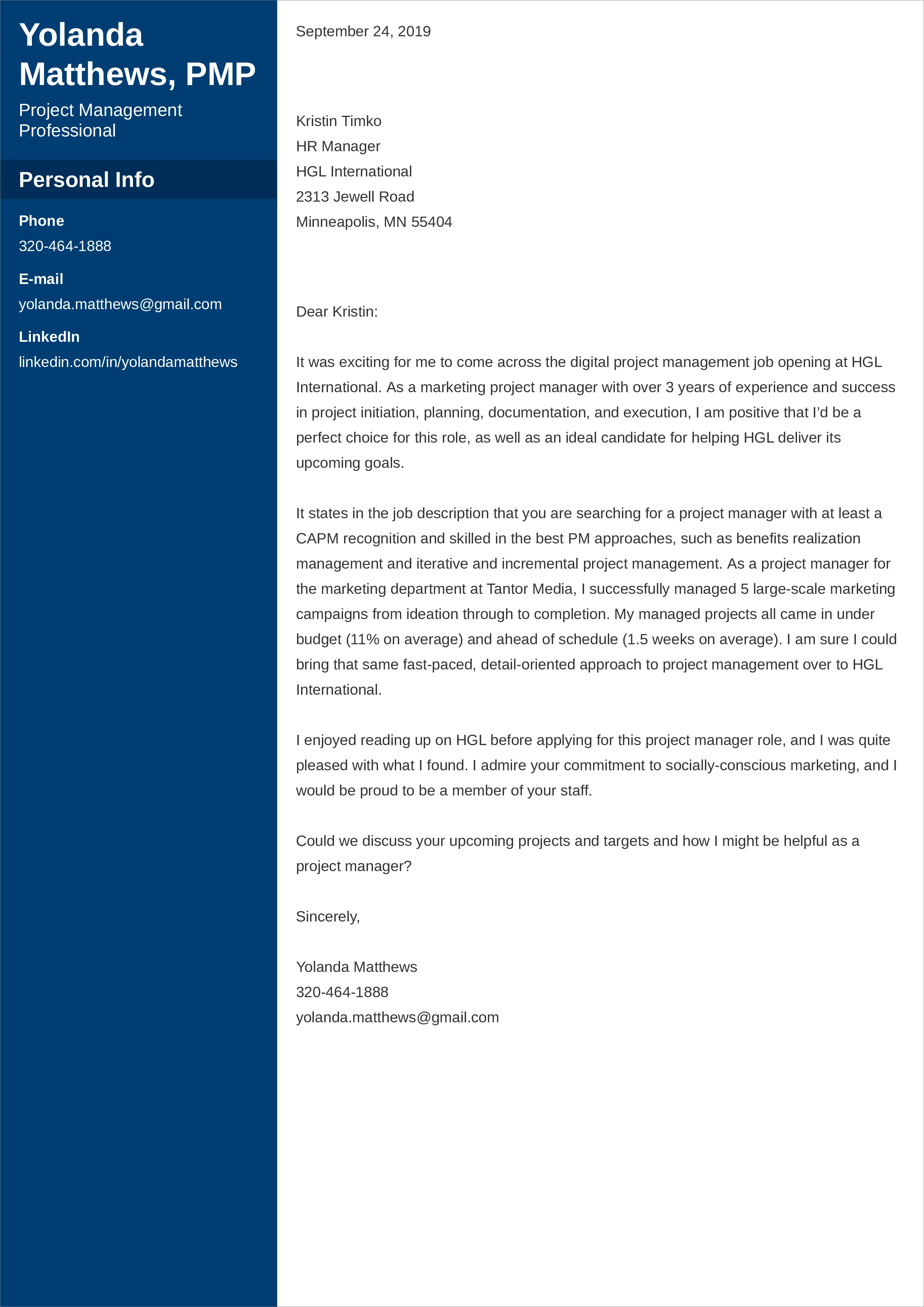
Highlighting Your Project Management Skills
Your cover letter is your first opportunity to make a strong impression on a potential employer. Project managers need a diverse skill set, so it is crucial to highlight the skills that make you an ideal candidate. Start by clearly stating your experience level and the types of projects you have managed. Identify your key strengths, such as budget management, risk assessment, stakeholder communication, and resource allocation. Show you understand the project manager’s role by incorporating keywords used in the job description. Tailor your letter to the specific job and company. Avoid generic statements and focus on the skills that align with the position requirements. This proactive approach demonstrates your understanding of the company’s needs and your ability to deliver results. This makes your application stand out from the competition.
Showcasing Relevant Experience
Experience is a critical component in securing a project manager role. When writing your cover letter, focus on highlighting your past project accomplishments. The letter must clearly show how your past experiences relate to the responsibilities outlined in the job description. Include details about the projects you have managed, including their scope, budget, and timeline. If possible, quantify your achievements by providing specific results, such as percentage improvements in efficiency, cost savings, or successful project delivery. Be concise, and provide examples that demonstrate your ability to successfully manage all phases of the project lifecycle. Show you have the skills to handle risks, manage change, and keep teams motivated. This helps employers quickly understand your experience and the value you bring to their organization.
Tailoring Your Cover Letter

A generic cover letter will not impress a hiring manager. Tailoring your cover letter to each specific job application is crucial for making a strong impression. Research the company and the specific project manager position. Learn about the company’s culture, values, and recent projects. Customize your letter to address the employer’s needs and concerns. This shows you’ve taken the time to understand the position and are genuinely interested in the company. Use the keywords mentioned in the job description. Show how your skills and experience align with the role’s requirements. Avoid using a one-size-fits-all approach; customize each letter to demonstrate your interest and show why you are the ideal candidate for that specific role. This attention to detail demonstrates your professionalism and enhances your chances of success.
Using Strong Action Verbs
Strong action verbs are essential for making your cover letter impactful and memorable. Action verbs paint a clear picture of your accomplishments. They make your descriptions more engaging and demonstrate your skills and experience in action. Examples of effective action verbs include “managed,” “led,” “coordinated,” “implemented,” “delivered,” “achieved,” “optimized,” and “streamlined.” Using these verbs shows what you have done and the results you have achieved. Review your cover letter carefully and replace weak or passive language with dynamic action verbs. This will help you showcase your capabilities and make your cover letter stand out, and will help to show you have excellent communication skills, which is a fundamental trait in project management.
Quantifying Your Achievements
Quantifying your achievements is one of the best strategies for demonstrating your value to a potential employer. Whenever possible, provide specific numbers and data to support your claims. Instead of saying “Improved project efficiency,” say “Improved project efficiency by 15% within six months.” Be specific, and use metrics to show the impact of your work. This might include reducing project costs, improving on-time delivery rates, increasing team productivity, or enhancing customer satisfaction. Using numbers makes your achievements more credible and memorable. The numbers demonstrate your ability to achieve tangible results and showcase your impact on past projects. This quantifiable evidence helps hiring managers understand your value and the potential you bring to their team.
Demonstrating Leadership and Communication Skills

Effective project managers must possess strong leadership and communication skills. When you are writing your cover letter, highlight these skills to show your ability to drive projects to success. Demonstrate your leadership skills by describing how you motivated your teams, resolved conflicts, and made crucial decisions. Show your communication skills by explaining how you effectively communicated with stakeholders, created status reports, and managed expectations. Provide specific examples of how you have successfully led and communicated throughout your projects. Mention any team-building initiatives you participated in or how you fostered positive relationships. These skills are vital to successful project outcomes, and showcasing these abilities will strongly impress the hiring manager.
Formatting and Proofreading
Your cover letter’s formatting and proofreading are key to creating a professional image. A well-formatted and error-free cover letter demonstrates attention to detail and professionalism. Use a clear and readable font, such as Arial or Times New Roman, and maintain consistent formatting throughout. Ensure proper spacing and alignment. Proofread your letter carefully for grammar, spelling, and punctuation errors. Ask a friend or colleague to review your letter before you submit it. A well-written and error-free cover letter shows that you take pride in your work and pay attention to detail. It shows that you are professional and dedicated to your career. The cover letter will reflect the quality of your work and commitment to excellence.
Including a Call to Action
Including a clear call to action is a key step in prompting the hiring manager to take the next step. Your call to action should make it clear what you want the hiring manager to do. Instead of ending your cover letter with a generic statement, ask for a specific action, such as an interview. You could write “I am eager to discuss my qualifications further in an interview,” or “I am available for an interview at your earliest convenience." Make it easy for the hiring manager to move forward in the hiring process. A strong call to action demonstrates your initiative and your interest in the position. It prompts a response and increases your chances of moving forward.
Highlighting Certifications and Training

Certifications and relevant training can significantly enhance your project management skills. If you have project management certifications, such as PMP or PRINCE2, be sure to highlight them in your cover letter. Mentioning these certifications demonstrates your commitment to professional development and adds credibility to your qualifications. Include any relevant training you have completed, such as courses in Agile methodologies, risk management, or project planning software. Show that you are a lifelong learner and stay up-to-date with industry best practices. Highlighting certifications and training will show potential employers that you have the skills and knowledge needed to excel in the role. This can provide a great advantage over other applicants.
Emphasizing Your Passion for Project Management
Expressing your passion for project management can make your cover letter more appealing to a potential employer. Convey your enthusiasm for the field by describing what excites you about project management. Talk about your passion for problem-solving, teamwork, and delivering successful outcomes. Show that you are genuinely interested in the role and the company. You can achieve this by researching the company and mentioning specific projects or goals that resonate with you. Make sure to show how your values align with the company culture. A cover letter that shows passion shows that you’re not just looking for a job but a career. This will make a powerful impression and differentiate you from other applicants.