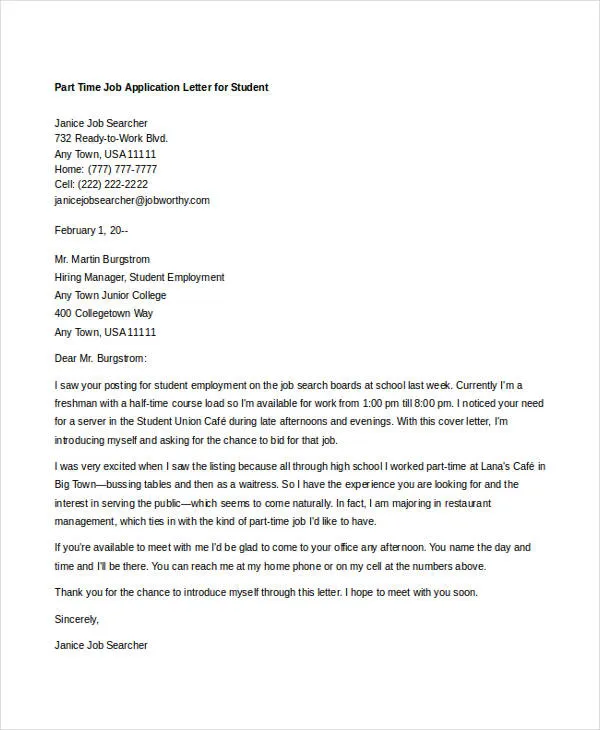
Understanding the Importance of a Cover Letter
In the competitive landscape of part-time job applications, especially for students, a well-crafted cover letter is your first chance to make a positive impression. It is more than just a formality; it’s a crucial tool that allows you to introduce yourself, showcase your personality, and highlight your relevant skills and experiences. This letter provides a platform to explain why you are the ideal candidate, going beyond the basic information found in your resume. A compelling cover letter can significantly increase your chances of securing an interview and ultimately, the job. It’s your chance to demonstrate your communication skills, your interest in the position, and your understanding of the company’s needs.
Why a Cover Letter Matters for Part-Time Jobs
For part-time positions, employers often receive numerous applications from students with varying levels of experience. A cover letter helps you stand out from the crowd. It enables you to address specific requirements listed in the job description and tailor your application to the role. A well-written letter shows that you’ve taken the time to understand the job and are genuinely interested in the opportunity. This level of effort demonstrates your professionalism and commitment, qualities that employers value. Moreover, a cover letter allows you to explain any gaps in your resume or address any potential concerns the employer might have, providing context to your application.
Highlighting Relevant Skills and Experiences

When writing your cover letter, it’s essential to focus on skills and experiences that are relevant to the specific part-time job you’re applying for. Think about the job requirements and identify transferable skills that align with them. For instance, if the job involves customer service, highlight any previous experience you have in dealing with the public, such as volunteering, retail work, or extracurricular activities. If the job requires organizational skills, mention any experience you have in managing projects, coordinating events, or keeping records. Quantify your achievements whenever possible. For example, instead of saying “Managed social media,” say “Increased social media engagement by 20% through targeted content.” Use action verbs to describe your skills, such as “managed,” “coordinated,” “created,” or “implemented.”
Tailoring Your Cover Letter to the Job Description
A generic cover letter is unlikely to impress an employer. Instead, tailor your letter to each job application. Carefully read the job description and identify the key requirements and desired qualities. Then, structure your letter to address these points directly. Use the language of the job description and mirror the tone of the company. Briefly explain how your skills and experiences match the specific requirements. Customize the letter to highlight the most relevant accomplishments and experiences. Showing that you have researched the company and understand their needs demonstrates your genuine interest and increases your chances of getting noticed. Avoid using a one-size-fits-all approach; each cover letter should be unique and specifically designed for the position.
Step-by-Step Guide to Writing a Winning Cover Letter
Formatting Your Cover Letter for Maximum Impact

The format of your cover letter plays a crucial role in making a positive first impression. Keep it clean, professional, and easy to read. Use a standard font such as Arial or Times New Roman, and use a font size between 10 and 12 points. Maintain consistent formatting throughout the document, including margins, spacing, and alignment. Use single spacing within paragraphs and double spacing between paragraphs. Ensure your letter is well-organized, with clear headings and subheadings if necessary. Keep the letter concise; aim for a single page. If the job application instructs you to submit the cover letter in a specific format, make sure you follow the instructions carefully. A well-formatted cover letter shows attention to detail and professionalism.
Key Elements to Include in Your Cover Letter
A winning cover letter must include several key elements to provide the employer with the necessary information. These elements ensure that your letter is well-structured, informative, and compelling. Ensure that all the required elements are included, that you are using correct grammar and punctuation, and that the tone of the letter matches the application requirements.
Contact Information and Salutation
Start with your contact information: your name, address, phone number, and email address. If possible, find out the hiring manager’s name and address your letter to them directly, using “Dear Mr./Ms./Mx. [Last Name].” If you cannot find the hiring manager’s name, use a professional salutation like “Dear Hiring Manager” or “Dear [Company Name] Team.” This shows that you have done your research and are paying attention to detail.
Opening Paragraph

Your opening paragraph should immediately grab the reader’s attention and state the purpose of your letter. Mention the specific job you are applying for and how you found the posting. Briefly highlight your key qualifications and express your enthusiasm for the opportunity. This paragraph sets the tone for the rest of the letter and should encourage the reader to continue reading.
Body Paragraphs
The body of your cover letter is where you demonstrate how your skills and experiences align with the job requirements. Use one or two paragraphs to highlight your most relevant qualifications. Provide specific examples that illustrate your achievements and skills. Quantify your achievements whenever possible to make a stronger impact. Tailor this section to match the job description and company needs, using relevant keywords and demonstrating your understanding of the role. This is your opportunity to convince the employer that you are a perfect fit for the position.
Closing Paragraph
In your closing paragraph, reiterate your interest in the position and thank the employer for their time and consideration. Express your availability for an interview and include a call to action, such as stating that you look forward to hearing from them soon. Reiterate your contact information and maintain a professional and enthusiastic tone throughout.
Proofreading and Editing Your Cover Letter

Before submitting your cover letter, proofread it carefully for any grammatical errors, spelling mistakes, or typos. These errors can undermine your credibility and make a negative impression on the employer. Use a spell checker and grammar checker, but don’t rely on them entirely; they may not catch all errors. Read your letter aloud to catch any awkward phrasing or sentences that don’t flow well. Consider asking a friend, family member, or career counselor to review your cover letter for feedback. A fresh pair of eyes can often catch errors you might have missed. Ensure your cover letter is well-formatted, with consistent fonts, spacing, and margins. A polished cover letter shows that you pay attention to detail and are committed to presenting yourself professionally.
Common Mistakes to Avoid
Avoid common mistakes that can damage your chances of getting hired. Do not submit a generic cover letter; always tailor your letter to the specific job description and company. Don’t include irrelevant information that doesn’t relate to the job requirements. Steer clear of excessive jargon or overly complex language; keep your writing clear and concise. Avoid negative statements or complaints about previous employers or experiences. Never lie or exaggerate your skills and experiences; honesty is always the best policy. Be sure to proofread your letter carefully to avoid any grammatical errors or typos. Finally, avoid using clichés or overused phrases; strive for original and engaging writing.
Using Action Verbs Effectively
Action verbs can make your cover letter more dynamic and engaging. Start your sentences with strong action verbs to describe your skills and experiences. Examples of effective action verbs include “managed,” “led,” “coordinated,” “created,” “implemented,” “achieved,” “improved,” and “organized.” Use these verbs to show what you have done in previous roles or experiences, and to highlight your accomplishments. For instance, instead of saying “Responsible for customer service,” say “Provided exceptional customer service, resolving issues efficiently and effectively.” Action verbs make your cover letter more compelling and help you stand out from other applicants.
Showcasing Your Enthusiasm and Availability

Employers appreciate candidates who demonstrate genuine enthusiasm for the job and the company. Express your interest in the position and the opportunity to contribute to the team. Show that you have researched the company and understand its mission and values. Mention specific aspects of the job that excite you and explain why you are drawn to the opportunity. Clearly state your availability for an interview and your willingness to start work. Be proactive and mention any specific times or days you are available to work. Demonstrating your enthusiasm and availability increases your chances of being considered for the position. Make it clear that you are eager to learn and contribute to the company’s success, and you are ready to take on new challenges and responsibilities.
By following these guidelines, you can create a compelling cover letter that showcases your qualifications and increases your chances of landing a part-time job. Remember to tailor your letter to each job, proofread it carefully, and highlight your enthusiasm and availability. Good luck with your job search!