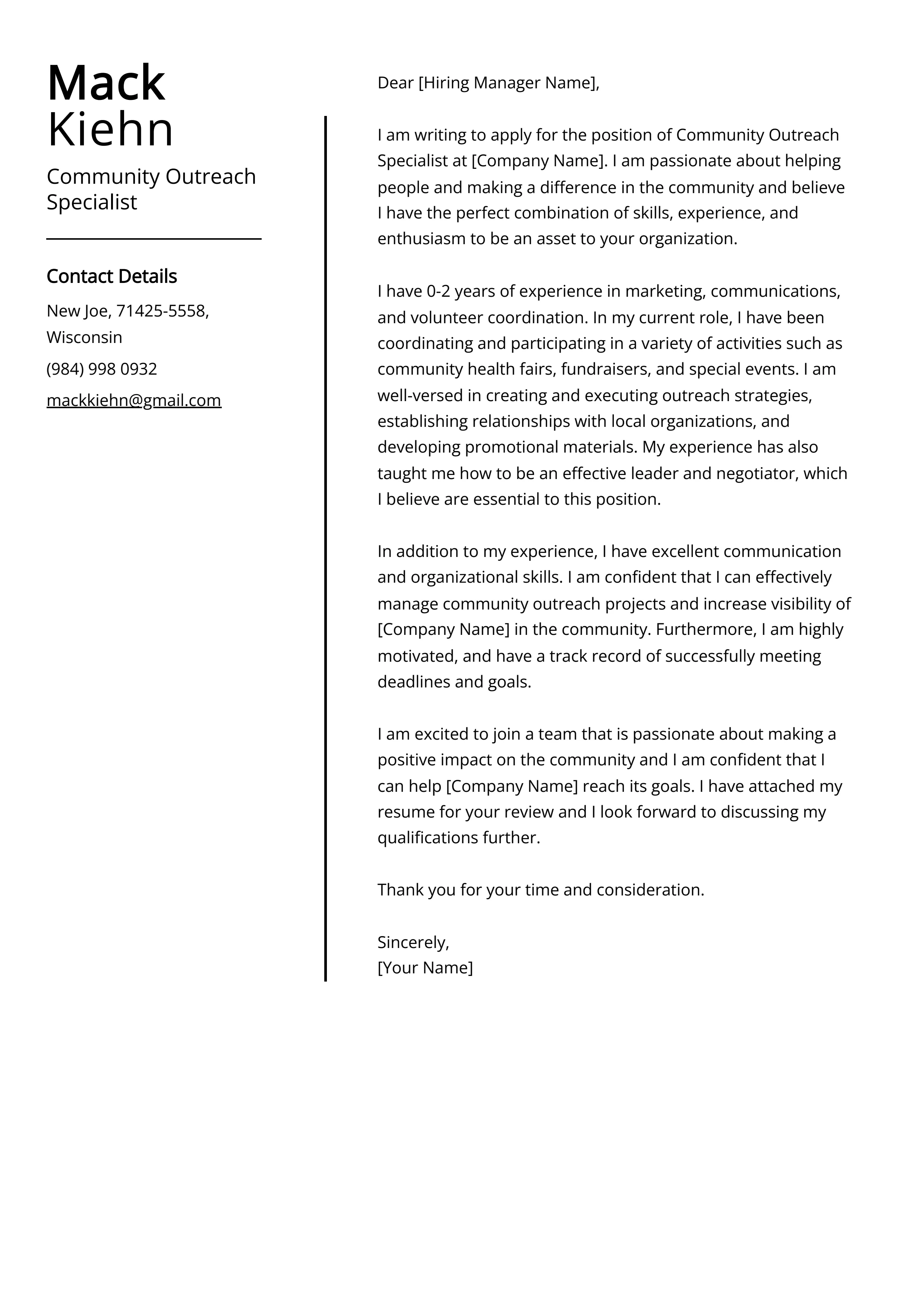
Why You Need a Standout Outreach Worker Cover Letter
In the competitive field of outreach work, a compelling cover letter is your first opportunity to make a positive impression and secure an interview. It’s more than just a formality; it’s your chance to showcase your qualifications, skills, and passion for the role. A well-crafted cover letter can set you apart from other applicants and significantly increase your chances of getting hired. It’s a crucial document for conveying your suitability to the hiring manager.
Understanding the Role of an Outreach Worker
Outreach workers play a vital role in connecting individuals and communities with essential resources, services, and support. They often work with vulnerable populations, addressing issues such as homelessness, poverty, mental health, and substance abuse. Effective outreach involves building trust, providing information, and advocating for the needs of those they serve. Understanding the nuances of this role is essential for tailoring your cover letter effectively.
Key Responsibilities and Skills

Outreach workers perform a variety of tasks. These may include conducting needs assessments, providing direct support, linking individuals to services, and advocating on their behalf. Critical skills for this position include excellent communication and interpersonal skills, empathy, cultural sensitivity, and the ability to work independently and as part of a team. Your cover letter should highlight these skills and demonstrate how your experience aligns with these requirements, emphasizing any specific skills relevant to the job description, such as crisis intervention or program management.
The Importance of a Cover Letter
While a resume provides a summary of your professional history, a cover letter allows you to elaborate on your qualifications, explain your motivation for applying, and express your enthusiasm for the organization. It’s where you can tell your story and connect your skills and experience to the specific requirements of the job. A well-written cover letter can provide context and demonstrate your understanding of the role and the organization’s mission, making your application more compelling.
Essential Elements of a Compelling Cover Letter
Contact Information and Date

At the top of your cover letter, include your contact information (name, address, phone number, and email address) and the date. This ensures the hiring manager can easily reach you. Ensure this information is accurate and professional, as it’s a basic but important element.
Personalized Greeting
Address the hiring manager by name whenever possible. Research the company to identify the hiring manager’s name and title. A personalized greeting shows that you’ve taken the time to learn about the organization and are genuinely interested in the role. If you are unable to find a specific name, you can use a professional greeting such as ‘Dear Hiring Team’.
Highlighting Relevant Experience
Focus on the experience and skills most relevant to the outreach worker position. Select experiences that showcase your abilities to work with diverse populations, manage crises, and provide support services. Instead of simply listing your responsibilities, describe your accomplishments and how you applied your skills in previous roles. Be sure to correlate your previous experiences with the needs of the organization. You must relate your experience to the requirements of the job description.
Quantifying Achievements

Whenever possible, quantify your achievements with specific data. For example, instead of saying ‘Improved client outcomes,’ say ‘Improved client outcomes by 15% through implementing a new support strategy.’ This provides concrete evidence of your effectiveness and makes your accomplishments more impactful. Using measurable results will add a layer of credibility to your statements.
Demonstrating Soft Skills
Outreach work requires a variety of soft skills. Highlight your communication, empathy, problem-solving, and conflict-resolution abilities. Provide examples of how you’ve used these skills in past roles or volunteer experiences. Show the hiring manager that you possess the necessary interpersonal skills to succeed in the role. Remember that in outreach work, building relationships is essential, so emphasizing your ability to work effectively with others is key.
Showcasing Passion and Enthusiasm
Express your genuine interest in the role and the organization’s mission. Explain what motivates you to work in outreach and what makes you passionate about helping others. Your enthusiasm can be contagious and can make you stand out from other candidates. Let your personality shine through while maintaining professionalism. This will help hiring managers see you as someone who genuinely cares about making a difference.
Expressing Your Understanding of the Organization

Demonstrate that you understand the organization’s mission, values, and the specific needs of the community it serves. Research the organization and tailor your cover letter to reflect this knowledge. This shows that you’re not just sending out a generic application but are genuinely interested in working for that specific organization. Show that you share their values and are invested in their goals. This makes your cover letter more persuasive.
Call to Action and Closing
End your cover letter with a clear call to action. Express your interest in an interview and thank the hiring manager for their time and consideration. Include a professional closing, such as ‘Sincerely’ or ‘Best regards,’ followed by your name. Make it clear that you are eager to discuss your qualifications further and that you are available at their convenience. This concludes your letter effectively.
Formatting and Proofreading Your Cover Letter
Font and Style Guidelines

Choose a professional font, such as Times New Roman, Arial, or Calibri, in a readable size (11 or 12 points). Use clear formatting, including appropriate spacing and paragraph breaks, to make your cover letter easy to read. A well-formatted document demonstrates attention to detail, which is essential for an outreach worker. Make sure it looks clean and organized.
Proofreading for Errors
Proofread your cover letter carefully for any typos, grammatical errors, or punctuation mistakes. Consider having a friend or colleague review it as well. Errors can undermine your credibility and may lead to your application being overlooked. A polished, error-free cover letter makes a positive impression.
Tailoring Your Cover Letter
Researching the Organization
Before writing your cover letter, research the organization thoroughly. Visit their website, read their mission statement, and understand their values. This will help you tailor your cover letter to align with their specific needs and demonstrate your genuine interest in working for them. Understanding the organization is important to show you are serious about the role.
Customizing for Each Application
Customize your cover letter for each job application. Use keywords from the job description and highlight the skills and experiences that are most relevant to the position. Generic cover letters are less likely to impress hiring managers. By tailoring your cover letter, you show that you understand the specific requirements of the job and are genuinely interested in the opportunity. This is a key aspect of writing a successful cover letter.
Common Mistakes to Avoid
Generic Cover Letters
Avoid sending generic cover letters that could be sent to any organization. Tailor your letter to the specific job and the organization. Show that you understand their mission, values, and the needs of the community they serve. A generic letter suggests a lack of effort and genuine interest in the role. Be specific to show you want the job.
Typos and Grammatical Errors
Typos and grammatical errors can damage your credibility and make you appear unprofessional. Always proofread your cover letter carefully. Have someone else review it as well, as a fresh pair of eyes can often catch mistakes you may have missed. Attention to detail is crucial in outreach work, so ensure your cover letter reflects this.
Lack of Enthusiasm
Let your passion and enthusiasm for outreach work shine through. Avoid writing a cover letter that sounds dull or uninspired. Explain why you’re interested in the role and what motivates you to help others. Your enthusiasm is contagious and can make a positive impression on the hiring manager. It will help you stand out from other candidates.
Tips for Outreach Worker Cover Letter Success
Crafting a compelling cover letter requires effort and attention to detail, but the investment pays off. By following these guidelines, you can create a cover letter that showcases your qualifications, skills, and passion for outreach work. Focus on highlighting your relevant experiences, quantifying your achievements, demonstrating your soft skills, and expressing your genuine enthusiasm for the role and the organization. Tailor your cover letter to each job application and always proofread it carefully. Following these tips can significantly increase your chances of getting hired. Your dedication to detail and passion for the job will set you apart.