Why a Nursing School Cover Letter Matters
A nursing school cover letter is your first, and often only, opportunity to make a strong impression on the admissions committee. Unlike your resume, which provides a factual account of your qualifications, a cover letter allows you to showcase your personality, express your passion for nursing, and explain why you’re the ideal candidate. It’s a chance to connect your experiences and aspirations, revealing the ‘why’ behind your application. A well-crafted cover letter can significantly boost your chances of acceptance, setting you apart from other applicants with similar academic backgrounds. It provides context, demonstrates your communication skills, and highlights your genuine interest in the nursing profession, making it an invaluable part of your application package. Remember, this is your chance to shine and demonstrate why you are the perfect fit for their nursing program.
Highlighting Your Nursing Aspirations
Begin by clearly stating your passion for nursing and your specific career goals. What area of nursing excites you most? Are you drawn to critical care, pediatrics, or perhaps public health? Detail why you’re choosing this path and what motivates you to become a nurse. This section should demonstrate your understanding of the nursing profession and your long-term ambitions within the field. Illustrate how a nursing education will help you achieve your objectives. Connect your personal experiences, volunteer work, or any observations that have fueled your desire to pursue nursing. Let the admissions committee envision your future contributions to the healthcare field. Express your enthusiasm for the program and how it aligns with your career objectives.
Showcasing Relevant Experiences

Highlight experiences that demonstrate your suitability for nursing. This includes healthcare-related work, volunteer roles, and any experiences where you provided care, showed compassion, or worked in a team environment. Quantify your accomplishments whenever possible. For example, instead of saying “assisted patients,” describe how you “assisted 20+ patients daily with daily living activities.” Use the STAR method (Situation, Task, Action, Result) to tell compelling stories about your experiences. Briefly describe the situation, outline your task, explain the action you took, and detail the result. This provides concrete evidence of your skills and abilities, showcasing your potential to succeed in nursing school and beyond. Mention any specific skills learned or challenges overcome, proving your resilience and adaptability.
Tailoring Your Letter
Customize your cover letter for each nursing school you apply to. Research the program’s values, mission, and any specific areas of focus. Refer to the school’s unique aspects, such as its clinical partnerships, research opportunities, or specializations offered, and explain why these resonate with your interests. Show that you understand the program and how it aligns with your goals. Mention faculty members, programs, or initiatives that particularly interest you, demonstrating your genuine interest. Tailoring your letter shows that you’ve invested time and effort, indicating a stronger commitment to the school, increasing the chances of acceptance. Make sure your cover letter demonstrates a clear understanding of the school and its unique offerings.
Structuring Your Nursing School Cover Letter
Header and Contact Information

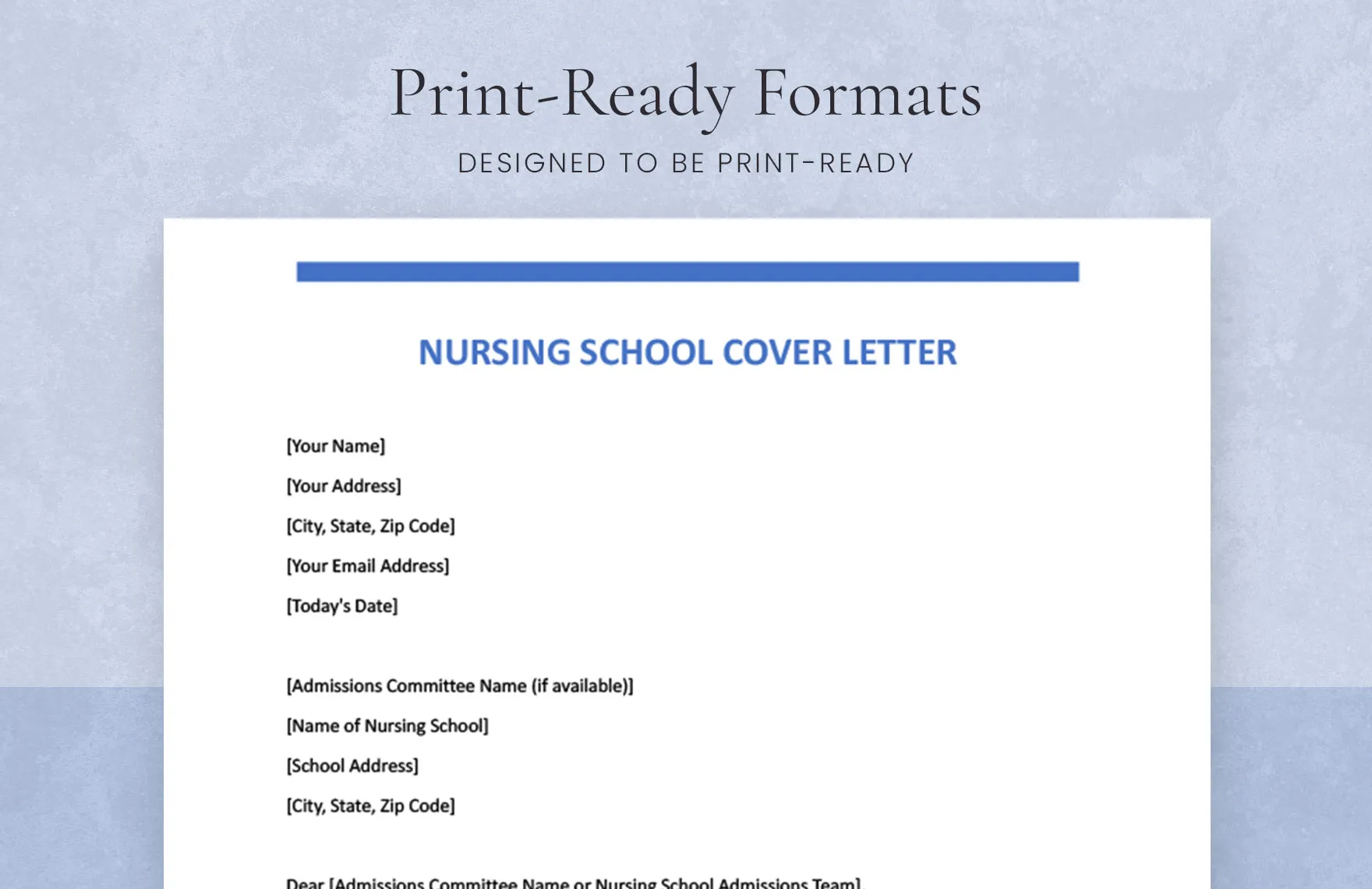
Begin with your full name, address, phone number, and email address. Include the date and the name and title of the admissions officer or the person to whom you are addressing the letter, if known. This section ensures that the admissions committee knows how to contact you. Use a professional and easily readable font, maintaining a clean and organized layout. Ensure all information is current and correct. Proofread carefully to avoid any errors in the header, as this is the first thing the reader will see.
Opening Paragraph
Start with a strong opening that grabs the reader’s attention. Clearly state the position you are applying for – admission to the nursing program. Briefly mention where you found out about the program or what initially sparked your interest in the school. Express your enthusiasm for the opportunity and make it clear why you are writing. The opening paragraph sets the tone for the entire letter and gives the admissions committee an initial impression of your personality and motivation. Be direct, concise, and enthusiastic about pursuing a nursing education.
Body Paragraphs
The body paragraphs are where you elaborate on your qualifications, experiences, and aspirations. Use the STAR method to tell stories that illustrate your skills and qualities. Explain how your experiences have prepared you for the rigors of nursing school and demonstrate your understanding of the nursing profession. Highlight any relevant skills, such as communication, empathy, critical thinking, or teamwork. Show how your past experiences align with the nursing school’s values and mission. This is the section to demonstrate your fit with the program and the nursing profession.
Closing Paragraph

Reiterate your interest in the program and summarize your key qualifications. Thank the admissions committee for their time and consideration. Include a call to action, such as expressing your availability for an interview. Express your enthusiasm and optimism for the opportunity. Ensure a professional and confident closing. Review the entire letter to ensure it makes a lasting impression.
Proofreading and Editing
Before submitting, carefully proofread your cover letter. Check for grammatical errors, spelling mistakes, and typos. Ensure that your letter flows logically and that your ideas are clear and concise. Read your cover letter aloud to check for awkward phrasing. Ask a friend, family member, or career counselor to review your letter for feedback on content, clarity, and style. A well-proofread cover letter demonstrates your attention to detail and professionalism. A polished cover letter will show that you take your application very seriously.
Key Skills to Emphasize in Your Cover Letter
Clinical Skills

If you have direct patient care experience, highlight skills such as taking vital signs, administering medications, assisting with medical procedures, or providing wound care. Describe how you apply clinical knowledge to patient care. Mention any specific certifications or training you’ve received, such as CPR, First Aid, or CNA certification. Focus on your ability to work effectively in a clinical setting, providing detailed patient care while adhering to clinical protocols and safety guidelines.
Soft Skills
Emphasize soft skills such as communication, empathy, critical thinking, problem-solving, and adaptability. Give specific examples of how you’ve demonstrated these skills. Explain how you’ve handled difficult situations, resolved conflicts, or provided emotional support to patients and their families. Highlight your ability to work collaboratively as part of a healthcare team. Demonstrate your emotional intelligence and ability to build rapport. Demonstrate your commitment to patient-centered care.
Leadership and Teamwork
Highlight experiences where you’ve demonstrated leadership, such as leading a team, organizing a project, or taking initiative. Provide examples of how you have worked effectively as part of a team. Describe your role in collaborative efforts, your contributions, and the outcome. Showcase your ability to motivate others, mediate conflicts, and achieve common goals. Showcasing your ability to work well with others and lead effectively is very important.
Formatting and Design Tips

Font and Readability
Choose a professional and easy-to-read font, such as Times New Roman, Arial, or Calibri. Use a font size of 11 or 12 points for the body text. Ensure consistent formatting throughout the document, with clear headings and subheadings to break up the text. Use proper spacing between paragraphs and sections. A well-formatted cover letter is easier to read and shows your attention to detail.
Length and Tone
Keep your cover letter concise, ideally one page in length. Use a professional and enthusiastic tone throughout the letter. Avoid using overly casual language or slang. Be authentic and genuine, and let your passion for nursing shine through. Maintain a positive and confident tone. Ensure the tone of your cover letter is appropriate for a professional document.
Final Checklist before Submission

Before submitting your cover letter, review this checklist: Did you tailor your letter to the specific nursing school? Did you proofread for any grammatical errors or typos? Did you highlight relevant experiences and skills? Did you use a professional and easy-to-read format? Did you include a strong opening and closing? Did you ask someone else to review your letter? Ensure your cover letter is well-written, personalized, and showcases your unique qualifications and passion for nursing. Your cover letter is your personal introduction. Make it count!