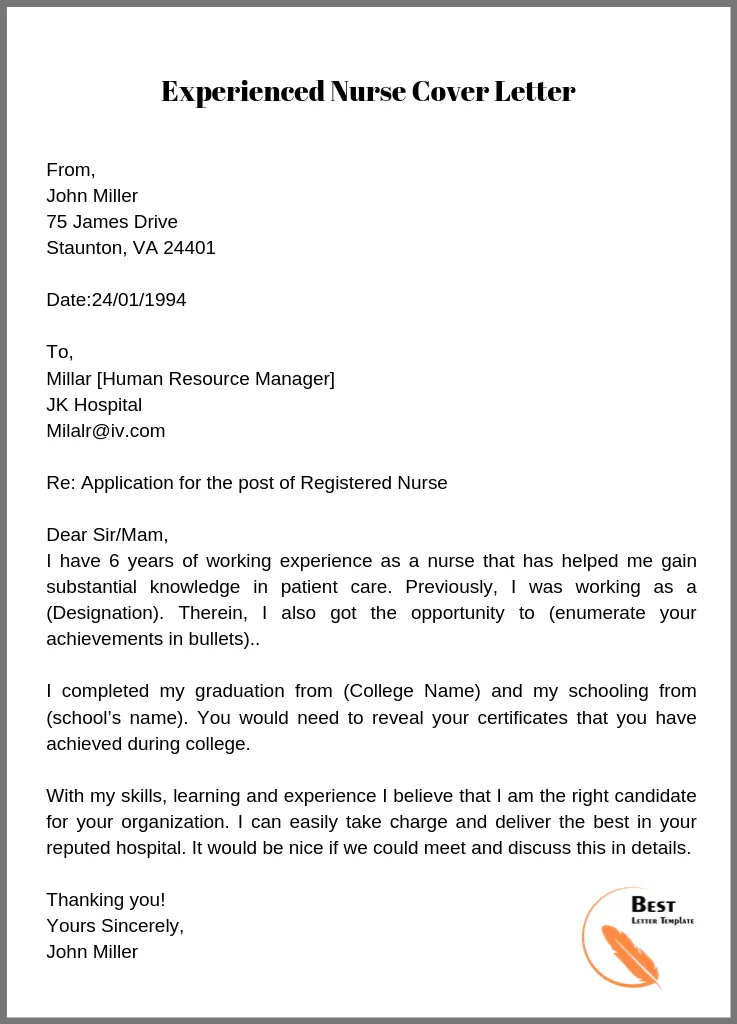
What is a Nursing Cover Letter?
A nursing cover letter is a crucial document that accompanies your nursing resume when applying for a job. It serves as your introduction to the hiring manager, providing an opportunity to highlight your qualifications, skills, and experiences in a way that a resume alone cannot. Unlike a resume, which provides a factual overview of your career, a cover letter allows you to express your personality, enthusiasm, and explain why you are the perfect fit for the specific nursing position. Think of it as your personal sales pitch, designed to persuade the employer to invite you for an interview and ultimately offer you the job. A well-crafted nursing cover letter can significantly increase your chances of getting noticed and securing your dream job in the healthcare field. The cover letter provides a space for you to expand on your resume and to showcase your unique abilities.
Key Components of a Nursing Cover Letter
A strong nursing cover letter is composed of several key components that work together to create a compelling and professional document. Understanding these elements is essential for crafting a cover letter that effectively showcases your qualifications and increases your chances of landing an interview. Each section plays a specific role in presenting you as a suitable candidate. Adhering to these core components will make your cover letter stand out from the competition.
Header Section

The header section of your nursing cover letter sets the tone for professionalism and provides essential contact information. It’s the first thing the hiring manager will see, so it needs to be clear, accurate, and well-formatted. A well-designed header immediately communicates your attention to detail and organizational skills, which are crucial qualities for any nurse. Make sure it’s easy to read and includes all necessary information.
Contact Information
Include your full name, address, phone number, and professional email address. Ensure your email address is appropriate and professional-sounding. Avoid using nicknames or informal addresses. Double-check all contact details for accuracy to ensure the hiring manager can easily reach you. This simple step prevents any potential miscommunication or delays in the hiring process. It is important to make it simple to reach you.
Date and Recipient Information
Beneath your contact information, include the date. Then, provide the hiring manager’s name, title, and the name and address of the healthcare facility. If you can’t find a specific name, research the hiring manager or use a general title like ‘Hiring Manager’ or ‘Nurse Recruitment Team.’ This personalized touch demonstrates your research and initiative and shows you are addressing the letter to a specific individual. Accuracy is critical to avoid any confusion or potential errors.
Salutation

Start your cover letter with a professional salutation. Using the hiring manager’s name is ideal; it adds a personal touch. If you don’t know the name, ‘Dear Hiring Manager’ or ‘Dear Nurse Recruitment Team’ are acceptable. Avoid generic greetings like ‘To Whom It May Concern,’ as they appear impersonal. This sets a professional tone right from the start, establishing a connection with the reader. Make sure you spell the name correctly!
Body Section
The body of your nursing cover letter is the heart of your application. It’s where you make your case for why you are the ideal candidate. The body of your letter should consist of three main paragraphs, each serving a specific purpose: grabbing attention, highlighting skills and experience, and showcasing your passion for nursing. Each paragraph should be concise, compelling, and focused on the employer’s needs. This section should be tailored to the specific job and facility.
First Paragraph, Grab Attention
Begin with a strong opening that immediately grabs the hiring manager’s attention. State the position you’re applying for and where you saw the job posting. Briefly mention something that makes you stand out, such as a specific skill or achievement relevant to the role. The goal is to pique their interest and encourage them to read on. You might open with a strong statement about your commitment to patient care or a brief mention of a key accomplishment.
Highlight Key Skills and Experience

In the subsequent paragraphs, highlight the skills and experiences that align with the job requirements. Refer to the job description and identify the key qualifications the employer is seeking. Provide specific examples of how your skills and experiences have benefited previous employers or patients. Use action verbs to describe your responsibilities and accomplishments, and focus on quantifiable results whenever possible. This section is where you demonstrate your ability to meet the employer’s needs.
Quantify Achievements with Numbers
Whenever possible, use numbers to quantify your achievements. Instead of saying ‘Improved patient outcomes,’ state ‘Improved patient outcomes by 15% through implementing a new care plan.’ This gives the hiring manager a clear understanding of your impact and provides concrete evidence of your skills and abilities. Quantifiable results are more persuasive and show that you can deliver tangible results. Include specific data to support your claims whenever you can.
Showcase Relevant Certifications
Nursing positions often require specific certifications. Make sure to include any relevant certifications, such as BLS, ACLS, or specialized nursing certifications, in your cover letter. List the certifications and the dates of their issuance or renewal. Highlighting these credentials demonstrates that you meet the necessary requirements for the job and are committed to maintaining your professional qualifications. This is a critical part of showing you are qualified.
Address the Employer’s Needs

Focus your cover letter on the employer’s needs and how you can meet them. Research the healthcare facility to understand its mission, values, and priorities. Tailor your cover letter to address these specific needs and explain how your skills and experiences align with their goals. This approach shows that you understand the facility and are genuinely interested in contributing to its success. Show them that you can help them achieve their goals.
Tailor the Letter to the Job Description
Customize your cover letter for each job application. Use the job description as a guide and highlight the skills and experiences that are most relevant to the position. Avoid using a generic cover letter; instead, tailor it to reflect the specific requirements and responsibilities of the job. This shows that you have carefully considered the role and are genuinely interested in it. Taking this extra step significantly increases your chances of being selected for an interview.
Emphasize your Passion for Nursing
Convey your genuine passion for nursing and patient care. Share what motivates you and what you find rewarding about the profession. This will help you create an emotional connection with the hiring manager, making them more likely to remember you. Talk about what inspires you to be a nurse. Show your commitment to providing excellent care. Your enthusiasm will help you stand out from other candidates.
Closing Section

The closing section of your cover letter is your opportunity to express enthusiasm for the position and encourage the hiring manager to take action. This is where you summarize your key qualifications and reiterate your interest in the job. A well-written closing can be the final push that convinces the employer to invite you for an interview. Make sure you leave a positive and lasting impression.
Express Enthusiasm
Reiterate your enthusiasm for the position and the healthcare facility. Express your excitement about the opportunity to contribute to their team and the care of their patients. This reinforces your interest and commitment, leaving a positive impression on the hiring manager. Mention how excited you are to be considered for the role and how it aligns with your career goals.
Call to Action
Include a call to action that encourages the hiring manager to take the next step. Express your availability for an interview and provide your contact information again. Make it easy for the hiring manager to reach you. Thank them for their time and consideration. A clear call to action makes it easy for them to take the next step in the hiring process.
Proofread and Edit

Before submitting your cover letter, proofread and edit it carefully. Check for any grammatical errors, spelling mistakes, and formatting inconsistencies. Ask a friend or mentor to review your cover letter for a fresh perspective. A polished and error-free cover letter demonstrates your attention to detail and professionalism. A simple error can make you look bad. Take the time to check it thoroughly.
Common Mistakes to Avoid in Nursing Cover Letters
Avoid common mistakes that can undermine your cover letter and reduce your chances of getting an interview. One of the biggest mistakes is using a generic cover letter that isn’t tailored to the specific job. Another mistake is focusing too much on your needs rather than the employer’s. Other common errors include grammatical errors, typos, and a lack of enthusiasm. By avoiding these mistakes, you can significantly improve the impact of your nursing cover letter and increase your chances of success.