5 Tips for a Stellar New Grad Nursing Cover Letter
Embarking on your nursing career as a new graduate is an exciting journey. A well-crafted cover letter is your first opportunity to make a strong impression on potential employers. It’s a crucial document that can set you apart from other applicants and highlight your qualifications and passion for nursing. This guide provides five essential tips to help you create a compelling nursing cover letter template tailored for new graduates, increasing your chances of landing your dream job. By focusing on these key areas, you’ll be able to showcase your skills, experiences, and enthusiasm for the nursing profession, making you a standout candidate in the competitive job market. Remember, a polished and personalized cover letter is a powerful tool that can open doors to rewarding career opportunities.
Highlight Your Education and Credentials
As a new graduate, your educational background and credentials are central to your cover letter. Clearly state your degree, the name of your nursing school, and your graduation date. Mention any honors, awards, or academic achievements that demonstrate your dedication and excellence in your studies. Furthermore, if you have passed your NCLEX exam, make sure to include that information prominently, as it is a critical requirement for nursing positions. If you have any certifications, such as BLS or ACLS, include those as well. This section should quickly and effectively communicate that you possess the foundational knowledge and skills required to practice nursing. By emphasizing your educational accomplishments, you build credibility and demonstrate your readiness to start your career.
Detail Your Clinical Experiences

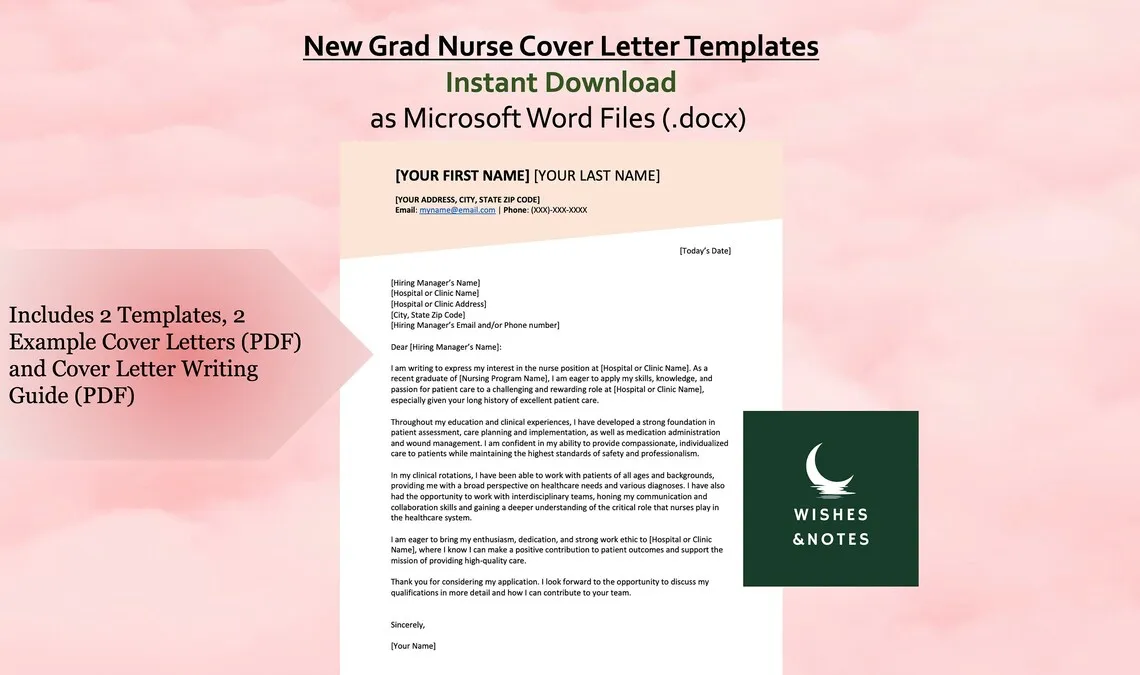
Clinical experiences are the cornerstone of your preparation as a new nurse, so it’s critical to provide details about your clinical rotations in your cover letter. Specify the units or specialties where you gained experience, such as medical-surgical, critical care, pediatrics, or mental health. For each rotation, briefly describe your responsibilities, the patient populations you worked with, and the types of procedures or skills you performed. Focus on experiences that align with the job you are applying for. This shows that you have practical experience and have encountered different healthcare settings. By sharing relevant details about your clinical rotations, you demonstrate your ability to handle diverse patient needs and adapt to various healthcare environments. Make sure to use the nursing cover letter template to showcase your clinical experiences.
Quantify Your Accomplishments
Whenever possible, quantify your accomplishments with specific examples and measurable results. Instead of saying you “assisted with patient care,” describe how many patients you cared for daily, the tasks you performed, and the impact of your actions. If you implemented a new process or improved patient outcomes, provide the data. For example, you might state that you “reduced patient falls by 15% through the implementation of a new fall prevention protocol.” Use numbers, percentages, and concrete metrics to demonstrate your effectiveness and the value you brought to your clinical rotations. Quantifying your achievements makes your cover letter more persuasive and shows employers that you are results-oriented and capable of making a positive impact in their organization. This adds weight to your claims and gives potential employers a clear picture of your capabilities, showcasing your abilities and highlighting your previous successes.
Showcase Your Skills and Abilities
Beyond your clinical experiences, highlight the skills and abilities that make you a strong nursing candidate. Mention both hard skills, such as medication administration, wound care, and electronic health record (EHR) proficiency, and soft skills, like communication, teamwork, critical thinking, and problem-solving. Tailor this section to the specific requirements of the job description. Use keywords from the job posting to ensure your cover letter resonates with the employer. Provide examples of how you have demonstrated these skills in your clinical rotations or other relevant experiences. For example, you could state how you effectively communicated with patients and families or collaborated with a multidisciplinary team to improve patient outcomes. Showcasing your skills demonstrates that you are well-rounded and possess the necessary competencies to excel in the role.
Emphasize Your Passion for Nursing

A cover letter is not just a summary of your qualifications; it’s also a chance to showcase your passion for nursing. Explain why you chose nursing as a career and what motivates you to provide compassionate care. Share any personal experiences or values that drive your commitment to the profession. Discuss your interest in the specific specialty or unit to which you are applying, and why you are drawn to that area of practice. Highlight your understanding of the nursing profession’s challenges and the values of patient-centered care, teamwork, and continuous learning. By expressing your genuine enthusiasm, you demonstrate that you are more than just a qualified candidate; you are someone who is truly dedicated to the well-being of patients and is eager to contribute to a positive work environment. A heartfelt expression of your passion can leave a lasting impression and distinguish you from other applicants.
Proofread and Customize Your Letter
Before submitting your cover letter, meticulously proofread it for any grammatical errors, typos, or inconsistencies. Errors can undermine your credibility and create a negative impression. Ensure your letter is well-organized, easy to read, and free of jargon. Furthermore, customize your cover letter for each job application. Avoid sending a generic letter; instead, tailor it to the specific requirements and values of each potential employer. Research the organization and the position, and highlight how your skills and experiences align with their needs. Addressing the specific requirements of the job and organization will demonstrate that you’ve done your homework and are genuinely interested in the opportunity. Make sure to customize your nursing cover letter template to match the specific job post.