What is a Nursing Cover Letter?
A nursing cover letter is a crucial document that accompanies your nursing resume when applying for jobs, internships, or volunteer positions. It serves as your first introduction to a potential employer, providing a platform to highlight your qualifications, experiences, and passion for the nursing profession. Unlike a resume, which is a factual account of your skills and accomplishments, a cover letter allows you to express your personality, explain your motivations, and connect with the employer on a more personal level. It should be tailored to each specific opportunity, demonstrating your understanding of the role and the organization’s values. A well-crafted cover letter can significantly increase your chances of getting noticed and securing an interview. It gives you an opportunity to elaborate on experiences and skills that are relevant to the specific position you are applying for. A cover letter isn’t just a formality; it is an essential marketing tool that can set you apart from other applicants.
Why is a Cover Letter Important for Nursing Students?
For nursing students, a cover letter is particularly important. It demonstrates your commitment to nursing and showcases your enthusiasm for the profession. As a student, you may have limited work experience, but your cover letter allows you to highlight your clinical rotations, volunteer experiences, and academic achievements. It provides a space to explain what you’ve learned, what skills you’ve gained, and how you plan to apply them to the role. It is also a great way to highlight any relevant coursework or projects you have completed during your nursing education. This allows you to demonstrate your knowledge and understanding of key concepts in nursing, further establishing your qualifications for the position. A strong cover letter gives you the opportunity to demonstrate your understanding of the role, your knowledge of the organization, and your passion for nursing. This can be the deciding factor in securing an interview and advancing your career.
Key Components of a Nursing Student Cover Letter
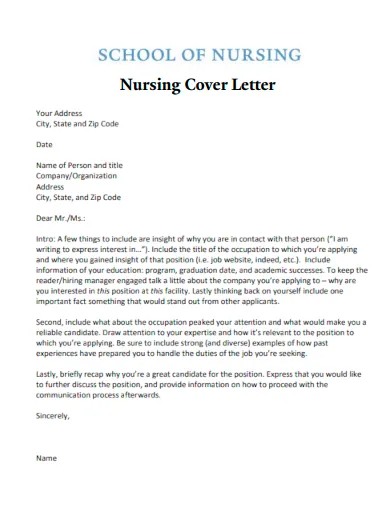
A compelling nursing student cover letter consists of several key components that work together to present you as a well-rounded and enthusiastic candidate. Each section serves a specific purpose in conveying your qualifications and making a positive impression on the hiring manager. The key components include your contact information, the date, the employer’s contact information, a professional greeting, the body of the letter highlighting your skills and experience, the closing, and a clear call to action. Each section plays a crucial role in conveying your qualifications, demonstrating your passion, and ultimately, securing the opportunity to advance in the nursing field. It is also important to use a professional tone and avoid any slang or informal language throughout the letter.
Your Contact Information
At the very top of your cover letter, include your full name, address, phone number, and professional email address. Make sure the email address is professional-sounding and easy to read. This information ensures that the employer can easily contact you. Double-check that all contact details are accurate and up-to-date. Errors here can lead to missed opportunities. Your contact information should be clearly formatted, making it easy for the reader to find. Ensure you are available at the phone number and monitor your email regularly for any correspondence from the employer. If you have a LinkedIn profile, you can include a link to it here to provide additional information.
Date
Below your contact information, add the date you are writing the letter. This helps the employer to know when the application was submitted. Use the standard date format, such as Month, Day, Year (e.g., June 15, 2024). The date provides context and can be important for internal tracking. Keeping the date up-to-date shows attention to detail, which is crucial in nursing. Ensure that you use the same date format consistently throughout all your application materials. This also helps to maintain a professional appearance and reflects your organizational skills.
The Employer’s Contact Information

Include the hiring manager’s name, their title, the company name, and the company’s address. If you can find the hiring manager’s name, address your letter to them directly, this shows that you have taken the time to research and personalize your application. If you’re unsure of the hiring manager’s name, try to find this information through the company website or LinkedIn. If you are unable to find a specific name, using a general greeting such as “Dear Hiring Manager” is acceptable. Personalizing your letter shows initiative and attention to detail. This step also helps the cover letter feel less generic and more specific to the job and the potential employer.
The Greeting
Start your cover letter with a professional greeting, such as “Dear Mr./Ms./Mx. [Last Name]” if you know the hiring manager’s name. Always use the correct title and spelling. If you don’t know the hiring manager’s name, use “Dear Hiring Manager” or “Dear [Department Name] Hiring Team.” Avoid overly casual greetings. Your greeting sets the tone for the entire letter, so it should be professional and respectful. Using the correct salutation establishes a professional tone from the outset and shows that you respect the hiring manager. This also shows that you have taken the time to learn about the employer and their team.
The Body of Your Nursing Cover Letter
The body of your cover letter is where you provide detailed information about yourself and explain why you’re a suitable candidate for the position. It is essential to structure the body of your cover letter logically, using concise paragraphs to highlight your skills, experiences, and motivations. The body of your cover letter should be well-organized and clearly demonstrate why you are the best fit for the nursing position. In addition, make sure to tailor your cover letter to the specific requirements of the job. This will show that you have taken the time to understand the position and are genuinely interested in the opportunity.
Highlight Your Skills and Experiences

Use this section to showcase your relevant skills and experiences. Provide specific examples from your clinical rotations, volunteer work, or any other nursing-related experiences. Highlight the skills that the employer is looking for, referring to the job description. Quantify your accomplishments whenever possible. For instance, if you managed a specific number of patients or assisted with a particular number of procedures, state this. Back up your claims with concrete examples. For example, if you claim to have excellent communication skills, explain a situation where you effectively communicated with a patient or a healthcare team member. Including these details will illustrate your skills and increase your credibility with the employer.
Showcase Your Passion for Nursing
Express your enthusiasm for nursing and why you are drawn to this profession. Share what motivates you and what you find rewarding about nursing. Discuss any specific areas of nursing that interest you and align with the job you are applying for. Briefly explain why you are pursuing a career in nursing and what you hope to achieve. This section is an opportunity to connect with the employer on a personal level and demonstrate your commitment to patient care. Make your passion for nursing evident. Share what inspires you and what you find most rewarding about caring for patients. Show your genuine interest in the organization’s mission and values.
Address the Specific Requirements
Carefully review the job description and address each of the required qualifications. Explain how your skills and experiences align with the job’s demands. If the job description requires specific certifications or skills, make sure to mention them. Show how your qualifications meet the employer’s needs. Tailor your letter to the specific requirements and expectations outlined in the job description. Explain how you meet each requirement. Include examples of how you have demonstrated these skills in the past. This shows the employer that you can fulfill the role successfully.
The Closing of Your Cover Letter

The closing of your cover letter is as important as the opening. It summarizes your interest in the position and encourages the employer to contact you for an interview. This section should be professional, confident, and forward-thinking. It leaves a lasting positive impression on the employer. It should leave the reader with a strong sense of your suitability for the position and the value you can bring to the team. Make it a memorable conclusion to your cover letter and enhance your chances of landing an interview.
Express Gratitude
Thank the employer for their time and consideration. Express your appreciation for the opportunity to apply for the position. A simple thank you shows respect for the employer’s time and reinforces your positive attitude. Conclude with a statement of gratitude to express your appreciation for the employer’s time and effort in reviewing your application. This gesture will leave a lasting impression and demonstrate your professionalism. Keep your message brief and sincere. This will also leave a lasting impression and shows that you value their time and consideration of your application. This simple gesture will leave a lasting positive impression.
Include a Call to Action
End your cover letter with a call to action, such as expressing your availability for an interview or encouraging the employer to contact you with any questions. Include your contact information again, just in case the reader has skipped over the top section. Make it easy for the employer to reach you. This encourages them to take the next step. State that you are looking forward to hearing from them soon. Include your contact information, such as your phone number and email address, to ensure the employer can easily reach you. Make it easy for the employer to take action. This also reinforces your interest in the position and demonstrates your initiative.
Formatting Your Nursing Cover Letter

The formatting of your nursing cover letter is critical to creating a professional and polished document. Proper formatting ensures readability and makes a positive impression on the hiring manager. Choose a clear font, use appropriate margins, and keep the overall layout clean and uncluttered. Formatting errors can detract from your qualifications. Well-formatted documents reflect your attention to detail. The format of your cover letter significantly impacts how the reader perceives you. The format should be professional, consistent, and easy to read. Make sure the format looks professional and is easy to read.
Choosing the Right Font and Font Size
Select a professional and readable font such as Times New Roman, Arial, or Calibri. Keep the font size between 11 and 12 points for easy reading. Avoid using overly fancy or distracting fonts. Using a clear font like Times New Roman, Arial, or Calibri. This will maintain a professional look. It ensures that your cover letter is accessible and easy to read. Avoid using decorative fonts. The font should be consistent throughout the document. This ensures consistency and readability. The font choice impacts the first impression. Therefore, selecting a professional font is essential. These fonts are designed for readability.
Margins and Spacing
Set your margins to 1 inch on all sides. Use single spacing for the body of the letter and double spacing between paragraphs. Proper margins and spacing make the document easier to read and more visually appealing. Well-formatted margins and spacing improve the overall visual appearance of your letter. These are crucial for creating a clean and professional look. These can significantly improve the readability of your cover letter. This also prevents the letter from appearing cluttered or cramped. Consistent formatting makes your application look professional. This improves the readability and the overall aesthetic appeal of your cover letter.
Proofreading and Editing Your Cover Letter

Thoroughly proofread and edit your cover letter to eliminate any errors in grammar, spelling, and punctuation. Have a friend, family member, or career advisor review your letter to catch any mistakes you may have missed. Errors can undermine your credibility. Proofreading is a critical step to ensure that your cover letter is free of errors. Errors detract from your professionalism. Proofreading is a key step in the process. Having a second set of eyes review your cover letter can catch errors. Errors will reduce your credibility. Ensure that your cover letter is free of any spelling, grammar, or punctuation errors. Errors can undermine your credibility and professionalism. Before you submit your cover letter, be sure to carefully review it for any errors or inconsistencies.
Common Mistakes to Avoid in Your Cover Letter
To create an impactful cover letter, it’s important to avoid some common mistakes that can deter the hiring manager. These mistakes can undermine your application and reduce your chances of securing an interview. Always remember that a well-written cover letter can significantly improve your chances of getting hired. Your cover letter should be tailored to the specific job requirements. Be sure to avoid these errors to make a positive impression. The mistakes you make can significantly impact your chances. Avoid these mistakes to present yourself in the best possible light.
Using Generic Language
Avoid using generic phrases or statements that could apply to any job. Tailor your cover letter to the specific requirements and the organization’s values. Instead of using clichés, use specific examples and data to show your qualifications. Use specific examples to demonstrate your skills and experience, instead of using generic statements. Personalize your letter to show that you’ve researched the position and are genuinely interested. Generic language makes your cover letter sound impersonal. This can undermine the impact of your application. Tailor your cover letter to reflect the job you are applying for. Using specific language enhances your application. Personalizing your letter is more effective.
Focusing Too Much on Yourself
While it’s important to highlight your skills and experiences, avoid making your cover letter all about yourself. Frame your accomplishments in terms of how you can contribute to the employer’s goals. Show how your skills and experiences align with the employer’s needs. Focus on how you can help the organization achieve its goals. Relate your skills and experiences to the employer’s objectives. Highlight your accomplishments in terms of the benefits you can bring to the employer. Frame your skills in terms of how you can contribute to the employer’s success. Demonstrate how you can provide value to the employer.
Failing to Proofread
Always proofread your cover letter carefully before submitting it. Errors in grammar, spelling, and punctuation can make you appear unprofessional. Mistakes undermine your credibility. Even minor errors can make a negative impression. Ensure your letter is free of errors. Having someone else review your letter can help catch mistakes you might have missed. Always take the time to proofread your cover letter before you submit it. Spelling and grammar errors can make you look unprofessional. Make sure to proofread the cover letter carefully. Always proofread your cover letter before sending it.
Nursing Cover Letter Examples by Specialty
Different nursing specialties require tailored cover letters that highlight specific skills and experiences relevant to those roles. Pediatric nurses, for example, should emphasize their experience with children, communication skills, and ability to provide a supportive environment. In contrast, an Emergency Room nurse’s cover letter should showcase their ability to work under pressure, make quick decisions, and provide critical care. Similarly, a cover letter for a psychiatric nurse should highlight their empathy, communication skills, and ability to deal with patients facing mental health challenges. By tailoring your cover letter to your specialty, you increase your chances of making a strong first impression. Tailor your cover letter to the specific nursing specialty. Emphasize experiences and skills that are relevant to your field. Doing so will enhance your application and increase your chances of success. Consider these examples when writing your nursing cover letter.