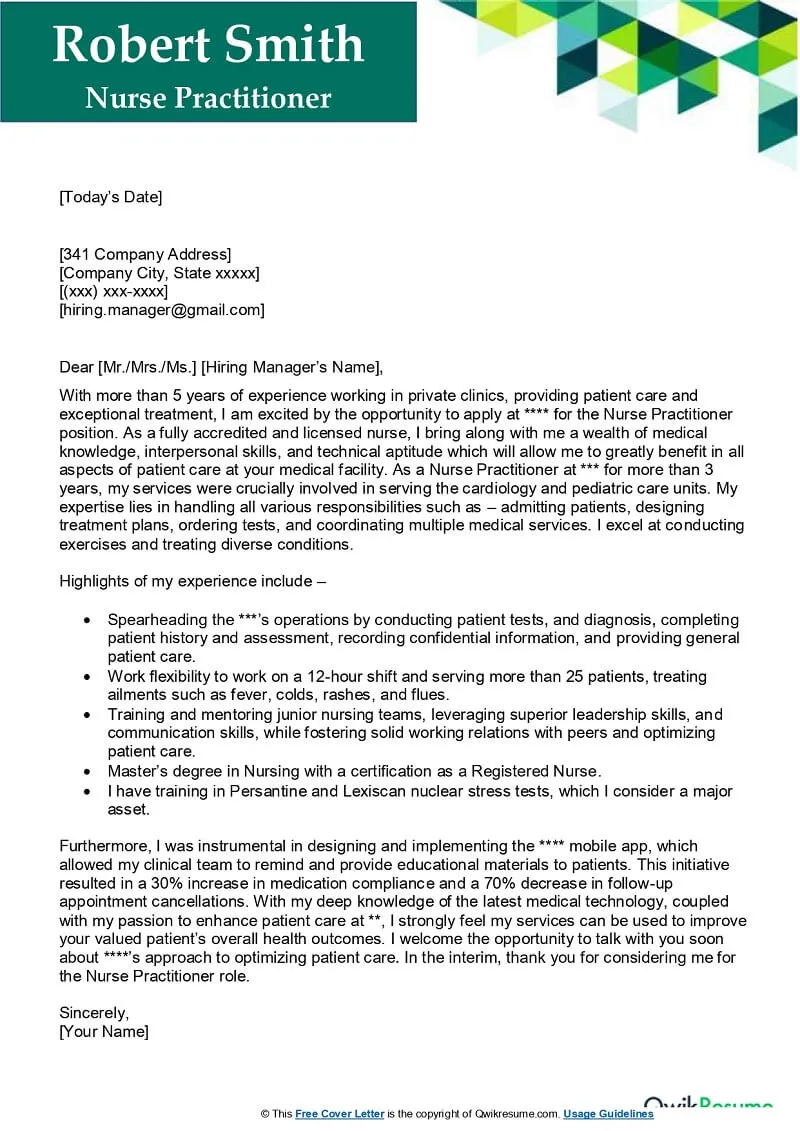
Understanding the Nurse Cover Letter
A well-crafted nurse cover letter is your first impression on a potential employer. It’s a crucial document that accompanies your resume, providing a platform to introduce yourself, showcase your skills, and express your enthusiasm for a nursing position. Unlike a resume that lists your experiences, a cover letter allows you to tell your story, connecting your qualifications to the specific requirements of the job and the values of the healthcare organization. This guide will provide you with top tips and examples to help you create a compelling cover letter that stands out from the competition. Mastering the art of the nurse cover letter can significantly increase your chances of landing an interview and ultimately, your dream nursing job.
Purpose of a Nurse Cover Letter
The primary purpose of a nurse cover letter is to persuade the hiring manager to read your resume and consider you for an interview. It’s an opportunity to elaborate on your qualifications in a way that a resume alone cannot. The cover letter highlights your interest in the specific role and organization, demonstrating that you’ve done your research and are genuinely interested in the opportunity. It also allows you to articulate your career goals and explain how your skills and experience align with the employer’s needs. A strong cover letter showcases your personality, communication skills, and passion for nursing, setting you apart from other applicants and increasing your chances of securing an interview.
Key Components of a Nurse Cover Letter

A comprehensive nurse cover letter typically includes several key components. Each section serves a specific purpose in presenting you as a qualified and enthusiastic candidate. These elements work together to create a cohesive narrative that highlights your skills, experience, and suitability for the role. Understanding the purpose of each component and how to effectively integrate them is crucial for creating a cover letter that captures the attention of hiring managers and encourages them to learn more about your qualifications. Below are the core sections to be included
Contact Information
At the top of your cover letter, include your full name, address, phone number, and email address. Ensure your contact information is current and professional. This information allows the employer to easily reach you if they are interested in scheduling an interview. It’s essential to use a professional email address; avoid using nicknames or informal language in your email address. The formatting should be clear and easy to read, typically aligned to the left or right side of the page.
Date
Below your contact information, include the date you are writing the letter. This helps the employer know when you applied. Format the date in a standard format, such as Month Day, Year (e.g., October 26, 2024). Consistency in formatting is key throughout your entire cover letter to maintain a professional appearance.
Employer Information

Include the name of the hiring manager (if known), their title, the name of the healthcare organization, and the organization’s address. If you are unsure of the hiring manager’s name, research the organization’s website or LinkedIn. Addressing the letter to a specific person personalizes your application and demonstrates your attention to detail. If the hiring manager’s name cannot be found, use a general salutation like “Dear Hiring Manager.”
Salutation
The salutation is the greeting of your cover letter. If you know the hiring manager’s name, use “Dear Mr./Ms./Mx. Last Name.” If the name is not available, use “Dear Hiring Manager.” Avoid using overly informal salutations. The salutation sets the tone for the rest of the letter, so it is important to get it right.
Body Paragraphs
The body paragraphs are the heart of your cover letter. They allow you to express your interest in the position, highlight your relevant skills and experience, and showcase your achievements. These paragraphs should be well-structured, concise, and tailored to the specific job requirements. Make each paragraph count and create a strong, persuasive argument for why you are the best candidate for the role.
First Paragraph [Expressing Interest]

Start by stating the position you are applying for and where you found the job posting. Briefly express your interest in the role and the healthcare organization. Show your enthusiasm and make a strong opening statement to grab the hiring manager’s attention. Demonstrate your initial understanding of the job requirements and highlight your general compatibility with the role.
Second Paragraph [Highlighting Skills and Experience]
Focus on your relevant skills and experience. Tailor this section to match the job description. Provide specific examples of how you’ve demonstrated your skills and the positive outcomes of your actions. Quantify your achievements whenever possible, such as the number of patients you’ve cared for or improvements you’ve made to patient care processes. Mention relevant certifications, licenses, and specialized training.
Third Paragraph [Showcasing Achievements]
Use this paragraph to showcase your achievements and how you have made a positive impact in previous roles. Focus on measurable results and use the STAR method (Situation, Task, Action, Result) to structure your examples. Highlight any awards, recognition, or leadership roles you have held. This helps the employer to see how you can contribute to their team.
Call to Action and Closing

In your closing paragraph, reiterate your interest in the position and express your eagerness for an interview. Thank the hiring manager for their time and consideration. Indicate your availability and how they can reach you. The closing should be professional and leave a lasting positive impression.
Closing Remarks
Use a professional closing such as “Sincerely,” “Respectfully,” or “Best regards.” Always capitalize the first letter and include a comma after your closing remark. Leave a few lines for your signature, and then type your full name.
Signature
If submitting a physical copy, sign your name above your typed name. If submitting digitally, you may insert an image of your signature or simply leave space for it. Make sure your signature is legible and professional. The signature adds a personal touch and confirms the authenticity of your application.
Formatting Your Nurse Cover Letter

The formatting of your nurse cover letter is as important as its content. Proper formatting enhances readability and creates a professional appearance. Make sure the layout is clean and organized to make a positive impression on the hiring manager. Following specific guidelines ensures that your application is easy to read and visually appealing. The key aspect of this includes font selection, margins, spacing, and proofreading.
Font and Font Size
Choose a professional and easy-to-read font, such as Times New Roman, Arial, or Calibri. Keep the font size between 10 and 12 points. Avoid using decorative or overly stylized fonts. The goal is to create a clean and professional document that is easy on the eyes. Ensure consistency in your font selection throughout the entire letter.
Margins and Spacing
Set standard margins (1 inch on all sides) to create a balanced look. Use single-line spacing within paragraphs and double spacing between paragraphs. This spacing enhances readability and allows the hiring manager to easily scan the document. Properly spaced text is more visually appealing and creates a professional appearance.
Proofreading and Editing

Always proofread your cover letter carefully for any typos, grammatical errors, or inconsistencies. Use a grammar checker and ask a friend or colleague to review your letter for a fresh perspective. Errors can make a negative impression and undermine your credibility. Ensure that your writing is clear, concise, and error-free. Proofreading is a crucial step in presenting a professional image.
Common Mistakes to Avoid in a Nurse Cover Letter
Avoiding common mistakes can significantly improve the quality of your nurse cover letter. These mistakes can detract from your qualifications and make a negative impression on the hiring manager. Knowing what to avoid will help you create a strong cover letter that highlights your strengths and increases your chances of securing an interview. Being mindful of these errors can dramatically improve your application’s effectiveness.
Generic Content
Avoid using a generic cover letter that you send to every job application. Tailor each letter to the specific job requirements and the healthcare organization. Demonstrating a genuine interest in the specific role and the organization shows that you’ve taken the time to research and understand their needs. Customize each cover letter, showing that you have a genuine interest in the role, and that you understand the company’s needs.
Typos and Grammatical Errors
Always proofread your cover letter carefully for any typos or grammatical errors. Errors can make you appear unprofessional and careless. Use a grammar checker and have someone else review your letter to catch any mistakes you might have missed. Attention to detail is a critical skill in nursing, and your cover letter should reflect that.
Lack of Personalization
Avoid using a generic salutation like “Dear Sir/Madam.” Whenever possible, address the hiring manager by name. Research the organization and the specific role, and tailor your letter to reflect your understanding of their needs. Personalization demonstrates your interest and attention to detail. Make sure to tailor the content to match the job requirements.
Failing to Quantify Achievements
Don’t just list your responsibilities; quantify your achievements. Use numbers and data to demonstrate your impact, such as the number of patients you’ve cared for, the percentage of improvement in patient outcomes, or any cost savings you’ve contributed to. Quantifiable results make your achievements more credible and impactful. Use the STAR method (Situation, Task, Action, Result) to structure your examples.
Nurse Cover Letter Examples [Templates and Samples]
Reviewing nurse cover letter examples can provide valuable insights and inspiration when crafting your own cover letter. These examples demonstrate how to effectively highlight your skills, experience, and achievements. Use these examples as a guide to tailor your letter to your specific qualifications and the requirements of the job. Note that the templates should be modified as needed to best reflect your unique qualifications and the specific role you are applying for.
Entry-Level Nurse Cover Letter
If you’re an entry-level nurse, emphasize your education, clinical rotations, and any relevant experience. Highlight your passion for nursing, your willingness to learn, and your strong work ethic. Include any volunteer experiences or extracurricular activities. Focus on showcasing your potential and enthusiasm to begin your nursing career. Remember to highlight your clinical experience and any projects you have completed.
Experienced Nurse Cover Letter
Experienced nurses should highlight their years of experience, specialized skills, and significant achievements. Quantify your accomplishments whenever possible and provide specific examples of your contributions to patient care and team performance. Mention any leadership roles, certifications, or specializations you hold. Showcase your advanced skills and accomplishments. Tailor the letter to match the requirements of the specific job, emphasizing your relevant experience and skills.
Specialty Nurse Cover Letter
If you’re applying for a specialty nursing position (e.g., ICU, ER, Oncology), tailor your cover letter to highlight your specialized skills and experience. Mention any relevant certifications or training, and provide examples of your work in the specific specialty. Use keywords from the job description and tailor your letter to match the specific needs of the specialty. Focus on the unique skills and knowledge required for your specialty.
Tips for Tailoring Your Cover Letter
Tailoring your nurse cover letter is crucial for making a strong impression on the hiring manager. Customizing your letter to match the specific requirements of the job and the organization demonstrates your genuine interest and attention to detail. The following tips will guide you in personalizing your letter to increase your chances of success. This ensures that your cover letter is both relevant and compelling.
Researching the Employer
Before you start writing your cover letter, research the healthcare organization and the specific role. Understand their mission, values, and the challenges they face. Visit their website, read reviews, and explore their social media profiles. This research will help you tailor your letter to address their specific needs and demonstrate your genuine interest in working for them. Tailoring your letter with the information gathered helps to show that you are a good fit.
Matching Skills to Job Requirements
Carefully review the job description and identify the key skills and qualifications required. Highlight your relevant skills and experience in your cover letter, providing specific examples to support your claims. Use keywords from the job description to ensure your letter aligns with the employer’s needs. Demonstrate how your skills and experience match the specific requirements of the role. The more you match the job requirements, the better the chances of landing the job.
Using Action Verbs
Use strong action verbs to describe your skills and achievements. Action verbs make your statements more impactful and dynamic. Instead of saying “responsible for patient care,” use verbs like “managed,” “coordinated,” or “provided.” Use action verbs to show, not just tell, what you have done and the impact of your work. Choose verbs that accurately reflect your skills and experience and are appropriate for the nursing profession.
Highlighting Relevant Certifications and Licenses
Clearly list your relevant certifications and licenses in your cover letter. Ensure that your credentials are current and valid. Highlight any specialized training or certifications that are relevant to the job. These certifications demonstrate your commitment to professional development and your ability to meet the specific requirements of the role. Provide clear information about your certifications and licenses to increase your credibility.
Submitting Your Nurse Cover Letter
Once you have finished writing and proofreading your cover letter, you need to ensure it is submitted correctly. Following these steps will increase your chances of a successful application. Proper submission is key for a professional and positive impression. Paying attention to this final step can help to prevent errors and improve your overall chances.