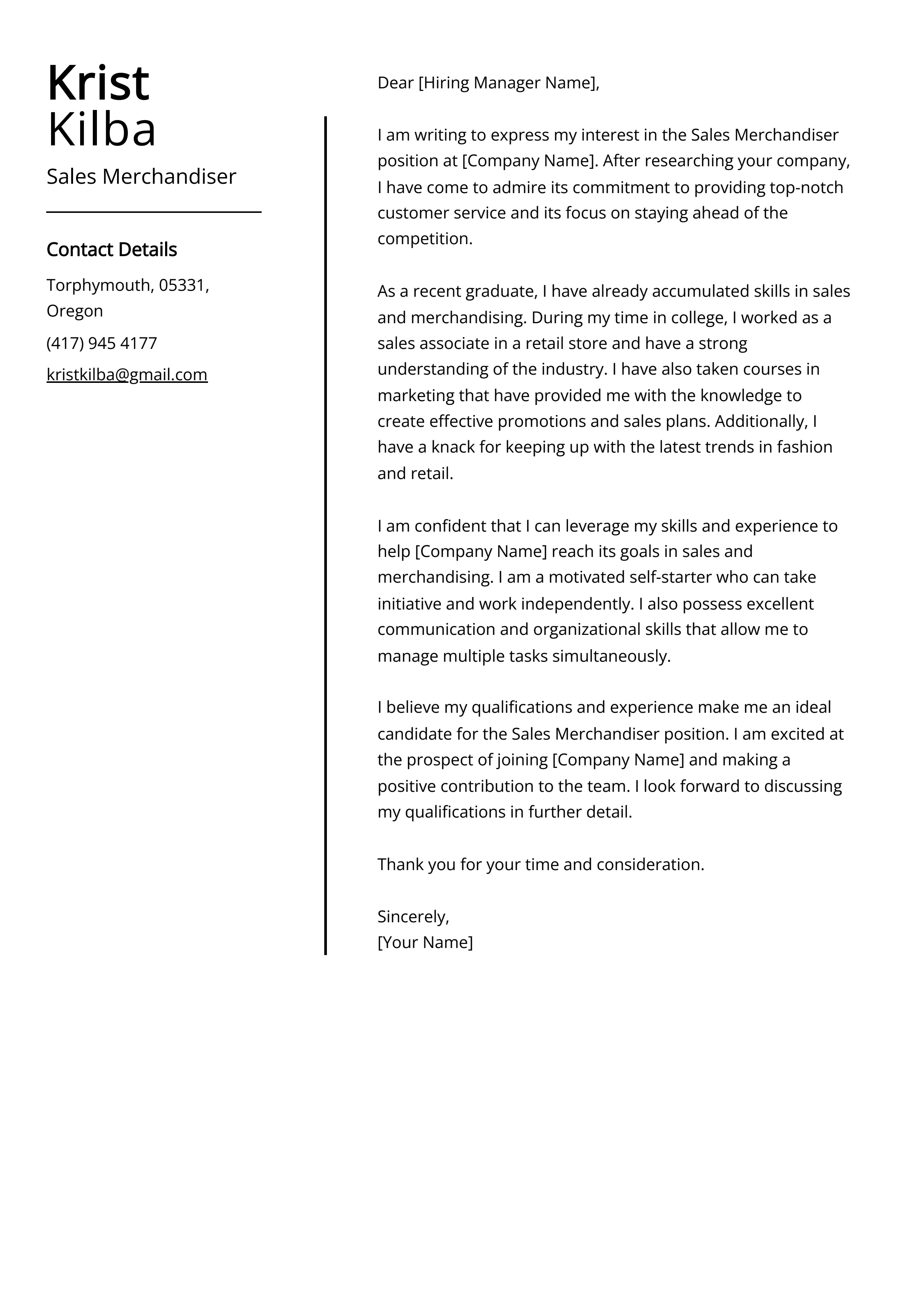
Why a Merchandiser Cover Letter Matters
In the competitive world of merchandising, a well-crafted cover letter is your key to unlocking job opportunities. It’s your first impression, a chance to showcase your personality, and highlight your skills beyond what a resume can convey. A strong cover letter doesn’t just reiterate your resume; it tells a story, demonstrating your genuine interest in the role and the company. It allows you to connect your past experiences and skills with the specific requirements of the job, making you stand out from other applicants. Remember, many hiring managers will read your cover letter before they even glance at your resume. Make it count!
Highlighting Your Skills
Merchandising is a multifaceted role that requires a blend of hard and soft skills. Your cover letter is where you can vividly illustrate these capabilities. Don’t just list your skills; provide examples of how you’ve used them to achieve positive outcomes in previous roles. Quantify your achievements whenever possible—mentioning specific sales increases, inventory reductions, or successful product placements will make your claims more credible. Be sure to align your skills with the specific requirements outlined in the job description. This targeted approach proves that you’ve carefully read the job posting and are a good fit for the company’s needs.
Sales and Negotiation Skills

Merchandisers often negotiate with suppliers, manage vendor relationships, and play a key role in maximizing sales. In your cover letter, emphasize your ability to secure favorable terms, build strong relationships, and drive sales growth. Give examples of successful negotiations you’ve led, highlighting the benefits these brought to your previous employers. Did you negotiate a lower price for inventory? Did you secure a better placement for products that led to increased sales? Be specific about these achievements to show your prospective employer that you have the ability to positively impact their bottom line.
Analytical and Problem-Solving Abilities
Effective merchandisers analyze sales data, identify trends, and solve problems related to inventory management, product placement, and customer behavior. In your cover letter, showcase your analytical skills by describing how you’ve used data to inform decisions. Did you analyze sales reports to identify slow-moving products? Did you develop strategies to improve their performance? Did you solve any supply chain issues? Detail your process, the challenges you faced, and the results you achieved. This demonstrates your ability to think critically, make informed decisions, and contribute to the overall success of a merchandising team.
Communication and Interpersonal Skills
Merchandising involves working with diverse teams, including sales, marketing, and store staff. Highlight your ability to communicate effectively, build relationships, and collaborate with others. Provide examples of how you’ve coordinated with cross-functional teams to achieve common goals. How did you train store staff on new product displays? Did you mediate any disputes with vendors or colleagues? Showcasing your interpersonal skills indicates your ability to contribute to a positive and productive work environment, a critical attribute for a successful merchandiser. Explain also how you have handled customer issues.
Showcasing Relevant Experience

Your cover letter should clearly demonstrate how your experience aligns with the requirements of the merchandising role you’re applying for. Focus on the experiences that are most relevant. Use action verbs to describe your responsibilities and achievements. If you have experience in a similar industry or with similar products, highlight that. Even if your past roles weren’t explicitly merchandising positions, you can still draw parallels to demonstrate your adaptability and transferable skills. Focus on the impact you made in previous roles. Did you drive sales growth, reduce costs, or improve customer satisfaction? Quantify your achievements whenever possible using numbers and percentages.
Tailoring Your Cover Letter to the Job Description
Never send a generic cover letter. Always tailor it to the specific job description. Carefully read the job posting and identify the key skills and qualifications the employer is seeking. Then, use your cover letter to explicitly show how your experience and skills meet those requirements. Use the same keywords and phrases the employer uses in the job description, but don’t just copy and paste; integrate them naturally into your writing. By tailoring your letter, you demonstrate that you understand the role and the company’s needs. This approach will significantly increase your chances of getting noticed.
Researching the Company
Before you start writing your cover letter, take the time to research the company. Understand their mission, values, and products. This information will help you tailor your letter and demonstrate your genuine interest in the position. Look at their website, social media profiles, and any recent press releases. If possible, try to find out who the hiring manager is and address your letter to that person. Showing that you’ve done your homework will make a positive impression and increase the likelihood of your application being considered. Show your understanding of their market position.
Keywords to Include

Modern cover letter writing is often an exercise in SEO. To get your cover letter past applicant tracking systems (ATS) and into the hands of a human, you need to incorporate relevant keywords. Identify the key skills and qualifications listed in the job description and use those keywords in your cover letter. Keywords might include inventory management, visual merchandising, sales analysis, vendor relations, or other specific skills related to the role. Don’t overdo it – the keywords should fit naturally into your sentences. Using the right keywords helps ensure that your application is seen by the right people. It also helps demonstrate you speak the language of the industry.
Formatting Your Cover Letter for Impact
The format of your cover letter is just as important as its content. A well-formatted letter is easy to read, professional, and makes a positive first impression. Use a standard business letter format with a clear heading, date, and recipient’s address. Choose a readable font such as Arial or Times New Roman, and use a font size of 11 or 12 points. Maintain consistent formatting throughout the document. Use bullet points to highlight key achievements and skills, and keep paragraphs concise and to the point. Proofread your cover letter carefully for any grammatical errors or typos before you submit it. Consider the use of headings for visual appeal.
The Opening Paragraph
The opening paragraph of your cover letter should immediately grab the reader’s attention. Start by stating the position you are applying for and how you learned about it. Then, quickly highlight your most relevant skills and experience. The opening paragraph is your chance to make a strong first impression, so make sure it is concise and compelling. Express your enthusiasm for the position and the company. Show the hiring manager that you are excited about the opportunity and that you have done your research on the company. Mention where you have seen the job advertisement to show the process followed.
The Body Paragraphs

The body paragraphs of your cover letter are where you expand on your skills and experience. Provide specific examples of your accomplishments and quantify your results whenever possible. Explain how your skills and experience align with the requirements of the job. Don’t just list your qualifications; show how you’ve used them to achieve success in previous roles. The body paragraphs should be focused and relevant to the job description. Avoid including unnecessary details or information that doesn’t directly relate to the position. Make it easy for the hiring manager to see how your skills meet their needs.
The Closing Paragraph
The closing paragraph of your cover letter should reiterate your interest in the position and the company. Thank the hiring manager for their time and consideration. Express your eagerness to discuss your qualifications further. Include a call to action, such as stating that you look forward to hearing from them or that you are available for an interview at their earliest convenience. Make sure your contact information is clearly stated, including your phone number and email address. Keep the closing paragraph concise and professional. This is the last thing the hiring manager will read, so make it memorable and leave a positive impression.
Key Takeaways How to Get Hired
Writing a compelling cover letter is a crucial step in landing a merchandising job. By highlighting your skills, tailoring your letter to the job description, researching the company, using relevant keywords, and formatting your letter for impact, you can significantly increase your chances of getting noticed. Remember to showcase your accomplishments, express your enthusiasm, and proofread your letter carefully. Following these guidelines, you’ll be well on your way to crafting a cover letter that gets you hired and takes your merchandising career to the next level. Good luck!