Why a Strong Cover Letter Matters
In the competitive field of medical assisting, a well-crafted cover letter can be your key to unlocking the door to your dream job. Even if you’re entering the profession with no prior experience, a compelling cover letter gives you the opportunity to shine. It’s your chance to go beyond the bullet points of your resume and tell a story. A story that showcases your passion, potential, and the unique value you bring to the table. A strong cover letter demonstrates your communication skills, attention to detail, and genuine interest in the specific medical assistant position you are applying for. It allows you to address any perceived gaps in your experience and position yourself as a highly motivated and trainable candidate. Without a strong cover letter, you risk being overlooked, so it’s a crucial element of your job application strategy.
Highlighting Transferable Skills
No experience in a medical setting doesn’t mean you have nothing to offer. Many skills from previous roles are highly transferable and valued in medical assisting. Think about skills like communication, organization, time management, problem-solving, and customer service. Perhaps you have experience in a retail environment, where you honed your ability to interact with customers, handle difficult situations, and work efficiently under pressure. Maybe you volunteered, demonstrating your empathy and commitment to helping others. Even if your previous jobs were not in healthcare, emphasize how your skills align with the requirements of a medical assistant role. Focus on what you can do, and how your background has prepared you for success in this new career. Quantify your achievements whenever possible. For instance, instead of saying ‘managed customer inquiries,’ you could say ‘Successfully resolved an average of 20 customer inquiries daily, resulting in a 95% satisfaction rate.’
Focus on Soft Skills

Soft skills are critical in medical assisting, and a cover letter is the ideal space to showcase them. Highlight your empathy, compassion, and ability to connect with patients from diverse backgrounds. Emphasize your excellent communication skills, both written and verbal, as medical assistants must effectively communicate with patients, doctors, and other healthcare professionals. Demonstrate your teamwork abilities by providing examples of when you worked collaboratively to achieve a common goal. Show your attention to detail by explaining how you maintain accuracy in your work. Illustrate your problem-solving skills. For instance, if you’ve ever had to de-escalate a tense situation or quickly adapt to a change in procedures, mention it. These soft skills are often what employers seek, even more than specific medical experience, in entry-level candidates. Showing that you are a quick learner, responsible, and have a positive attitude can significantly enhance your application.
Researching the Medical Assistant Role
Before you even begin writing your cover letter, thoroughly research the medical assistant role and the specific clinic or practice to which you are applying. Understand the common duties and responsibilities of a medical assistant. Are they responsible for taking patient histories, measuring vital signs, assisting with examinations, or scheduling appointments? Read the job description carefully and identify the key requirements and preferred qualifications. Visit the clinic’s website or social media pages to get a sense of its culture and values. This research will enable you to tailor your cover letter to the specific needs of the employer and demonstrate your genuine interest in the position. Use the information you gather to show how your skills and experience align with their requirements and highlight the aspects of the role that you find most appealing. This personalized approach will make your cover letter stand out from generic applications.
Tailoring Your Cover Letter to the Job
One of the most common mistakes job seekers make is sending out a generic cover letter for every position. Each cover letter must be customized to the specific job and the employer. Review the job description carefully and identify the most important skills and qualifications they are seeking. Then, in your cover letter, provide concrete examples of how your skills and experience align with those requirements. Don’t just list your skills; show how you’ve used them successfully in the past. If the job description emphasizes the importance of electronic health records, for example, briefly describe any experience you have with such systems, or your willingness to learn them quickly. If the employer mentions specific software or procedures, show that you have knowledge of these or a keen interest in acquiring it. Demonstrate that you understand the clinic’s values and its patient care philosophy. This level of personalization shows that you’ve taken the time and effort to understand the role and the organization, which can significantly improve your chances of getting an interview.
Cover Letter Structure and Formatting

A well-structured and easy-to-read cover letter is just as essential as its content. Start with a professional header that includes your name, contact information, and the date. Address the letter to the hiring manager by name whenever possible. Follow the standard business letter format: use a clear and concise font like Times New Roman or Arial. Aim for a one-page cover letter, using short paragraphs and bullet points to improve readability. The cover letter typically consists of an introductory paragraph, two or three body paragraphs, and a closing paragraph. Ensure your formatting is consistent throughout the document. Proofread carefully, and then proofread again, to catch any grammatical errors or typos. A clean and well-formatted cover letter demonstrates your professionalism and attention to detail.
Header and Contact Information
The header of your cover letter is the first thing the hiring manager will see, so make sure it is accurate and professional. Include your full name, address, phone number, and email address. Use a professional-sounding email address. If you do not have one, create a new one specifically for your job search. Place the date below your contact information, and then add the hiring manager’s name and title, along with the clinic’s name and address. This level of detail shows that you have taken the time to personalize your application and helps the hiring manager easily identify your contact information. Make sure the information matches your resume and is up-to-date.
Greeting the Hiring Manager
Always address the hiring manager by name. This shows that you have done your research and are making a personal connection. Use formal greetings such as ‘Dear Mr. / Ms. [Last Name].’ If you can’t find the hiring manager’s name, you can use a more general greeting like ‘Dear Hiring Manager’ or ‘Dear [Clinic Name] Hiring Team.’ Avoid informal greetings such as ‘Hi’ or ‘Hello.’ In the opening, state the position you are applying for and where you found the job posting. For instance, ‘I am writing to express my interest in the Medical Assistant position advertised on [job board name].’
Opening Paragraph Examples

The opening paragraph of your cover letter should immediately capture the hiring manager’s attention and state your purpose. Here are a few examples:
- Example 1 (Highlighting Passion): ‘I am writing to express my enthusiastic interest in the Medical Assistant position at [Clinic Name]. As a highly motivated individual with a passion for patient care and a strong foundation in [relevant skills], I am eager to contribute to your team.’
- Example 2 (Focusing on Transferable Skills): ‘Having developed strong communication and organizational skills in [Previous role/experience], I am excited to apply for the Medical Assistant position at [Clinic Name]. I am eager to leverage my abilities to support your healthcare team and provide exceptional patient service.’
- Example 3 (Expressing Enthusiasm): ‘I am thrilled to apply for the Medical Assistant position at [Clinic Name]. I have always been passionate about healthcare, and my dedication to patient well-being, coupled with my eagerness to learn, makes me confident I can excel in this role.’
Remember to tailor the opening to the specific job and your own unique strengths.
Body Paragraph 1 Skills and Qualities
In the first body paragraph, highlight your most relevant skills and qualities. This is where you can showcase the transferable skills and demonstrate how they align with the requirements of the medical assistant position. Focus on the skills that are emphasized in the job description. Provide specific examples to back up your claims. For instance, if the job description requires excellent communication skills, you could write: ‘In my previous role as a customer service representative, I consistently exceeded expectations by effectively communicating with customers, resolving their inquiries, and ensuring their satisfaction. I am adept at both written and verbal communication, and I understand the importance of clear and empathetic communication in healthcare.’ Make sure to demonstrate that you’ve researched the role and understand the essential skills required.
Body Paragraph 2 Passion and Enthusiasm
The second body paragraph is your opportunity to express your passion for healthcare and your enthusiasm for the specific opportunity. Explain why you are interested in working as a medical assistant and why you are excited about this particular clinic or practice. Share your understanding of the challenges and rewards of working in healthcare. Explain what specifically attracts you to the clinic or the role. Consider mentioning the clinic’s values, its reputation, or anything that resonates with you. For example, you could say, ‘I am particularly drawn to [Clinic Name]’s commitment to patient-centered care, as this aligns with my own values and my desire to provide compassionate support to individuals during their healthcare journey.’ This enthusiasm can make a strong impression on the hiring manager and shows you are genuinely interested in the role.
Body Paragraph 3 Call to Action

In your final body paragraph, include a clear call to action. Reiterate your interest in the position and your confidence in your ability to contribute to the team. Express your eagerness to learn more about the role and the organization. Make it easy for the hiring manager to contact you. For instance, you could write: ‘I am confident that my skills and enthusiasm align perfectly with the requirements of this role. I am eager to learn more about this opportunity and discuss how I can contribute to the success of [Clinic Name]. Thank you for your time and consideration. I am available for an interview at your earliest convenience.’ Include your phone number and email again for easy contact. Show that you are serious about getting hired by clearly stating your availability.
Closing the Cover Letter
End your cover letter with a professional closing and your signature. Use a formal closing such as ‘Sincerely,’ ‘Respectfully,’ or ‘Best regards.’ Leave a few lines for your signature, then type your full name below the closing. Proofread your entire cover letter one last time after you have added your signature. Avoid informal closings. Maintain a professional tone throughout. This final touch reinforces your professionalism and leaves a positive lasting impression.
Common Mistakes to Avoid
Avoid common mistakes that can undermine your application. First, never use a generic cover letter. Always tailor it to the specific job and employer. Secondly, avoid typos and grammatical errors. Proofread carefully, and ask someone else to review your cover letter. Third, don’t make it too long. Aim for one page. Don’t use jargon or overly complex language. Use clear, concise language that is easy to understand. Avoid negativity. Focus on your strengths and what you can bring to the role. Do not be dishonest. Do not exaggerate your skills or experience. Finally, avoid sounding desperate. Express your enthusiasm for the role, but maintain a professional tone. By avoiding these common pitfalls, you can ensure your cover letter is an asset, not a hindrance.
Example Cover Letters Medical Assistant

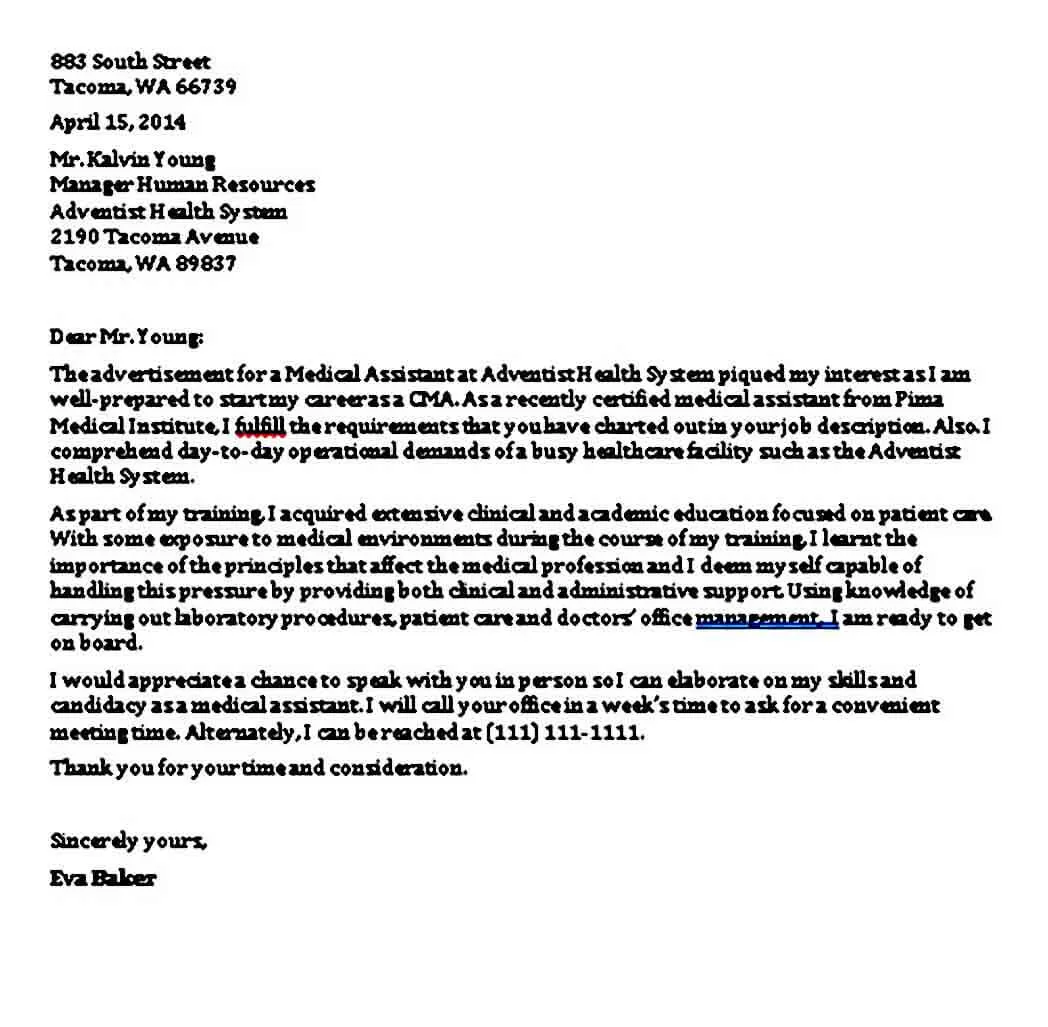
Reviewing examples of successful cover letters can be incredibly helpful in crafting your own. Search online for medical assistant cover letter examples, paying attention to how experienced candidates highlight their skills and qualifications. Use the examples as a guide, but make sure to adapt them to your own unique experiences and the specific requirements of the jobs you are applying for. Modify the examples, using the advice above, and replace the details with your information. Look at the different structures. Pay attention to the tone and style of successful cover letters. By reviewing examples, you can develop a sense of what works well and how to structure your own cover letter to make it effective. Remember that a well-written cover letter can make a significant difference in helping you secure an interview.
Cover Letter Template: Medical Assistant
Using a template can streamline the cover letter writing process. Search online for a cover letter template designed specifically for medical assistants. Most templates provide a pre-formatted structure, including the header, greeting, body paragraphs, and closing. You can then customize the template to reflect your own unique skills and experiences. Replace the placeholder text with your personal information, ensuring that the content is relevant to the job description and the clinic. You might need to adapt the template to suit the specific requirements of each job you apply for. Templates can save you time and ensure you cover all the essential elements of a cover letter. Templates provide a professional format, improving your chances of getting noticed. Make sure to always proofread and tailor any template before submitting your cover letter.
Review and Proofread Your Cover Letter
Before submitting your cover letter, review and proofread it meticulously. Check for any grammatical errors, typos, and formatting issues. Make sure your contact information is accurate. Review the letter to ensure the tone is professional and that your message is clear and concise. Consider asking a friend, family member, or career counselor to review your cover letter for feedback. Fresh eyes can often catch mistakes that you might have missed. Make certain your cover letter is tailored to the specific job and the clinic, and that you have included all the necessary information. Proofreading is a crucial step in the job application process. It ensures that your cover letter represents you in the best possible light and increases your chances of getting an interview.