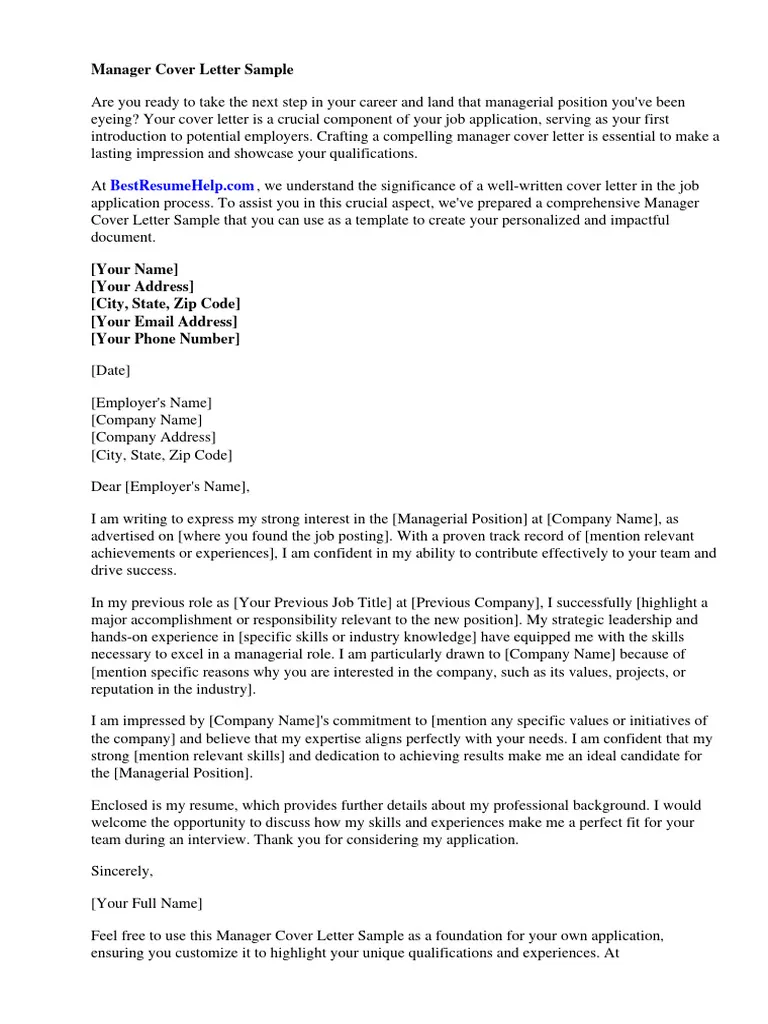
Crafting a Compelling Management Cover Letter
A well-crafted management cover letter is your first opportunity to make a strong impression on potential employers. It goes beyond simply listing your qualifications; it’s a chance to demonstrate your personality, leadership skills, and understanding of the role. This guide will walk you through the essential elements of a cover letter that will impress hiring managers and significantly increase your chances of landing an interview. Remember, a cover letter is not just a formality; it’s a strategic tool to showcase your suitability for the management position and set you apart from other candidates.
Understanding the Importance of a Cover Letter for Management
In the competitive field of management, a cover letter provides a crucial platform to articulate your vision, leadership approach, and how your experience aligns with the specific needs of the company. It allows you to connect your resume’s data points with a narrative that explains your career trajectory and ambitions. The best management cover letters demonstrate not only what you’ve done but also how you’ve done it – illustrating your problem-solving skills, team management capabilities, and strategic thinking. A well-written cover letter can be the deciding factor in getting you an interview, especially when applying for high-level management positions.
Why a Cover Letter Matters

Cover letters serve to personalize your application, showing employers that you’re genuinely interested in the position and have taken the time to understand their requirements. They allow you to elaborate on specific experiences, such as leading successful projects, improving team performance, or implementing cost-saving strategies. A cover letter’s format also offers an opportunity to showcase your communication skills, which is essential for any management role. By demonstrating your ability to write concisely, persuasively, and professionally, you can quickly set yourself apart from other candidates and prove why you are the right fit for the role. It’s your chance to tell a story that the resume alone cannot.
What Recruiters Look For
Recruiters and hiring managers are looking for several key things in a management cover letter. They want to see that you understand the company’s mission and how you can contribute to its success. They look for evidence of your leadership skills, such as your ability to motivate teams, solve problems, and make strategic decisions. The best cover letters also highlight your achievements in previous roles, including quantifiable results like increased revenue, improved efficiency, or successful project completion. They want someone who understands the company’s culture and can fit in with the existing team. Furthermore, they are seeking individuals who can effectively communicate their value and align their expertise with the available position.
Key Elements to Include in Your Management Cover Letter
Building a cover letter that grabs the reader’s attention and proves your worth as a potential manager involves incorporating several crucial elements. Your letter should be structured to be both informative and engaging, providing a complete overview of your qualifications and motivations. From the first sentence to the closing paragraph, every word must contribute to your objective: to impress and secure an interview. Each section of your cover letter contributes to a narrative that showcases your potential. Let’s dive into the specifics, ensuring you have the necessary tools to construct a compelling cover letter.
Contact Information and Salutation

Begin with your contact information at the top of the letter: your name, phone number, email address, and optionally, your LinkedIn profile link. Always address the hiring manager by name if possible. Research the hiring manager’s name, often found on the job posting or the company’s website. Avoid generic greetings like “To Whom It May Concern.” If you cannot find a specific name, you can use “Dear Hiring Manager” to maintain a professional tone. This personal touch instantly sets a more engaged and proactive tone.
Personalized Opening Paragraph
The opening paragraph is your chance to grab the reader’s attention. State the position you are applying for and where you saw the job posting. Briefly mention your key qualifications and why you are excited about the opportunity. Show genuine enthusiasm for the company and the role. A strong opening paragraph immediately showcases your understanding of the company and the specific requirements of the role. This sets the tone for the rest of the letter and encourages the hiring manager to continue reading.
Highlighting Relevant Skills and Experience
This is where you detail your skills and experience relevant to the management position. Don’t just restate your resume. Provide specific examples of how you have demonstrated leadership, problem-solving, and team management skills. Tailor your examples to match the requirements of the job description. Mention your experience in strategic planning, performance management, and project execution. Use action verbs to describe your accomplishments, such as “led,” “managed,” “implemented,” and “achieved”. Focus on showcasing your competencies by using concrete examples that illustrate your ability to thrive in a management position.
Quantifiable Achievements

Back up your claims with quantifiable achievements. Use numbers and data to demonstrate the impact of your work. For example, instead of saying “Improved sales,” say “Increased sales by 15% within six months.” Quantifiable achievements provide concrete evidence of your ability to deliver results and make you a more compelling candidate. If you have experience with budget management, performance review, or process improvement, highlight specific achievements related to those areas. By using figures and statistics, you show tangible success, thus attracting more attention from the hiring team.
Leadership Qualities
Clearly showcase your leadership qualities. Mention your experience in leading teams, motivating employees, and fostering a positive work environment. Describe your leadership style and how you adapt it to different situations. Highlight your ability to make difficult decisions and resolve conflicts. Demonstrate your ability to mentor and develop team members. Your capacity to lead others is a crucial element of a management position, so emphasize examples of effective leadership. Consider including specific situations where you’ve successfully guided a team, resolved conflicts, or driven positive change.
Showcasing Your Management Style
Describe your management style. Are you a collaborative leader, a results-oriented manager, or a coach? Explain how your style aligns with the company’s culture and the specific requirements of the role. Provide examples of how you have used your management style to achieve success in previous roles. This shows the hiring manager that you are self-aware and understand the importance of adapting your approach to different workplace dynamics. Consider how you foster a team atmosphere that encourages innovation and productivity. Your management style directly affects the team dynamics and output, and it should be presented in a manner that fits the requirements of the position.
Closing with a Call to Action

End your cover letter with a clear call to action. Express your interest in an interview and thank the hiring manager for their time and consideration. Reiterate your enthusiasm for the role and the company. Include your contact information again to make it easy for them to reach you. A strong call to action is an essential component of your cover letter, so the hiring team is more prone to responding. Make sure your contact information is correct, and always be available on your phone and email for the follow-up steps.
Formatting and Presentation Best Practices
The appearance of your cover letter is just as important as its content. A well-formatted cover letter shows attention to detail and professionalism. Ensure your cover letter is easy to read and visually appealing. A clean and professional layout is as important as the content. Your cover letter is your first contact, so it needs to be professional to impress the hiring team. Also, make sure that your cover letter is easy to navigate, which will help them quickly scan through the most critical aspects of your application.
Choosing the Right Font and Font Size
Choose a professional font, such as Times New Roman, Arial, or Calibri. Use a font size between 11 and 12 points to ensure readability. Avoid using fancy or overly decorative fonts, as they can be difficult to read. The goal is to present your information clearly and professionally. A readable font and size is critical because it must be easily perceived. The readability of your cover letter can either contribute to its success or hinder your application. Choose a simple, professional font that is easy to read and is available across all platforms.
Proper Use of White Space

Use white space effectively to break up text and make your cover letter easier to read. Keep paragraphs short and concise. Use bullet points to highlight key information. Leave ample space between sections. Avoid overcrowding your cover letter with text. Make sure the format looks appealing and professional. White space aids the reader and draws attention to essential details. White space increases readability and makes the document less exhausting. Ensure adequate margins, spacing between paragraphs, and use of bullet points to make the content easily digestible.
Proofreading and Editing
Proofread your cover letter carefully for any typos, grammatical errors, or inconsistencies. Use spell check and grammar check tools, but also manually proofread your document. Have a friend or colleague review your cover letter as well. A polished cover letter demonstrates attention to detail and professionalism. Errors can create a negative impression and undermine your credibility. Proofreading also helps refine your language and ensures your message is clear and compelling. Your cover letter is a reflection of your care and attention to detail, which are essential for any management position. Double-check all details and revise your cover letter multiple times to improve the final product.
Tailoring Your Cover Letter to the Specific Position
A generic cover letter is unlikely to impress hiring managers. Tailoring your cover letter to each specific position is essential. It proves that you have taken the time to understand the role and the company. This effort will prove that your cover letter is worthy of the hiring team’s attention. The ideal cover letter shows that you are not just sending out a form letter; you have taken the time to understand the nuances of the specific management position. This level of care and attention is highly appreciated and increases the possibility of an interview.
Researching the Company and Its Values

Research the company’s mission, values, and culture before you write your cover letter. Visit their website, read their social media, and learn about their recent news and achievements. Use this information to tailor your cover letter to the company’s specific needs and demonstrate your understanding of their goals. This shows that you are genuinely interested in working for the company and that your values align with theirs. Your knowledge of the company’s values will inform your approach, making your cover letter feel more personal and sincere. This deepens your appeal and underscores your desire to be part of the organization.
Matching Your Skills to the Job Description
Carefully review the job description and identify the key skills and qualifications required for the role. Highlight your relevant skills and experience and provide specific examples to support your claims. Use keywords from the job description throughout your cover letter. This helps to demonstrate that you are a good fit for the position and that you have the skills and experience the company is looking for. By aligning your skills with the employer’s needs, you make your application highly relevant and improve your chances of success. Prioritize the requirements that are mentioned in the job description; it is a must.
Using Keywords Strategically
Integrate relevant keywords from the job description naturally throughout your cover letter. Use keywords in your opening paragraph, in your descriptions of skills and experience, and in your closing paragraph. Avoid keyword stuffing; your cover letter should still read naturally. Keywords are essential, as many companies use applicant tracking systems (ATS) to screen applications. Including keywords helps your application get past the initial screening and into the hands of the hiring manager. Keywords assist ATS systems in matching the job description with the applicant. Use your keywords to align with the job responsibilities.
Common Mistakes to Avoid in Your Management Cover Letter
To increase your chances of success, it’s important to avoid common mistakes. Mistakes can easily undermine your application, so pay attention to the following pitfalls to ensure your cover letter impresses. Always make sure to present a professional impression to the hiring team. Your cover letter can be easily ruined by a couple of errors; so make sure that you are aware of those to increase the chances of landing a good management position.
Generic Cover Letters
Avoid sending generic cover letters. Tailor each letter to the specific position and company. Generic cover letters demonstrate a lack of effort and interest. Always address the hiring manager by name and mention specific details about the company and the role. Personalized cover letters showcase your interest and commitment. Take the time to customize your cover letter to the job description and the company’s needs. A personalized cover letter shows that you are enthusiastic and well-suited to the position.
Typos and Grammatical Errors
Typos and grammatical errors can damage your credibility and make you appear unprofessional. Proofread your cover letter carefully and use spell check and grammar check tools. Have a friend or colleague review your cover letter as well. Errors indicate a lack of attention to detail. Proper editing is crucial; it demonstrates your professionalism and attention to detail. Errors can quickly make you look less qualified.
Focusing on “I” Instead of “You”
While it’s important to highlight your skills and experience, avoid focusing solely on yourself. Balance your letter by emphasizing how your skills and experience can benefit the company. Frame your accomplishments in terms of the value you can bring to the organization. Shifting the focus from yourself to the company’s needs is a key technique to increase your appeal to the hiring team. The hiring manager is looking to find solutions for their company. Focusing on the value you can offer the company makes you a more appealing candidate.
Final Thoughts and Next Steps
Crafting a compelling management cover letter requires careful planning, attention to detail, and a strategic approach. By following the guidelines outlined in this guide, you can create a cover letter that will impress hiring managers and significantly increase your chances of landing an interview. Remember to tailor your cover letter to each specific position, highlight your relevant skills and experience, and showcase your leadership qualities. Good luck with your job search.