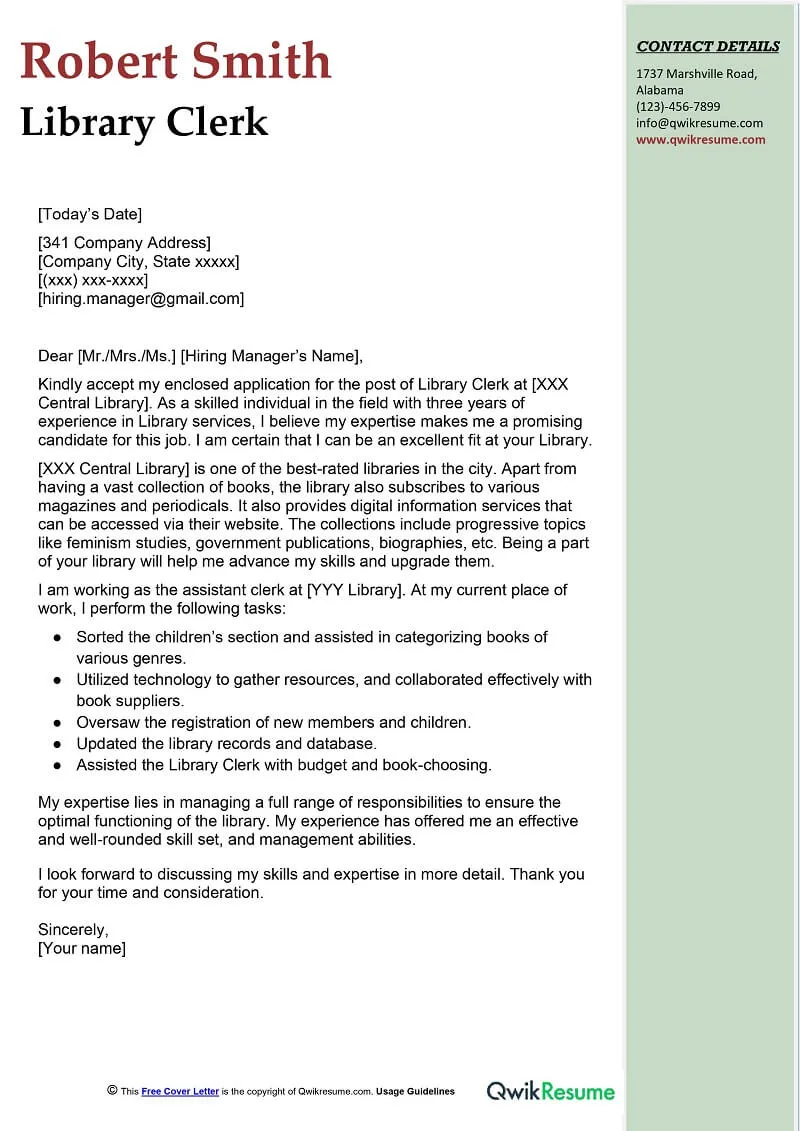
Why a Library Assistant Cover Letter is Important
In the competitive job market, a well-crafted library assistant cover letter is your first chance to make a positive impression. It’s more than just a formality; it’s your opportunity to showcase your personality, passion for libraries, and potential value to the hiring manager, even if you lack direct experience. This document provides a space to explain why you’re interested in the position, highlighting your skills, and addressing any perceived shortcomings. A strong cover letter can set you apart from other applicants and significantly increase your chances of landing an interview. It allows you to frame your qualifications in a compelling way, demonstrating your understanding of the role and your genuine enthusiasm for the opportunity. A cover letter is essential because it helps you stand out in a crowded field.
Understanding the Role of a Library Assistant
Before writing your cover letter, a thorough understanding of the library assistant role is essential. Research the specific responsibilities typically involved, such as assisting patrons, shelving books, managing library materials, and supporting library programs. Identify the key skills required, which often include strong communication, organizational abilities, attention to detail, and a customer-service orientation. Knowing the duties helps you to tailor your cover letter to the specific requirements of the job. Also, you will be able to articulate how your skills and experiences align with the position requirements. Look for information about the library’s mission, values, and the community it serves. Understanding the context of the role and library’s needs allows you to better demonstrate your ability to contribute to its goals.
Highlighting Transferable Skills

When you lack direct experience as a library assistant, emphasizing your transferable skills is key. These are skills you’ve gained in other contexts that are applicable to the role. Common examples include excellent communication skills honed through customer service roles, strong organizational skills developed through project management or personal organization, and attention to detail demonstrated in previous work or academic settings. Highlight instances where you’ve demonstrated these skills. For instance, if you have volunteered in a community organization, describe how you managed tasks efficiently. By focusing on these transferrable skills, you can show the hiring manager that, despite the lack of direct experience, you possess the capabilities necessary to succeed in the role of a library assistant.
Research and Preparation
Thorough research and preparation are crucial steps before you begin writing your cover letter. Start by carefully reviewing the job description, paying close attention to the required skills, qualifications, and responsibilities. Then, research the library itself. Look at its website to understand its mission, values, and community involvement. If possible, visit the library in person to get a feel for its environment. Tailoring your cover letter to a specific library shows that you are genuinely interested in the position. Collect information about the specific library’s needs, like programs they have, or their patron base. This way, you will be able to highlight how your skills and experiences are a good fit. Gathering information shows initiative and helps you personalize your letter, making it more impactful.
Structuring Your Cover Letter
A well-structured cover letter is easy to read and conveys your message effectively. Start with a professional heading that includes your contact information and the date, followed by the hiring manager’s name (if known) and address. The main body of your letter should be divided into three or four paragraphs. Begin with an engaging opening that states the position you are applying for and explains why you are interested. Use the following paragraphs to highlight your skills, experience, and enthusiasm, focusing on what you can offer the library. Finally, conclude with a strong closing statement that reiterates your interest and includes a call to action, such as expressing your availability for an interview. Good structure helps the hiring manager easily understand your qualifications and appreciate your interest.
Opening Paragraph

Your opening paragraph should immediately grab the reader’s attention and clearly state your purpose. Begin by mentioning the specific library assistant position you are applying for and how you learned about it (e.g., job board, referral). Then, briefly express your interest in the role, highlighting what excites you about the opportunity. You can mention your passion for libraries, your eagerness to assist patrons, or your interest in contributing to the library’s mission. Avoid generic openings; personalize your introduction to make it stand out. You can add a sentence about a relevant skill or your understanding of the library’s services. The goal is to show your enthusiasm and set the tone for the rest of the letter.
Body Paragraph 1 Demonstrating Enthusiasm
The first body paragraph is the place to demonstrate your enthusiasm and genuine interest in the library assistant role. Focus on your passion for books, libraries, or serving the community. You can share a personal anecdote about your love for reading, a positive library experience, or your desire to contribute to the library’s mission. This section allows you to show the hiring manager why you want the job and why you’re a good fit for their environment. Make your interest evident by highlighting what you value about the library and expressing your eagerness to learn and grow within the organization. Make it clear that you have a genuine interest in the role.
Body Paragraph 2 Skills and Qualities
The second body paragraph should focus on your skills and qualities. Even without direct experience, you can highlight skills that are relevant to the library assistant role. Mention your strong communication skills and provide examples of how you have used them in the past. Describe your organizational skills, illustrating how you’ve managed tasks and responsibilities in previous settings. Show that you’re detail-oriented and capable of handling various tasks by providing examples. Focus on teamwork and adaptability, demonstrating that you can work well with others and adjust to changing situations. Use action verbs to describe your accomplishments. This helps the hiring manager understand the impact you made in these roles.
Body Paragraph 3 Addressing the Lack of Experience

This is where you address your lack of direct experience. Be honest but positive, acknowledging that you may not have worked as a library assistant before. Instead of dwelling on what you haven’t done, focus on what you can do. Talk about your willingness to learn, your eagerness to take on new challenges, and your dedication to the job. If you have volunteered or completed relevant coursework, describe these experiences and explain how they have prepared you for the role. You can also mention any relevant certifications or training you’ve completed. This paragraph is your chance to convince the hiring manager that you’re a valuable asset, regardless of your lack of experience.
Closing Paragraph
Your closing paragraph should reiterate your interest in the position and express your enthusiasm for the opportunity. Thank the hiring manager for their time and consideration. Then, include a call to action, such as stating that you are available for an interview and eager to discuss how you can contribute to the library. Reiterate your appreciation for the role and state that you look forward to hearing from them. Review your letter to ensure a positive and impactful ending that leaves a lasting impression. It leaves the hiring manager with a clear sense of your eagerness and interest.
Proofreading and Editing
Before submitting your cover letter, proofread it carefully. Check for any grammatical errors, spelling mistakes, or punctuation errors. These errors can detract from your professionalism and undermine your credibility. Read your letter aloud to ensure that it flows well and makes sense. Ask a friend, family member, or career advisor to review your cover letter for feedback and catch any mistakes you may have missed. Ensure your letter is well-formatted and easy to read. A clean and polished cover letter reflects your attention to detail. Proofreading and editing shows the hiring manager that you value quality and pay attention to detail.
Tailoring Your Cover Letter

Customize your cover letter to each specific job application. Avoid using a generic cover letter that you send to every position. Tailoring your letter shows that you have taken the time to research the specific role and the library. You can highlight relevant skills or experiences listed in the job description. By customizing your letter to show why you are a good fit, you will increase your chances of being interviewed. Use the library’s name and mention any specific programs. Tailoring will help demonstrate your knowledge of the institution and helps you to stand out.
Common Mistakes to Avoid
Avoid common mistakes that can hurt your application. Do not make grammatical errors or typos. Avoid using generic language or repeating your resume. Don’t be too long or unfocused; keep it concise. Don’t focus solely on what you want; demonstrate how you can benefit the library. Don’t use overly casual language. Do not include negative comments about past employers. These common mistakes can create a negative impression and reduce your chances of getting an interview. Always maintain a professional tone.