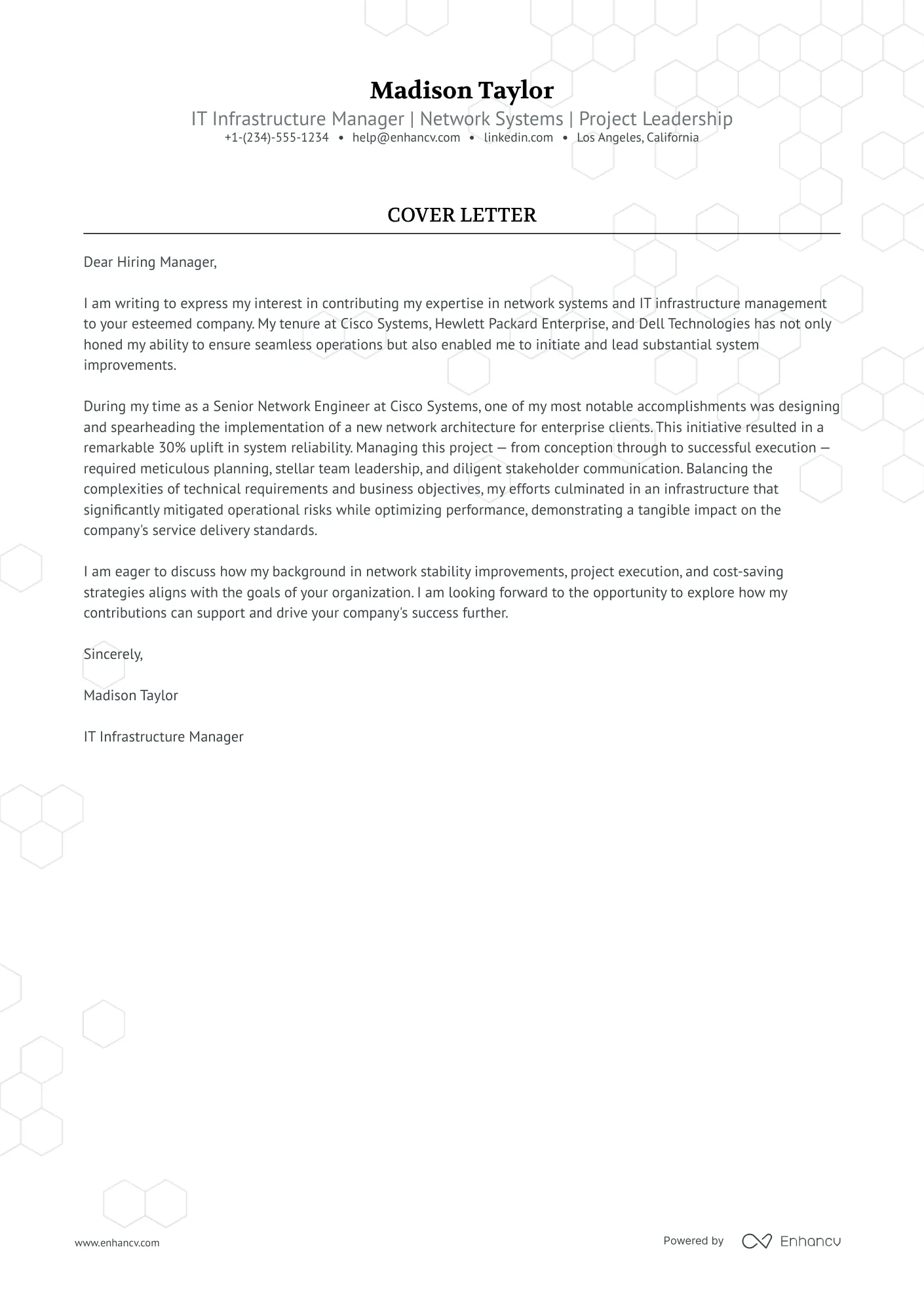
What is an IT Manager Cover Letter?
An IT Manager cover letter is a crucial document that accompanies your resume when applying for an IT Manager position. It serves as a personalized introduction, allowing you to highlight your skills, experience, and qualifications in a way that a resume alone cannot. It provides an opportunity to express your enthusiasm for the role and demonstrate how your specific abilities align with the requirements of the job and the needs of the company. Unlike a resume, which presents a factual overview of your career, the cover letter allows you to tell a story, connecting your past experiences to the future you envision with the prospective employer.
Why is an IT Manager Cover Letter Important?
The importance of a well-crafted IT Manager cover letter cannot be overstated. It’s often the first impression you make on a hiring manager, setting the tone for their assessment of your candidacy. A strong cover letter demonstrates your communication skills, attention to detail, and genuine interest in the position. It allows you to personalize your application, showing that you’ve taken the time to understand the company and the role. Moreover, a cover letter is your chance to address any potential gaps or weaknesses in your resume, providing context and explaining how your skills and experiences make you a good fit for the role. It also underscores your professionalism and commitment to the application process.
Key Components of a Strong IT Manager Cover Letter

A compelling IT Manager cover letter should incorporate several key components to make a lasting impression. These elements work together to present you as a well-rounded and capable candidate. From the header, which establishes your contact information, to the closing, which reiterates your interest and calls for action, each part serves a specific purpose in conveying your qualifications and enthusiasm. Ensuring that each element is effectively crafted is crucial to building a persuasive case for why you are the best fit for the job.
Header and Contact Information
Start with a professional header that includes your full name, address, phone number, and email address. Make sure the information is current and easily accessible. Consider using a professional-looking font and layout. This section ensures that the hiring manager can quickly and easily contact you. Accuracy and clarity are paramount; double-check all details to prevent any errors that could hinder communication. Your contact information should be readily available at the top of the page for easy reference.
Professional Greeting
Address the hiring manager by name if possible. Research the company to find out the name of the hiring manager or the person responsible for reviewing applications. A personalized greeting shows that you have taken the initiative to learn about the company and the role. If you cannot find a specific name, use a general greeting like “Dear Hiring Manager.” Avoid generic greetings such as “To Whom It May Concern”, which can make your application seem less personalized. The tone should be professional and respectful, setting the stage for the rest of your letter.
Opening Paragraph Highlight Your Enthusiasm

Your opening paragraph is your first chance to grab the reader’s attention. Clearly state the position you are applying for and how you learned about the opportunity. Express your enthusiasm for the role and the company, demonstrating that you have researched and are genuinely interested. Briefly mention one or two key skills or experiences that make you a strong candidate. Make it clear why you are interested in the specific position and what excites you about the opportunity. Your goal is to immediately create a positive impression and show you are a good fit.
Body Paragraphs Showcasing Skills and Experience
The body paragraphs of your cover letter are where you highlight your relevant skills and experience. The goal is to demonstrate how your background aligns with the job requirements. Use specific examples to showcase your accomplishments, providing concrete evidence of your capabilities. Focus on what makes you unique and why the company should choose you over other candidates. Break down this section into clear, concise paragraphs, each focusing on a specific skill or experience to make the information easy to follow and understand. Tailor the content to match the job description and address the employer’s needs.
Technical Skills and Expertise
Highlight your technical skills and expertise relevant to the IT Manager position. Mention specific technologies, software, and systems you are proficient in, such as networking, cybersecurity, cloud computing, or database management. Provide examples of how you have used these skills to solve problems or improve IT infrastructure in previous roles. Quantify your achievements whenever possible, such as reducing system downtime or improving network performance. Tailor the skills to align with the specific requirements listed in the job description. Show practical application and the results achieved to support each skill.
Leadership and Management Abilities

IT Manager roles often require strong leadership and management skills. In your cover letter, showcase your ability to lead and motivate teams, manage projects, and make strategic decisions. Provide examples of how you have successfully managed IT teams, including your approach to team building, performance management, and conflict resolution. Highlight any experience with budgeting, resource allocation, or vendor management. Emphasize your ability to collaborate effectively with different departments and stakeholders. Focus on your leadership style and how it contributes to the success of IT projects and the overall goals of the company. (Image: it-manager-leadership.webp)
Problem-Solving and Decision-Making Skills
IT Managers must possess strong problem-solving and decision-making skills. Provide specific examples of how you have addressed and resolved complex IT issues, such as system failures, security breaches, or network disruptions. Describe your approach to identifying problems, analyzing root causes, and implementing effective solutions. Highlight your ability to make informed decisions under pressure and prioritize tasks. Mention any experience with risk management or disaster recovery planning. Show your ability to think strategically and make decisions that align with the company’s overall business objectives.
Quantifiable Achievements and Results
Include quantifiable achievements and results to demonstrate your impact in previous roles. Use numbers and metrics to showcase your accomplishments, such as reducing IT costs, improving system uptime, or increasing user satisfaction. Provide specific examples of projects you led, the challenges you faced, and the outcomes you achieved. Mention any awards or recognition you received for your work. The more concrete evidence you can provide, the more compelling your cover letter will be. Quantifiable achievements add credibility and make it easier for the hiring manager to assess your value. (Image: it-manager-achievements.webp)
Closing Paragraph Expressing Interest and Call to Action

In your closing paragraph, reiterate your interest in the position and the company. Thank the hiring manager for their time and consideration. State your availability for an interview and express your eagerness to discuss how your skills and experience can benefit the organization. Provide your contact information again to make it easy for the hiring manager to reach you. End the letter with a professional closing, such as “Sincerely” or “Respectfully,” followed by your full name.
Proofreading and Editing Your Cover Letter
Proofreading and editing your cover letter is critical to ensure that it is free of errors. Carefully review your cover letter for any spelling, grammar, punctuation, or formatting mistakes. Read the letter aloud to catch any awkward phrasing or unclear sentences. Consider having a friend, colleague, or career counselor review your cover letter for a fresh perspective. A polished and error-free cover letter reflects your attention to detail and professionalism. Errors can detract from your qualifications, so take the time to ensure accuracy and clarity. (Image: it-manager-formatting.webp)
Common Mistakes to Avoid in Your IT Manager Cover Letter
Avoid common mistakes that can undermine your application. Don’t use generic cover letters; tailor each letter to the specific job and company. Avoid excessive jargon or technical terms that the hiring manager may not understand. Don’t simply repeat your resume; provide additional context and elaborate on your experiences. Avoid typos and grammatical errors, as they reflect poorly on your attention to detail. Do not be overly verbose; keep your cover letter concise and to the point. Avoid negative language or criticizing previous employers. Focus on your strengths and what you can contribute to the new role.
Formatting and Layout Best Practices

Follow formatting and layout best practices to make your cover letter easy to read and visually appealing. Use a professional font, such as Times New Roman or Arial, with a font size of 11 or 12 points. Maintain consistent formatting throughout the document, including margins, spacing, and bullet points. Use clear headings and subheadings to organize the content and guide the reader. Keep the letter to one page, or no more than two pages. Use a clean, uncluttered layout that makes it easy for the hiring manager to quickly find the information they need. (Image: it-manager-formatting.webp)
Tailoring Your Cover Letter to the Job
Customize your cover letter to each specific IT Manager job you apply for. Carefully review the job description and identify the key requirements and desired skills. Highlight the experiences and qualifications that align with those requirements. Use the keywords and phrases from the job description in your cover letter to show that you understand the role and are a good fit. Research the company and its culture to tailor your letter to their specific needs and values. This personalization shows that you are genuinely interested in the opportunity and have taken the time to understand the company’s requirements. (Image: it-manager-tailoring.webp)
Examples of IT Manager Cover Letter Phrases
Use specific phrases to effectively communicate your skills and experiences. Here are some examples of phrases you can include in your IT Manager cover letter: “Proven ability to…”, “Experience with…”, “Successfully managed…”, “Increased efficiency by…”, “Reduced costs by…”, “Implemented…”, “Collaborated with…”, “Expert in…”, “Dedicated to…”, “Results-oriented approach”. Tailor these phrases to match your specific experiences and the job requirements, making your cover letter more impactful and relevant to the hiring manager.
Example IT Manager Cover Letter (Template)

Use an IT Manager cover letter template to guide you in writing your own. You can find many free templates online. The template should include sections for your contact information, a professional greeting, an opening paragraph that expresses your interest, body paragraphs that showcase your skills, and a closing paragraph that expresses your enthusiasm. Use the template as a starting point, customizing it with your own information and tailoring it to the specific job you are applying for. This will save you time and ensure that you have a structured and professional cover letter.
Tips for Following Up on Your Application
After submitting your IT Manager cover letter and resume, follow up with the hiring manager. Send a brief email or make a phone call to express your continued interest and inquire about the status of your application. This shows your proactive attitude and can help you stand out from other candidates. Time your follow-up appropriately, waiting a week or two after the application deadline. Thank the hiring manager for their time and reiterate your interest in the position. This step demonstrates your commitment and can potentially increase your chances of getting an interview.