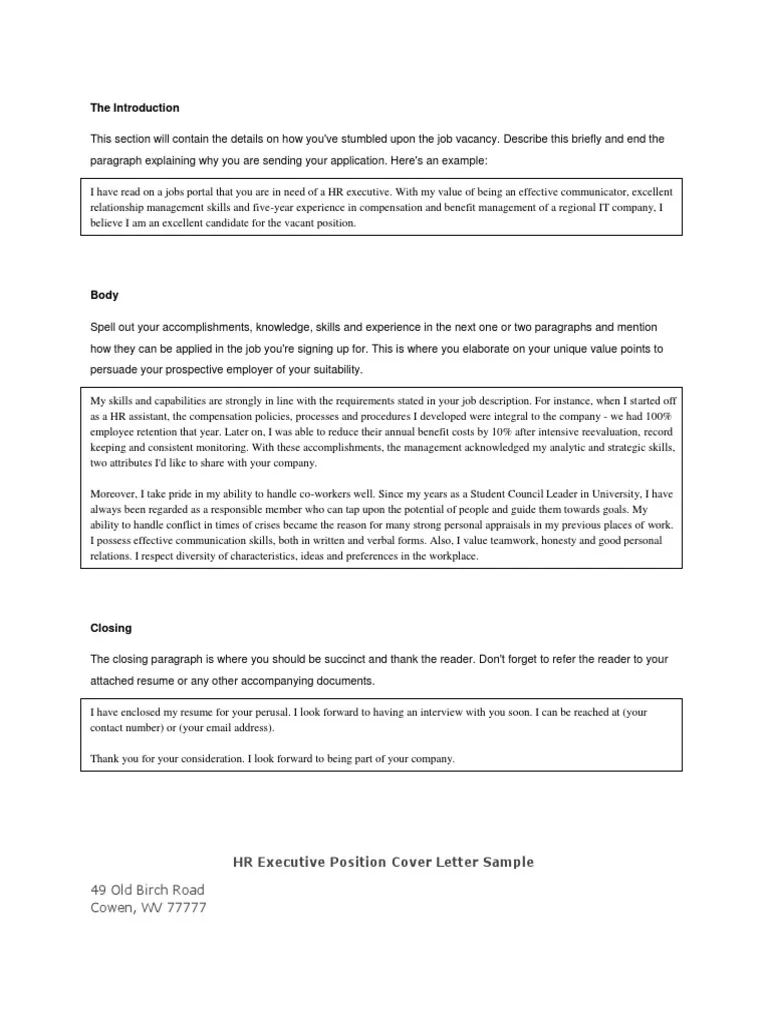
Crafting a Powerful HR Executive Cover Letter
As an HR executive, your cover letter is your first opportunity to make a strong impression. It’s not just a formality; it’s a critical tool that can set you apart from other candidates. A well-crafted cover letter demonstrates your understanding of the role, highlights your relevant experience, and showcases your personality. It allows you to expand on your resume and provide context to your achievements, ultimately increasing your chances of landing an interview. This guide will walk you through the key elements of a compelling HR executive cover letter, ensuring you make a lasting positive impact on potential employers and open doors to new career opportunities.
Understanding the Importance of a Cover Letter
Why a Cover Letter Matters

In today’s competitive job market, a cover letter is more than just an optional document; it’s an essential component of your application. It’s your chance to tell your story, explain your career goals, and illustrate how your skills align with the company’s needs. Your cover letter allows you to go beyond the bullet points of your resume and provide a narrative that humanizes your professional experience. By personalizing your cover letter, you signal to the hiring manager that you’ve invested time and effort in understanding the role and the company. This proactive approach can demonstrate your genuine interest and increase your appeal to the hiring manager. It is your first real interaction with the potential employer, so it needs to be perfect. Your cover letter will set the tone for what is to come. A good cover letter is the key to getting your foot in the door.
Highlighting Your HR Executive Experience
Your HR executive cover letter is your platform to demonstrate your expertise. It is essential to showcase your relevant experience, including your accomplishments and skills in detail. Focus on key areas such as talent acquisition, employee relations, compensation and benefits, performance management, and HR strategy. Tailor your examples to align with the specific requirements outlined in the job description. By highlighting your relevant experience, you assure the recruiter that you are ready to take on this new role. Always focus on your achievements. Show, don’t just tell; use concrete examples to bring your points across.
Quantifying Your Achievements
One of the most effective ways to impress a hiring manager is to quantify your achievements. Rather than simply stating your responsibilities, use numbers and metrics to demonstrate your impact. For example, instead of saying you “improved employee retention,” you could write “Improved employee retention by 15% within one year through the implementation of a new employee engagement program.” This specificity shows the impact of your contributions. Use data to highlight your successes in areas such as cost savings, process improvements, or increased productivity. This approach transforms your claims into concrete proof of your capabilities, making your cover letter more persuasive and memorable. Quantifying your accomplishments shows the hiring manager your ability to deliver real results.
Showcasing Key HR Skills

In addition to experience, it is crucial to highlight your key HR skills. The most important skills include leadership and management, strategic thinking and planning, and communication and interpersonal abilities. Your cover letter should provide examples of these skills in action. By showcasing your skills, you are setting the stage for what your future with the company will look like. Do not only mention the skills, but also show how you can utilize them. These skills are crucial for any HR executive, so emphasizing your proficiency in them will significantly increase your chances of getting noticed.
Leadership and Management
Leadership and management skills are critical for HR executives. Your cover letter should highlight your ability to lead and motivate teams, make strategic decisions, and foster a positive work environment. Provide examples of how you have successfully managed and developed HR teams, resolved conflicts, and implemented initiatives that improved employee morale and productivity. Demonstrate your capacity to build and maintain a strong team culture that supports the company’s goals. Highlight your ability to lead teams to their full potential. This is crucial for getting the hiring manager to take you seriously.
Strategic Thinking and Planning
HR executives must also possess strong strategic thinking and planning abilities. Highlight your experience in developing and implementing HR strategies that align with business objectives. Showcase your ability to analyze data, identify trends, and make informed decisions that drive organizational success. Provide examples of strategic initiatives you have led, such as workforce planning, talent management, or compensation and benefits programs. Your cover letter should convey your strategic thinking, problem-solving abilities, and how you can contribute to the company’s long-term goals.
Communication and Interpersonal Skills

Communication and interpersonal skills are paramount for HR executives. Your cover letter must emphasize your ability to communicate effectively with employees at all levels, mediate conflicts, and build strong relationships. Provide examples of how you have successfully communicated complex information, resolved difficult employee issues, and fostered a positive and inclusive work environment. Demonstrate your ability to listen, empathize, and build trust with employees and stakeholders. Highlight your experience in presenting to executives and collaborating with cross-functional teams. These skills are essential for building trust and rapport.
Tailoring Your Cover Letter to the Job
One of the biggest mistakes applicants make is submitting a generic cover letter. Take the time to tailor your cover letter to each specific job. Customize your content, highlighting skills and experiences that are most relevant to the position. This personalization demonstrates your attention to detail and shows that you are genuinely interested in the role and the company. By customizing each cover letter, you enhance your chances of getting noticed and making a strong impression.
Researching the Company and Role
Before writing your cover letter, thoroughly research the company and the specific role. Visit the company’s website, review its social media profiles, and read news articles about the organization. Understand the company’s mission, values, and culture. Analyze the job description carefully and identify the key requirements and responsibilities. This research will enable you to tailor your cover letter and demonstrate your understanding of the company’s needs. This is a crucial step to getting hired. Knowing the values and mission of the company can show the hiring manager that you would be a good fit.
Matching Skills to Requirements

Once you have researched the company and the role, match your skills and experience to the job requirements. Review the job description and identify the key skills and qualifications the employer is seeking. Use specific examples from your career to showcase how you have successfully applied those skills. Tailor your cover letter to highlight those areas where you excel and provide concrete evidence of your abilities. This targeted approach shows the hiring manager that you possess the necessary skills to excel in the role.
Structuring Your HR Executive Cover Letter
Structuring your HR executive cover letter effectively can greatly enhance its impact. A well-structured cover letter is easy to read, highlights key information, and keeps the reader engaged. It includes a clear header with contact information, a captivating opening, well-organized body paragraphs that showcase your value, and a strong closing that encourages action.
Header and Contact Information
Your cover letter should begin with a professional header that includes your name, address, phone number, and email address. Also include the date and the hiring manager’s name and title, if known. Ensure your contact information is accurate and up to date. Use a clear, professional font, such as Times New Roman or Arial, and maintain a consistent format throughout the document. A well-formatted header is the first step in making a positive impression.
The Opening Paragraph Captivating the Reader

The opening paragraph is your first chance to grab the reader’s attention and make a positive impression. Start with a compelling statement that showcases your enthusiasm for the role or the company. Briefly mention how you learned about the position and why you are interested in it. State your relevant experience and highlight what makes you a strong candidate. Avoid generic phrases; instead, try to personalize your opening by mentioning something specific about the company or the role. This is your chance to set the tone for the rest of the letter and persuade the hiring manager to continue reading.
The Body Paragraphs Showcasing Value
The body paragraphs are where you showcase your skills, experience, and accomplishments. Each paragraph should focus on a specific aspect of your qualifications and provide concrete examples of your achievements. Use the STAR method (Situation, Task, Action, Result) to structure your examples, making them clear and impactful. Highlight relevant skills, such as leadership, strategic thinking, and communication. Tailor your content to align with the job description and demonstrate how your experience can benefit the company. Use concise, clear language and strong action verbs to keep the reader engaged.
Highlighting Relevant Accomplishments
In your body paragraphs, it’s important to highlight accomplishments that are relevant to the job description. Instead of simply listing your responsibilities, focus on results. Use the STAR method to describe situations you encountered, the tasks you were assigned, the actions you took, and the results you achieved. For example, if the job description requires experience in performance management, describe how you improved the performance review process at your previous job, increasing employee satisfaction by a specific percentage. Use numbers, percentages, and data to provide concrete evidence of your achievements. This demonstrates the value you bring to the table and how you can contribute to the company’s success.
Demonstrating Problem-Solving Abilities

HR executive roles often require solving complex problems. Your cover letter should demonstrate your problem-solving abilities. Share examples of challenges you’ve faced in your career, the strategies you used to overcome them, and the outcomes you achieved. Whether it’s resolving employee conflicts, implementing new HR policies, or managing a difficult project, highlight your ability to analyze situations, identify solutions, and take effective action. By showcasing your problem-solving skills, you’ll convince the hiring manager that you can handle the complexities of the HR executive role.
The Closing Paragraph Call to Action
The closing paragraph should leave a strong final impression. Summarize your key qualifications, reiterate your interest in the role, and express your confidence in your ability to contribute to the company’s success. Include a clear call to action, such as requesting an interview or offering to provide further information. Thank the hiring manager for their time and consideration, and use a professional closing, such as “Sincerely” or “Best regards,” followed by your name. A strong closing paragraph can encourage the hiring manager to take the next step and move your application forward.
Proofreading and Editing Your Cover Letter
Once you have written your cover letter, it is crucial to proofread and edit it carefully. Errors in grammar, spelling, and punctuation can undermine your professionalism and reduce your chances of getting hired. Ensure that your cover letter is free of errors and that your message is clear and concise. Read your letter multiple times and consider having someone else review it. A well-proofread and edited cover letter demonstrates your attention to detail and your commitment to excellence. This is the most important step to getting hired.
Checking for Grammar and Spelling Errors

Grammar and spelling errors are the most common mistakes that can damage your cover letter. Review your cover letter carefully for any mistakes. Use spell-check and grammar-check tools, but also read through the document yourself to catch errors these tools might miss. Pay close attention to word choice, sentence structure, and punctuation. Ensure that your cover letter is polished and professional. A clean cover letter shows your attention to detail and respect for the hiring manager’s time.
Ensuring a Professional Tone
The tone of your cover letter should be professional and appropriate for the HR executive role. Avoid casual language, slang, and overly familiar expressions. Use a formal, yet conversational tone that reflects your professionalism and experience. Use strong action verbs and concise language to convey your message effectively. Ensure that your writing style is clear, confident, and reflects your expertise. This is your chance to establish a positive, professional impression with the hiring manager.