Understanding the HR Cover Letter
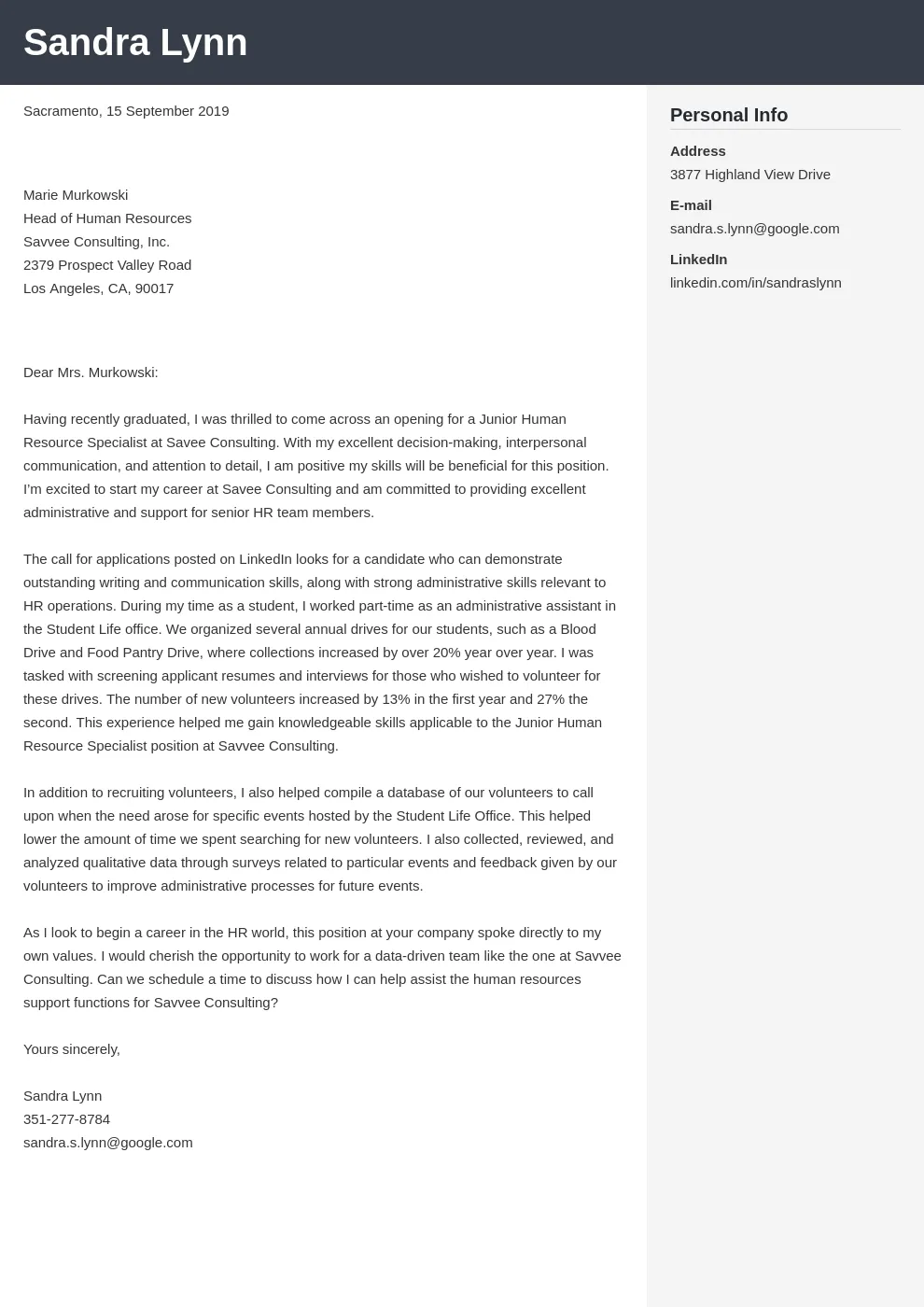
An HR cover letter is a crucial document in your job application, serving as your introduction to a potential employer. It provides an opportunity to showcase your personality, highlight your relevant skills and experience, and express your enthusiasm for the position. Unlike a resume, which provides a factual overview of your qualifications, a cover letter allows you to tell a story, explaining why you are the ideal candidate for the specific HR role. A well-crafted cover letter can significantly increase your chances of securing an interview, making it a vital tool in your job search arsenal. Crafting a compelling HR cover letter is about more than just listing your qualifications. It’s about making a positive first impression and demonstrating that you understand the role and the company’s needs.
Key Components of a Successful HR Cover Letter
A successful HR cover letter comprises several key components, each playing a vital role in conveying your qualifications and suitability for the role. These components work together to create a compelling narrative that captures the hiring manager’s attention. The structure and content of your cover letter should be clear, concise, and tailored to the specific job description. Failing to include all the key components can make your application less likely to succeed. Ensuring that your cover letter is properly structured and addresses all the necessary elements is fundamental to making a strong impression.
Header Information

The header is the first thing the hiring manager sees, and it should include your contact information. This section is essential for allowing the hiring manager to quickly identify you and know how to reach you. Including details such as your full name, phone number, email address, and professional social media profiles (e.g., LinkedIn) in the header makes it easy for the employer to contact you. The header should be clearly formatted and easy to read, ensuring that all of your contact details are readily available. This creates a professional impression from the start.
Applicant’s Contact Details
Include your full name, professional email address, and phone number at the top of the cover letter. Ensure your email address is professional. Always double-check the contact information to avoid any errors. Make sure your contact information is current and up-to-date so that recruiters and hiring managers can reach you easily.
Date
Following your contact information, include the current date. This helps in keeping track of when the cover letter was sent. It’s a simple but essential detail that adds to the formality and professionalism of your letter.
Recipient’s Information

Below the date, provide the recipient’s information: the hiring manager’s name, their title, the company’s name, and the company’s address. Addressing your cover letter to a specific person, rather than using a generic greeting, shows that you’ve done your research and are genuinely interested in the position. If you cannot find the hiring manager’s name, try to find the name of someone in the HR department. Always double-check all details for accuracy. Use LinkedIn or the company’s website to find this information.
The Opening Paragraph
Expressing Interest and Purpose
The opening paragraph is your chance to immediately capture the hiring manager’s attention and express your interest in the HR position. Clearly state the specific role you’re applying for, and briefly mention where you saw the job posting. Express your enthusiasm for the company and the opportunity. This sets the tone for the rest of your letter. It should be concise, impactful, and immediately convey your purpose for writing. Make sure your opening sentence is direct and engaging, making the reader want to learn more about you and your qualifications.
Highlighting Relevant Skills and Experience

The body of your HR cover letter should highlight your relevant skills and experience in a way that aligns with the job requirements. This is where you showcase your value and demonstrate why you’re the perfect fit for the role. Avoid simply restating your resume; instead, elaborate on specific achievements and how your skills have benefited previous employers. It is essential to show, rather than just tell, the hiring manager about your capabilities. Use concrete examples to illustrate your successes and tailor your content to match the specific needs of the position.
Showcasing HR Skills
Identify the key skills mentioned in the job description and provide specific examples that demonstrate your proficiency. HR roles often require a combination of technical skills, such as knowledge of HRIS systems, and soft skills, such as communication, conflict resolution, and leadership. Tailor your examples to the specific requirements of the job. Providing concrete examples of how you’ve used these skills in the past makes your claims more credible and demonstrates your ability to perform the required duties effectively.
Demonstrating Relevant Experience
Focus on your HR-related experience, emphasizing the roles and responsibilities most relevant to the position you are applying for. Use the STAR method (Situation, Task, Action, Result) to describe your accomplishments. This framework helps you structure your examples, providing context, explaining what you did, and highlighting the positive outcomes. By showcasing your accomplishments in this way, you demonstrate your value to potential employers, offering concrete evidence of your ability to succeed in the role.
Quantifying Achievements

Whenever possible, quantify your achievements with data and metrics. Instead of saying you “improved employee satisfaction,” state the percentage increase or the specific actions taken. Quantifying your accomplishments provides concrete evidence of your abilities and the impact you made in previous roles. Numbers and statistics make your claims more credible and help the hiring manager understand the value you bring to the table. This helps you stand out by illustrating the positive impact you can have on the company.
Tailoring Your Cover Letter
Researching the Company and Role
Before you begin writing, thoroughly research the company and the specific HR role. Understand the company’s mission, values, and culture. Review the job description carefully, noting the key requirements and responsibilities. This research will enable you to tailor your cover letter to address the specific needs of the role and the company’s expectations. Demonstrating this understanding shows the hiring manager that you are genuinely interested in the opportunity.
Matching Skills to Job Requirements

Carefully compare your skills and experience with the requirements listed in the job description. Highlight the skills and experiences that align with the role’s needs. Use the same keywords and phrases from the job description to show the hiring manager that you understand the requirements. Tailoring your cover letter in this way increases your chances of getting noticed and makes it clear that you possess the specific qualifications the employer is seeking. This targeted approach enhances your application’s relevance and impact.
Addressing the Hiring Manager
Addressing your cover letter to the hiring manager, or a specific contact person, shows initiative and attention to detail. If possible, find out the hiring manager’s name and title and use this information in the salutation. This personal touch makes your application more engaging and shows that you have taken the time to research the role and company. Using a specific name rather than a generic greeting makes your cover letter more personal and demonstrates a higher level of interest in the role.
The Closing Paragraph
Expressing Enthusiasm and Call to Action

In the closing paragraph, reiterate your enthusiasm for the HR position and express your interest in an interview. Thank the hiring manager for their time and consideration. Include a call to action, such as stating that you are available for an interview and can be reached at your phone number or email. The closing should be professional, optimistic, and leave a positive final impression. A strong call to action encourages the hiring manager to take the next step and consider your application further. Ending your cover letter on a positive note can significantly increase your chances of being selected for an interview.
Proofreading and Editing
Before submitting your cover letter, meticulously proofread and edit it for any errors in grammar, spelling, and punctuation. Errors can undermine your credibility and make you appear unprofessional. Read the letter aloud, or have someone else review it. A clean, error-free cover letter reflects your attention to detail and professionalism. Paying close attention to the details demonstrates your commitment to excellence. Ensure your cover letter is well-written and polished.
Formatting and Presentation
Your cover letter’s formatting and presentation also matter. Choose a professional font, such as Times New Roman or Arial, and use a font size of 11 or 12 points. Maintain consistent formatting throughout the document, including margins and spacing. Ensure your cover letter is easy to read and visually appealing. A well-formatted cover letter shows that you pay attention to detail and present yourself professionally. Ensure your cover letter is easy on the eyes and visually appealing. Your formatting and presentation contribute significantly to the overall impression of your application.