What is a Student Advisor and Why Apply?
A student advisor plays a crucial role in supporting students throughout their academic journey. They provide guidance on course selection, academic planning, career exploration, and personal development. Student advisors often serve as a point of contact for students, helping them navigate university policies, connect with campus resources, and address any challenges they may face. Applying for a student advisor position, especially with no prior experience, can be a great opportunity to develop valuable professional skills, contribute to the success of fellow students, and gain experience in a supportive environment. These roles often seek individuals who are passionate about helping others and have strong interpersonal skills, making it an excellent entry point into a career in education or student services. The application process gives you a chance to showcase these skills, emphasizing how your unique experiences align with the requirements.
Key Components for a Compelling Cover Letter
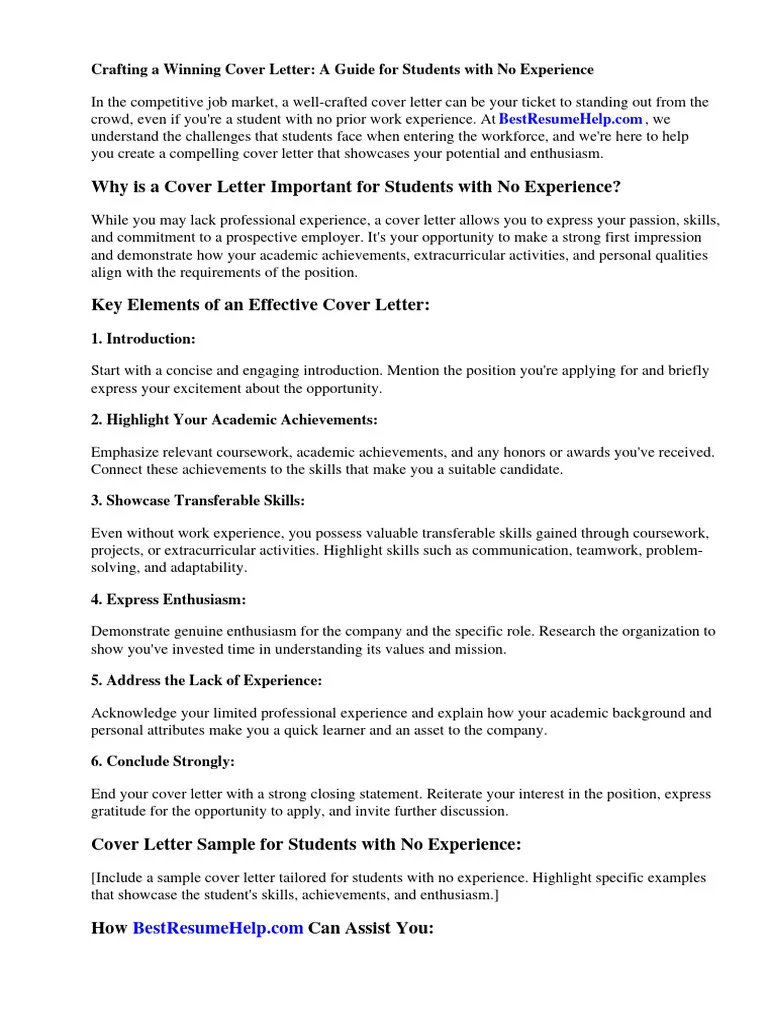
A strong cover letter is your first opportunity to make a positive impression on a potential employer. When writing a cover letter for a student advisor position, particularly without experience, it’s vital to highlight your skills, enthusiasm, and potential. A well-structured letter includes a clear introduction stating the position you are applying for and where you found the posting, a body that showcases your relevant skills and experiences (even if not directly related to advising), and a conclusion that reiterates your interest and thanks the reader for their time. Remember to address the letter to the hiring manager by name if possible, as this demonstrates attention to detail and genuine interest in the role. The language used should be professional, yet enthusiastic, reflecting your personality and genuine desire to support students. This initial component, if crafted with care, sets the stage for the remainder of your application.
Highlighting Transferable Skills Without Experience

Even with no direct experience as a student advisor, you likely possess a variety of transferable skills that are highly valued in this role. Think about skills gained from part-time jobs, volunteer work, extracurricular activities, or academic projects. Communication skills are essential – have you given presentations, led group discussions, or mediated conflicts? Problem-solving skills are also critical – have you successfully resolved issues, analyzed complex situations, or developed creative solutions? Consider highlighting organizational skills, such as time management, project coordination, and the ability to prioritize tasks. Leadership skills, such as teamwork, motivation, and mentoring, are also important. Provide specific examples of how you have demonstrated these skills, even if in different contexts. For example, if you were a team lead in a club, describe how you managed responsibilities, motivated members, and achieved goals. The goal is to demonstrate how your skills can be applied to a student advisor role.
Showcasing Academic Achievements and Relevant Coursework
Your academic achievements and coursework are significant in demonstrating your potential as a student advisor. Mention your major and any relevant minors or areas of specialization. Highlight any academic honors, scholarships, or awards you have received. Detail coursework that aligns with the responsibilities of a student advisor, such as psychology, education, communication, or sociology. If you’ve taken courses related to student development, counseling, or academic advising, be sure to mention them. Furthermore, discuss any research projects, essays, or presentations that showcase your analytical skills, ability to conduct research, or communication abilities. Providing specific examples of your academic accomplishments will help the employer understand your dedication to learning and your potential to excel in a role that supports students’ educational goals.
Emphasizing Soft Skills and Personal Attributes
Beyond academic achievements, soft skills and personal attributes are critical for a student advisor. These include empathy, active listening, patience, and the ability to build rapport with students. Highlight your ability to communicate effectively, both verbally and in writing. Demonstrate your problem-solving skills and your capacity to remain calm under pressure. Mention your organizational and time-management skills, which are essential for managing multiple tasks and meeting deadlines. If you are detail-oriented, describe how this helps you in your studies or other activities. Reflect on your ability to work collaboratively with others, as teamwork is often an essential component in a student support setting. Provide specific examples of how you have demonstrated these attributes in your personal or professional life. For instance, describe how you helped a friend through a difficult time, how you resolved a conflict in a group project, or how you organized a successful event.
Tailoring Your Cover Letter to the Job Description

Customize your cover letter to match the specific requirements and expectations outlined in the job description. Carefully read the posting and identify the key skills, qualifications, and experiences the employer is seeking. Then, tailor your letter to highlight how your skills and experiences align with these requirements. Use keywords and phrases from the job description throughout your cover letter, ensuring you address each of the key responsibilities mentioned. If the job description emphasizes the importance of communication skills, provide specific examples of your experience communicating with others. If the position requires strong organizational skills, highlight instances where you have successfully organized events, managed projects, or met deadlines. Demonstrating that you have thoroughly researched the role and understand its demands will significantly increase your chances of being considered for an interview.
Structuring Your Cover Letter for Maximum Impact
The structure of your cover letter should be clear, concise, and easy to follow. Begin with a professional salutation, addressing the hiring manager by name if possible. Then, in the first paragraph, state the position you are applying for and how you learned about the opportunity. In the following paragraphs, showcase your relevant skills, experiences, and academic achievements. Use bullet points or short paragraphs to make your points clear and easy to read. Focus on the most important information and avoid lengthy, complex sentences. Keep your language professional, enthusiastic, and enthusiastic. In the concluding paragraph, reiterate your interest in the role, and thank the reader for their time and consideration. Finally, end with a professional closing such as “Sincerely” or “Best regards,” followed by your name and contact information. The structure ensures your most vital qualifications are presented clearly.
Proofreading and Refining Your Cover Letter
Before submitting your cover letter, carefully proofread it for any errors in grammar, spelling, or punctuation. Errors can create a negative impression and undermine your credibility. Read the letter aloud to catch any awkward phrasing or unclear sentences. Ask a friend, family member, or career advisor to review your cover letter for feedback. They can identify any areas that need improvement or suggest ways to make your letter more compelling. Pay attention to the formatting and ensure your letter is easy to read. Use a professional font, such as Times New Roman or Arial, and maintain consistent spacing and margins. Make sure your contact information is correct and up-to-date. Before submitting, always personalize the letter for the specific job and employer. This attention to detail demonstrates your commitment to the application process.
Formatting Guidelines and Best Practices

Follow standard formatting guidelines to ensure your cover letter is visually appealing and easy to read. Use a professional font, such as Times New Roman or Arial, in a size between 10 and 12 points. Set your margins to one inch on all sides. Use single spacing within paragraphs and double spacing between paragraphs. The cover letter should be no more than one page long. Keep the tone professional, enthusiastic, and positive throughout the letter. Avoid using slang, jargon, or overly casual language. Use action verbs to describe your skills and experiences, such as “managed,” “coordinated,” “developed,” and “communicated.” Include your full name, address, phone number, and email address at the top of the letter. If you have a professional online profile, such as a LinkedIn profile, you may include the link. Following these guidelines will help to showcase you as a strong candidate.
In conclusion, writing a student advisor cover letter with no experience requires focus on transferable skills, academic accomplishments, and personal attributes. Highlighting these factors through targeted language and a well-structured format is crucial. By following the guide, you can craft a compelling cover letter that presents your qualifications and passion for supporting students, significantly increasing your chances of securing an interview and ultimately, the position.