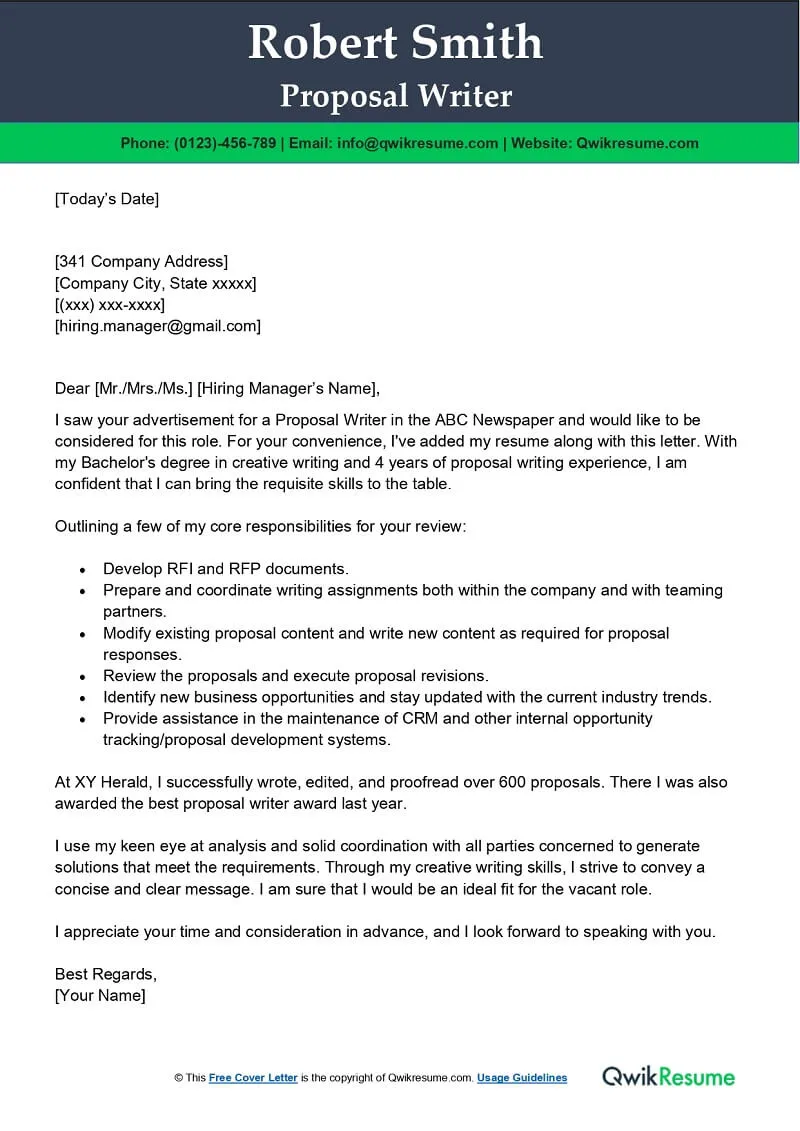
What is a Business Proposal Cover Letter?
A business proposal cover letter serves as the introduction to your detailed proposal, setting the tone for your pitch. It’s the first impression you make on a potential client or investor, and it significantly influences whether they’ll read your entire proposal. This letter provides a concise overview of your proposal, highlighting the key benefits and value you offer. Unlike the proposal itself, which provides in-depth solutions and strategies, the cover letter focuses on generating initial interest and encouraging the recipient to delve deeper into the document. It is a crucial component in business communication as it provides the opportunity to introduce your company, establish credibility, and pique the reader’s interest. A well-crafted cover letter will clearly and concisely communicate your understanding of the client’s needs, and how your proposal addresses those needs, setting the stage for a positive and engaging response.
Why Is a Cover Letter Important?
The importance of a cover letter in a business proposal cannot be overstated. It is the initial handshake in a formal business interaction, offering a chance to make a strong first impression. A well-written cover letter immediately establishes the context of your proposal, providing a brief synopsis of your offer and its relevance to the recipient’s needs. This initial summary is crucial, as it informs the reader about the core value proposition quickly, allowing them to decide whether the proposal warrants further attention. Furthermore, a cover letter demonstrates professionalism and attention to detail, which are critical in building trust with potential clients. It reflects your company’s values and its understanding of their needs. A well-crafted cover letter provides a strategic advantage, clearly communicating your value proposition and showcasing your understanding of the client’s needs, thus significantly increasing the chances of the proposal being read and considered favorably. In essence, the cover letter is not merely an introduction; it is a key component that can influence the success or failure of your proposal.
Key Components of a Winning Cover Letter

A winning cover letter is composed of several critical elements that work together to capture attention and convey the value of your proposal. Firstly, clear and accurate Contact Information is a must, including your company’s name, address, phone number, and email address. Secondly, Date and Recipient Details should be placed appropriately, including the date and the recipient’s name, title, and company, ensuring a personalized approach. The Salutation should be formal and polite, addressing the recipient by name. Next, Crafting a Compelling Opening is very important because it introduces your proposal with a hook. This section needs to quickly grab the reader’s attention by highlighting a key benefit or addressing a specific pain point. Furthermore, Highlighting Your Value Proposition allows you to showcase how your proposal solves their problems or meets their needs. Then, Showcasing Your Understanding of the Client’s Needs helps to confirm you understand their challenges by demonstrating your comprehension of their specific needs. After that, Mentioning the Proposal’s Contents offers a brief overview of what the reader can expect to find in the full proposal. The penultimate aspect involves a Call to Action, which explicitly encourages the reader to take the next step. The final element is a Professional Closing, which reinforces your commitment and gratitude, setting the stage for a successful outcome.
Contact Information
Your contact information is essential for enabling the recipient to reach you effortlessly. At the top of the cover letter, you should include your company’s name, full mailing address, phone number, and email address. Make sure the information is accurate, up-to-date, and easy to read. Use a professional font and format that matches your company’s branding. The contact information provides the client with a clear channel for reaching out for clarifications, further discussions, or to express interest in your proposal. It should be prominently displayed, preferably in the upper-left or upper-right corner of the letter. Including this information demonstrates transparency and professionalism, and it eases the process for the potential client to engage with your team directly. Always double-check your information before finalizing the letter to make sure it’s correct.
Date and Recipient Details
Properly formatting the date and recipient details is critical for a professional cover letter. The date should appear below your contact information, using a standard format like Month, Day, Year. Following the date, you should include the recipient’s details. This starts with their full name and title, followed by their company name and address. Ensure that the recipient’s name and title are accurate to avoid appearing unprofessional. If you know the specific individual who will be reviewing the proposal, addressing the letter to them directly is recommended. If not, research who is most likely to be the decision-maker. Getting the recipient’s details correct is a small but significant step that shows you have taken the time to customize the letter and understand the client’s organizational structure. This personalized approach sets a professional tone, demonstrating that you value the relationship and the opportunity at hand.
The Salutation

The salutation is the initial greeting of your cover letter, and its tone should be professional and respectful. Ideally, you should address the recipient by name. If you know the individual’s name, use ‘Dear Mr./Ms./Dr. [Last Name]’. If you are uncertain of the recipient’s name, then use a more general salutation such as ‘Dear Hiring Manager’ or ‘To Whom It May Concern’ (though it’s always better to find a specific name if possible). Avoid overly informal greetings. The salutation sets the tone for the entire letter, so make it appropriate for the business context. It is critical to ensure the salutation is correct and the name is spelled correctly. Starting your letter with a proper salutation establishes credibility, shows respect, and helps build a professional connection. It shows that you have taken the time to personalize the letter and gives a favorable initial impression. If the name is incorrect or the salutation is unprofessional, it can make the rest of your letter less effective.
Crafting a Compelling Opening
The opening paragraph of your cover letter is critical as it immediately captures the reader’s attention and sets the tone for your proposal. Start with a concise statement that highlights the core value proposition or the main benefit of your proposal. You might address a key challenge the client is facing and how your services or products can solve it, or even provide a brief summary of your understanding of their needs. This is an opportunity to showcase that you’ve done your homework. Ensure your opening is engaging and relevant to the client’s needs. Avoid generic or cliché opening statements, such as “I am writing to submit our proposal.” Instead, aim for a more direct and compelling approach. The opening paragraph should entice the reader to continue reading and learn more about your proposal. The use of strong verbs and concise language is essential for making an impactful opening.
Highlighting Your Value Proposition
In the core of your cover letter, you should highlight your value proposition. This is where you need to clearly articulate the specific benefits your company brings to the table. Define the unique advantages that differentiate you from competitors. Quantify those advantages whenever possible; for example, if your proposal can increase efficiency by a certain percentage, or reduce costs. Emphasize how your solution addresses the client’s specific needs or solves their challenges. Your value proposition should be clear, concise, and aligned with the goals and objectives outlined in the proposal. Focus on results; your value proposition should be about the outcomes the client can expect. The stronger your value proposition, the more likely the client will be to take notice and engage with your proposal.
Showcasing Your Understanding of the Client’s Needs

Demonstrating your understanding of the client’s needs is a critical element of a winning cover letter. In the body of your letter, briefly reference the client’s challenges, goals, and any specific requirements mentioned in the request for proposal (RFP). Highlight how your proposal aligns with their objectives. Show that you’ve researched their business, industry, and competitors, and that you understand their business. Refer to specific points from their RFP or project description. This shows that you are not just sending a generic proposal, but rather have tailored it to their specific needs. If you mention these points, it demonstrates that you’re attentive to detail and genuinely interested in meeting their requirements. This tailored approach sets you apart, making your proposal more relevant and valuable. It shows that your team is not only capable of providing services but is also attentive to the client’s needs.
Mentioning the Proposal’s Contents
Provide a brief overview of what the reader can expect to find in the full proposal. Don’t simply list each section, but rather offer a concise summary of the key aspects. Mention the critical solutions, strategies, and benefits highlighted in the proposal. This overview serves as a roadmap for the reader, guiding them through the detailed information contained within the proposal. Include a brief reference to the main sections or key elements of your proposal. Focus on the most compelling parts, such as innovative strategies, cost-saving measures, or unique approaches. This will make the reader want to read the rest of the proposal. In the cover letter, you should provide a brief overview of the key sections within the proposal, so the reader knows what to expect. The goal is to generate interest and guide the reader through the document.
Call to Action (Encourage a Response)
Include a strong call to action in your cover letter to encourage a response from the recipient. Specify the desired next step, such as scheduling a meeting, requesting more information, or reviewing the proposal in detail. Make the call to action clear and easy to follow. For instance, provide contact details for follow-up inquiries. The call to action is your opportunity to convert interest into action. A clear and concise call to action will guide the reader toward the next step, whether it’s scheduling a meeting, requesting more information, or moving forward with the proposal. It ensures the recipient knows what you expect and what they should do next. Provide a clear call to action that encourages a response, reinforcing your commitment to helping them. This will also set the stage for future communication.
Professional Closing

Your closing should reflect a professional tone and reinforce your enthusiasm and gratitude. Thank the recipient for their time and consideration. Reiterate your willingness to answer any questions or provide additional information. Use a professional closing like “Sincerely,” “Best regards,” or “Respectfully.” Include your name, title, and contact information at the end of the letter. The closing provides a final opportunity to make a positive impression. It reinforces your commitment to the project and expresses your appreciation for the recipient’s time and consideration. Before sending the cover letter, re-read it to ensure the tone is consistent and the closing is appropriate. The closing is your last chance to leave a positive mark.
Formatting and Design Tips
Formatting and design are essential elements to make your cover letter visually appealing and easy to read. Use a professional font, such as Times New Roman or Arial, and ensure a consistent font size, typically between 10 and 12 points. Use clear, concise language, and keep paragraphs short and to the point. Use bullet points or numbered lists when appropriate to highlight key points. Use margins and spacing to create a clean layout. A well-formatted letter demonstrates attention to detail and helps you stand out from the competition. Make sure the formatting is consistent throughout the document and that it aligns with your brand’s style. A visually appealing cover letter can capture a reader’s attention, making the content more digestible. Keep the design clean, consistent, and reflective of your company’s brand to create a favorable impression.
PDF Best Practices
When saving your cover letter as a PDF, it’s important to follow best practices to maintain its integrity. Save the document as a PDF to preserve its formatting, ensuring it appears the same on any device. Before you save, double-check that all of your formatting elements are correctly displayed. Check that images are embedded correctly. Ensure that the PDF is optimized for web use. Consider using a descriptive file name. Always preview the final PDF to ensure that your contact details, formatting, and content are all correctly displayed. The recipient must have a clear, professional-looking document. PDF format ensures that your cover letter will display consistently, regardless of the recipient’s operating system or software. By adhering to these best practices, you are guaranteed that your message reaches the recipient.
Proofreading and Editing

Proofreading and editing are the final steps to ensure your cover letter is polished and free of errors. Carefully review every word in your letter, checking for grammatical errors, typos, and stylistic inconsistencies. Use a spell checker to identify any spelling errors. Ask a colleague to proofread your letter to provide a fresh perspective. A perfect cover letter indicates professionalism and attention to detail. Proofreading and editing ensure that the cover letter presents a professional image and conveys the intended message. Correcting these types of issues reinforces your commitment to quality. Ensure the cover letter is free of any grammatical errors and is well-structured, to make a favorable impression.
Common Mistakes to Avoid
Avoid some common mistakes to enhance the effectiveness of your cover letter. Avoid using generic language, such as phrases that could apply to any proposal. Do not make spelling and grammatical errors, as these diminish credibility. Avoid making the letter too long, keep it focused and concise. Do not focus solely on your company; instead, tailor the letter to the client’s needs. Never send a cover letter without personalization. Ensure you carefully address the recipient, and that the tone is professional. Failing to avoid common mistakes may detract from the overall impact. By avoiding these common pitfalls, you can create a cover letter that is persuasive and effective. A well-crafted and error-free cover letter substantially improves the chances of your proposal being read and positively considered.