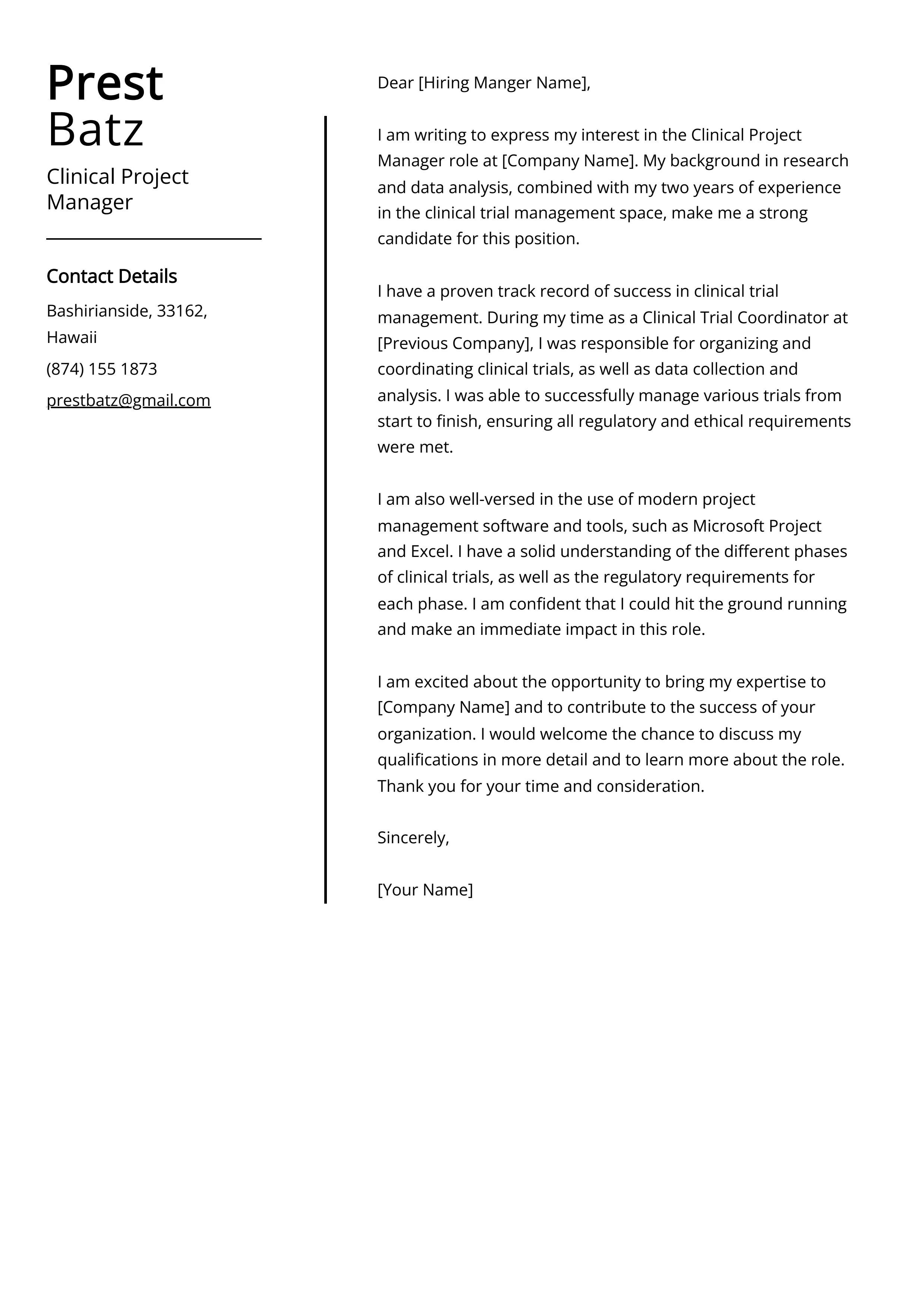
Crafting Your Healthcare Project Manager Cover Letter
A well-crafted cover letter is your first opportunity to make a strong impression on a potential employer. For a Healthcare Project Manager, it’s particularly crucial, as it allows you to showcase not only your project management skills but also your understanding of the healthcare industry and your ability to align your experience with the specific needs of the role. This guide will provide you with the essential elements to create a compelling cover letter that grabs attention and highlights your qualifications, ultimately increasing your chances of landing an interview. We’ll explore how to structure your letter effectively, what to include, and how to avoid common pitfalls. A strong cover letter is more than just a formality; it’s a strategic tool that can significantly enhance your job application.
Understanding the Purpose of Your Cover Letter
The primary purpose of your cover letter is to introduce yourself, express your interest in a specific position, and persuade the hiring manager to review your resume. Unlike your resume, which provides a snapshot of your experience, your cover letter allows you to tell a story, explain why you’re a good fit for the job and the company, and highlight the most relevant aspects of your background. It provides context to your resume, demonstrating your understanding of the role and the organization’s needs. Use this opportunity to communicate your passion for healthcare project management and how your skills can contribute to the company’s success. Make your letter personal and reflect your unique value proposition.
Highlighting Your Skills and Experience

This is where you bridge the gap between your resume and the job requirements. Carefully review the job description and identify the key skills and experiences the employer is seeking. Then, select the most relevant examples from your background and elaborate on them. Use action verbs to describe your accomplishments, and focus on the results you achieved in previous roles. Show, don’t just tell; provide specific examples of how you’ve successfully managed projects, solved problems, and improved outcomes. Quantify your achievements whenever possible to demonstrate the impact of your work. Tailor your skills and experiences to the job description, emphasizing aspects that align with the employer’s needs.
Relevant Project Management Skills
Healthcare project managers need a diverse set of skills to succeed. Highlight your proficiency in project planning, execution, and monitoring. Emphasize your experience with project management methodologies like Agile or Waterfall, depending on the job requirements. Showcase your expertise in risk management, budget management, and resource allocation. Demonstrate your ability to lead and motivate teams, manage stakeholders, and communicate effectively at all levels. If you have experience with project management software, such as MS Project, Asana, or Jira, be sure to mention it. The more specific you are about the tools and methodologies you’ve used, the stronger your application will be.
Healthcare Industry Knowledge
Healthcare project managers must possess a solid understanding of the healthcare industry. Mention your experience with healthcare regulations, such as HIPAA, and your familiarity with healthcare IT systems. If you have worked in different healthcare settings, such as hospitals, clinics, or insurance companies, specify those experiences. Demonstrate your understanding of healthcare operations, patient care processes, and the unique challenges facing the industry. Show that you are familiar with current healthcare trends and their impact on project management. Highlighting your healthcare knowledge sets you apart from candidates without industry-specific experience.
Key Accomplishments to Showcase

Focus on accomplishments, not just responsibilities. Instead of saying you ‘managed projects,’ describe specific projects you successfully completed, the challenges you overcame, and the results you achieved. Highlight your ability to deliver projects on time and within budget. If you have improved efficiency, reduced costs, or enhanced patient outcomes, provide concrete examples. Showcase your leadership skills by describing how you led and motivated your project teams. When describing your achievements, make sure they align with the requirements of the target job. Choose accomplishments that are the most relevant to the position you are applying for.
Quantifying Your Achievements
Whenever possible, use numbers and metrics to quantify your accomplishments. Instead of saying ‘Improved project efficiency,’ say ‘Improved project efficiency by 15%.’ Instead of saying ‘Reduced project costs,’ say ‘Reduced project costs by $50,000.’ Providing specific numbers gives your achievements more credibility and demonstrates the impact of your work. Quantifying your achievements makes it easier for the hiring manager to understand the value you brought to your previous roles. Even small improvements can be significant when measured in terms of efficiency, cost savings, or patient outcomes.
Formatting Your Cover Letter for Success
A well-formatted cover letter is easy to read and professional in appearance. Use a standard font like Times New Roman or Arial, and ensure your font size is between 10 and 12 points. Keep your letter concise, ideally within one page. Use clear headings and subheadings to break up the text and make it scannable. Use bullet points to highlight key skills and accomplishments. Proofread your letter carefully to eliminate any grammatical errors or typos. Make sure your cover letter aligns with the professional standards of the healthcare industry.
Contact Information and Salutation

At the top of your cover letter, include your contact information: your name, phone number, email address, and LinkedIn profile URL. Always address your cover letter to a specific person if possible. Research the hiring manager’s name and use a formal salutation like ‘Dear Mr./Ms. [Last Name].’ If you cannot find the hiring manager’s name, use a general greeting like ‘Dear Hiring Manager.’ Avoid using outdated or informal salutations.
Cover Letter Structure
A typical cover letter consists of four main sections: an opening, a body, and a closing. The opening should grab the reader’s attention and state the position you are applying for. The body should highlight your skills, experience, and accomplishments, using examples to support your claims. The closing should summarize your interest in the role and reiterate your enthusiasm, while including a call to action. Keep the structure clear and logical. Each section should flow seamlessly into the next, creating a cohesive and compelling narrative.
Writing a Compelling Opening
Your opening paragraph should immediately capture the reader’s attention. Clearly state the position you are applying for and where you saw the job posting. Briefly mention your key qualifications and why you are interested in the role. Show your enthusiasm for the company and the opportunity. Avoid generic opening lines. Instead, personalize your introduction and make it specific to the job and the company. Your goal is to hook the reader and make them want to continue reading.
Showcasing Your Qualifications

In the body of your cover letter, demonstrate how your skills and experience align with the job requirements. Use the job description as your guide and tailor your letter to match the key qualifications. Provide specific examples of your accomplishments, highlighting the results you achieved in previous roles. Use action verbs to describe your responsibilities and the impact of your work. Focus on what you can bring to the role. Illustrate your understanding of the company’s needs and how you can contribute to their goals.
Expressing Your Enthusiasm
Your cover letter is an opportunity to express your passion for the role and the company. Show your enthusiasm for healthcare project management and your interest in the company’s mission. Briefly explain what excites you about the opportunity. Research the company to demonstrate your interest and understanding of their work. Enthusiasm is infectious and can help you stand out from other applicants.
Closing Your Cover Letter Effectively
Your closing paragraph should summarize your interest in the role and reiterate your enthusiasm. Thank the hiring manager for their time and consideration. Include a call to action, such as stating your availability for an interview and your contact information. Keep your closing concise and professional. End on a positive note, leaving a lasting impression on the reader.
Proofreading and Editing Your Letter

Before submitting your cover letter, carefully proofread and edit it to ensure it is free of errors. Typos and grammatical errors can undermine your credibility and make a negative impression on the hiring manager. Read your letter aloud to catch any awkward phrasing or inconsistencies. Ask a friend or colleague to review your letter for a fresh perspective. A polished and error-free cover letter demonstrates your attention to detail and professionalism.
Reviewing for Clarity and Impact
Ensure your cover letter is clear, concise, and easy to understand. Avoid jargon and overly complex language. Focus on conveying your message in a direct and impactful way. Make sure your key qualifications and accomplishments are easy to spot and immediately relevant to the job. A well-written cover letter leaves a positive impression on the reader and showcases your ability to communicate effectively.
Ensuring Professionalism
Maintain a professional tone throughout your cover letter. Use formal language and avoid slang or informal expressions. Pay attention to your formatting and ensure your letter is well-organized and visually appealing. Use a professional email address and include your contact information at the top of your letter. Proofread carefully to avoid any typos or grammatical errors. A professional cover letter conveys your attention to detail and your commitment to excellence.
Tailoring Your Cover Letter

Tailoring your cover letter to each specific job application is essential. Generic cover letters that can be used for any job are often easily dismissed. Customize your cover letter by carefully reviewing the job description and identifying the key requirements and qualifications. Use the job description as a guide to highlight your most relevant skills and experiences. Research the company and show your understanding of their mission, values, and recent projects. Tailoring demonstrates your genuine interest in the role and increases your chances of getting an interview.
Researching the Company
Before you start writing your cover letter, research the company to gain a better understanding of its mission, values, and recent projects. Visit the company’s website, read their ‘About Us’ section, and look for news articles or press releases about the company. Understanding the company’s goals and culture will help you tailor your cover letter to align with their needs. If possible, find the hiring manager’s name and learn more about their role within the organization. Researching the company demonstrates your initiative and genuine interest in the position.
Customizing for Each Application
Each cover letter should be customized to the specific job you are applying for. Use the job description to identify the key requirements and qualifications. Highlight your skills and experiences that are most relevant to the role, and provide specific examples of your accomplishments. Tailor your language to match the tone and style of the company. Customize your opening and closing paragraphs to express your interest in the specific position and company. A customized cover letter increases your chances of making a positive impression and getting an interview.
Common Mistakes to Avoid

Avoiding common mistakes is critical for a successful cover letter. Be aware of the pitfalls that can make a negative impression on hiring managers and diminish your chances of getting an interview. By understanding and avoiding these mistakes, you can significantly improve the quality of your cover letter and increase your chances of landing your dream job. Common mistakes often involve a lack of personalization or a failure to address the specific requirements of the job. Take your time to review and edit before you submit your application.
Generic Language and Lack of Specificity
Avoid using generic language and vague statements. Generic cover letters often fail to capture the reader’s attention. Instead of making general claims about your skills, provide specific examples of your accomplishments. Use action verbs to describe your responsibilities and the impact of your work. Avoid phrases like ‘I am a team player’ or ‘I am a hard worker.’ Demonstrate these qualities through your examples. Provide concrete examples of your achievements. Make sure your cover letter is unique to you and the specific job you are applying for.
Ignoring the Job Description
Failing to address the requirements outlined in the job description is a major mistake. The job description is your guide for what the employer is looking for in a candidate. Carefully review the job description and identify the key skills, experience, and qualifications. Tailor your cover letter to match these requirements, highlighting the most relevant aspects of your background. Show the hiring manager how your skills and experience align with the job description’s needs. Tailoring your cover letter to the job increases your chances of making a positive impression.
Grammar and Spelling Errors
Grammar and spelling errors can make a negative impression and undermine your credibility. They can indicate a lack of attention to detail and professionalism. Always proofread your cover letter carefully before submitting it. Read your letter aloud to catch any awkward phrasing or inconsistencies. Ask a friend or colleague to review your letter for a fresh perspective. Use a grammar checker to identify any errors you may have missed. A polished and error-free cover letter demonstrates your attention to detail and your commitment to excellence.
Best Practices for Sending Your Cover Letter
Once you’ve written and proofread your cover letter, follow best practices for sending it. Always attach your cover letter as a PDF file to preserve its formatting and ensure it can be viewed correctly by the recipient. Customize the email subject line to include the job title and your name. In the body of the email, reiterate your interest in the role and briefly mention your key qualifications. Proofread your email before sending it to ensure it is free of errors. Following these practices will ensure your cover letter is presented professionally and increases your chances of success.