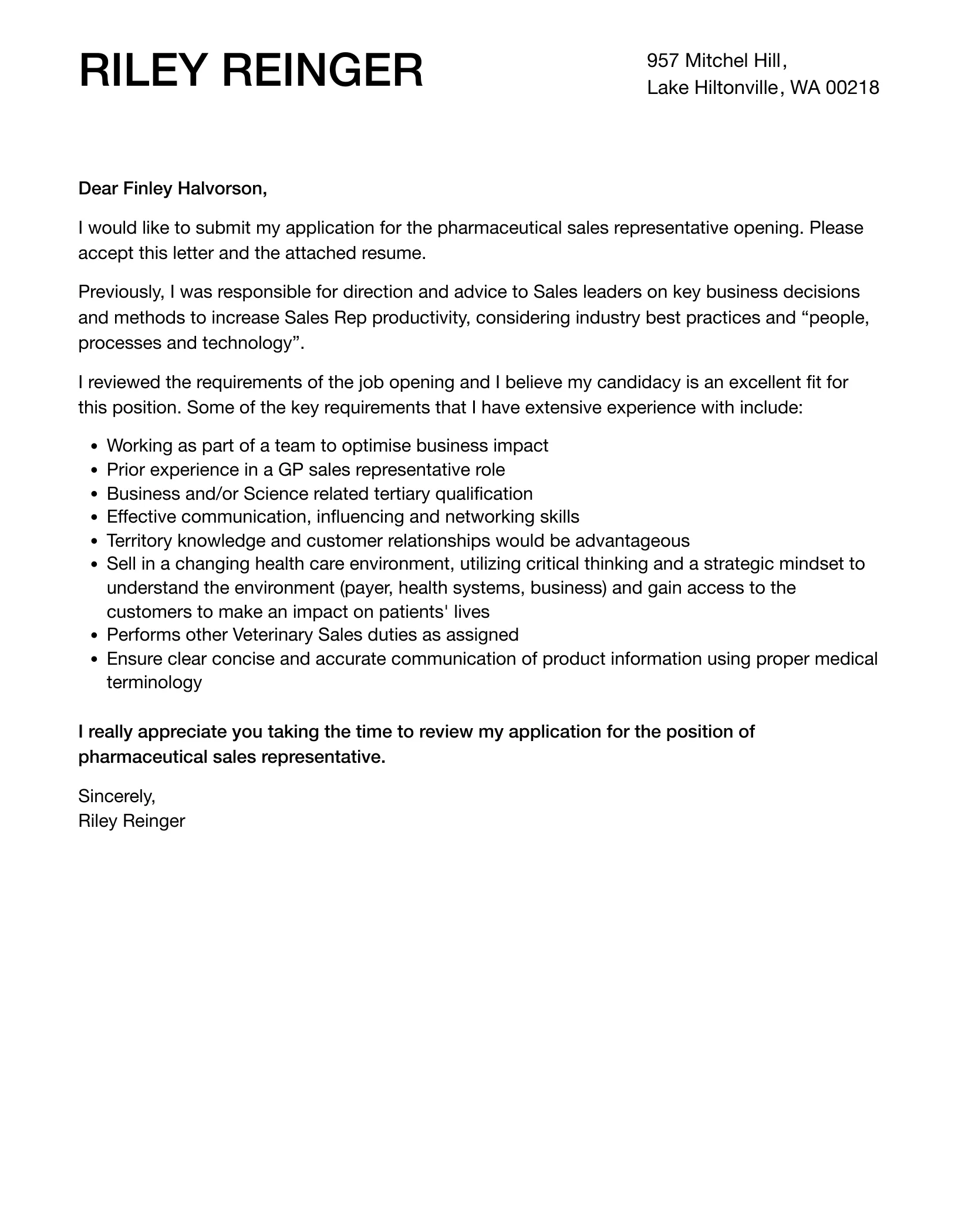
Why a Strong Cover Letter is Crucial
In the competitive world of pharmaceutical sales, a well-crafted cover letter is your first chance to make a positive impression. Even without direct experience in the field, a compelling cover letter can be the key to unlocking the door to your dream job. It’s more than just a formality; it’s your opportunity to showcase your personality, highlight transferable skills, and demonstrate your genuine interest in the role and the company. A strong cover letter complements your resume, providing context and depth to your qualifications, and allowing you to connect with the hiring manager on a personal level. It sets the tone for your application and can significantly increase your chances of securing an interview. Remember, in the absence of experience, the cover letter becomes even more critical in highlighting your potential and enthusiasm.
Highlighting Transferable Skills
Since you might not have direct experience in pharmaceutical sales, focusing on your transferable skills is essential. These are the skills you’ve developed in previous roles, education, or volunteer work that are relevant to sales. Think about skills like communication, persuasion, problem-solving, and organization. The goal is to demonstrate how your existing abilities can be applied to the pharmaceutical sales environment. This involves not just listing your skills but also providing specific examples of how you’ve used them to achieve results. The best cover letters provide concrete evidence, so the hiring manager can easily visualize how your skills translate into success in a sales role. This section should take center stage in your cover letter, as it is the area where you can make the most impact without direct experience.
Identify Relevant Skills

Start by identifying the skills most crucial for pharmaceutical sales. Analyze the job description carefully to understand the specific skills the employer is looking for. Typical requirements include strong communication, the ability to build relationships, a persuasive nature, and a customer-centric approach. Also, highlight abilities in areas like time management, organization, and analytical thinking. Create a list of these skills, then think about how you have demonstrated them in previous experiences. These can be from any setting - previous jobs, volunteer work, academic projects, or extracurricular activities. Make sure the examples are recent and relevant to the pharma sales environment.
Communication Skills
Communication is at the heart of any sales role, especially in pharmaceuticals. Illustrate your ability to communicate clearly and persuasively, both verbally and in writing. Have you given presentations, written reports, or had to explain complex information to others? Provide examples of how you’ve adapted your communication style to different audiences. For example, you might have simplified technical information for a non-technical audience or successfully negotiated a deal with a client. Highlight your active listening skills, which is vital to understanding the needs of customers. Show your ability to build rapport and create positive relationships through effective communication. Remember to keep the language concise and to the point, as it also shows the importance of this skill in your work.
Sales and Persuasion Abilities
Even without formal sales experience, you’ve likely used persuasion in different aspects of your life. This could be convincing a team to adopt a new strategy, influencing a supervisor, or even negotiating a price. Detail instances where you successfully persuaded others, highlighting your techniques. Describe the situation, the actions you took, and the positive outcome you achieved. It is essential to show that you understand the sales process, even if you haven’t worked in a sales role. The key here is to demonstrate that you possess the natural ability to influence and persuade others. Make sure you include a discussion on how you have understood the customer’s need and adjusted your communication based on that. Include how you address objections or create new opportunities.
Analytical Skills

Sales in the pharmaceutical industry often involve analyzing data, understanding market trends, and assessing customer needs. Mention any experience you have with data analysis, market research, or problem-solving. If you’ve used data to identify trends, make recommendations, or improve a process, describe the process in detail. Even if your experience is not directly related to sales, show how you can use data to drive decisions. Emphasize your critical thinking skills and your ability to use information to make informed choices. Employers are looking for someone who can interpret information and apply it strategically. Explain the methods and tools that you have used to create value, even on a small scale.
Detail-Oriented Skills
Pharmaceutical sales require a high level of attention to detail, especially when dealing with regulations and client information. Demonstrate your organizational skills, and your ability to manage multiple tasks simultaneously. Provide examples of how you have maintained accuracy in your work, such as managing records, handling confidential information, or ensuring compliance with regulations. If you have experience with project management, mention your processes for planning, organizing, and executing projects. Highlight the systems you’ve used to stay organized, such as to-do lists, calendars, or project management software. Any work that requires accuracy and precision is a plus, as the lack of this skill could ruin all the hard work done so far.
Researching the Pharmaceutical Company
Thorough research is essential when applying for any job, but it’s particularly important when you’re trying to make a strong impression without relevant experience. Demonstrate that you understand the company’s mission, values, and products. The more familiar you are with the company, the better you can tailor your cover letter and show your genuine interest in the position. This preparation makes you stand out from other candidates. Being able to align your skills and experiences with the company’s needs is a key factor in demonstrating you are the right fit. Also, identify the current industry trends and how the company is responding to them. This shows your proactive approach to work and learning.
Understanding the Company’s Mission and Values

Visit the company’s website and other online resources to gather information about its mission and values. Read the ‘About Us’ section, look for press releases, and explore their social media presence. Identify how the company views its role in the industry and what it prioritizes. Look for clues on what the company values in its employees. Does it emphasize teamwork, innovation, or customer focus? Use this information to show how your values align with the company’s culture. Make sure you highlight the same values in your experience. Show that you have the same professional and cultural values as the company. This demonstration of alignment will show the company that you are a good fit.
Tailoring Your Letter to the Company
Once you’ve researched the company, it’s time to tailor your cover letter specifically to their needs. Avoid using a generic cover letter. Address the letter to the hiring manager by name if possible. Reference specific products or initiatives the company is involved in. In the cover letter, connect your skills and experiences to the company’s objectives. Show how you can help the company achieve its goals. For instance, if the company emphasizes customer satisfaction, emphasize your customer service skills and your ability to build relationships. Customizing your letter will prove you have taken the time to understand the company and are genuinely interested in working for them. By doing this, you show that you are not a generic applicant and that you are the right fit for the company.
Structuring Your Cover Letter
A well-structured cover letter is easy to read and highlights your most relevant skills. It also demonstrates your professionalism. Follow a standard business letter format, with a clear opening, body paragraphs, and a closing. Each part of the cover letter should serve a specific purpose, guiding the reader through your qualifications and making your case for an interview. Keep the language clear and concise, focusing on demonstrating your value. Keep the tone professional and enthusiastic, reflecting your eagerness to join the company. Always proofread your cover letter carefully to ensure there are no errors, which will enhance your credibility.
Opening Paragraph Grabbing Attention

The opening paragraph is your first chance to grab the hiring manager’s attention. It should be concise and compelling. Mention the specific position you are applying for and where you found the job posting. State your enthusiasm for the role and the company. If you have a connection to the company or the industry, mention it here. Highlight your most impressive accomplishment that is relevant to the job. The goal is to make the hiring manager want to read the rest of your letter. Keep the opening brief and focused, and make sure it clearly states why you are interested in the position. Make sure the sentences are clear and engaging to captivate the reader’s attention.
Body Paragraphs Showcasing Your Value
The body paragraphs are where you showcase your skills and experiences, focusing on transferable skills and achievements. Use each paragraph to address a specific point. Provide specific examples to support your claims. For each skill you highlight, use the STAR method (Situation, Task, Action, Result) to demonstrate your abilities. Describe the situation, the task you needed to complete, the actions you took, and the results you achieved. For example, explain how you increased sales, improved customer satisfaction, or resolved a problem. Use keywords from the job description to tailor your language and make your application more relevant. Also, keep each paragraph concise, focusing on the most relevant information. Maintain a professional tone while keeping it engaging. This section is vital in your application.
Closing Paragraph Call to Action
The closing paragraph should reiterate your interest in the position and express your gratitude for the hiring manager’s time and consideration. State your availability for an interview and provide contact information. Reiterate your enthusiasm and confidence in your ability to contribute to the company. Make it clear that you want to take the next step in the application process. End with a professional closing such as “Sincerely” or “Best regards”, followed by your name. Your goal is to leave a positive and lasting impression. Ensure the tone is confident but not overly assertive. Your call to action should be clear and direct, making it easy for the hiring manager to take the next step.
Formatting and Presentation Tips

The format of your cover letter is just as important as its content. Poor formatting can make your letter difficult to read, and it may create a negative impression, even if the content is excellent. Use a professional font such as Times New Roman, Arial, or Calibri, and a font size between 10 and 12 points. Use standard margins (1 inch on all sides) and single-spacing. Ensure there is sufficient white space to make the letter easy on the eyes. Use bullet points to highlight key achievements or skills, if appropriate. Choose a clean, uncluttered layout. If possible, save your cover letter as a PDF to preserve the formatting when the recipient opens it. Always ensure your cover letter is visually appealing and easy to read.
Proofreading Your Cover Letter
Proofreading is a crucial step that can make or break your application. Errors in grammar, spelling, or punctuation create a negative impression, suggesting a lack of attention to detail. Before submitting your cover letter, carefully review it for any mistakes. Read it aloud to catch any awkward phrasing or grammatical errors. Use a spell checker, but don’t rely on it entirely, as it won’t catch all errors. Have a friend or career counselor review your cover letter. They can offer a fresh perspective and spot any mistakes you may have missed. Make sure that the formatting is correct. Check the contact details and the company name. Ensure that the content flows logically and that your message is clear and concise. This small step can make a big difference in your chances of landing an interview.
Using Action Verbs and Keywords
Use action verbs to start your sentences and highlight your accomplishments. Action verbs make your cover letter more dynamic and engaging. Begin each sentence with a strong verb to describe what you did or what you achieved. Refer to the job description and incorporate keywords from the posting. Use the keywords naturally throughout your cover letter to show your suitability for the role. These keywords are often screened by applicant tracking systems. Be sure the keywords fit within the context of the sentences. Use the action verbs to show what you were doing while using the keywords. Also, use a thesaurus to avoid repetition, but don’t try to be too fancy. The goal is to impress your potential employer.