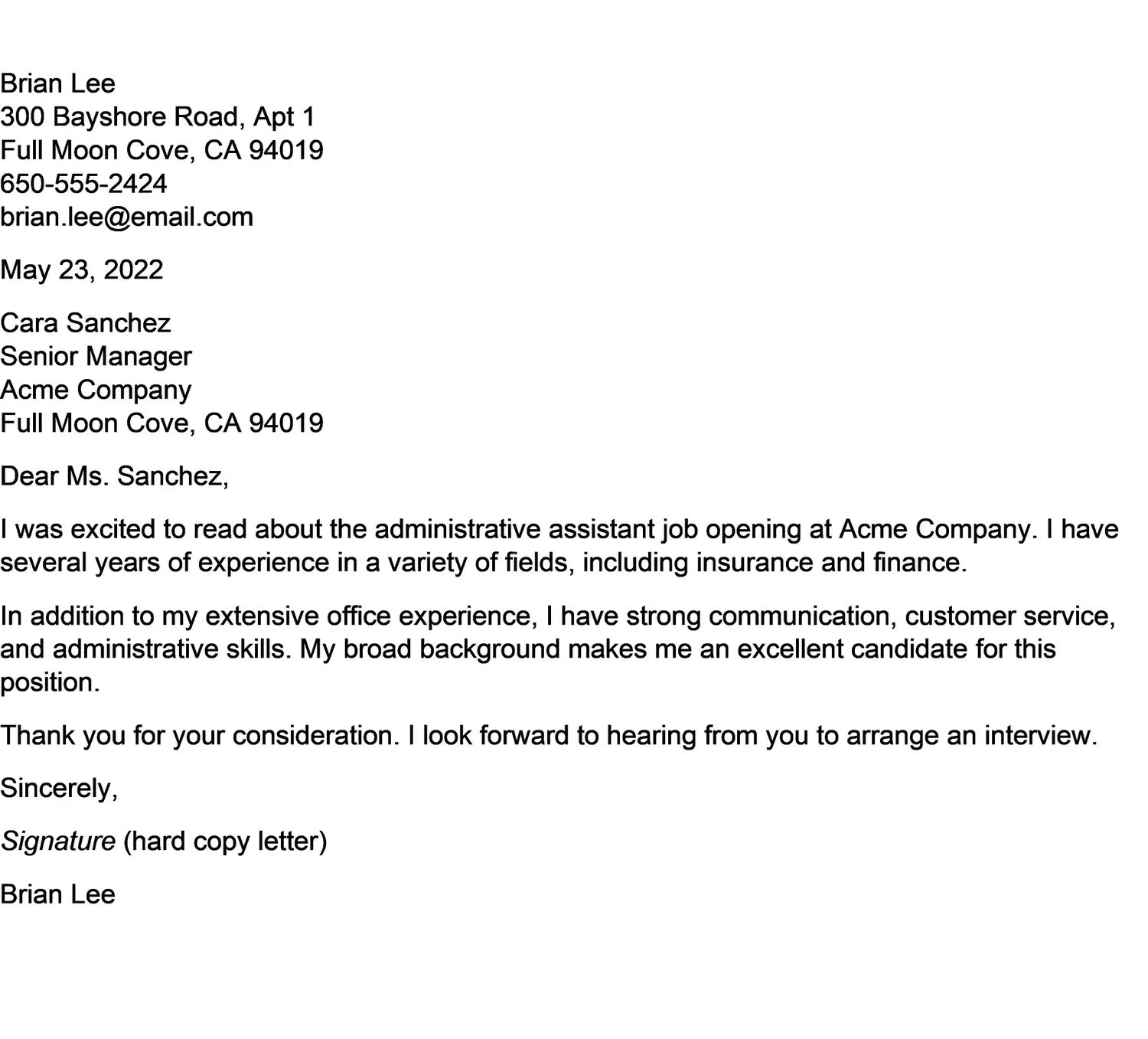
Understanding the Importance of a Cover Letter
In the competitive landscape of job applications, an administrative assistant cover letter serves as your first, and often most impactful, introduction to a potential employer. It’s more than just a formality; it’s a strategic tool to demonstrate your personality, passion, and suitability for the role. Unlike a resume, which is a factual summary of your experience, a cover letter allows you to tell a story, connecting your skills and experiences to the specific needs of the job and the company. A well-crafted letter provides context, elaborates on your qualifications, and highlights your unique value proposition, setting you apart from other applicants. By carefully constructing each paragraph, you can create a compelling narrative that captures the reader’s attention and encourages them to delve deeper into your qualifications, ultimately increasing your chances of landing an interview. This initial impression can significantly influence an employer’s perception and decision-making process, making the cover letter a crucial element of your job application strategy. Prioritizing its quality can directly influence your career trajectory, leading to opportunities that align with your professional aspirations.
Why a Cover Letter is Crucial
A cover letter is a critical component of your job application, often overlooked but undeniably impactful. It gives you the opportunity to go beyond the bullet points of your resume and provide a more personal and detailed account of your qualifications, experiences, and aspirations. This document allows you to showcase your communication skills, demonstrate your understanding of the job requirements, and express your genuine interest in the company and the position. Furthermore, it provides an opportunity to address any potential gaps in your resume or explain career transitions, giving context to your professional journey. Through your cover letter, you can convey your personality, enthusiasm, and dedication, elements that are often challenging to communicate effectively in a resume. A well-written cover letter can significantly increase your chances of securing an interview by making a strong first impression and convincing the hiring manager that you are not only qualified but also a great fit for the organization’s culture. Failing to submit a cover letter, or submitting a poorly written one, can signal a lack of attention to detail or genuine interest in the role, potentially resulting in your application being overlooked.
Highlighting Your Administrative Skills

When crafting your administrative assistant cover letter, the primary goal is to highlight the skills and experiences that align with the job requirements. Begin by carefully reviewing the job description and identifying the key skills the employer is seeking. These could range from communication and organization to technical proficiency and problem-solving. Once you have identified these core competencies, think about specific instances where you have successfully demonstrated these skills in previous roles or projects. Quantify your achievements whenever possible; for example, instead of saying “managed schedules,” you could state “managed schedules for a team of 10+ executives, resulting in a 15% increase in meeting efficiency.” Use action verbs to describe your accomplishments, creating a vivid picture of your capabilities. Moreover, tailor your cover letter to the specific company and role, showing that you understand their needs and can contribute effectively. This approach demonstrates your commitment to excellence and your ability to make a valuable contribution to their team. Emphasizing your skills effectively sets you apart from other applicants, showcasing your value and suitability for the role.
Key Skills to Showcase
As an administrative assistant, a diverse skill set is crucial for success. While specific requirements vary, some skills are universally valued. Focus on showcasing these in your cover letter to capture the attention of hiring managers. Highlight your proficiency in communication, both written and verbal. Explain your ability to correspond with clients, colleagues, and stakeholders. Detail your experience in managing schedules, coordinating meetings, and handling travel arrangements, illustrating your organizational prowess. Demonstrate technical proficiency in software such as Microsoft Office Suite (Word, Excel, PowerPoint, Outlook) and any industry-specific tools. Include your ability to handle multiple tasks, prioritize effectively, and meet deadlines. These skills are fundamental for the smooth functioning of any administrative role. Remember to provide concrete examples and use strong action verbs to demonstrate these key competencies and their positive impact in previous positions. By presenting your abilities clearly and concisely, you can give a clear indication to employers that you are equipped to excel in the role.
Communication Skills
Effective communication is at the heart of any administrative role. Highlight your ability to communicate clearly and concisely, both in writing and verbally. Provide examples of how you’ve communicated with diverse audiences, from executives to clients. Mention experience in composing emails, drafting reports, and creating presentations. Detail how you handle phone calls, manage correspondence, and take minutes in meetings. Showcase your ability to tailor your communication style to different situations and audiences. Explain how you manage sensitive information and maintain confidentiality. If you have experience in customer service, emphasize your ability to handle inquiries professionally and resolve issues efficiently. Describe instances where your communication skills helped to improve relationships or streamline processes. By demonstrating strong communication skills, you assure the employer that you can effectively represent the company and contribute to a positive work environment. This skill set underscores your adaptability, versatility, and ability to excel in a multifaceted administrative role.
Organization and Time Management

Organization and time management are essential for administrative assistants. Highlight your ability to manage schedules, prioritize tasks, and meet deadlines. Provide specific examples of how you’ve organized complex projects, coordinated meetings, or managed multiple calendars. Mention your experience with scheduling software and tools. Detail your strategies for staying organized, such as using to-do lists, creating filing systems, or implementing project management techniques. Describe your ability to handle unexpected situations, such as urgent requests or last-minute changes. Quantify your achievements by stating, for example, that you reduced scheduling conflicts by a certain percentage through effective organization. If you have experience in managing travel arrangements, emphasize your ability to handle logistics efficiently. Show that you are detail-oriented and capable of maintaining a high level of accuracy. By demonstrating strong organizational and time-management skills, you convey your ability to keep the office running smoothly and ensure that projects are completed on time and within budget. This helps establish your efficiency and your ability to make a tangible impact in the workplace.
Technical Proficiency
Technical proficiency is a must-have skill in the administrative field. Highlight your experience with software applications, such as Microsoft Office Suite (Word, Excel, PowerPoint, Outlook), and any other programs relevant to the role. Detail your experience with database management, CRM systems, and any specialized software. If you have experience with online communication tools, such as Zoom or Microsoft Teams, be sure to include that. Explain your ability to troubleshoot technical issues and provide support to colleagues. If you have experience in website management or social media, include that as well. Mention any certifications you possess, such as those related to Microsoft Office or specific software programs. List any other computer skills relevant to the job, such as typing speed, data entry, and internet research. Emphasize your willingness to learn new technologies and adapt to changing requirements. By highlighting your technical skills, you demonstrate your ability to contribute immediately and to quickly learn any new tools the company uses. This provides a clear indication that you can handle the technological demands of the job.
Formatting Your Cover Letter for Impact
The presentation of your cover letter can be just as important as the content itself. Proper formatting makes your letter easy to read and conveys professionalism. Ensure your letter uses a standard business letter format, including your contact information, the date, the hiring manager’s name and title, and the company’s address. Choose a professional font, such as Times New Roman, Arial, or Calibri, and use a font size between 10 and 12 points. Maintain consistent margins, typically one inch on all sides, to create a clean and balanced look. Use single-spacing within paragraphs and double-spacing between paragraphs to improve readability. Break up large blocks of text by using bullet points or short paragraphs to highlight key information. Proofread your cover letter carefully for any grammatical errors or typos, as these can create a negative impression. Consider using a template to ensure your formatting is consistent and professional. A well-formatted cover letter is an essential element in showcasing your attention to detail and your commitment to excellence, demonstrating your understanding of professional communication. Properly formatted letters leave a positive impression.
Header and Contact Information

Your header is the first thing a hiring manager will see, so ensure it’s accurate and professional. Start with your full name, followed by your address, phone number, and email address. Use a professional email address, avoiding nicknames or informal language. The date should follow, typically placed below your contact information. Next, include the hiring manager’s name and title, if known. If you cannot find the hiring manager’s name, use a general salutation like “Dear Hiring Manager.” Include the company’s name and address, aligning them with the rest of the letter. Keep your contact information concise and easy to read, ensuring that it is consistent with the information on your resume. Check your contact information for accuracy. This ensures the hiring manager can easily reach you for further communication. A well-structured header sets a professional tone and allows for quick contact, demonstrating your attention to detail and professionalism from the very beginning.
Professional Salutation
The salutation sets the tone for your cover letter, so it’s important to get it right. Address the hiring manager by name whenever possible, as it shows you’ve done your research and are genuinely interested in the role. Use “Dear Mr./Ms./Mx. [Last Name]” for a formal approach. If you don’t know the hiring manager’s name, you can use a more general salutation, such as “Dear Hiring Manager” or “Dear [Company Name] Hiring Team.” Avoid overly casual salutations like “Hi” or “Hello” unless you are instructed to do so by the company. Ensure you spell the name correctly, as a misspelling can create a negative impression. Keep the salutation concise and professional, setting a positive tone for the rest of your letter. Your salutation can shape the hiring manager’s initial perception. A well-chosen salutation communicates respect, attention to detail, and an understanding of professional etiquette.
Crafting a Compelling Opening Paragraph
The opening paragraph of your cover letter is your first and best opportunity to grab the hiring manager’s attention, so make it count. Start by clearly stating the position you are applying for and where you saw the job posting. Briefly mention how your skills and experience align with the requirements of the role. This sets the context for the rest of your letter. Then, express your enthusiasm for the position and the company. Show that you’ve done your research and that you understand the company’s mission, values, and culture. Consider including a strong statement that highlights your unique value proposition. What sets you apart from other applicants? Why are you the perfect fit for this job? Be confident and engaging, but avoid clichés. Keep the paragraph concise and focused. The goal is to capture the reader’s attention and encourage them to read the rest of your letter. A captivating opening paragraph can significantly increase the likelihood of your application being reviewed favorably.
Showcasing Your Value Proposition

Your value proposition is the unique set of skills, experiences, and qualities that you bring to the table. Clearly articulating your value proposition is essential for demonstrating why you are the best candidate for the administrative assistant position. Focus on the specific benefits you offer to the company, not just listing your skills. Explain how your skills and experiences align with the company’s needs and the job requirements. Quantify your achievements whenever possible. Use numbers to illustrate your impact, like the percentage of improved efficiency. Highlight any unique skills or experiences that set you apart from other applicants. If you have a specific industry experience or have worked with specific technologies, be sure to mention it. Explain how your skills can directly contribute to the company’s goals and objectives. Think about what problems you can solve or what improvements you can bring. By clearly showcasing your value proposition, you highlight the benefits of hiring you, providing a compelling reason for the hiring manager to choose you over other candidates.
Body Paragraphs Highlighting Achievements
The body paragraphs are your opportunity to provide specific examples of your achievements and demonstrate your capabilities. Focus on the skills and experiences most relevant to the job description. For each key skill, provide a specific example of how you have demonstrated it in a previous role or project. Use the STAR method (Situation, Task, Action, Result) to structure your examples. Briefly describe the situation you were in, the task you were assigned, the actions you took, and the results you achieved. This provides a clear, concise, and impactful narrative. Quantify your accomplishments whenever possible. Use numbers, percentages, or specific data to illustrate the impact of your actions. For example, “Reduced administrative costs by 15%.” Tailor your examples to the specific requirements of the job. Highlight accomplishments that align with the company’s needs and goals. Your examples should prove that you are qualified, capable, and ready to make a contribution from day one. By structuring your body paragraphs this way, you present a compelling case for why you are the right fit.
Quantifying Your Accomplishments
Quantifying your accomplishments is a critical element in making your cover letter stand out. Numbers, percentages, and specific data provide concrete evidence of your skills and effectiveness. Rather than stating, “Managed schedules effectively,” say, “Improved meeting scheduling efficiency by 20%.” Instead of saying, “Improved organization,” state, “Implemented a new filing system that reduced document retrieval time by 25%.” Always include specific examples to illustrate your achievements. For example, “Successfully managed a high volume of phone calls, averaging 50+ calls per day.” Quantify your achievements to showcase your impact. Show the value you bring to the company. Quantification transforms a vague statement into a measurable achievement. If possible, provide data that aligns with the job requirements. By providing tangible evidence, you demonstrate your ability to deliver results, illustrating your impact and increasing the likelihood of you being selected for an interview.
Tailoring Your Letter to the Job Description

Customizing your cover letter to each job description is essential for demonstrating your genuine interest and suitability for the role. Begin by carefully reading the job description, identifying the key requirements and skills. Match your skills and experiences to the specific needs of the job. Make sure your cover letter directly addresses how you meet each requirement. Use keywords from the job description throughout your letter. This will make your application more visible to applicant tracking systems (ATS). Provide examples of how you have demonstrated those skills in previous roles or projects. Highlight any specific experience or knowledge that the company is looking for. If the job description mentions specific software, technologies, or industries, be sure to include those in your letter. Tailoring your cover letter shows that you have taken the time to understand the role and the company’s needs. When you personalize your cover letter, you increase your chances of being selected for an interview. This custom approach shows your genuine interest and shows a high degree of professionalism.
Emphasizing Relevant Experience
Your cover letter should highlight the most relevant experiences that align with the job requirements. Focus on positions and projects that have equipped you with the necessary skills for the administrative assistant role. Prioritize experiences where you have demonstrated the skills most valued by employers, such as communication, organization, and technical proficiency. For each experience, provide a brief overview of your responsibilities and accomplishments. Quantify your achievements whenever possible to showcase the impact of your work. Tailor the details of your experience to the specific job description. Highlight any transferable skills from previous roles that would be beneficial in this new position. If you have gaps in your employment history, address them briefly and explain how you have used that time productively, such as through professional development. Make sure the information is clear, concise, and easy to understand, highlighting the most relevant parts of your professional journey. Emphasizing your experience demonstrates to potential employers that you have the proven ability to handle the responsibilities of the role.
The Importance of Proofreading and Editing
Proofreading and editing are crucial steps in the cover letter writing process. Errors can undermine your credibility and create a negative impression. Thoroughly proofread your cover letter for any grammatical errors, spelling mistakes, and typos. Check for correct punctuation and capitalization. Make sure your sentences are clear, concise, and easy to understand. Read your cover letter aloud, as this helps you catch errors you might miss when reading silently. Have a friend, family member, or career counselor review your cover letter for a fresh perspective. They may catch errors that you have overlooked. Check for consistency in formatting and style. Ensure your letter flows logically and is easy to read. Proofreading and editing demonstrate your attention to detail and commitment to excellence. A well-written, error-free cover letter significantly increases your chances of landing an interview. Proofreading is your final step to ensure the cover letter reflects your professionalism and expertise.
Common Mistakes to Avoid

There are several common mistakes that can hinder the effectiveness of your cover letter. One of the biggest pitfalls is simply not tailoring the letter to the specific job and company. Generic, mass-produced cover letters show a lack of interest. Another mistake is focusing too much on yourself rather than highlighting how you can benefit the employer. Avoid clichés and overly formal language. Keep your tone professional and enthusiastic. Make sure to avoid any spelling, grammar, or punctuation errors. These errors can create a negative impression. Don’t exceed the recommended length of one page. Hiring managers often have limited time to review applications. Finally, don’t forget to proofread your cover letter carefully before submitting it. Avoiding these common mistakes significantly improves your chances of making a positive impression and advancing to the next stage of the hiring process.
Closing with Confidence and a Call to Action
Your closing paragraph is your final opportunity to leave a lasting impression. Reiterate your interest in the position and the company. Summarize your key qualifications and why you are a great fit. Express your enthusiasm for the opportunity and your desire to learn more about the role. Include a clear call to action, such as requesting an interview or expressing your willingness to discuss your qualifications further. Thank the hiring manager for their time and consideration. Use a professional closing, such as “Sincerely” or “Respectfully,” followed by your full name. Make sure your contact information is accurate and up-to-date. A confident and well-written closing reinforces your professionalism and initiative. When you close with a clear call to action, you provide a concrete next step for the hiring manager. This ensures that your cover letter leaves a lasting impression and encourages further communication, thus advancing your application.