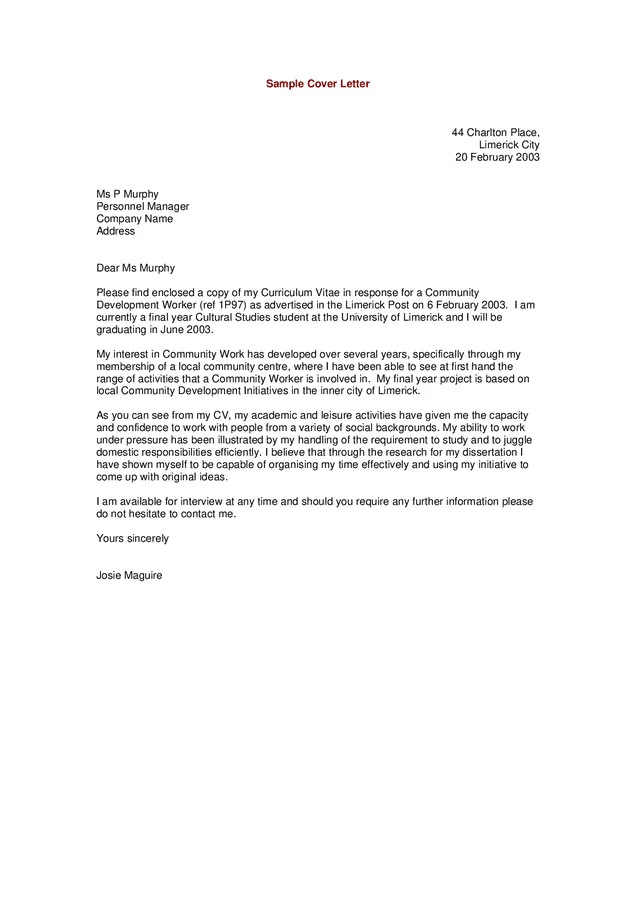
Understand the Purpose of a Cover Letter
A well-crafted cover letter serves as your personal introduction to a potential employer, providing context to your resume and showcasing your suitability for a specific role. It’s more than just a formality; it’s your opportunity to make a strong first impression and demonstrate your enthusiasm for the position. This crucial document allows you to highlight relevant skills, experiences, and achievements that align with the job requirements, setting you apart from other candidates. The cover letter gives you space to tell your story, connecting your qualifications with the company’s needs and making a compelling case for why you deserve an interview. A well-written cover letter is the first step towards landing your dream job.
What is a Cover Letter and Why Is It Important
A cover letter is a formal document that accompanies your resume when applying for a job. It’s your chance to introduce yourself, express your interest in the position, and explain why you’re a great fit for the role. It provides a more personal and detailed overview of your qualifications than your resume alone. Its importance lies in its ability to demonstrate your communication skills, highlight specific experiences, and showcase your understanding of the job requirements. A cover letter allows you to address any gaps in your resume, such as career changes or employment history. By personalizing your cover letter to each job application, you demonstrate to the employer that you’ve taken the time to understand their needs, and that you are truly interested in the position.
Benefits of a Well-Written Cover Letter

A compelling cover letter can significantly increase your chances of getting an interview. It provides a platform to demonstrate your writing and communication skills, which are often critical in various professional settings. It allows you to showcase your personality and enthusiasm, going beyond the basic facts presented in your resume. By highlighting your relevant experiences and achievements, you can create a stronger connection with the hiring manager and show how your skills and experiences align with the job requirements. Furthermore, a well-crafted cover letter allows you to express your understanding of the company’s mission and values, demonstrating that you’ve done your homework and are genuinely interested in the opportunity. It gives you the edge to stand out in a competitive job market.
Key Components of a Winning Cover Letter
Your Contact Information
Begin your cover letter with your full name, address, phone number, and email address. This information should be clearly presented at the top of the page, often aligned to the left or right. Ensure that your email address is professional and appropriate for business communication. Avoid using nicknames or informal handles. Make it easy for the hiring manager to quickly access your contact details and reach out to you. This simple step ensures that the employer can easily connect with you if they decide to move forward with your application. Ensure the information is accurate and up-to-date.
The Date

The date is a straightforward component, typically placed directly below your contact information, either on the left or right side. It’s simply the date you are sending the cover letter. This element serves as a reference point, particularly if the hiring manager is reviewing multiple applications. It also helps in keeping track of the application timeline. Proper formatting of the date ensures your cover letter looks professional and well-organized. Use a standard date format (e.g., January 1, 2024, or 01/01/2024), which is easily recognizable.
Hiring Manager’s Contact Information
If you know the hiring manager’s name, address them directly. This personal touch demonstrates that you’ve done your research and are genuinely interested in the role. If you can’t find a specific name, you can use a professional greeting like “Dear Hiring Manager” or “Dear [Department Name] Hiring Team.” Include the hiring manager’s title and the company address. Make sure you check the company website or LinkedIn to find the correct information. Addressing the cover letter to a specific individual adds a personal touch that generic greetings cannot replicate. This shows that you’ve gone the extra mile to personalize your application.
Salutation
The salutation sets the tone for your letter. As mentioned, if you know the hiring manager’s name, start with “Dear Mr./Ms./Mx. [Last Name]”. If you are unsure, use a general greeting like “Dear Hiring Manager” or “Dear [Department Name] Hiring Team.” Avoid outdated or overly formal greetings. The salutation should be aligned with your contact and hiring manager’s information. The salutation establishes the tone of your letter. It is important to choose a salutation that reflects the level of formality appropriate for the company and the position. A well-chosen salutation signals respect, professionalism, and your attention to detail.
Opening Paragraph

The opening paragraph is your chance to grab the hiring manager’s attention. State the position you’re applying for and how you found the job posting. Briefly mention why you are interested in the role and the company. Make sure to convey your enthusiasm and excitement. This paragraph should be concise, engaging, and tailored to the specific job. It should immediately capture the reader’s interest and make them want to learn more about you. A compelling opening paragraph sets the stage for the rest of your cover letter and encourages the reader to continue reading, significantly increasing the chances that they’ll engage with your application.
Body Paragraphs
The body paragraphs are where you provide more detail about your qualifications, skills, and experiences. This section allows you to showcase how your expertise aligns with the job requirements. Use this space to highlight your achievements and explain how you can contribute to the company’s success. The body should include details about how you’ve utilized your skills in the past. Focus on results and accomplishments. Use action verbs and specific examples. Use several paragraphs to discuss why you are a good fit for the job. This section of the cover letter is crucial in demonstrating your value to the hiring team.
Highlighting Your Skills and Experience
In the body paragraphs, focus on skills and experiences most relevant to the job description. Analyze the job posting to identify the key requirements and then present examples from your past roles and accomplishments. Use clear, concise language, and provide specific instances that demonstrate your ability to excel in the position. This should show the hiring manager what you have done, what you can do, and why you are the best fit for the role. It demonstrates how your skills and past experiences are directly transferable to the requirements of the current role. It is important to make the connection obvious, making it easier for the hiring manager to understand your value and suitability.
Quantifying Your Achievements

Whenever possible, quantify your achievements using numbers and data. For example, instead of saying, “Improved customer satisfaction,” say, “Increased customer satisfaction by 20% within six months.” Using numbers adds credibility to your claims and provides concrete evidence of your capabilities. This approach allows the hiring manager to easily understand the impact of your work and the value you would bring to their organization. Use metrics, percentages, and specific data to create a compelling case for your abilities. Highlighting your accomplishments in quantifiable terms provides a clear picture of your past performance and potential future contributions. Quantifying achievements shows that you’re results-oriented and understand the value of data.
Tailoring Your Letter to the Job
Each cover letter should be tailored to the specific job you are applying for. Don’t use a generic template. Carefully review the job description and identify the key skills, experiences, and qualifications the employer is seeking. Customize your cover letter to address these requirements directly. Show how your skills and experiences match the needs of the role and explain why you are the best candidate. This shows the employer that you have taken the time to understand the position and the company, making your application more impactful. By tailoring your cover letter, you demonstrate that you understand the specific needs of the role and have the skills and experience required to excel.
Closing Paragraph
In the closing paragraph, summarize your key qualifications and reiterate your interest in the position. Thank the hiring manager for their time and consideration. Reiterate your enthusiasm for the opportunity and mention how your skills and experiences align with the company’s needs. This paragraph should be brief, yet impactful. It should leave a lasting positive impression and reinforce your value as a candidate. The closing paragraph should confidently state your interest in the role and your belief that you would be a valuable asset to their team. It’s your final chance to underscore your enthusiasm.
Call to Action

Include a clear call to action, encouraging the hiring manager to contact you. Indicate your availability for an interview and express your eagerness to discuss your qualifications further. You can add a line like, “I am available for an interview at your earliest convenience and can be reached at [phone number] or [email address].” This encourages the hiring manager to take the next step. A clear call to action shows your proactive approach and enthusiasm. This is a simple yet effective way to move your application forward. This step signals your willingness to move to the next stage.
Formal Closing and Signature
Conclude your cover letter with a professional closing such as “Sincerely,” “Best regards,” or “Respectfully.” Always capitalize the first letter of the closing phrase. Below the closing, leave a few lines for your signature. If you’re sending a digital copy, you can type your name. If you’re printing the letter, sign it in ink above your typed name. Ensure that your signature is legible and professional. It adds a personal touch and reinforces the formality of your application. A proper closing and signature complete the professional look of your letter. This is also important to show that you have prepared a well-written application and care about the opportunity.
Formatting and Design Best Practices
Font Choices

Choose a professional and easy-to-read font such as Times New Roman, Arial, Calibri, or Helvetica. Use a font size of 10 to 12 points for the body text. Ensure consistency throughout the entire letter. A clean, readable font ensures your cover letter is easy to read and looks professional. Avoid using decorative or overly stylized fonts, as they can be distracting and make your letter difficult to read. The goal is to present your information in a way that is accessible and pleasing to the eye, making your cover letter attractive to the hiring manager. Choose fonts that are simple and easy to read.
Margins and Spacing
Use standard 1-inch margins on all sides of your cover letter. Double-space between paragraphs to improve readability. A well-formatted document is easier to read and more visually appealing. Proper spacing enhances readability, allowing the hiring manager to quickly scan the document and grasp key information. It also provides a clean and professional appearance. Consistent formatting is crucial for making your cover letter look polished. It will make the document easier on the eyes and present you as someone who pays attention to detail.
Length Considerations
Keep your cover letter concise and to the point, ideally one page in length. Focus on the most relevant information and avoid including unnecessary details. Hiring managers are busy, so it’s important to respect their time. A short, focused cover letter is much more likely to be read thoroughly. A well-written, concise cover letter demonstrates your ability to communicate effectively and respect the hiring manager’s time. Ensure your cover letter is focused and delivers the core message effectively. Brevity and clarity are key.
Proofreading and Editing
Proofreading and editing are crucial steps in creating a professional cover letter. Carefully review your letter for any grammatical errors, typos, and spelling mistakes. Use a grammar checker and have a friend or colleague review your letter. Correcting errors and ensuring clarity enhance the overall quality of your letter. It is the final step to ensuring that your application is as impressive as possible. Correcting your mistakes guarantees that the hiring manager is not distracted by small errors.
Common Mistakes to Avoid
Generic and Vague Content
Avoid using generic and vague language that could apply to any job. Tailor your letter to the specific requirements of the position and provide concrete examples of your skills and achievements. Avoid phrases like, “I am a team player” or “I am a hard worker” without providing specific evidence to support these claims. Generic content is often considered the most damaging thing a cover letter can have, as it does not provide enough context to the hiring manager. Make sure to demonstrate why you are the best fit for the job through your past experiences. Instead, provide specific details about your skills and experience.
Typos and Grammatical Errors
Typos and grammatical errors can create a negative impression and undermine your credibility. Always proofread your cover letter carefully before submitting it. Use spell-check and grammar-check tools. Ask a friend or colleague to review your letter to catch any mistakes you might have missed. Typos and grammatical errors show the hiring manager that you are not detail oriented. It creates the impression that you may not have paid adequate attention to detail when preparing your application. Ensure that your cover letter is free from errors to maintain your professional image.
Ignoring the Job Description
Failing to address the specific requirements mentioned in the job description shows a lack of attention to detail and a lack of interest in the role. Always carefully review the job posting and tailor your cover letter to match the requirements. Highlight the skills and experiences that are most relevant to the position and provide examples of how you have demonstrated those skills in the past. Tailoring your cover letter shows you are interested in the specific job. Failing to customize your letter for a specific role shows that you did not read the posting carefully. This demonstrates to the hiring manager that you may not be interested in the job.
Providing Irrelevant Information
Avoid including information that is not directly related to the job you are applying for. Keep your cover letter focused on your qualifications, skills, and experiences that are relevant to the position. The hiring manager is interested in what makes you qualified for the current role. Avoid sharing information about your personal life or past experiences that do not demonstrate your suitability for the role. Remove all of the irrelevant information from your cover letter to show the hiring manager that you are a great fit for their needs.
Using an Unprofessional Tone
Maintain a professional tone throughout your cover letter. Avoid using slang, colloquialisms, or overly casual language. Ensure your writing style is formal and respectful. Proofread your letter for any casual or unprofessional language. Your writing should clearly reflect your understanding of professional communication. A professional tone shows your respect for the company. Your tone should be appropriate for a business environment.
Sample Cover Letter Examples
Example 1 Entry-Level Position
Here’s a sample cover letter for an entry-level marketing assistant position:
[Your Name] [Your Address] [Your Phone Number] [Your Email]
[Date]
[Hiring Manager Name] [Hiring Manager Title] [Company Name] [Company Address]
Dear [Hiring Manager Name],
I am writing to express my keen interest in the Marketing Assistant position at [Company Name], as advertised on [Platform]. With my strong academic background in marketing and passion for creating engaging content, I am confident I can contribute significantly to your team.
During my internship at [Previous Company], I assisted in developing and executing marketing campaigns, which resulted in a 15% increase in social media engagement. I am proficient in various marketing tools, including [List Tools], and have a proven ability to manage multiple projects simultaneously while meeting deadlines.
I am particularly drawn to [Company Name]’s commitment to [Mention Company Value]. My skills in [Mention Skills] align perfectly with the requirements of this role, and I am eager to bring my enthusiasm and dedication to your team.
Thank you for your time and consideration. I look forward to the opportunity to discuss my qualifications further.
Sincerely, [Your Name]
Example 2 Experienced Professional
Here’s a sample cover letter for an experienced project manager position:
[Your Name] [Your Address] [Your Phone Number] [Your Email]
[Date]
[Hiring Manager Name] [Hiring Manager Title] [Company Name] [Company Address]
Dear [Hiring Manager Name],
I am writing to express my interest in the Project Manager position at [Company Name], as advertised on [Platform]. With over ten years of experience in project management and a proven track record of delivering successful projects, I am confident I can excel in this role.
In my previous role at [Previous Company], I led cross-functional teams in the successful completion of several key projects, including [Project 1] and [Project 2]. My ability to manage budgets, mitigate risks, and ensure timely delivery has consistently resulted in increased efficiency and profitability.
I am particularly impressed with [Company Name]’s innovative approach to [Mention Company Initiative]. My skills in [Mention Skills] align perfectly with your project management needs. I am eager to apply my expertise to your team.
Thank you for your time and consideration. I look forward to the opportunity to discuss my qualifications further.
Sincerely, [Your Name]
Example 3 Career Change
Here’s a sample cover letter for a career change to a data analyst position:
[Your Name] [Your Address] [Your Phone Number] [Your Email]
[Date]
[Hiring Manager Name] [Hiring Manager Title] [Company Name] [Company Address]
Dear [Hiring Manager Name],
I am writing to express my interest in the Data Analyst position at [Company Name], as advertised on [Platform]. Although my background is in [Previous Field], my passion for data analysis and proven analytical skills make me a strong candidate for this role.
During my time at [Previous Company], I independently developed a system to track and analyze sales data, which increased the sales team’s efficiency by 20%. I am proficient in [List Skills] and possess a strong understanding of statistical methods and data visualization.
I am particularly drawn to [Company Name]’s dedication to [Mention Company Value]. My analytical skills and problem-solving abilities align perfectly with the requirements of this role. I am eager to bring my skills to your team.
Thank you for your time and consideration. I look forward to the opportunity to discuss my qualifications further.
Sincerely, [Your Name]
Tips for Adapting Sample Letters
Use sample cover letters as templates. Customize the samples to highlight your own experiences, skills, and accomplishments. Review the job description and tailor each cover letter to match the specific requirements. Provide your own unique experiences and details, and avoid copying and pasting content. Each job requires its own personalized version. Focus on quantifying your achievements and use action verbs to showcase your contributions. Make sure to proofread and edit your cover letter for accuracy and clarity. Using samples as inspiration allows you to get a better feel for the writing process.