What is a Cover Letter & Why is it Important?
A cover letter is a crucial document that accompanies your resume when applying for a job. It serves as your introduction to a potential employer, allowing you to highlight your qualifications, express your interest in the position, and showcase your personality. Unlike a resume, which provides a factual summary of your work history and skills, a cover letter offers you the opportunity to tell a story, explaining why you are the perfect fit for the job and the company. It is your chance to make a strong first impression and persuade the hiring manager to read your resume closely. A well-crafted cover letter can significantly increase your chances of landing an interview by demonstrating your genuine interest and providing context to your application.
Understanding Cover Letter Format Essentials
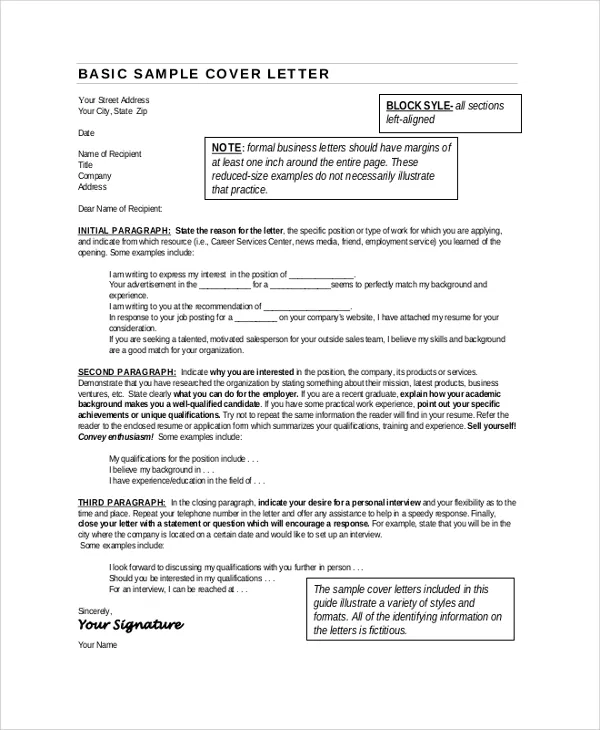
The format of your cover letter is just as important as its content. A professional and easy-to-read format demonstrates attention to detail and respect for the hiring manager’s time. Begin with your contact information (name, phone number, email, and optionally, your LinkedIn profile URL) at the top. Then, include the date and the employer’s contact information. Use a professional font like Times New Roman, Arial, or Calibri, with a font size between 10 and 12 points. The body of your letter should be single-spaced with a space between paragraphs. Aim for a concise letter, typically no more than one page long. Break up large blocks of text into shorter paragraphs to improve readability, making it easy for the recruiter to scan and absorb the key information.
Address the Hiring Manager by Name

Whenever possible, address your cover letter to a specific person. This shows that you’ve done your research and are genuinely interested in the opportunity. Research the hiring manager’s name on LinkedIn or the company website. If you can’t find a specific name, use a general salutation like “Dear Hiring Manager” or “Dear [Department] Team.” Avoid generic greetings such as “To Whom It May Concern,” which can make your application feel impersonal. Addressing the hiring manager by name demonstrates your attention to detail and your proactive approach to the job application process. It also makes your letter more personal and engaging, capturing the reader’s attention from the very beginning. This is one of the initial steps to get you noticed.
Customize Your Cover Letter to the Job Description
One of the biggest mistakes job seekers make is sending a generic cover letter for every application. Tailoring your cover letter to each specific job is essential. Carefully review the job description and identify the key skills, experiences, and qualifications the employer is seeking. Then, in your cover letter, highlight how your skills and experiences align with those requirements. Use keywords from the job description throughout your letter. Provide specific examples of how you have demonstrated those skills in past roles. This demonstrates that you understand the role and are genuinely interested in the position. Customize it for each role, which takes time, but dramatically increases your chances of success.
Highlight Relevant Skills and Experience
While your resume provides a comprehensive overview of your qualifications, your cover letter offers the opportunity to elaborate on the most relevant aspects of your experience. Focus on the skills and experiences that are most relevant to the job you’re applying for. Give specific examples of your achievements and how you have applied your skills in past roles. For instance, if the job description requires strong communication skills, describe a situation where you successfully communicated complex information to a diverse audience. If the role requires leadership abilities, provide an example of when you led a team or project and the positive outcomes you achieved. Support your claims with quantifiable results and showcase your value to the employer.
Showcase Your Enthusiasm and Company Knowledge

Your cover letter is also your chance to show your genuine interest in the company and the specific role. Research the company, its mission, values, and recent accomplishments. Demonstrate this knowledge in your letter by explaining why you are interested in working for that particular company. Mention specific aspects of the company’s culture, products, or services that resonate with you. Explain how your values align with the company’s mission and what you can bring to the table. Be sure to express your enthusiasm for the position, showing that you are not only qualified but also excited about the opportunity. This enthusiasm can make a significant impression and set you apart from other candidates.
Quantify Your Accomplishments for Impact
Instead of simply stating your responsibilities, use numbers and data to quantify your accomplishments. For example, instead of saying “Managed social media accounts,” you could say “Increased social media engagement by 30% in six months.” Instead of stating “Improved customer satisfaction,” you could say “Improved customer satisfaction scores by 15% through implementing new customer service strategies.” Using quantifiable results makes your achievements more concrete and demonstrates the value you brought to previous roles. Quantifying your accomplishments helps employers understand the impact you can have on their organization. Use numbers and data to prove your achievements, highlighting your abilities.
Keep it Concise & Easy to Read
Hiring managers are busy, so it’s essential to keep your cover letter concise and easy to read. Aim for a one-page letter, focusing on the most relevant information. Use clear and concise language, avoiding jargon or overly complex sentences. Break up long blocks of text into shorter paragraphs to improve readability. Use bullet points to highlight key skills or accomplishments. Make sure to proofread your letter carefully for any grammatical errors or typos. A well-formatted and easy-to-read cover letter shows that you respect the hiring manager’s time and attention.
Proofread Your Cover Letter

Before submitting your cover letter, proofread it meticulously. Errors in grammar, spelling, or punctuation can create a negative impression and undermine your credibility. Read your letter aloud to catch any awkward phrasing or typos. Ask a friend, family member, or career advisor to review your letter for you. They may catch errors that you missed. Pay close attention to details such as capitalization, formatting, and the correct use of punctuation. Make sure your contact information is accurate. A polished, error-free cover letter demonstrates your attention to detail and your commitment to excellence, helping you stand out as a strong candidate.