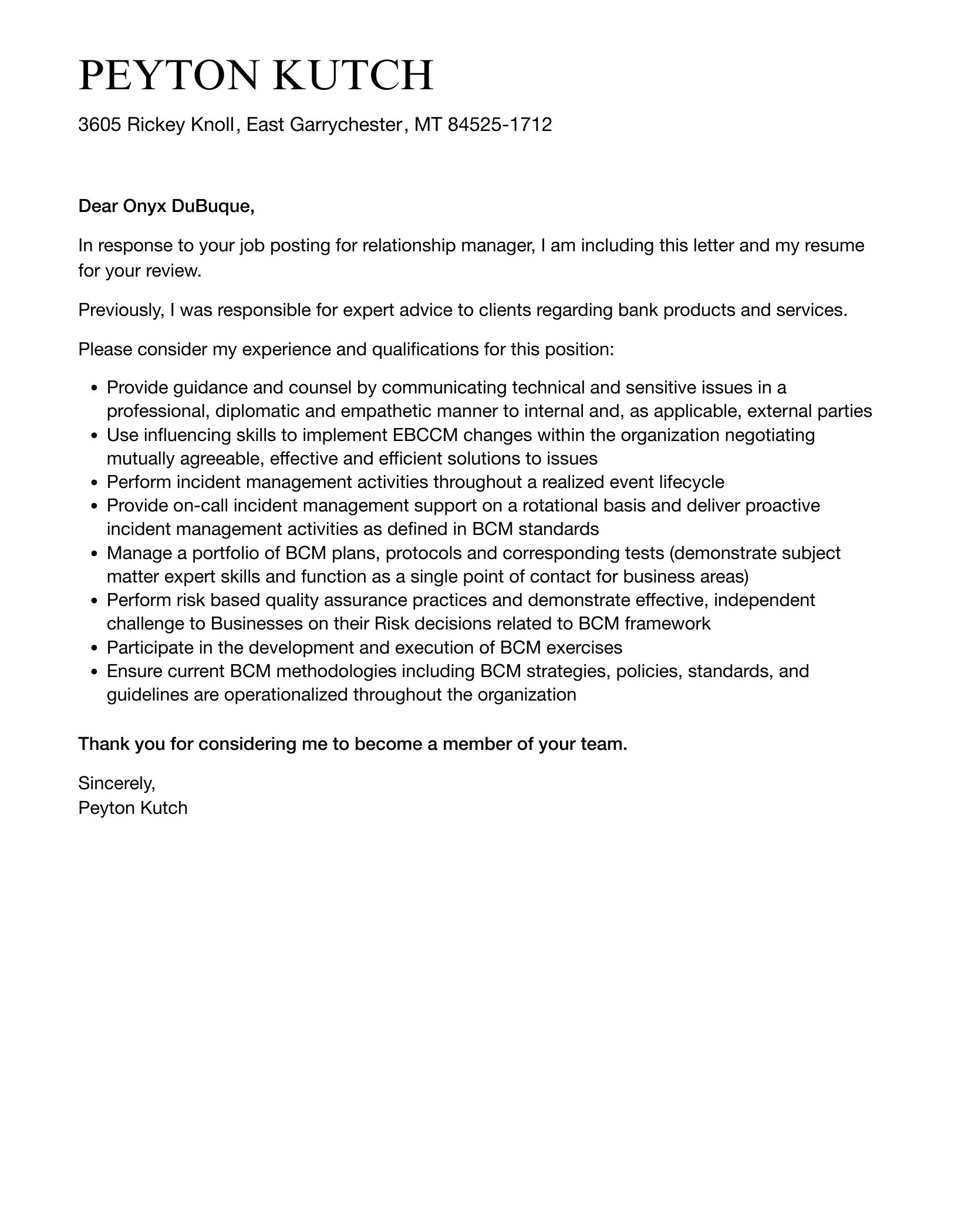
Crafting an Impressive Cover Letter
In the competitive landscape of job applications, a well-crafted cover letter can be your golden ticket to securing an interview. For relationship managers, whose roles hinge on effective communication and interpersonal skills, a compelling cover letter is even more crucial. It’s your first chance to make a lasting impression, showcasing not just your qualifications but also your personality and passion for the role. This guide delves into the essentials of writing a cover letter that captures the attention of hiring managers and sets you apart from the competition. A powerful cover letter demonstrates your understanding of the position, your relevant experience, and your genuine interest in the company. It’s an opportunity to tell your story, highlight your key achievements, and articulate why you’re the ideal candidate. By following the steps outlined in this guide, you can transform your cover letter from a mere formality into a powerful marketing tool that opens doors to new career opportunities.
Understanding the Role of a Relationship Manager
Before you even begin writing your cover letter, it’s essential to have a firm grasp of what a relationship manager does. This role is multifaceted, often involving building and maintaining strong relationships with clients, understanding their needs, and providing tailored financial solutions or services. It requires excellent communication, problem-solving, and sales skills. A relationship manager serves as a primary point of contact, acting as a trusted advisor and advocate for their clients. They must be adept at identifying opportunities, managing expectations, and ensuring client satisfaction. This understanding of the role is the foundation upon which your cover letter should be built. Highlighting your experience and skills in line with these responsibilities will make your application more relevant and persuasive. Research the specific requirements of the job you are applying for, paying close attention to the responsibilities and qualifications mentioned in the job description. This will help you tailor your cover letter to address the employer’s specific needs.
Highlighting Your Skills

Your cover letter is the perfect platform to showcase the skills that make you a successful relationship manager. Focus on both hard skills and soft skills. Hard skills include your technical abilities, such as financial analysis, loan origination, or investment management. Soft skills encompass your interpersonal abilities, such as communication, negotiation, and leadership. Provide specific examples of how you’ve utilized these skills in past roles. If you are proficient in financial modeling, mention the types of models you have worked with and the results you achieved. Similarly, if you excel at communication, provide examples of how you’ve successfully managed client relationships, resolved conflicts, or presented complex information clearly and concisely. Quantify your achievements whenever possible. For instance, instead of saying you “increased client satisfaction,” say you “increased client satisfaction by 15% through proactive communication and personalized service.” This adds credibility to your claims and demonstrates your ability to deliver results. Don’t just list your skills, demonstrate them through concrete examples.
Showcasing Your Achievements
Don’t just list your job duties; highlight your accomplishments. Instead of simply stating you managed a portfolio of clients, explain how you increased client retention rates, grew the portfolio’s assets under management, or generated new business through referrals. Use the STAR method (Situation, Task, Action, Result) to structure your accomplishments. Describe the situation you were in, the task you needed to accomplish, the action you took, and the results you achieved. This structured approach allows you to clearly and concisely communicate your contributions. For instance, you might describe a situation where a client was facing financial difficulties. The task was to find a solution that met their needs while protecting the bank’s interests. The action you took involved analyzing their financial situation, proposing a tailored repayment plan, and providing ongoing support. The result was that the client successfully navigated their financial challenges, and the bank retained a valuable client. Quantify your results whenever possible to demonstrate the impact of your work. Use data points such as percentage increases, dollar amounts, or the number of clients served to illustrate your achievements. This gives potential employers a clear understanding of your value and the contributions you can make to their organization.
Tailoring Your Cover Letter
A generic cover letter will likely end up in the recycling bin. Customize each cover letter to the specific role and company you are applying for. Research the company, its values, and its current initiatives. This shows that you are genuinely interested in the opportunity and have taken the time to understand their business. Address the letter to the hiring manager by name if possible. This personal touch demonstrates that you’ve done your homework and are not just sending out a mass application. In the body of your letter, specifically address the requirements and qualifications listed in the job description. Explain how your skills and experience align with their needs. Don’t just rehash your resume. Instead, expand on your accomplishments and explain why you are the ideal candidate. This shows that you have the relevant skills and experience that the employer seeks. Mention any specific projects, clients, or industries that resonate with the company. This tailored approach demonstrates that you have given consideration to the role and are a good fit for the organization. Tailoring your letter takes extra effort, but it significantly increases your chances of getting noticed and securing an interview.
Essential Cover Letter Elements

A well-structured cover letter includes several key elements. Begin with a professional header that includes your contact information and the date. If you are applying to a specific contact, include their name, title, and the company’s address. Next is a compelling opening paragraph that grabs the reader’s attention. State the position you are applying for and briefly highlight why you are interested in the role and the company. The body of your letter should consist of one or two paragraphs where you showcase your relevant skills, experience, and achievements. Use specific examples and quantify your results whenever possible. Conclude with a strong closing paragraph. Reiterate your interest in the role, summarize your key qualifications, and express your enthusiasm for the opportunity to interview. End with a professional closing, such as “Sincerely” or “Respectfully,” followed by your typed name. Keep your cover letter concise and focused, typically no more than one page. Use clear and concise language, and avoid jargon or overly complex sentences. Make sure your letter is easy to read and visually appealing. Proper formatting, including appropriate spacing and font, is crucial. A well-formatted cover letter reflects your attention to detail and professionalism.
Formatting and Structure
The format and structure of your cover letter are just as important as the content. Use a professional font such as Times New Roman, Arial, or Calibri in a readable size (11 or 12 points). Maintain consistent spacing and use appropriate margins (typically 1 inch on all sides). Divide your letter into logical paragraphs, each addressing a specific point or topic. Use bullet points sparingly to highlight key skills or achievements, but avoid overusing them, as it can make your letter seem like a list. Ensure that your letter is visually appealing and easy to read. A well-formatted cover letter demonstrates your attention to detail and professionalism. Avoid using excessive bolding, italics, or underlining. Keep the overall design clean and uncluttered. Proofread your cover letter carefully for any grammatical errors or typos. Errors can undermine your credibility and make a negative impression on the hiring manager. A well-structured and formatted cover letter demonstrates that you have taken the time and effort to present yourself in a professional manner.
Keywords and Action Verbs
To maximize your chances of getting noticed by applicant tracking systems (ATS) and human readers alike, incorporate relevant keywords and action verbs throughout your cover letter. Review the job description and identify the key skills, qualifications, and responsibilities. Use these keywords naturally within your letter. Don’t simply stuff the keywords into your text, as this can make your writing sound unnatural. Instead, integrate them seamlessly into your sentences. Use strong action verbs to describe your accomplishments and responsibilities. Examples include “managed,” “developed,” “implemented,” “achieved,” “increased,” “led,” and “collaborated.” Action verbs make your accomplishments sound more dynamic and impactful. For example, instead of writing “responsible for client communication,” write “managed client relationships, providing regular updates and resolving inquiries promptly.” This demonstrates your active role and the results you achieved. Using relevant keywords and action verbs increases the likelihood that your cover letter will be noticed by both software and human readers. It also helps demonstrate that you are the right fit for the role and the organization.
Proofreading and Editing

Before submitting your cover letter, take the time to proofread and edit it carefully. Errors in grammar, spelling, or punctuation can undermine your credibility and make a negative impression on the hiring manager. Read your cover letter aloud to catch any awkward phrasing or grammatical errors. Use a spell-checker and grammar-checker to identify potential errors. However, don’t rely solely on these tools; they are not foolproof. Have a trusted friend or colleague review your cover letter for you. A fresh pair of eyes can often catch errors that you might have missed. Ensure your cover letter is well-organized, with clear and concise language. Eliminate any unnecessary jargon or complex sentences. Make sure the tone of your letter is professional and enthusiastic. Ensure that your contact information is accurate and up-to-date. Proofreading and editing are crucial steps in ensuring your cover letter is polished and professional. A well-written cover letter reflects your attention to detail and your commitment to excellence. This is essential for making a strong first impression and demonstrating your professionalism to the hiring manager.
Making a Strong Impression
Your cover letter is a critical opportunity to make a strong impression. By crafting a well-written and tailored cover letter, you can set yourself apart from other candidates and increase your chances of securing an interview. Remember to highlight your skills, showcase your achievements, and demonstrate your understanding of the role. Tailor your cover letter to the specific job and company. Pay attention to formatting and structure, and use keywords and action verbs effectively. Proofread and edit your cover letter carefully before submitting it. This detailed approach will help you create a compelling cover letter that showcases your skills, experience, and enthusiasm. A well-crafted cover letter is more than just a formality; it’s a powerful tool that can make the difference between getting an interview and getting overlooked. Invest the time and effort required to write a cover letter that impresses. By taking these steps, you can significantly increase your chances of landing your dream job as a relationship manager. Good luck with your job search!