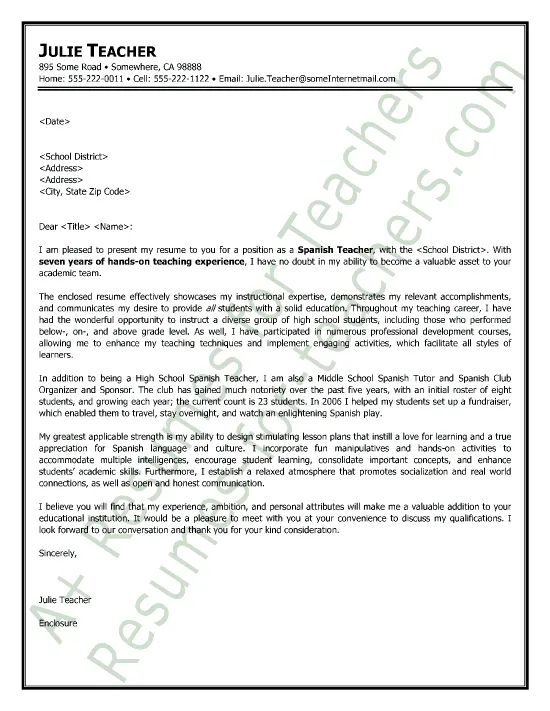
Understanding the Purpose of a Spanish Teacher Cover Letter
A well-crafted cover letter is your first opportunity to make a strong impression and secure a Spanish teacher position. It serves as a crucial introduction, providing context to your resume and highlighting why you are the ideal candidate. Unlike a resume, a cover letter allows you to demonstrate your personality, passion for teaching Spanish, and your understanding of the school’s values and needs. It’s your chance to go beyond a simple list of qualifications and showcase your unique skills and experiences. A compelling cover letter can significantly increase your chances of being selected for an interview. This document is not just a formality; it’s a strategic tool designed to capture the attention of the hiring committee and persuade them that you’re the best fit for their school. Consider it your first chance to connect with the hiring team on a personal level.
Highlighting Your Qualifications
The core of your cover letter lies in effectively showcasing your qualifications. This section should explicitly connect your skills and experiences with the requirements of the Spanish teacher position. The goal is to demonstrate that you not only meet the job requirements but also bring something extra to the table. Providing specific examples and quantifiable achievements from your past teaching experiences is key to making your claims credible. For example, instead of just saying you ‘improved student test scores,’ state that you ‘increased average student scores by 15% on the final exam through differentiated instruction and focused tutoring sessions.’ When discussing your skills, emphasize how they benefit the students and the school as a whole. This means that you can align your skills with the school’s mission and demonstrate your understanding of the role.
Education and Certifications

Begin by clearly stating your educational background, including the name of your university, the degree earned (e.g., Bachelor’s or Master’s in Spanish, Education, or a related field), and the year of graduation. If you have any specialized certifications, such as a teaching license or a specific language proficiency certification (like DELE), be sure to mention those as well. The more official your educational background, the better. When you are providing details of your qualifications, be sure to include not only the degree, but any specializations or focuses within your degree that might be particularly relevant. The school wants to make sure your qualifications line up to the need of the position and that the students are well-served and are receiving the best education possible.
Experience in Teaching Spanish
Detail your previous teaching experiences, including the name of the schools, the grades you taught, and the duration of your employment. Describe your role and responsibilities, emphasizing how you implemented your lesson plans, how you differentiated instruction, and how you managed the classroom. Where possible, include specific achievements, such as positive feedback from students, increased student engagement, or improvements in student performance. Be sure to tailor your language to highlight experiences that are most relevant to the Spanish teacher position. This should include any involvement in extracurricular activities, like Spanish clubs or language immersion programs. Highlighting your experience and expertise is critical to showcasing your overall capabilities.
Tailoring Your Cover Letter
A generic cover letter sent to multiple schools will likely end up in the rejection pile. To stand out, you must tailor your cover letter to each specific job and school. This involves researching the school’s mission, values, and current initiatives. Review the job description carefully and identify the key requirements and desired skills. Then, align your qualifications and experiences with those needs, using specific examples to demonstrate how you have met similar challenges in the past. Mentioning specific aspects of the school that appeal to you or referencing any conversations you had with school representatives (if applicable) will show that you have taken the time to learn about the school and are genuinely interested in the position. This personalized approach is often the difference between getting an interview and getting passed over.
Adapting to the School’s Needs

Carefully review the job description to identify the school’s specific needs. Some schools may emphasize technology integration, while others may prioritize cultural immersion. Address these needs directly in your cover letter, providing evidence of your relevant skills and experiences. For example, if the job description mentions a desire for teachers who can incorporate technology into their lessons, describe your experience using educational apps, online resources, or interactive whiteboards. If the school values cultural exchange, share your experience with any study abroad programs, your knowledge of Spanish-speaking cultures, or your ability to create culturally relevant lesson plans. Tailoring your skills shows that you understand what the school wants, and demonstrates your flexibility and willingness to adapt to the school’s needs.
Showcasing Relevant Skills
Beyond your formal qualifications and teaching experience, your cover letter should highlight a range of skills that make you a well-rounded Spanish teacher. These can include communication skills, classroom management abilities, curriculum development expertise, and language proficiency. Choose the skills that align most closely with the job description and provide specific examples of how you have utilized those skills in your previous roles. For instance, when discussing communication, mention your ability to communicate clearly with students, parents, and colleagues. This showcases your ability to create and maintain a positive and constructive learning environment and is key to succeeding in the role of a Spanish teacher. Highlighting these skills helps you demonstrate to the hiring committee that you possess not only the qualifications to teach, but the capabilities to thrive in the role.
Language Proficiency
A high level of Spanish proficiency is, of course, essential. State your fluency level and provide any certifications or formal assessments of your language skills. Explain how you’ve used your language skills to facilitate lessons, communicate with students and their parents, and immerse students in the Spanish language and culture. This could include your ability to speak, read, and write fluently, as well as the ability to understand the nuances of the language. Mentioning any experience living in a Spanish-speaking country or any advanced language courses you have taken can further bolster your language abilities. Language proficiency and the ability to communicate in Spanish will be essential to all aspects of this role.
Classroom Management

Demonstrate your classroom management skills by describing your strategies for maintaining a positive and productive learning environment. Mention your ability to establish clear expectations, manage student behavior, and handle any disruptive situations. Give examples of the techniques you have used to foster student engagement and create a positive classroom culture. Focus on what strategies you can bring to the school to handle student needs. Emphasizing your classroom management skills shows the hiring committee your expertise in creating a safe and conducive learning environment. Be sure to demonstrate your awareness of the importance of creating a productive and positive learning atmosphere.
Curriculum Development
Discuss your experience in creating and implementing lesson plans, adapting curricula to meet students’ needs, and assessing student progress. Mention any specific curriculum development projects you have undertaken. Be sure to mention how you have aligned your lesson plans with the school’s curriculum guidelines. Highlighting your curriculum development expertise shows that you can contribute to the Spanish program and effectively meet the needs of the students. Your ability to contribute to curriculum development is a valuable asset. Providing details of your experience in the development and adaption of curriculum can give you an advantage over other candidates for the position.
Formatting and Proofreading
Your cover letter should be well-formatted and free of errors. Proofreading is key to a professional cover letter. Ensure that your contact information is accurate, that your language is clear, and your sentences are easy to read. Poorly written cover letters give the impression of carelessness and will make the hiring committee question your attention to detail. The cover letter is your first chance to show you can write and communicate effectively. Proofreading is also crucial to convey professionalism and attention to detail, skills that are essential for a Spanish teacher.
Proper Structure
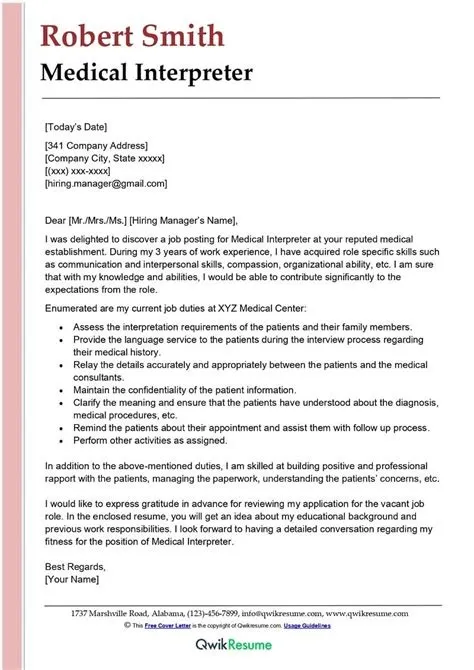
Use a professional format, such as a standard business letter format. The letter should include your contact information, the date, the school’s contact information, a professional salutation, a clear and concise body, and a closing with your signature. Using the standard format, the hiring committee knows what to expect, and you will demonstrate professionalism. Proper formatting is crucial to ensure that your cover letter is easy to read and visually appealing. Ensure the font is professional, such as Times New Roman or Arial, and the font size is easy to read. Consider a simple, clean layout that is easy to follow.
Essential Cover Letter Components
Every cover letter should include the following elements: a compelling opening that captures the reader’s attention, a concise summary of your qualifications and experience, specific examples that demonstrate your skills and achievements, an expression of your interest in the position and the school, and a call to action. Be sure you include a call to action that mentions how you can contribute to the team and organization. This includes your contact information, a personalized introduction, and a closing statement expressing your enthusiasm for the position and your willingness to discuss your qualifications further. Each element must be crafted to convey a clear and persuasive message.
Contact Information
Include your full name, address, phone number, and professional email address at the top of your cover letter. Ensure that your contact information is up-to-date and accurate. Include your contact information so that the school can contact you easily. Double-check for any typos or errors in your contact information. Make it as easy as possible for the hiring team to reach you.
Professional Salutation

Address the hiring manager by name if possible. If you do not know the name of the hiring manager, address your letter to the “Hiring Committee” or a similar professional greeting. Avoid generic salutations like “To Whom It May Concern.” A personalized salutation demonstrates that you’ve done your research and taken the time to understand who will be reviewing your application. Addressing the letter by name helps you demonstrate professionalism. If possible, always use the hiring manager’s name.
Body Paragraphs
The body paragraphs are where you showcase your qualifications and connect them to the job requirements. Start with a strong opening that grabs the reader’s attention and clearly states your interest in the position. Use the middle paragraphs to highlight your most relevant experiences, skills, and achievements. Provide specific examples and quantifiable results whenever possible. Tailor your examples to demonstrate how you meet the school’s needs and how your skills and experiences align with their mission. Be as direct and professional as possible when discussing your experiences and qualifications, making sure to keep in mind the needs of the school. Tailoring your examples helps demonstrate how you would be the perfect fit for the Spanish teacher position.
Closing and Signature
End your cover letter with a strong closing statement that reiterates your interest in the position and expresses your enthusiasm. Thank the hiring manager for their time and consideration. Include a call to action by stating your availability for an interview and offering to provide any additional information. Always sign your cover letter, either electronically or with a physical signature if you are submitting a hard copy. Be sure you end with a professional closing, such as “Sincerely” or “Respectfully,” before your signature. A strong closing creates a lasting impression.
By following these guidelines, you can create a compelling cover letter that effectively showcases your qualifications, demonstrates your passion for teaching Spanish, and significantly increases your chances of landing an interview and securing the job. Remember to tailor your letter to each specific position, proofread carefully, and present yourself in a professional and enthusiastic manner. Good luck with your job search!