Securing a teaching position requires more than just passion for education. A well-crafted teaching resume and cover letter are your first impressions, acting as powerful tools to showcase your skills, experience, and enthusiasm to potential employers. This guide provides a comprehensive overview of how to create a standout resume and cover letter that will significantly increase your chances of landing your dream teaching job. By following these strategies, you can effectively present your qualifications and distinguish yourself from other applicants in the competitive job market. The key is to focus on clarity, relevance, and impact, ensuring that your application materials resonate with the specific needs and expectations of the schools and districts you are targeting. Lets dive in how to make it happen.
Highlighting Your Skills and Experience
Your teaching resume is your professional introduction, and it’s crucial to highlight the skills and experiences that make you a strong candidate. This section is designed to help you organize and present your qualifications in a way that grabs the attention of hiring managers. Focus on what makes you unique. Consider what specific subjects you excel at or areas of student support you can offer. The goal is to create a clear picture of your capabilities and how you can contribute to a school’s educational environment. Remember, your resume should not just list your experiences; it should demonstrate how you’ve applied your skills and the results you’ve achieved.
Creating a Powerful Teaching Resume Summary
A resume summary is a concise overview of your professional qualifications, experience, and career objectives. It should immediately capture the reader’s attention and provide a snapshot of your suitability for the position. Start with a strong adjective to describe your teaching philosophy, followed by your years of experience, key skills, and a statement of your career goals. For instance, you might start with ‘Dedicated elementary educator with 5+ years of experience…’ It is vital to tailor your summary to each specific job you apply for. Highlight skills and experiences mentioned in the job description. This ensures that your summary quickly conveys your alignment with the school’s needs.
Tailoring Your Resume to the Job Description

Customizing your resume for each job application is critical for demonstrating that you are a good fit for the role and the school. Carefully review the job description, identifying the keywords, required skills, and preferred qualifications. Then, update your resume to reflect these specific elements. This may involve adjusting the language used in your summary, highlighting relevant experiences, or reordering your skills section to emphasize the most pertinent abilities. Include concrete examples. If a job description specifies a need for experience with differentiated instruction, provide specific instances where you have successfully implemented such strategies, illustrating the positive impact on student learning. This targeted approach will make your application more relevant and compelling.
Showcasing Your Teaching Experience
Your teaching experience section should provide a detailed overview of your previous roles, responsibilities, and accomplishments. For each position, list the school name, location, dates of employment, and your title. Below this, use bullet points to describe your key duties and achievements. Focus on quantifiable results such as ‘Increased student test scores by 15%’ or ‘Implemented a new literacy program that improved reading comprehension.’ Emphasize the impact. For instance, mention any awards or recognitions you received. Show your ability to inspire students, manage classrooms, and collaborate with other educators. Use action verbs, such as ‘developed,’ ‘implemented,’ ‘managed,’ and ‘collaborated,’ to make your descriptions more dynamic and compelling. This section is where you demonstrate what you have to offer, so make every word count.
Listing Your Education and Certifications
Provide a clear and concise list of your educational background and certifications. For each degree, include the name of the institution, the degree earned, the major, and the graduation date. If you have multiple degrees, list them in reverse chronological order. Your certifications are equally important. Be sure to include all relevant teaching certifications, licenses, and any endorsements you hold. If you are a recent graduate, you may choose to include your GPA. Highlight any honors or awards received during your studies. Make sure to include your certification numbers or any other relevant identifiers. This section provides the foundational credentials that validate your qualifications and establish your readiness to teach.
Crafting a Compelling Teaching Cover Letter

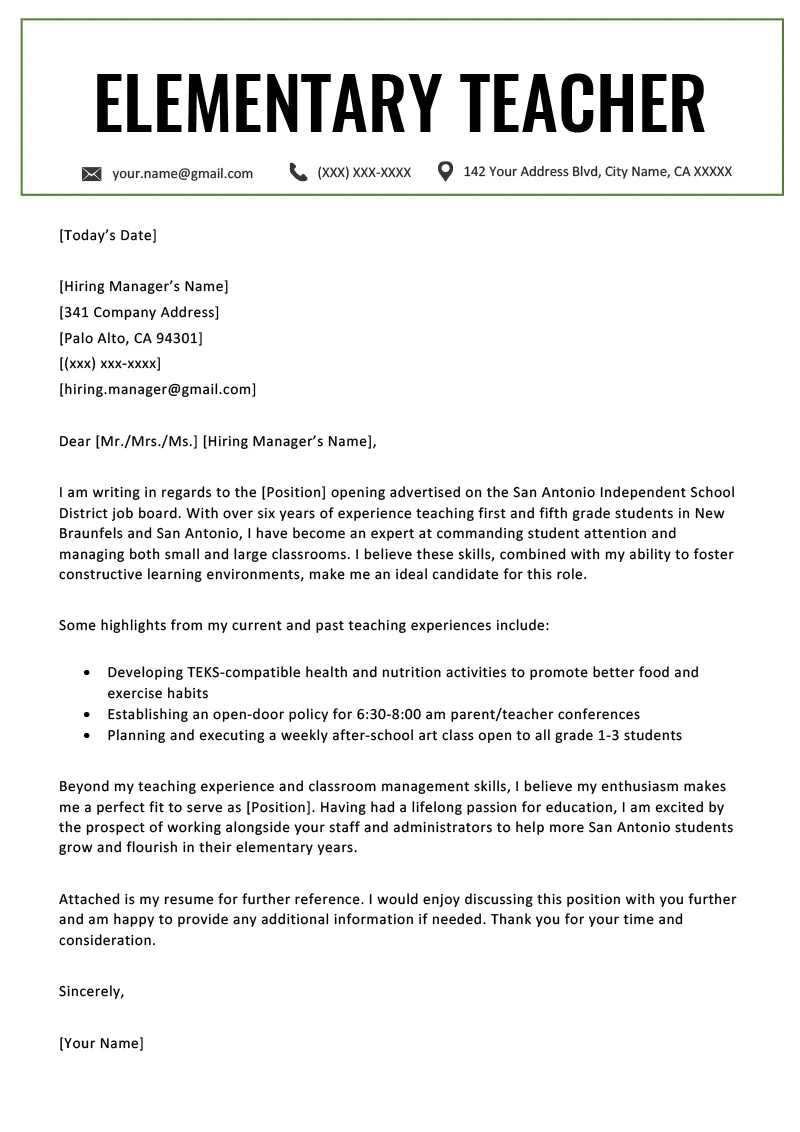
Your cover letter is your chance to make a personal connection with the hiring manager and show your enthusiasm for the teaching position. This supporting document allows you to expand on your resume, providing additional context and demonstrating your communication skills. It should complement your resume and offer a deeper insight into your teaching philosophy, skills, and motivations. A well-written cover letter can significantly increase your chances of getting an interview. Focus on tailoring each letter to the specific school and role, using the opportunity to highlight your unique strengths and how you can contribute to the school’s mission. The format needs to be clean and engaging.
Opening Your Cover Letter Effectively
The opening of your cover letter is crucial as it sets the tone for the rest of your application. Begin by addressing the hiring manager by name if possible; otherwise, use a professional greeting such as ‘Dear Hiring Committee’. State the position you are applying for and where you saw the advertisement. Then, immediately capture the reader’s interest. Instead of a generic opening, try expressing your enthusiasm for the specific school or district. Make sure to mention your passion for education and your key skills that align with the job’s requirements. The first paragraph should clearly convey your purpose and create a positive first impression. Show your passion and what you will offer them if you get the job.
Demonstrating Your Passion for Teaching
A successful teacher is driven by passion, so express your enthusiasm for teaching. Share why you are drawn to education and what motivates you to make a difference in students’ lives. Describe your teaching philosophy. Talk about what you value in the classroom and how you create a positive and engaging learning environment. Provide specific examples of your teaching methodologies. Mention your approaches to student engagement, classroom management, and curriculum development. Sharing personal experiences and stories can make your cover letter more memorable and impactful. These anecdotes humanize your application and show that you are a dedicated and empathetic educator.
Connecting Your Skills to the School’s Needs

The body of your cover letter should explain how your skills and experience align with the school’s specific needs and values. Use the job description as your guide to identify the key requirements and skills sought by the school. For each of these points, provide concrete examples of how you have demonstrated those skills in the past. You might describe your experience with differentiated instruction, collaborative projects, or classroom management techniques. Mention specific programs you have utilized or curriculum areas you specialize in. If the school emphasizes a particular educational approach, be sure to highlight your experience with that method. By making these connections, you will demonstrate how your strengths are a perfect match for the school’s educational environment and overall goals.
Concluding Your Cover Letter Professionally
Conclude your cover letter with a strong call to action. Reiterate your interest in the position and express your eagerness for an interview. Thank the hiring manager for their time and consideration. Clearly state your availability and provide your contact information, including your phone number and email address. A professional closing, such as ‘Sincerely’ or ‘Respectfully,’ is appropriate. Proofread your cover letter one final time to eliminate any errors. By ending with a strong, confident, and professional closing, you leave a lasting positive impression on the hiring manager.
Formatting and Design Best Practices
Your resume and cover letter’s formatting and design play a critical role in making a strong first impression. Even the most qualified candidate can be overlooked if their application materials are poorly formatted or difficult to read. This section will give you clear advice on how to format and design your documents, ensuring they look professional and are easily accessible to hiring managers. A well-designed document highlights your qualifications and makes it easy for the reader to extract the most important information quickly.
Choosing the Right Resume Format

Selecting the proper resume format is crucial for presenting your qualifications effectively. The most common formats include chronological, functional, and combination. The chronological format is the most traditional and lists your work experience in reverse chronological order. This format is ideal if you have a consistent work history and want to emphasize your career progression. A functional format focuses on your skills and abilities, which is beneficial if you have gaps in your employment history or are changing careers. A combination format merges elements of both, highlighting your skills while also providing a brief overview of your work history. For most teaching positions, a chronological or combination format is usually preferred, as they clearly show your teaching experience and career trajectory. Choose the format that best showcases your strengths and aligns with the job requirements.
Using Clear and Concise Language
Ensure that your resume and cover letter are easy to read and understand. Use clear, concise language to describe your skills, experience, and accomplishments. Avoid jargon, overly complex sentences, and vague descriptions. Stick to action verbs, such as ‘developed,’ ‘implemented,’ ‘managed,’ and ‘collaborated,’ to create a sense of dynamism. Keep your sentences and paragraphs short and to the point. Focus on the most relevant information. Avoid unnecessary details that may distract from your key qualifications. You should aim for a tone that is both professional and engaging. This helps demonstrate your communication skills and makes the reader appreciate your focus.
Proofreading and Editing Your Documents
Proofreading and editing are essential steps in creating a professional resume and cover letter. Typos, grammatical errors, and formatting inconsistencies can undermine your credibility and create a negative impression. Carefully proofread your documents multiple times, paying attention to spelling, grammar, punctuation, and sentence structure. Use spell-check and grammar-check tools, but don’t rely on them entirely. They may not catch all errors. Read your documents aloud to catch awkward phrasing or mistakes that you might otherwise miss. Ask a friend, family member, or career counselor to review your application materials for feedback. A second pair of eyes can often catch errors you might overlook. Ensuring your application is error-free shows that you pay attention to detail and that you are serious about the job.
Keywords and SEO for Teaching Resumes

In today’s job market, many employers use Applicant Tracking Systems (ATS) to scan and screen resumes. To ensure your resume gets noticed, you must optimize it for keywords. This ensures that your application successfully navigates the initial screening process and reaches the hiring manager. Keywords help match your skills and experience with the requirements of the job. By incorporating the right keywords into your resume, you significantly improve your chances of being selected for an interview. This strategy is essential for any job seeker, but especially important for educators looking to be considered for teaching roles. It’s important to emphasize the skills of teaching and education in the keyword section.
Using Keywords Effectively in Your Resume
To incorporate keywords effectively, start by carefully reviewing the job description. Identify the key skills, qualifications, and requirements listed. Use these words and phrases throughout your resume. For instance, if the job description emphasizes ‘differentiated instruction,’ ‘classroom management,’ and ‘student assessment,’ include these terms naturally in your resume summary, skills section, and experience descriptions. Use a variety of keywords. Don’t simply repeat the same keywords. Focus on a broader range of relevant terms that describe your skills and experiences. Make sure you use these keywords in a way that reads naturally. Don’t stuff your resume with keywords. The goal is to ensure that your resume is relevant and easy to understand.
Optimizing Your Resume for Applicant Tracking Systems (ATS)
Applicant Tracking Systems (ATS) are designed to scan resumes and rank candidates based on keyword matches and other criteria. To optimize your resume for ATS, use a simple, clean format. Avoid graphics, tables, and unusual fonts, as these can confuse the system. Save your resume as a .doc or .docx file. ATS systems can parse these formats more easily than other file types, such as PDFs, which can sometimes lead to the information being lost. Use clear headings and section titles, such as ‘Summary,’ ‘Skills,’ and ‘Experience.’ Ensure that your resume is easily readable by an ATS, making sure that it can effectively extract your key information. This increases your chances of being seen by a hiring manager.
Resources for Further Assistance

Creating a strong teaching resume and cover letter can seem like a daunting task, but many resources are available to help you succeed. Career counselors and resume writers can provide personalized guidance, reviewing your application materials and offering feedback. Online templates and examples can give you a starting point. Educational websites, such as those from the National Education Association (NEA) or the state’s department of education, can offer job-specific guidance. Remember to tailor these examples to your individual strengths and experiences. Utilize these resources to polish your applications. Take advantage of the available support to make your application materials more compelling and successful, putting you one step closer to your dream teaching job.
In conclusion, crafting an outstanding teaching resume and cover letter is a crucial step in securing your ideal teaching position. Focus on showcasing your skills, experience, and passion for education, while also highlighting how you meet the specific requirements of the job. Tailor each application to the school and role, optimizing your resume for both human readers and ATS systems. With the right tools and strategies, you can create a resume and cover letter that will grab the attention of hiring managers and increase your chances of landing an interview and ultimately, your dream job. Good luck!