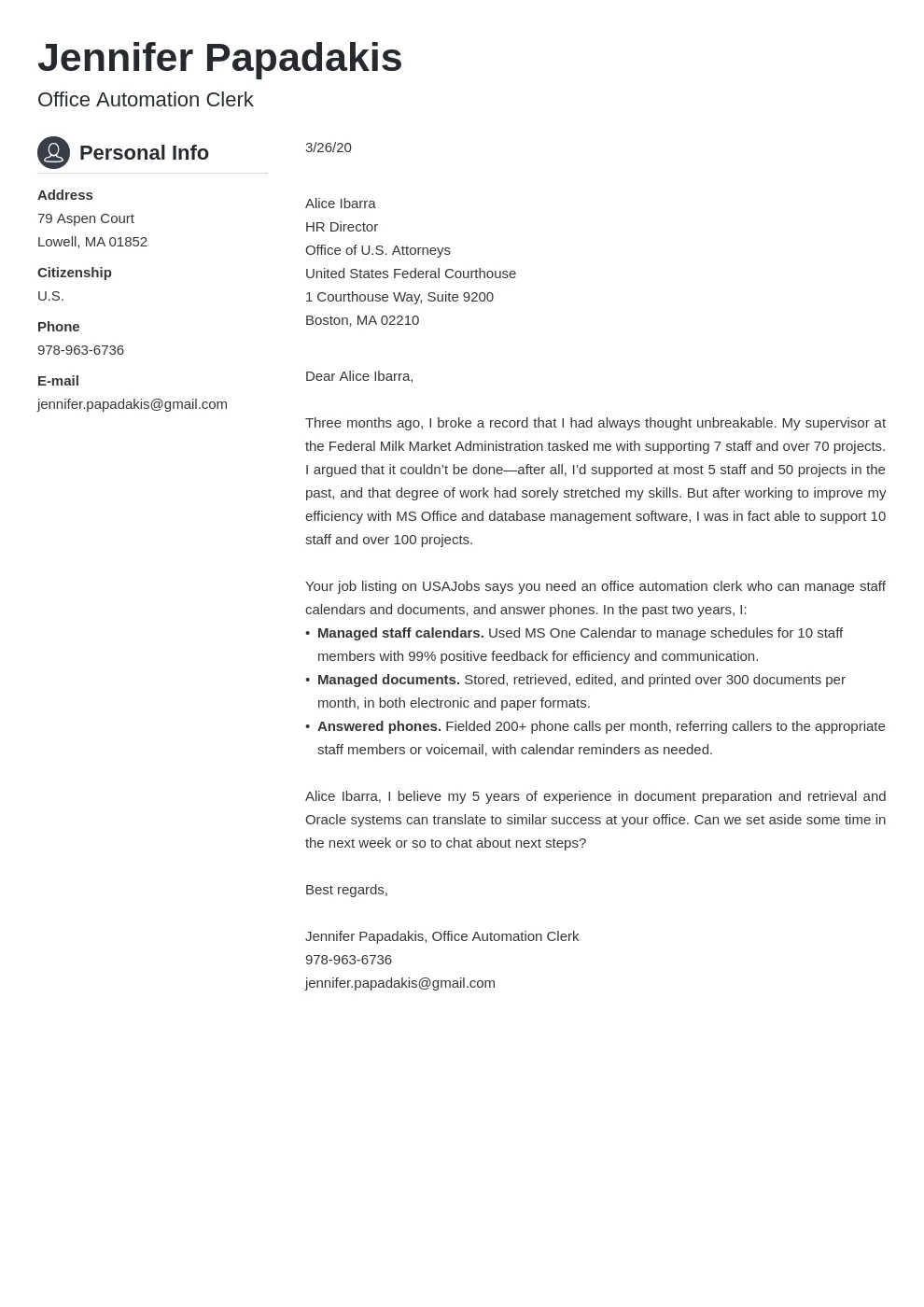
What Is a Government Job Cover Letter?
A government job cover letter is a formal document that accompanies your resume when applying for a position within a government agency. It serves as an introduction to your qualifications, skills, and experiences, and it highlights why you are the ideal candidate for the specific role. Unlike a resume, which provides a factual overview of your work history, a cover letter allows you to express your personality, demonstrate your enthusiasm for the position, and explain how your skills align with the job requirements. It is an opportunity to make a strong first impression and convince the hiring manager to read your resume in detail and consider you for an interview. A well-crafted cover letter is often the key to unlocking opportunities within the government sector, showcasing your written communication abilities and your understanding of the role and the organization.
Why Is a Cover Letter Important?
The importance of a cover letter cannot be overstated, especially when applying for government jobs. In the competitive landscape of government employment, a cover letter is your chance to differentiate yourself from other applicants. It provides a personalized narrative that your resume alone cannot convey. It allows you to expand on your skills and experiences, explain how they relate to the specific job requirements, and demonstrate your genuine interest in the position and the agency. A cover letter can showcase your writing and communication skills, which are highly valued in government roles. Furthermore, it can help you address any potential gaps in your resume, such as career changes or periods of unemployment, by providing context and demonstrating your proactive approach. Many government agencies require a cover letter, and failure to submit one can lead to immediate disqualification. Therefore, it is a critical element of your application, significantly influencing your chances of securing an interview and, ultimately, the job.
Key Components of a Government Job Cover Letter

A well-structured government job cover letter includes several key components. These components work together to present a compelling case for your candidacy. Begin with a professional header that includes your contact information and the date. This is followed by the recipient’s information the hiring manager’s name and title if known, and the agency’s address. A polite salutation, such as “Dear Mr./Ms. [Last Name],” sets the tone for the letter. The body of the letter should consist of several paragraphs, each serving a specific purpose, such as introducing yourself, highlighting relevant skills and experiences, demonstrating your fit for the role, and expressing enthusiasm. A strong closing paragraph summarizes your interest and reiterates your contact information. Conclude with a professional complimentary close, such as “Sincerely” or “Respectfully,” followed by your signature (if submitting a hard copy) and your typed name. Finally, include an attachment notation to indicate the documents you are submitting with your application, such as “Attachment Resume.” Adhering to this structure ensures your letter is clear, organized, and effectively communicates your qualifications.
Header of Your Cover Letter
The header of your government job cover letter is the first thing the hiring manager will see, so it should be professional and easy to read. Start with your full name, followed by your address, phone number, and email address. Ensure that your contact information is up-to-date and easily accessible. The format should be clean and consistent. The header sets the tone for the rest of your letter, and it provides essential contact details that the hiring manager will need to reach you. Some applicants prefer to include the header as part of their resume, while others create a separate header for their cover letter. Regardless of your choice, the goal is to present a polished and professional image. The use of a simple, easy-to-read font, like Times New Roman or Arial, is recommended for the header, and for the entire cover letter to maintain consistency and readability.
Your Contact Information
Your contact information should be accurate and professional. Include your full name, a current and easily accessible phone number, and a professional email address. Avoid using nicknames or informal email addresses. Double-check all contact details for accuracy, as incorrect information could prevent the hiring manager from reaching you. It is also advisable to have a voicemail message set up that conveys a professional image. Make sure that you check your email regularly so that you don’t miss any important communications about the job application. If your address is temporary, you can indicate a forwarding address or include a note about your availability. Consistency in your contact information is important, as the hiring manager will verify it. This makes it simple to be considered as the best candidate for the job.
Date

The date on your cover letter should reflect the day you are submitting your application. This is typically placed directly beneath your contact information or, if the recipient’s information follows the sender’s information, above it. Use a formal date format, such as Month, Day, Year (e.g., January 1, 2024). The date is important as it shows when you are applying and provides a record of your application submission. It is also a standard element of business correspondence and indicates that the information in your cover letter is current. Always ensure the date is accurate, and it should be consistent with any application deadlines. The date is also important if you are submitting multiple applications, as it allows you to track which applications you’ve sent.
Recipient’s Information
The recipient’s information should include the hiring manager’s name (if known), title, the agency name, and the agency’s mailing address. If you are applying online, you might only need the hiring manager’s name and title, or you might need to include the department name and address. The level of detail included depends on the requirements of the application. If you can find the name of the hiring manager, address your letter directly to that person; this will show initiative and that you have taken the time to research the opportunity. If the hiring manager’s name is not available, use a general title like “Hiring Manager.” Double-check the spelling of names and titles, as errors can create a negative impression. The recipient’s information is crucial, as it directs your application to the appropriate person and demonstrates attention to detail.
Salutation
The salutation should be formal and appropriate. If you know the hiring manager’s name, use “Dear Mr./Ms./Mx. [Last Name],” as this is the most personalized approach. If you do not know the hiring manager’s name, use a general salutation such as “Dear Hiring Manager,” or “Dear [Department Name] Hiring Team.” Avoid overly casual salutations like “Hi” or “Hello.” The salutation sets the tone for the rest of your letter and shows respect for the recipient. If the job posting specifies a particular way to address the letter, make sure to follow those instructions. Ensure correct titles and spellings to demonstrate professionalism. The salutation is an important part of the cover letter, and using the correct salutation will show that you are professional.
Body Paragraph 1 Introduction

The introduction paragraph should immediately grab the reader’s attention and state the purpose of your letter. Begin by clearly stating the position you are applying for and where you saw the job posting. Briefly mention how your skills and experience align with the job requirements. Consider including a compelling statement about your passion for the role or your interest in the agency. The first paragraph sets the stage for the rest of the letter and gives the hiring manager a clear understanding of why you are writing. Keep this paragraph concise and focused, aiming to create a positive initial impression. Use active voice and strong verbs to make your introduction more engaging. Show the reader you’re the best fit for the job by immediately highlighting your key qualifications. This gives the hiring manager a reason to continue reading.
Body Paragraph 2 Showcase Skills & Experience
In the second paragraph, provide specific examples of your skills and experiences that are relevant to the job requirements. Carefully review the job description and identify the key qualifications the employer is looking for. Then, select the experiences from your background that best demonstrate those skills. Use the STAR method (Situation, Task, Action, Result) to structure your examples, providing context, explaining your role, describing the actions you took, and highlighting the positive results. Quantify your achievements whenever possible (e.g., “Increased efficiency by 15%” or “Managed a budget of $500,000”). Tailor your examples to the specific job and highlight how your skills meet the needs of the government agency. This paragraph is where you demonstrate your value as a potential employee, so it is crucial to be clear, concise, and impactful.
Body Paragraph 3 Demonstrate Your Fit
This paragraph is where you demonstrate your understanding of the agency’s mission, values, and the role itself. Explain why you are a good fit for the organization and the specific position. Research the agency’s website and identify their core values, goals, and recent initiatives. Then, describe how your personal values and career aspirations align with the agency’s. Show that you have a genuine interest in the work they do and that you are committed to making a positive contribution. Provide examples of how your past experiences have prepared you for the role and how you can contribute to the agency’s success. This is an opportunity to show that you have a good understanding of what the job and the agency entail and to showcase your commitment to the agency’s values. Demonstrate your deep research and attention to detail to ensure you stand out from the competition.
Body Paragraph 4 Show Enthusiasm

This paragraph should be dedicated to expressing your enthusiasm for the position and the agency. Use strong and positive language to convey your excitement about the opportunity. Explain why you are particularly interested in this specific role and why you believe you would be a good fit for the team. You can discuss how this position aligns with your career goals and how it will allow you to grow professionally. Mention what aspects of the role or the agency’s work are most appealing to you. Show genuine interest in the agency’s mission and highlight what excites you about the organization. This paragraph should leave the hiring manager with a lasting impression of your enthusiasm and dedication. Avoid generic statements and instead, be specific and genuine in expressing your interest.
Closing Paragraph
The closing paragraph should summarize your interest in the position and reiterate your enthusiasm. Thank the hiring manager for their time and consideration. Reiterate your contact information and state your availability for an interview. Include a call to action, such as “I am eager to discuss my qualifications in detail” or “I look forward to hearing from you soon.” This is the last impression you make, so make sure it is a strong one. Express your confidence that your skills and experiences match the job requirements and reiterate your interest in the role and the organization. Ensure that your closing is clear, concise, and professional. End with a note of appreciation and anticipation for the next step in the hiring process.
Complimentary Close
The complimentary close is the final part of your letter. Choose a professional and appropriate closing phrase such as “Sincerely,” “Respectfully,” “Best regards,” or “Thank you for your consideration.” The choice depends on your level of formality and the tone of your letter. “Sincerely” is a standard, safe option, while “Respectfully” might be more appropriate for more formal situations. Avoid overly casual closings like “Cheers” or “Best.” Make sure your closing matches the tone of the rest of your letter. This final touch reinforces your professionalism. Following the closing phrase, leave space for your handwritten signature if submitting a hard copy or an electronic signature if submitting the application digitally. The complimentary close sets the tone for your signature and ensures a professional finish to your cover letter.
Signature

Your signature should follow the complimentary close. If you are submitting a hard copy of your cover letter, sign your name in ink above your typed name. If you are submitting your application electronically, you can either use an electronic signature or simply type your name. Ensure your signature is legible. A professional signature reinforces your commitment to the application and helps the hiring manager connect your name to your application. This will make it easy for the hiring manager to identify you when you attend the interview and will remind them of the care you have put into your application. Your typed name should always be underneath your signature, providing clarity and ensuring the recruiter can identify your name easily.
Attachment Notation
The attachment notation, typically placed below your signature and typed name, lists the documents you are including with your application. This notation serves to inform the hiring manager of all the documents included in your application, such as “Attachment Resume.” If you are including additional documents, such as a writing sample or a reference list, list them separately, for example, “Attachments Resume, Writing Sample, and References.” This ensures the hiring manager knows they have received all the necessary documents. It also demonstrates your attention to detail and professionalism. The attachment notation helps ensure your application is complete and organized, making it easier for the hiring manager to review all the required materials and to prevent any missing documents.
Formatting and Style Tips for Government Job Cover Letters
Formatting and style are very important for your cover letter, and it should be well-formatted and easy to read. Use a standard font such as Times New Roman or Arial, and use a font size between 11 and 12 points. Set margins to 1 inch on all sides and use single spacing within paragraphs, with a blank line between paragraphs. Use clear and concise language, avoiding jargon or overly complex sentences. Proofread carefully for any grammatical errors, spelling mistakes, and typos. Use a professional tone throughout your letter, and maintain a positive and enthusiastic attitude. Tailor the cover letter to the specific job description, highlighting relevant skills and experiences. Use action verbs to describe your accomplishments, and quantify your achievements when possible. Keep your cover letter to one page in length, ensuring you convey all necessary information in a clear, professional way. Adhering to these guidelines will help you make a strong first impression.
Proofreading and Editing Your Cover Letter

Proofreading and editing are crucial steps in preparing your cover letter. Before submitting your application, carefully review your cover letter for any grammatical errors, spelling mistakes, and typos. Ensure that your punctuation and sentence structure are correct. Read your letter aloud to catch any awkward phrasing or unclear sentences. Ask a friend, family member, or career advisor to review your cover letter for feedback and suggestions. Consider using grammar and spell-checking tools, but always review the suggestions carefully to ensure they are accurate. A well-proofread and edited cover letter demonstrates your attention to detail and professionalism. This helps you to make a positive impression on the hiring manager and increases your chances of being selected for an interview. Taking the time to proofread and edit your cover letter is an investment in your job search.
Government Job Cover Letter Samples
Reviewing different government job cover letter samples can help you understand how to structure your letter and what content to include. Samples will provide different formats based on various job levels. These samples provide a basis for your own writing. They can guide you on how to effectively highlight your qualifications and tailor your letter to the specific requirements of each role. When reviewing samples, pay attention to the tone, language, and structure of the letters. Note how the candidates showcase their skills and experience and how they address the specific job requirements. Customize the samples to match your background, experiences, and the positions you are applying for, ensuring they are tailored to reflect your unique qualifications and demonstrate your fit for the role. Tailoring your letter to match the job can increase the chances of getting the job.
Sample 1 Entry Level Position
An entry-level cover letter for a government job should focus on highlighting your skills and education. Emphasize any relevant coursework, internships, or volunteer experiences. Be sure to demonstrate your enthusiasm for the opportunity and your eagerness to learn and grow. You may be lacking experience but be certain to highlight your passion and relevant transferable skills. If you have experience with the same types of tools that they use, then be sure to mention that. Mention your eagerness to contribute to the agency. Tailor the letter to reflect your strengths. The key is to demonstrate that you are a promising candidate. Highlight your relevant skills and education and express your commitment to the agency’s mission. This is a good starting point to begin your career.
Sample 2 Mid Career Professional
A mid-career cover letter should showcase your accomplishments and how your past experiences prepare you for the role. Highlight your professional accomplishments, leadership skills, and any specializations or achievements. Focus on results and quantify your impact whenever possible. Use the STAR method. Make sure you tailor your resume to demonstrate your value and your ability to take on more responsibility. Make sure to align your professional aspirations with the job posting and show a strong understanding of how your experience can benefit the agency. Present the hiring manager with a clear narrative to make them want to hire you. A compelling cover letter can elevate your chances of getting the job.
Sample 3 Senior Level Role
A senior-level cover letter should highlight your leadership experience, strategic thinking, and accomplishments in the field. Showcase your ability to manage teams, lead projects, and drive results. Emphasize your expertise and how you can contribute to the agency’s strategic goals. Make sure you highlight past accomplishments, and quantifiable metrics. Demonstrate your vision for the future and how you plan to make an impact. Present a well-crafted narrative to convey your ability to make an impact. Tailor the letter to highlight your accomplishments, expertise, and ability to take on leadership responsibilities. This type of letter will allow you to stand out from the competition.
Key Takeaways and Next Steps
In summary, a well-written government job cover letter is essential for securing an interview and demonstrating your suitability for a government position. Focus on clarity, conciseness, and accuracy in your writing. Show the hiring manager how your skills, experience, and enthusiasm align with the job requirements. Follow the formatting guidelines, and tailor your letter to each specific job. Proofread and edit your cover letter thoroughly before submitting it. Review cover letter samples for inspiration and adapt them to your situation. Before submitting your application, make sure to check for all requirements. Once you have submitted your cover letter, make sure to follow up with a phone call or email to see what the next steps are. By following these guidelines, you will significantly increase your chances of success in your job search.