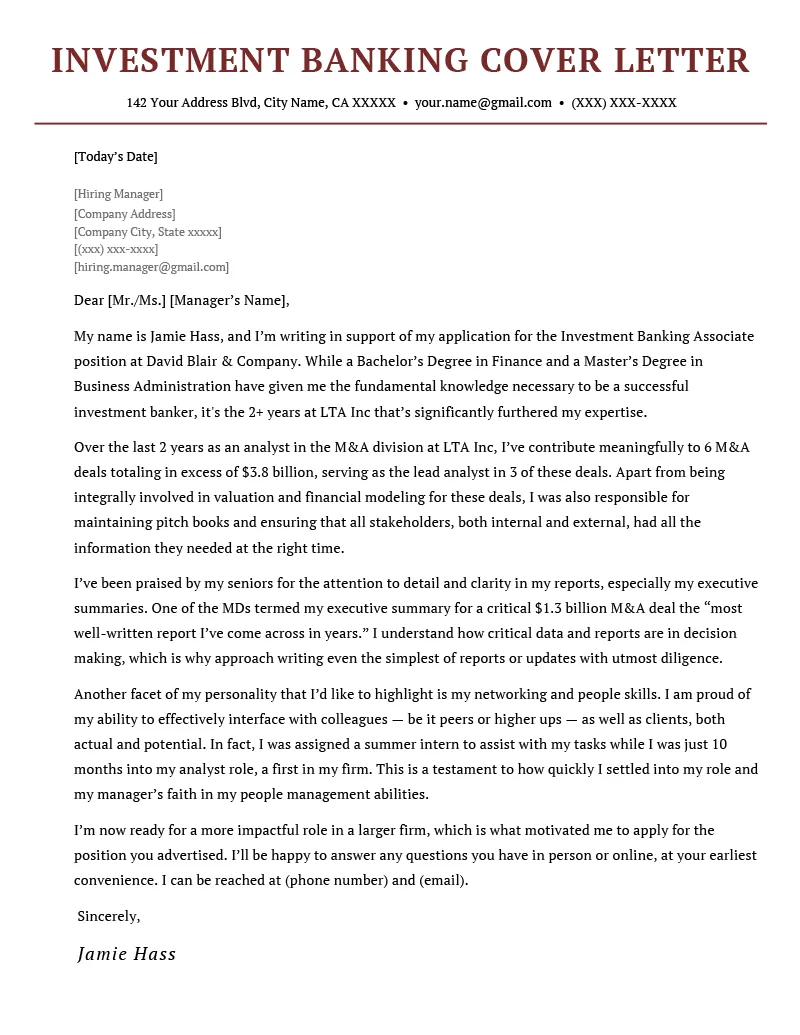
Crafting a Standout Finance Cover Letter
In the competitive world of finance, a well-crafted cover letter can be the key that unlocks your dream job. It’s your first opportunity to make a strong impression and demonstrate why you’re the perfect candidate. Unlike a resume, which provides a factual overview of your experience, a cover letter allows you to showcase your personality, enthusiasm, and specific qualifications in a more engaging way. This guide will equip you with the knowledge and tools to create a finance cover letter that truly stands out from the crowd.
Understanding the Importance of a Finance Cover Letter
A finance cover letter is more than just a formality; it’s a crucial part of your application package. It serves as your personal introduction to the hiring manager, allowing you to present yourself in the best possible light and highlight your suitability for the role. In an industry where attention to detail and strong communication skills are highly valued, a well-written cover letter can significantly improve your chances of landing an interview.
Why a Strong Cover Letter Matters

A strong cover letter immediately grabs the reader’s attention, making them want to learn more about you. It demonstrates your genuine interest in the position and the company, setting you apart from candidates who may simply submit a resume without a personalized introduction. Moreover, a well-written letter showcases your ability to communicate clearly and concisely, a vital skill in the finance sector. It also demonstrates your writing abilities, attention to detail, and understanding of professional communication.
What Recruiters Look For
Recruiters in finance are looking for candidates who possess a combination of technical skills, relevant experience, and a proactive approach. Your cover letter should convey these qualities effectively. They’ll evaluate your ability to articulate your skills, your understanding of the role and the company, and your overall professionalism. The ideal cover letter provides specific examples of your accomplishments, highlighting your contributions to past projects or organizations.
Key Elements of a Compelling Finance Cover Letter
To create a standout finance cover letter, you need to incorporate several key elements. These elements work together to tell a compelling story about your qualifications and your interest in the position. By including these components, you increase your chances of capturing the recruiter’s attention and getting an interview. Ensure your cover letter is tailored to the specific job and company.
Contact Information and Salutation

Start with your contact information (name, phone number, email, and LinkedIn profile URL) and the date. Address the letter to the hiring manager by name if possible; this demonstrates your initiative and attention to detail. If you can’t find the hiring manager’s name, use a professional salutation like ‘Dear Hiring Manager.’ Avoid generic greetings like ‘To Whom It May Concern.’
Highlighting Your Relevant Skills and Experience
The core of your cover letter should focus on demonstrating your relevant skills and experience. Instead of simply listing your duties, explain how your skills and experience align with the job requirements. Provide specific examples of your accomplishments, using the STAR method (Situation, Task, Action, Result) to describe how you handled challenges and achieved positive outcomes. The examples should be drawn from your past experiences, internships, or projects.
Quantifying Your Achievements
Whenever possible, quantify your achievements with numbers and data. For example, instead of saying you ‘improved efficiency,’ say ‘Improved efficiency by 15% by implementing a new process.’ This provides concrete evidence of your capabilities and makes your accomplishments more impactful. Use metrics such as cost savings, revenue growth, or project completion rates to showcase your effectiveness.
Showcasing Your Knowledge of the Company

Demonstrate your knowledge of the company and your genuine interest in working there. Research the company’s mission, values, recent projects, and industry position. Mention specific aspects of the company that resonate with you, and explain why you want to be a part of their team. This shows that you’ve taken the time to understand the organization and are truly invested in the opportunity.
Expressing Enthusiasm and Interest
Let your enthusiasm shine through. Express your genuine interest in the position and the company. Explain what excites you about the role and how your skills and experience align with their needs. Be positive, confident, and professional in your tone. Your enthusiasm can make a lasting impression on the hiring manager and increase your chances of getting an interview. Express your passion for finance and how you can contribute to the company’s success.
Structuring Your Finance Cover Letter for Maximum Impact
The structure of your cover letter can significantly influence its impact. A well-organized and easy-to-read cover letter will capture the reader’s attention and make it easier for them to understand your qualifications. Pay attention to the flow and organization of your thoughts to maximize your impact. A clear structure makes it easy for the hiring manager to extract key information.
Formatting and Length

Keep your cover letter concise and easy to read. Aim for one page, with a maximum of three or four paragraphs. Use a professional font, such as Times New Roman or Arial, and ensure that the font size is easy to read (11 or 12 points). Use clear headings, bullet points, and ample white space to break up the text and improve readability. Ensure the format is consistent throughout the document.
Tone and Language
Maintain a professional and confident tone. Use clear, concise language and avoid jargon or overly complex sentences. Be enthusiastic but avoid being overly familiar or casual. Proofread carefully to eliminate any grammatical errors or typos. Your language should reflect your professionalism and attention to detail. Show your understanding of finance terminology and the industry standards.
Proofreading and Editing
Proofreading is crucial. Errors in your cover letter can undermine your credibility. Carefully review your cover letter for any typos, grammatical errors, or inconsistencies. Read it aloud to catch any awkward phrasing or sentence structure. Ask a friend or colleague to review your letter for a fresh perspective. Ensure the letter is polished and professional. The details are what make your application stand out.
Providing Actionable Finance Cover Letter Examples

Reviewing examples can offer valuable insight into how to write a compelling cover letter. Understanding various examples that fit different career stages can provide you with a template for your own application. The examples provided below can serve as a starting point. Adapt these examples to your specific experience and the requirements of the job you’re applying for.
Entry-Level Finance Cover Letter Example
This example would be suited for recent graduates or those with limited professional experience. Highlight relevant coursework, internships, and any projects that demonstrate your skills in finance, accounting, or related fields. Emphasize your understanding of financial principles and your enthusiasm for a career in finance.
Mid-Career Finance Cover Letter Example
For experienced professionals, this cover letter should focus on your accomplishments and quantifiable results. Detail how you’ve contributed to past successes, such as increasing revenue, reducing costs, or improving financial processes. Tailor your examples to the specific requirements of the job you’re applying for. Show your career progression and demonstrate expertise in your specialized field.
Senior-Level Finance Cover Letter Example

Senior-level cover letters need to highlight your leadership skills, strategic thinking, and ability to drive significant results. Provide examples of your accomplishments at a strategic level, such as leading a successful financial transformation, managing large budgets, or making key investment decisions. Demonstrate your vision for the role and how you will contribute to the company’s future. Highlight your accomplishments as a leader in the financial industry.
Common Mistakes to Avoid in Your Finance Cover Letter
Certain mistakes can significantly hurt your chances of getting an interview. Being aware of these common pitfalls will help you create a cover letter that effectively showcases your qualifications. Avoid these errors to enhance your prospects and make a positive impression.
Generic Cover Letters
Avoid using a generic cover letter that is not tailored to the specific job and company. Generic letters lack the personalization that hiring managers expect. Customize your cover letter to match the job description and the company’s needs. Show that you have researched the company and understand the role.
Typos and Grammatical Errors

Typos and grammatical errors can instantly damage your credibility. Proofread your cover letter carefully to eliminate any errors. Use a spell-checker and grammar-checker, but don’t rely on them completely. Ask someone else to review your letter for a second opinion. Careful attention to detail is essential in finance, and your cover letter should reflect that.
Focusing Solely on Responsibilities
Don’t just list your job responsibilities. Instead, focus on your achievements and how you’ve made a positive impact in previous roles. Quantify your accomplishments whenever possible. Use the STAR method to provide concrete examples. Show what you have contributed to the company, and how you have achieved specific goals.
Tips for Tailoring Your Finance Cover Letter
Tailoring your cover letter is essential for making a strong impression. It shows the hiring manager that you’ve taken the time to understand the role and the company. Here are some tips to help you tailor your cover letter effectively.
Researching the Company and Role
Research the company thoroughly. Visit their website, read news articles about them, and explore their social media profiles. Understand their mission, values, and recent projects. Carefully read the job description and identify the key skills and qualifications that the employer is seeking. Show how your skills and experience align with those requirements.
Using Keywords from the Job Description
Incorporate relevant keywords from the job description into your cover letter. This helps the hiring manager quickly see that you meet the requirements. However, don’t just stuff your letter with keywords. Use them naturally and integrate them into your descriptions of your skills and experience. Highlight your proficiency with specific software or financial tools.
Highlighting Your Unique Value Proposition
Identify your unique value proposition – what sets you apart from other candidates. What are your key strengths, experiences, and accomplishments that make you the best fit for the role? Clearly articulate your value in your cover letter. Highlight the special skills and knowledge that set you apart and show how you can contribute to the company’s success. Be specific about your skills in finance and how they are related to the role.
The Importance of a Strong Call to Action
End your cover letter with a strong call to action. Express your enthusiasm for the opportunity and state your desire for an interview. Thank the hiring manager for their time and consideration. Provide your contact information again. A strong call to action encourages the hiring manager to take the next step and contact you. Express your excitement about the opportunity to discuss your qualifications further.