Why an Electrical Apprenticeship Is a Great Choice
Embarking on an electrical apprenticeship is a fantastic pathway to a rewarding and stable career. The demand for skilled electricians remains consistently high, making it a secure profession. An apprenticeship offers a structured way to learn the trade, combining hands-on experience with classroom instruction. This approach ensures you gain practical skills alongside a solid theoretical foundation. Moreover, the electrical field provides diverse opportunities, from residential wiring to industrial systems, allowing you to specialize in areas that spark your interest. This guide will equip you with the knowledge to craft a compelling cover letter, even with no prior experience, and launch your journey toward a fulfilling electrical career.
Benefits of an Electrical Apprenticeship
Electrical apprenticeships offer numerous advantages for aspiring electricians. They provide a structured training program, ensuring comprehensive skill development. You’ll gain practical experience under the guidance of experienced professionals, learning the trade’s intricacies firsthand. These apprenticeships often combine paid work with classroom learning, allowing you to earn while you learn and minimize educational debt. Beyond technical skills, you’ll develop problem-solving abilities, teamwork skills, and a strong work ethic, all valuable assets in any career. Furthermore, the apprenticeship model facilitates networking within the industry, opening doors to future job opportunities and professional growth.
High Earning Potential

One of the significant advantages of an electrical apprenticeship is the potential for high earnings. Electricians are in constant demand, leading to competitive salaries, especially as they gain experience and expertise. During the apprenticeship, you’ll earn a wage while learning, gradually increasing as your skills develop. Upon completion, you can expect a substantial income that often exceeds that of many other trades and entry-level professions. Moreover, experienced electricians can further increase their earnings through specialization, certifications, and by starting their own businesses. The financial rewards make an electrical apprenticeship a smart investment in your future.
Hands-On Training and Practical Skills
Electrical apprenticeships emphasize hands-on training, enabling you to develop practical skills essential for success in the field. You’ll work on real-world projects, learning how to install, maintain, and repair electrical systems. This practical experience allows you to apply theoretical knowledge and develop problem-solving abilities in real-time. Under the supervision of experienced electricians, you’ll master various techniques, from wiring and troubleshooting to using specialized equipment. The hands-on approach fosters confidence and prepares you for the challenges of the electrical trade. This practical foundation is the cornerstone of a successful electrical career, making apprenticeships highly valuable.
Career Advancement Opportunities
An electrical apprenticeship opens doors to extensive career advancement opportunities. After completing your apprenticeship, you can pursue various paths, from becoming a licensed electrician to specializing in specific areas like commercial, industrial, or residential electrical work. Experienced electricians can also advance to supervisory or management roles, overseeing projects and leading teams. Further professional development, such as obtaining additional certifications or pursuing an associate’s or bachelor’s degree, can enhance your career prospects. The electrical field offers ample room for growth, allowing you to build a long-term, fulfilling career with increasing responsibilities and rewards.
The Importance of a Compelling Cover Letter

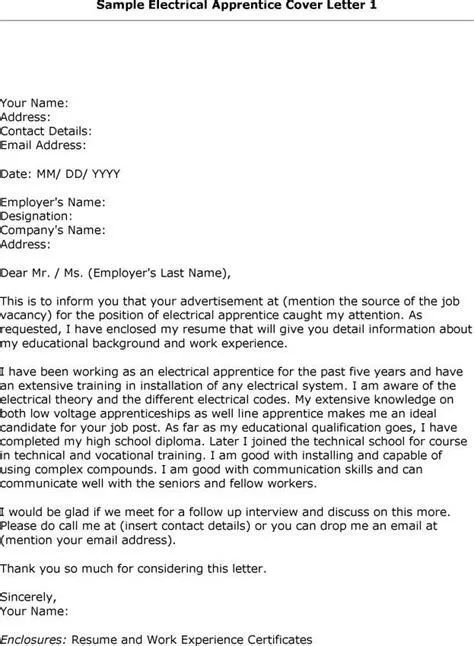
A well-crafted cover letter is critical for securing an electrical apprenticeship, especially if you lack prior experience. It serves as your first impression, allowing you to showcase your enthusiasm, skills, and potential to the hiring committee. This document should highlight your relevant abilities, even if they come from other fields, and demonstrate your eagerness to learn. The cover letter provides an opportunity to explain why you’re interested in the apprenticeship program, what motivates you to pursue a career in the electrical trade, and how your skills and qualities align with the program’s requirements. A compelling cover letter can significantly increase your chances of getting an interview and landing the apprenticeship.
Crafting Your Cover Letter
Header and Contact Information
Start your cover letter with a professional header that includes your contact information. Ensure your name, address, phone number, and email address are clearly displayed. This information enables the recipient to easily contact you. The header should be consistent with the formatting of your resume, maintaining a professional appearance. Using a clean and legible font will make your contact information easy to read. Double-check your email address and phone number for accuracy to avoid any communication issues. This section is the first piece of information a potential employer sees, so ensure it is correct and professional.
Applicant’s Contact Information

In the header of your cover letter, provide your full name, address, phone number, and email address. It is a critical element for potential employers to easily reach out to you. Maintain the information’s accuracy and keep it up-to-date to avoid any communication issues. Your email should sound professional, so avoid using nicknames or informal terms. Using a professional font and size will make your contact information easy to read. The header sets the stage for your cover letter, and presenting your contact details clearly and professionally will provide a positive first impression.
Date
Place the current date directly below your contact information. This date helps the employer understand when the cover letter was written. The date should be formatted consistently with the other information in your header. It shows that the document is current and demonstrates that you are attentive to detail. Presenting the date correctly conveys a sense of professionalism and attentiveness. This is a small yet significant detail that contributes to the overall impact of your cover letter.
Recipient’s Contact Information
Below the date, include the recipient’s contact information. This typically includes the name of the hiring manager or the person to whom the cover letter is addressed, their title, the company’s name, and the company’s address. Addressing the letter to a specific person demonstrates that you’ve done your research and shows a genuine interest in the position. If the hiring manager’s name is unavailable, use a general salutation like “Dear Hiring Committee” or “Dear [Company Name] Hiring Manager”. Correctly formatting the recipient’s information shows your attention to detail and respect for the program.
Professional Salutation

Begin your cover letter with a professional salutation. If you know the hiring manager’s name, use “Dear Mr./Ms./Mx. [Last Name]”. If you don’t know the hiring manager’s name, use a general salutation like “Dear Hiring Committee” or “Dear [Company Name] Hiring Manager”. Avoid casual greetings like “Hi” or “Hello”. The salutation sets the tone for your letter, so it’s important to be respectful and formal. A professional salutation shows respect and is a critical step in making a positive impression.
Opening Paragraph Grab the Reader’s Attention
The opening paragraph is your chance to capture the reader’s attention and make them want to learn more about you. Start by expressing your enthusiasm for the electrical apprenticeship program and state the position you are applying for. You can also mention where you found the job posting or how you learned about the company or the program. Keep it concise and engaging. Briefly highlight your key skills or qualities that align with the apprenticeship program’s requirements. A strong opening paragraph sets the tone for the rest of your cover letter and entices the reader to continue.
Expressing Your Enthusiasm for the Electrical Field
In the opening paragraph and throughout your cover letter, express your genuine enthusiasm for the electrical field. Explain what sparked your interest in becoming an electrician. Did you always enjoy working with your hands? Are you fascinated by how electrical systems work? Whatever it is, convey your passion for the trade. This enthusiasm shows your dedication and motivation, making you a more attractive candidate. By sharing your interests and excitement, you showcase your genuine desire to learn and succeed in the field, a key attribute for any electrical apprentice.
Highlighting Your Interest in the Apprenticeship

In your opening paragraph, clearly state your interest in the specific electrical apprenticeship program. Indicate why you are applying to this particular program and what attracts you to it. This shows that you have researched the program and are genuinely interested in the opportunity it offers. Mention specific aspects that appeal to you, like the training, the company’s reputation, or the location. Tailoring your cover letter to the specific program demonstrates your commitment and initiative, setting you apart from applicants who may be sending out generic letters.
Body Paragraphs Show Your Potential
The body paragraphs of your cover letter are where you provide more detail about your qualifications and skills. Even with no experience, you can still highlight your potential and demonstrate why you would be a good fit for the apprenticeship. Focus on transferable skills, such as problem-solving, attention to detail, and the ability to follow instructions. Providing concrete examples from past experiences, such as volunteer work, academic projects, or hobbies, will add value to your statements. Use this section to showcase what makes you stand out and align with the apprenticeship program’s needs.
Emphasizing Relevant Skills and Qualities
Even if you lack experience, identify and emphasize the relevant skills and qualities that the apprenticeship program seeks. Focus on skills such as a strong work ethic, problem-solving abilities, attention to detail, and the capacity to learn quickly. Highlight qualities like being a team player, being dependable, and showing a willingness to follow instructions. Provide specific examples that demonstrate how you’ve used these skills in other contexts. This allows you to show your suitability for the apprenticeship, even with no direct electrical experience. Relating these skills and qualities to the requirements of the program will strengthen your candidacy.
Transferable Skills from Other Experiences

If you have no direct experience in the electrical field, focus on transferable skills that you have acquired in other areas. These skills include communication, teamwork, problem-solving, and technical aptitude. Did you participate in any school projects that involved problem-solving or technical tasks? Did you work in customer service or any field that required problem-solving abilities? Provide specific examples of how you have applied these skills in different situations. Highlighting transferable skills shows that you have the potential to succeed in an electrical apprenticeship, despite your lack of specific experience.
Demonstrating Your Work Ethic and Motivation
In your cover letter, demonstrate your strong work ethic and motivation. Provide specific examples of times when you went the extra mile, took initiative, or exceeded expectations. Mention your willingness to work hard and learn new skills. Highlight any instances where you were proactive and took on extra responsibilities. Emphasizing your commitment to succeed and your willingness to put in the effort will help demonstrate your value. Showing initiative and drive will make you a more attractive candidate and will boost your chances of acceptance into the program.
Mentioning Any Relevant Coursework or Certifications
If you have completed any coursework or obtained certifications that are relevant to the electrical trade, be sure to mention them in your cover letter. This can include courses in mathematics, physics, or any technical skills, or certifications in areas like first aid, CPR, or safety training. These qualifications show that you have a basic understanding of the field. They can demonstrate your commitment to the profession. If you are planning on taking relevant courses or certifications, mention your plans. This will further strengthen your application and show your willingness to prepare yourself for the apprenticeship.
Highlighting Your Passion for Learning
Showcase your passion for learning and your eagerness to acquire new skills. Mention any self-directed learning, such as reading books or watching videos related to the electrical field. Indicate your willingness to embrace the training and education that the apprenticeship provides. Highlight your openness to feedback and your ability to quickly grasp new concepts. Demonstrating your ability to learn quickly and your enthusiasm for the field will show you are a motivated and adaptable individual. It will also make you a prime candidate for the apprenticeship.
Showcasing Your Problem-Solving Skills
Problem-solving skills are essential in the electrical trade. In your cover letter, emphasize your problem-solving abilities by providing specific examples. Describe situations where you faced a challenge and how you approached solving it. Explain the steps you took, the resources you used, and the outcome. This could include a project, a task at work or school, or a personal experience. Showcasing your ability to analyze issues, think critically, and find effective solutions will make you a highly valued applicant. Including your approach and thought process will help the reader understand how you react to difficult situations.
Concluding the Cover Letter with a Strong Call to Action
The conclusion of your cover letter is your chance to reiterate your interest in the apprenticeship and express your desire for an interview. Thank the reader for their time and consideration. A clear call to action is crucial for making a lasting impression and increasing your chances of moving forward in the application process. Summarize your key strengths and reiterate your enthusiasm for the apprenticeship program. Ensure your contact information is easily accessible.
Expressing Gratitude for the Opportunity
In your concluding paragraph, express your gratitude to the hiring manager for considering your application. Thank them for their time and the opportunity to apply for the electrical apprenticeship program. This shows respect and professionalism. Expressing gratitude leaves a positive final impression. It’s a polite way to end your cover letter and shows you appreciate the chance to be considered.
Reiterating Your Interest in the Apprenticeship
In your concluding paragraph, reiterate your interest in the electrical apprenticeship and in the specific program. Emphasize your passion for the electrical trade and your eagerness to learn and contribute to the team. This reinforces your enthusiasm and commitment, leaving a positive impression. By restating your interest, you make your cover letter memorable and confirm your desire to be a part of the program. Be sure to mention the company by name or the program name to personalize your message.
Providing Contact Information
In the closing section of your cover letter, ensure that your contact information is easy to find. This allows the recipient to contact you quickly if they want to schedule an interview. Repeat your phone number and email address. If you have a professional online presence like a LinkedIn profile, include the link. Make sure the information is accurate and up to date to avoid any potential communication issues. Providing clear contact information simplifies the process for the employer to get in touch with you.
Closing and Signature
Conclude your cover letter with a professional closing and your signature. Use a closing like “Sincerely,” “Respectfully,” or “Best regards,” followed by a space and your typed full name. If you are submitting a physical letter, sign your name above your typed name. This adds a personal touch to your cover letter, making it more formal. Your signature shows professionalism, and the closing adds a polished finish to your cover letter.
Formatting Your Cover Letter for Maximum Impact
Font and Size
Choose a professional and easy-to-read font for your cover letter, such as Times New Roman, Arial, or Calibri. Keep the font size between 10 and 12 points. These fonts are generally considered standard and make the document legible. Using a clear font and size improves readability. Avoid overly decorative or complex fonts. Professional fonts will provide a clean appearance, making the information easy for the reader to process.
Margins and Spacing
Use standard margins of 1 inch on all sides of your cover letter. This creates enough white space to make the document visually appealing and easier to read. Double-space between paragraphs and single-space within paragraphs. Appropriate margins and spacing create a balanced and organized look. The white space will help prevent your letter from appearing cramped or cluttered, making it more engaging for the reader. Good formatting also enhances the readability of your letter.
Proofreading and Editing
Before submitting your cover letter, thoroughly proofread and edit it for any errors in grammar, spelling, or punctuation. Typos and grammatical errors can create a negative impression. Consider having someone else review your cover letter. They can spot any mistakes that you may have missed. Proofreading is crucial to ensure that your letter is clear, concise, and professional. A polished cover letter demonstrates your attention to detail and commitment to quality.
Final Tips for a Successful Application
Research the Apprenticeship Program
Before you begin writing your cover letter, research the electrical apprenticeship program thoroughly. Learn about the program’s specific requirements, the types of training they offer, and the skills they value. Understanding the program’s details will allow you to tailor your cover letter to their needs and demonstrate your genuine interest. Visit their website, read any available brochures, and if possible, speak with current apprentices or program staff. This knowledge will allow you to write a personalized and compelling cover letter that showcases your suitability for the program.
Tailor Your Cover Letter to the Specific Program
Avoid using a generic cover letter. Instead, tailor your cover letter to the specific electrical apprenticeship program you are applying for. Highlight the specific aspects of the program that appeal to you. Customize your language and examples to align with the program’s requirements. Tailoring your letter shows your commitment and attention to detail. This will help your application stand out. Demonstrate your research and understanding of the program. Customizing your cover letter shows that you are genuinely interested and have carefully considered your application.
Seek Feedback on Your Cover Letter
Ask for feedback on your cover letter from career counselors, mentors, teachers, or friends who are experienced in the field. Obtain feedback on your writing style, clarity, and content. They can offer valuable insights. They can spot any errors and provide suggestions for improvement. Consider their comments and revise your cover letter based on their feedback. Getting feedback ensures your letter is professional and polished. This will increase your chances of making a positive impression.
Follow Up After Submitting Your Application
After submitting your application, follow up with the hiring manager or the apprenticeship program. Send a brief email or make a phone call to reiterate your interest and inquire about the application status. Following up shows your enthusiasm and commitment. It also gives you an opportunity to address any questions. However, be mindful not to be overly persistent, which could have a negative impact. Generally, you can follow up a week or two after the application deadline. This demonstrates your genuine interest in the opportunity.