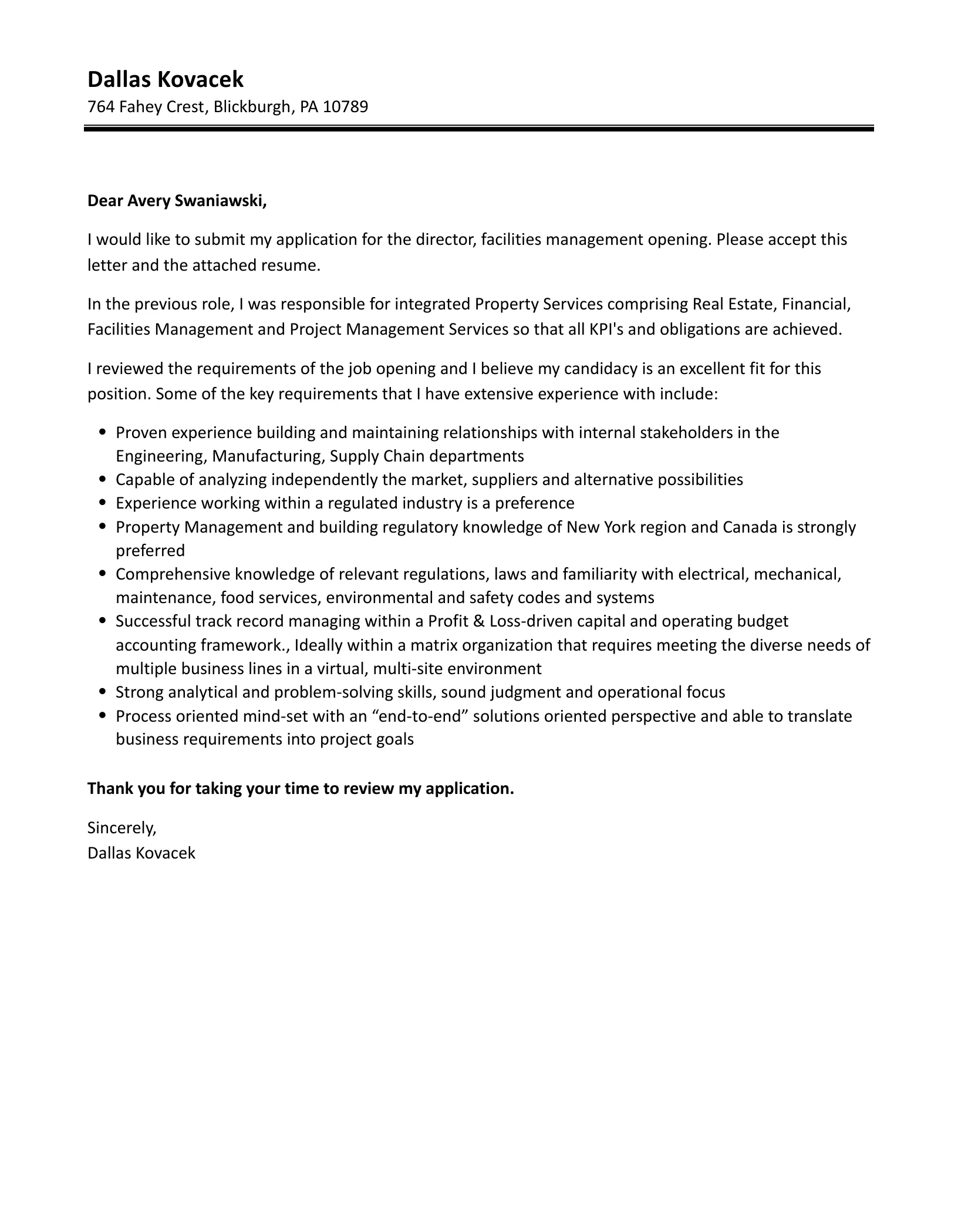
Highlight Your Key Qualifications
A compelling Director of Facilities cover letter is your first opportunity to make a strong impression on a potential employer. It’s your chance to showcase why you are the ideal candidate for the role. One of the most crucial tips for writing an effective cover letter is to begin by highlighting your key qualifications. This involves identifying the most relevant skills and experiences that align with the job description. Consider the core responsibilities of the Director of Facilities position: managing budgets, overseeing maintenance, ensuring safety compliance, and leading a team. Your cover letter should immediately communicate your proficiency in these areas. Use concise and powerful language to describe your expertise, making sure to quantify your accomplishments whenever possible.
Demonstrate Relevant Experience
Detailing your relevant experience is critical to showcasing your suitability for the Director of Facilities role. Go beyond simply listing your past job titles and responsibilities; instead, provide specific examples of how you have successfully managed facilities operations in the past. Did you oversee a major renovation project? Describe your role, the scope of the project, and the results. Have you implemented cost-saving measures? Quantify the savings achieved. Were you responsible for improving safety protocols? Highlight the improvements made and any resulting benefits, such as reduced incidents or better compliance. Emphasize experience with budgeting, vendor management, and compliance with relevant regulations.
Showcase Leadership Abilities

The Director of Facilities is a leadership position, so your cover letter must demonstrate your leadership abilities. Provide examples of how you have effectively led and managed teams. Describe your approach to motivating and developing employees. Discuss your experience in conflict resolution and your ability to create a positive and productive work environment. Mention any leadership training or certifications you have obtained. Detail how you have implemented process improvements, increased efficiency, or improved team performance. The goal is to paint a picture of you as a capable and inspiring leader who can effectively guide the facilities team and contribute to the overall success of the organization.
Emphasize Achievements and Results
Instead of merely listing your duties, focus on your achievements and the results you’ve delivered in previous roles. Quantify your accomplishments whenever possible. For example, instead of saying, “Managed the maintenance budget,” say, “Reduced maintenance costs by 15% through strategic vendor negotiations and preventative maintenance programs.” Did you improve the efficiency of a particular process? State the percentage improvement. Did you successfully complete a project on time and within budget? Highlight those facts. Providing concrete examples of your achievements will immediately distinguish you from other applicants and demonstrate the value you can bring to the company.
Tailor Your Cover Letter to the Job
A generic cover letter is unlikely to impress a hiring manager. One of the most important Director of Facilities cover letter tips is to tailor each letter to the specific job and company. This requires careful attention to the job description and the company’s needs. Use the job description as a guide to identify the key skills and experiences the employer is seeking, and then highlight how your qualifications align with those requirements. Show that you understand the specific challenges and opportunities the company faces and that you have the skills and experience to address them.
Research the Company and the Role

Before you start writing your cover letter, conduct thorough research on the company and the specific role. Visit the company’s website, read their mission statement, and learn about their values and culture. Search for recent news articles or press releases to understand the company’s current priorities and challenges. This research will enable you to personalize your cover letter and demonstrate your genuine interest in the position and the organization. Show the hiring manager that you’ve taken the time to learn about their company and that you understand their needs.
Use Keywords from the Job Description
Carefully analyze the job description and identify the keywords and phrases that are most important. Incorporate these keywords into your cover letter in a natural and relevant way. This helps to ensure that your cover letter is noticed by applicant tracking systems (ATS), which many companies use to screen applications. More importantly, it demonstrates that you possess the skills and experience the employer is seeking. Avoid keyword stuffing; the goal is to use the keywords authentically and in a context that showcases your abilities.
Customize the Letter for Each Application
Avoid using a generic cover letter for multiple applications. Take the time to customize each letter for the specific job and company. Address the letter to the hiring manager by name whenever possible. Mention specific projects or initiatives that resonate with the company’s goals. Demonstrate that you have carefully considered the company’s needs and that you have the skills and experience to contribute to their success. Personalized cover letters are more likely to capture the hiring manager’s attention and increase your chances of getting an interview.
Structure and Formatting

The structure and formatting of your cover letter are just as important as the content. A well-organized and visually appealing cover letter is easier to read and makes a better impression. Start with a professional heading that includes your contact information and the date. Use a clear and concise font, such as Arial or Times New Roman, and use appropriate spacing to ensure readability. Avoid using overly elaborate formatting or graphics that could distract from the content.
Use a Professional Tone
Maintain a professional tone throughout your cover letter. Use formal language and avoid slang or overly casual expressions. Proofread your letter carefully to ensure there are no grammatical errors or typos. Your cover letter reflects your professionalism and attention to detail. Use a positive and confident tone to highlight your strengths and express your enthusiasm for the position. Avoid sounding overly eager or desperate.
Keep It Concise and Focused
Hiring managers are busy, so keep your cover letter concise and focused. Aim for a length of one page, or a maximum of two pages if necessary. Focus on the most relevant information and avoid going into unnecessary detail. Highlight your key qualifications and achievements and show how they align with the job requirements. Each paragraph should have a clear purpose and contribute to the overall message of your cover letter.
Proofread Carefully

Proofreading is the final and perhaps most crucial step in writing a cover letter. Typos and grammatical errors can make a negative impression, regardless of your qualifications. Before submitting your cover letter, carefully proofread it for any errors. Use a spell checker and a grammar checker, but also read the letter aloud to catch any mistakes that might be missed by software. Ask a friend or colleague to proofread your cover letter as a second set of eyes. Ensure the letter is free of errors before submitting your application.
Essential Cover Letter Sections
Knowing the essential sections of a cover letter is crucial for creating a professional and effective document. Following a standard format ensures your cover letter is easy to read and conveys the necessary information clearly and concisely. Mastering these sections will increase the chances of a positive impression on the hiring manager.
Contact Information
At the top of your cover letter, include your contact information. This typically includes your name, phone number, email address, and optionally, your LinkedIn profile URL. Ensure that your contact information is accurate and up-to-date so that the hiring manager can easily reach you. Use a professional-looking email address.
Opening Paragraph

The opening paragraph is your chance to grab the reader’s attention and state the purpose of your letter. Clearly state the position you are applying for and where you saw the job posting. Briefly mention why you are interested in the role and the company. Highlight your most relevant qualification or a key achievement to immediately capture the hiring manager’s interest. Make it clear why you are a good fit for the position.
Body Paragraphs
The body paragraphs are the heart of your cover letter. This is where you expand on your qualifications and experience. Each paragraph should focus on a specific aspect of your skills and experience, supporting your claims with concrete examples and quantifiable achievements. Use the job description as a guide to tailor your content, highlighting the skills and experiences that align with the employer’s needs. Aim for a balance of showcasing your accomplishments and demonstrating your understanding of the role and the company.
Closing Paragraph
In your closing paragraph, reiterate your interest in the position and the company. Thank the hiring manager for their time and consideration. Include a call to action, such as expressing your eagerness for an interview or stating your availability for a follow-up discussion. Reiterate the value you bring to the company, and ensure your contact information is available for easy access.
Common Mistakes to Avoid

Avoiding common mistakes is critical to creating an effective cover letter. Knowing what to avoid helps you present yourself in the best possible light and increase your chances of getting an interview. Understanding these pitfalls can elevate your application and help you stand out from the competition.
Generic or Vague Language
Avoid using generic or vague language that could apply to any candidate. Instead of saying, “I am a hard worker,” provide specific examples of your accomplishments and how you have demonstrated your skills. Use precise language and quantify your achievements whenever possible. Show, don’t just tell, how you have excelled in your past roles. Generic statements are unlikely to impress a hiring manager.
Focusing on “I” Too Much
While you need to highlight your skills and experience, avoid focusing solely on yourself. Frame your accomplishments in terms of the value you can bring to the company. Show how your skills and experience align with the company’s needs and goals. Emphasize how you can contribute to their success. Shift the focus from your individual achievements to the positive impact you can have on the organization.
Typos and Grammatical Errors

Typos and grammatical errors can undermine your credibility and make a negative impression. Always proofread your cover letter carefully, and ideally, have someone else proofread it as well. Errors suggest a lack of attention to detail and can lead the hiring manager to question your professionalism. Use spell-check and grammar-check tools, but don’t rely on them entirely. Reading your cover letter aloud can help you catch mistakes.
Providing Irrelevant Information
Avoid including information that is irrelevant to the job. Focus on the skills and experiences that are directly related to the Director of Facilities position. Avoid mentioning hobbies or interests unless they are directly relevant to the role. Keep your cover letter focused and concise, and only include information that demonstrates your suitability for the job. Irrelevant details can distract the hiring manager and detract from the core message of your cover letter.