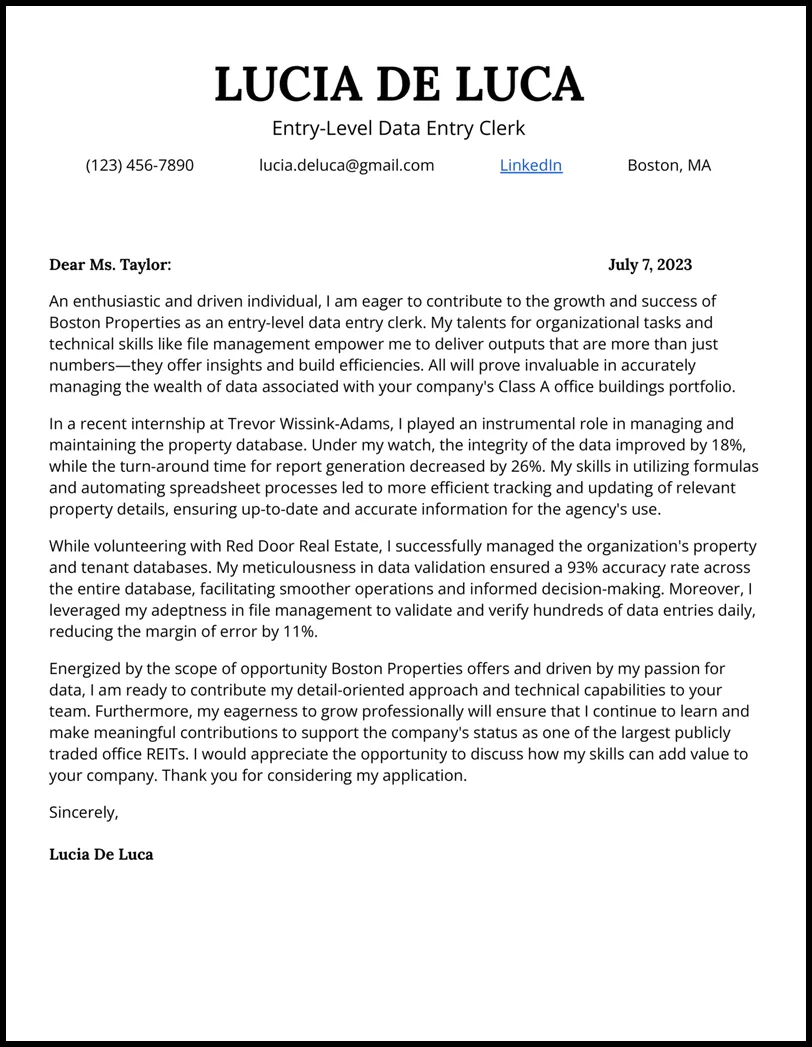
What is a Data Entry Cover Letter
A data entry cover letter is a crucial document accompanying your resume when applying for data entry positions. It serves as a formal introduction, allowing you to showcase your skills, experience, and enthusiasm for the role. Unlike a resume, which provides a summary of your qualifications, a cover letter allows you to express your personality and explain why you are the perfect fit for the specific job. It’s an opportunity to demonstrate your communication skills and attention to detail, qualities highly valued in data entry roles. A well-crafted cover letter can significantly increase your chances of landing an interview.
Why a Data Entry Cover Letter is Important
In the competitive job market, a cover letter provides a significant advantage. Data entry roles often require a high degree of accuracy, efficiency, and the ability to work with minimal supervision. A cover letter allows you to highlight these key skills and provide concrete examples of how you’ve demonstrated them in previous roles or projects. It shows employers that you’re not just sending out a generic application, but that you’ve taken the time to understand the job requirements and tailor your application accordingly. It’s a chance to make a strong first impression and set yourself apart from other applicants.
Key Elements to Include in Your Data Entry Cover Letter

Contact Information
Begin with your contact information including your name, address, phone number, and email address. This should be clearly visible at the top of the letter, allowing the hiring manager to easily reach you. Ensure your email address is professional and easy to read.
Professional Greeting
Address the hiring manager by name if possible. Researching the company and finding the hiring manager’s name shows initiative and demonstrates your genuine interest in the position. If you cannot find a specific name, use a professional greeting such as “Dear Hiring Manager”.
Highlighting Data Entry Skills

Showcase your relevant skills, such as typing speed, accuracy, attention to detail, and proficiency in data entry software (e.g., Microsoft Excel, Google Sheets). Mention any specific software or systems you’re familiar with. Include both hard skills and soft skills that are valuable to the role. For example, detail your experience with data entry, data validation, or any other relevant experience you might have.
Quantifiable Achievements
Whenever possible, quantify your achievements. Instead of saying “I processed a large volume of data,” state “Processed an average of 500 data entries per day with 99% accuracy.” Use numbers to showcase the impact of your work and demonstrate your efficiency and accuracy. These details will highlight your contributions to previous employers.
Expressing Enthusiasm
Convey your genuine interest in the position and the company. Explain why you are excited about the opportunity and what attracts you to the role. This personal touch demonstrates your motivation and commitment to the job. Express your enthusiasm by describing how your skills and interests align with the company’s needs. Remember to tailor your letter to each specific job, making it clear that you are truly interested in the position.
Tailoring Your Letter to the Job Description

Carefully read the job description and tailor your cover letter to match the specific requirements. Identify the key skills and qualifications the employer is seeking and highlight how you meet those needs. Customize your letter to show you have the specific skills or experience they are looking for. By tailoring your letter, you show the hiring manager that you have taken the time to understand their needs and are serious about the position. Be sure to align your skills and experience to what the employer has specified in the job description, making your application more relevant.
Researching the Company
Demonstrate your knowledge of the company by researching its mission, values, and recent activities. Mention something specific that appeals to you about the company or its work. This shows that you are interested in the company and not just any job. Use this research to tailor your cover letter and show the employer how you fit into their organization. Take the time to understand what makes the company unique. This can impress the hiring manager and make your cover letter stand out.
Addressing Specific Requirements
Address any specific requirements mentioned in the job description. This could include specific software skills, experience in a particular industry, or certain certifications. Make sure to explicitly state how you meet those requirements, providing examples if possible. Addressing specific requirements head-on shows the employer that you carefully reviewed the job description and are a good fit.
Showcasing Soft Skills

In addition to hard skills, mention your soft skills, such as communication, time management, problem-solving, and teamwork. These skills are essential in a data entry role, and highlighting them can significantly increase your chances of success. Demonstrate how you have used these skills in previous roles or projects. These skills will impress the hiring manager by showing that you are well-rounded and that you can work well in a team.
Data Entry Cover Letter Examples
Example 1 Entry-Level Data Entry
This example is for candidates with little to no prior experience. Focus on transferable skills, education, and any relevant projects or volunteer work. Highlight your strong work ethic, attention to detail, and willingness to learn. For example, you might mention a data entry project in school or a volunteer role where you handled data. Emphasize your eagerness to begin a data entry career and your enthusiasm for learning new skills. Show you have an understanding of data entry, even without extensive experience. The more you can demonstrate your attention to detail and accuracy, the more attractive you become to employers.
Example 2 Data Entry with Experience

This example is for candidates with previous data entry experience. Quantify your accomplishments with specific numbers and statistics. Mention the types of data you have worked with and the software you are proficient in. Highlight your speed, accuracy, and any improvements you have made in your previous roles. Show how you have streamlined processes or reduced errors. By clearly demonstrating your previous achievements, you highlight your ability to contribute to the company’s efficiency and accuracy.
Example 3 Data Entry with Specific Software Skills
If the job description mentions specific software requirements, tailor your cover letter to showcase your proficiency in those programs. Describe your experience using the software, including the types of tasks you performed and the results you achieved. Provide concrete examples to support your claims. If you have certifications or training in any relevant software, mention them. The goal is to demonstrate your capability with these tools and show you are able to jump into the role.
Example 4 Data Entry for a Specific Industry
If you are applying for a data entry position in a specific industry (e.g., healthcare, finance), tailor your cover letter to the industry’s needs. Highlight any relevant industry experience, knowledge of industry-specific terminology, and understanding of industry regulations. Demonstrate your understanding of the industry and its unique data requirements. If you have experience in a specific industry, your cover letter shows you possess the necessary expertise and knowledge to thrive in the role.
Example 5 Data Entry with a Focus on Accuracy

Accuracy is paramount in data entry. In this example, emphasize your attention to detail and commitment to accuracy. Provide specific examples of how you have maintained high accuracy rates in previous roles, such as error reduction or successful data validation. Mention any quality control measures you have implemented. Highlight the importance of your work. Focus on accuracy and its impact on business performance. The more you can highlight your attention to detail, the more likely you are to impress.
Common Mistakes to Avoid
Generic Content
Avoid using a generic cover letter that could be sent to any company. Tailor your letter to each specific job, highlighting the skills and experience most relevant to the position. Show that you’ve researched the company and understand its needs. Generic cover letters don’t show enough consideration for the needs of the employer and are often dismissed.
Typos and Grammatical Errors
Typos and grammatical errors can make a negative impression, suggesting a lack of attention to detail. Proofread your cover letter carefully before submitting it. Have someone else review it for you. Ensure the letter is free of errors. Always use spell check and grammar check tools. Data entry roles require accuracy, and your cover letter is the first impression of your communication skills. Check and double-check your letter before sending your application to the hiring manager.
Lack of Customization
Failing to tailor your cover letter to the job description demonstrates a lack of interest. Customize your letter by mentioning the company’s name, the specific role, and how your skills and experience align with the job requirements. Showing that you’ve taken the time to understand the employer’s needs will make your application stand out. If you do not customize your cover letter, you run the risk of missing an opportunity to get the job.
Ignoring the Job Description
Ignoring the requirements and keywords in the job description is a common mistake. Addressing the specific skills and qualifications the employer is seeking is critical. Your cover letter should directly address the requirements mentioned in the job posting. By addressing the requirements of the job, your cover letter will get noticed and reviewed.
Formatting Issues
Ensure your cover letter is well-formatted, easy to read, and visually appealing. Use a professional font, appropriate margins, and clear spacing. Avoid excessive use of bolding or italics. Use formatting to make your letter easy for the hiring manager to review. Proper formatting makes a positive impression and shows your professionalism. Ensure your cover letter is easy to read. Remember to maintain a professional style.
Tips for Writing a Strong Data Entry Cover Letter
Proofread Carefully
Always proofread your cover letter multiple times before submitting it. Check for typos, grammatical errors, and formatting inconsistencies. Errors can undermine your credibility and make a negative impression. Use spell check and grammar check tools. Have someone else review your cover letter to catch any mistakes you may have missed. Proper proofreading is essential to present a professional image. Always proofread your letter to make sure your letter gets the attention it deserves.
Use Action Verbs
Use action verbs to describe your skills and accomplishments. Instead of stating “I was responsible for data entry,” use stronger verbs such as “Managed,” “Processed,” “Verified,” or “Maintained.” Action verbs make your cover letter more dynamic and engaging. Use active language to show your abilities and make a more compelling case for your application.
Keep it Concise
Keep your cover letter concise and to the point. Aim for one page, focusing on the most relevant information. Avoid unnecessary details or lengthy explanations. Highlight your key qualifications and experience, providing only the information needed to make a strong case for your application. Hiring managers are busy and don’t have a lot of time to read long cover letters.
Show, Don’t Tell
Instead of simply stating your skills, provide concrete examples of how you have demonstrated those skills in the past. Show the hiring manager what you have achieved and the impact you have had. Support your claims with evidence. This allows the hiring manager to easily recognize your talents. Use specific examples from previous roles and highlight your achievements.
The Importance of Follow-Up
Following up with the hiring manager a week or two after submitting your application shows your continued interest in the position. Send a brief email expressing your enthusiasm and reiterating your interest. This demonstrates your proactivity and initiative. Even if you do not get the job, following up is a sign of professionalism. The follow-up allows you to stay top of mind.