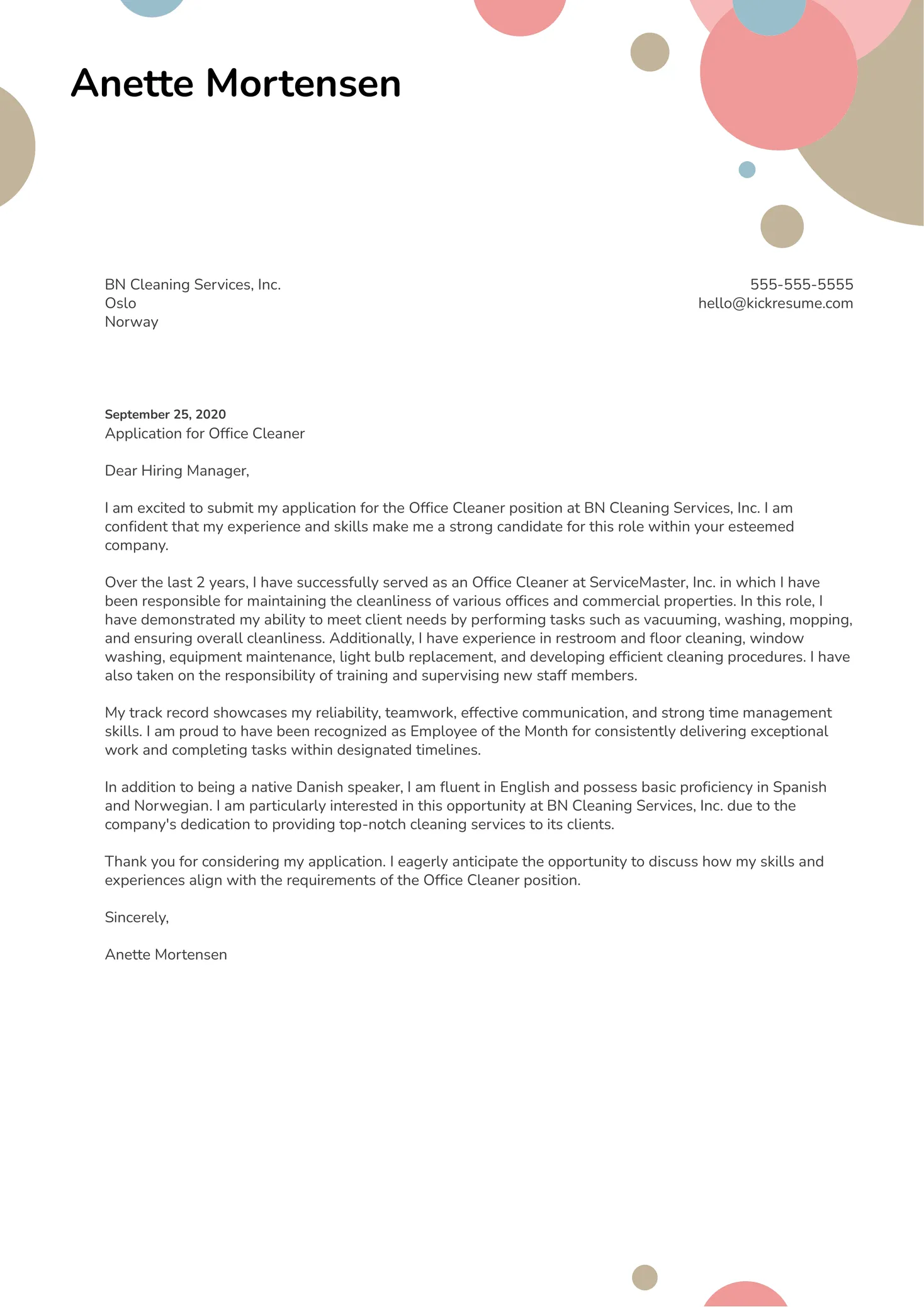
Why a Cover Letter Matters for Cleaners
In the competitive job market, especially for cleaning positions, a cover letter is your chance to shine. It’s more than just a formality; it’s your introduction, your sales pitch, and your opportunity to make a lasting impression. Unlike a resume, which provides a factual overview, a cover letter allows you to connect with the hiring manager on a personal level, demonstrating your enthusiasm and suitability for the role. This is your chance to go beyond the basics and showcase why you’re the ideal candidate. It is important to remember that many applicants apply for the same job, therefore, this is your chance to shine and make a great impression.
Highlighting Your Skills & Experience
Your cover letter is the perfect place to spotlight your skills and experience. Don’t just list them; illustrate how you’ve applied them in previous roles. For example, if you’re proficient in using various cleaning equipment, mention it and provide context. Did you use a specific type of machine to clean a large office space? Did you successfully manage cleaning tasks for a busy household? Quantify your achievements whenever possible. Instead of saying ‘cleaned homes,’ try ‘cleaned an average of five homes per week, maintaining a 99% client satisfaction rate.’ Specificity adds credibility and makes your application more compelling.
Detailing Your Cleaning Experience

Provide a concise overview of your cleaning experience. Mention previous cleaning positions, the types of environments you’ve cleaned (homes, offices, hospitals, etc.), and the duration of your employment. If you have experience with specific types of cleaning, such as deep cleaning, move-in/move-out cleaning, or specialized cleaning, be sure to include that information. If you are new to the industry, highlight any transferable skills, such as attention to detail, time management, or customer service experience, that demonstrate your ability to excel in a cleaning role. Don’t forget to mention how long you have been in the industry.
Showcasing Specific Cleaning Skills
This is where you detail your cleaning capabilities. Do you have experience with a range of cleaning products and equipment? Are you skilled in dusting, vacuuming, mopping, and sanitizing surfaces? Do you have experience with specialized cleaning tasks, such as window washing, floor care (waxing, polishing), or upholstery cleaning? List the specific skills relevant to the job description. If you’re applying for a commercial cleaning position, highlight your experience with industrial cleaning equipment. If the job involves eco-friendly cleaning, mention your knowledge of green cleaning products and practices. Highlight your understanding of health and safety protocols.
Emphasizing Reliability and Punctuality
Cleaning jobs require dependability and timeliness. Your cover letter is an opportunity to emphasize your reliability and punctuality. State your commitment to being on time and completing tasks efficiently. You can mention any systems or methods you use to stay organized and manage your time effectively. If you have a strong attendance record in previous roles, mention it briefly. For example, ‘I have a proven track record of excellent attendance and punctuality in all my previous roles.’ You can also highlight your ability to work independently and follow instructions without supervision, showcasing your commitment to your work and ensuring customer satisfaction.
Formatting Your Cover Letter

A well-formatted cover letter is a sign of professionalism. Use a clear, easy-to-read font like Arial or Times New Roman, and maintain a consistent font size. Keep your letter concise, aiming for a single page. Use headings, bullet points, and short paragraphs to break up the text and make it easier to scan. Proofread carefully for any grammatical errors or typos, as these can detract from your credibility. Pay attention to the overall layout, ensuring that your letter is visually appealing and easy to navigate. The use of correct formatting in your cover letter indicates that you pay attention to details, which is a critical skill for a cleaner.
Contact Information and Salutation
Start with your contact information (name, address, phone number, and email address) at the top of the letter. Then, address the hiring manager by name if possible. Research the company’s website or LinkedIn to find the hiring manager’s name. If you cannot find a specific name, use a general greeting like ‘Dear Hiring Manager.’ Make sure you address the correct company and position. In the end, your goal is to get the interview, therefore it is very important to use proper salutations, as it shows respect and that you can communicate professionally.
Body Paragraph Structure
The body of your cover letter should consist of a few well-structured paragraphs. Begin by stating the position you’re applying for and where you found the job posting. In the following paragraphs, highlight your relevant skills and experience, providing specific examples of your accomplishments. Use the STAR method (Situation, Task, Action, Result) to describe how you handled situations in previous roles. This method is effective in showcasing your problem-solving abilities. Keep each paragraph focused, and ensure your points are concise and easy to understand. Close your body paragraphs with a statement that re-emphasizes your interest and enthusiasm for the role.
Closing and Call to Action

Conclude your cover letter with a strong call to action. Reiterate your interest in the position and express your enthusiasm for the opportunity. Thank the hiring manager for their time and consideration. Provide a clear call to action, such as, ‘I am eager to discuss my qualifications further in an interview.’ Include a professional closing such as ‘Sincerely’ or ‘Best regards,’ followed by your name and signature (if submitting a hard copy). The call to action is an important element to keep the reader engaged. It shows that you are willing to take the extra step and are enthusiastic about your application.
Tailoring Your Cover Letter
Avoid sending a generic cover letter. Customize it for each job application. A tailored cover letter demonstrates that you have carefully reviewed the job description and understand the specific requirements. This personalization can make your application stand out from the crowd, as it shows you’ve put in the effort. It showcases a genuine interest in the role and the company. Generic cover letters can show that the candidate is not really interested in the role. Tailoring your cover letter increases your chances of getting the interview and the job.
Researching the Company
Before writing your cover letter, research the company. Visit their website, read about their mission, and review their social media presence. Understanding the company’s values and culture will help you tailor your letter to match their needs. If the company emphasizes customer service, highlight your customer service skills. If they value teamwork, mention your experience working in a team environment. Demonstrating that you understand the company’s objectives will make your application more relevant and compelling. This will also help you align your goals with the goals of the company. It will also allow you to know who you’re talking to.
Using Keywords from the Job Description

Carefully review the job description and identify the keywords used to describe the required skills and qualifications. Incorporate these keywords naturally into your cover letter. This helps the hiring manager quickly see that you meet the requirements of the role. However, don’t overdo it. Your letter should read smoothly and authentically. Use keywords strategically, emphasizing your relevant skills and experience. This will help your cover letter get past applicant tracking systems (ATS) and into the hands of the hiring manager, as many companies use ATS to filter through candidates.
Proofreading and Editing
Proofreading is a critical step in the cover letter writing process. Typos and grammatical errors can undermine your credibility and damage your chances of getting the job. After writing your cover letter, read it multiple times, checking for any errors. It is recommended to read it aloud to identify awkward phrasing. Use a grammar checker, such as Grammarly. Ask a friend or family member to review your letter for clarity and accuracy. A fresh pair of eyes can often catch errors that you might miss. The more you proofread, the better your chances of getting a job.
By following these tips, you can create a cover letter that will impress potential employers and significantly increase your chances of landing a cleaning job. Your cover letter is your first step to success.