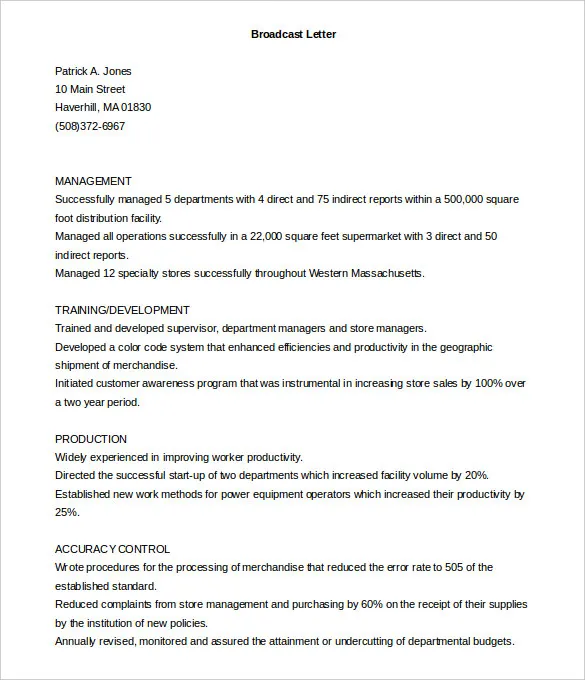
Highlighting Key Achievements
As an experienced professional, your cover letter is not just a formality, it’s a strategic tool to showcase your value. One of the most critical components is highlighting your key achievements. This means moving beyond simply listing your responsibilities and focusing on the results you’ve delivered in previous roles. Employers want to see what you’ve accomplished, not just what you did. Think of your cover letter as your personal highlight reel. Each sentence should pack a punch, demonstrating your capabilities and the positive impact you’ve had on past organizations. This section sets the stage for the rest of your application, immediately grabbing the reader’s attention and making them eager to learn more about your qualifications. Avoid generic statements and instead, opt for specifics that make your experience relatable and valuable.
Quantify Your Accomplishments
To truly make your achievements stand out, you need to quantify them. Numbers speak louder than words, and providing concrete data gives employers a clear understanding of your impact. For instance, instead of saying ‘Increased sales,’ say ‘Increased sales by 20% in one quarter, exceeding targets by 15%.’ This level of detail adds credibility and demonstrates your ability to drive results. Use metrics such as percentages, dollar amounts, and specific figures to illustrate your successes. Consider the size of projects you managed, the budgets you handled, and any cost savings or revenue increases you achieved. Quantifying your accomplishments proves your value and makes your cover letter far more persuasive.
Use Action Verbs

Action verbs breathe life into your cover letter and make your achievements more dynamic and engaging. Start each bullet point or key sentence with a strong action verb to immediately grab the reader’s attention. Verbs like ‘Led,’ ‘Managed,’ ‘Developed,’ ‘Implemented,’ and ‘Achieved’ are powerful and paint a vivid picture of your capabilities. These verbs convey a sense of leadership, initiative, and accomplishment. Avoid passive language and replace it with active verbs that demonstrate your proactive approach and results-oriented mindset. By using action verbs, you make your cover letter more compelling and ensure your achievements are presented in the most effective way possible.
Tailoring Your Cover Letter
Generic cover letters are a surefire way to get your application lost in the shuffle. As an experienced professional, it’s crucial to tailor each cover letter to the specific job and company. This involves thorough research and a strategic approach to align your skills and experience with the employer’s needs. Tailoring shows that you’ve taken the time to understand the role and organization, demonstrating your genuine interest and commitment. It allows you to address the specific requirements outlined in the job description and highlight the skills and experiences that are most relevant.
Research the Company
Before you even begin writing, conduct thorough research on the company. Understand their mission, values, and recent projects. Visit their website, read news articles, and check out their social media profiles. This research will provide insights into their culture, goals, and challenges. Use this information to demonstrate how your skills and experience align with their specific needs. For example, if the company emphasizes innovation, highlight your experience with creative problem-solving. If they value teamwork, provide examples of your collaborative efforts. Tailoring your cover letter to reflect the company’s unique characteristics proves that you’re not just sending a generic application, but that you’re genuinely interested in the opportunity.
Match Skills to Requirements

Carefully review the job description and identify the key skills and qualifications the employer is seeking. Then, use your cover letter to explicitly demonstrate how your experience aligns with those requirements. Provide specific examples of how you have successfully used these skills in previous roles. For each skill or requirement, provide a brief explanation and a supporting example. This could involve quantifying your achievements or highlighting a specific project where you used the skill. The goal is to create a clear and direct connection between your qualifications and the job’s needs. This approach proves that you not only meet the requirements but also understand how to apply your skills effectively.
Showcase Your Personality
While professionalism is key, don’t be afraid to let your personality shine through. Your cover letter is an opportunity to show the employer who you are beyond your resume. It helps them get a sense of your communication style, enthusiasm, and fit within their company culture. Use a conversational tone and inject a bit of your own voice. This doesn’t mean being overly casual, but rather, allowing your genuine personality to be evident in your writing. Share a brief anecdote or a personal interest that relates to the job or company. By showcasing your personality, you make your cover letter more memorable and demonstrate that you are a well-rounded individual. This adds a human element to your application, making you stand out from other applicants.
Maintain a Professional Tone
Even as you showcase your personality, always maintain a professional tone. Your cover letter is a formal document, and it should reflect your professionalism. This includes using proper grammar, spelling, and punctuation. Avoid slang, jargon, or overly casual language. Focus on clear and concise communication, demonstrating your ability to express yourself effectively in a professional setting. Use a formal salutation (e.g., ‘Dear Mr. / Ms. Last Name’) and a professional closing (e.g., ‘Sincerely,’ or ‘Best regards’). Ensure your writing is polished and error-free, as this reflects your attention to detail and respect for the employer.
Proofread Meticulously

Proofreading is one of the most critical steps in writing a cover letter. Even the most impressive achievements can be undermined by typos or grammatical errors. Always proofread your cover letter multiple times, preferably after taking a break from writing it. Read it aloud to catch any awkward phrasing or mistakes. Consider having a friend or colleague review your cover letter for a fresh perspective. They may spot errors you’ve overlooked. Make sure to check for spelling mistakes, grammatical errors, and punctuation issues. Pay close attention to the details, ensuring that every word is correctly spelled and every sentence is grammatically sound. Proofreading is a simple step that can significantly improve your chances of making a positive impression.
Formatting and Design
The formatting and design of your cover letter are just as important as the content. An easy-to-read cover letter is more likely to grab the reader’s attention. A well-designed cover letter is visually appealing and showcases your attention to detail. Consider your cover letter as a marketing tool that represents your brand. Make sure your formatting enhances readability and reinforces your professionalism.
Choose a Clear and Readable Font
The font you choose should be clear, professional, and easy to read. Stick to standard fonts such as Times New Roman, Arial, or Calibri. These fonts are universally accepted and are easy on the eyes. Avoid using overly decorative or complex fonts, as they can be distracting and make your cover letter difficult to read. The font size should be between 10 and 12 points to ensure readability. Use a consistent font throughout the document. A clean and professional font creates a positive impression and ensures that your message is easily understood.
Keep it Concise

Employers are busy, so it’s important to keep your cover letter concise and to the point. Aim for one page maximum. Focus on your most relevant qualifications and achievements. Use clear and concise language to convey your message. Avoid unnecessary jargon or long, rambling sentences. Each sentence should serve a purpose, and every word should contribute to your overall message. Get straight to the point, highlight the key information, and make it easy for the reader to understand why you’re the perfect fit for the job. A well-written and concise cover letter demonstrates your respect for the employer’s time.