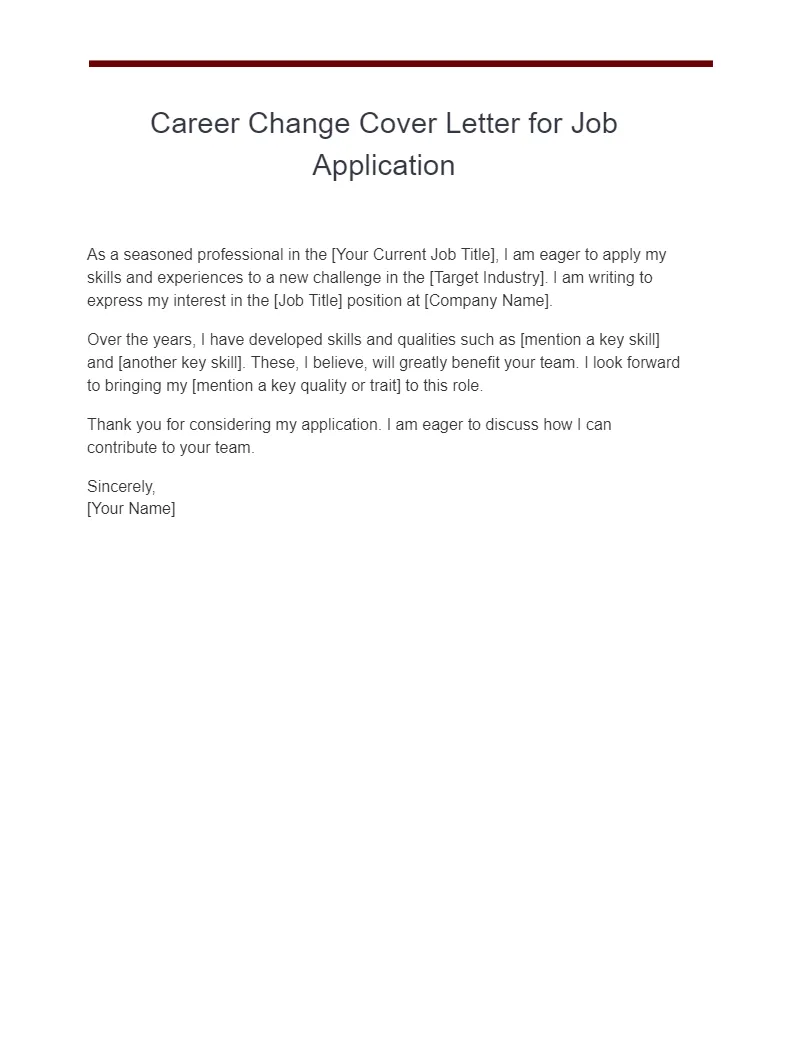
Cover Letter Secrets Unveiled
Embarking on a career change can be a daunting but exciting journey. One of the most crucial tools in your arsenal is a well-crafted cover letter. It’s your first impression, your chance to convince a potential employer that you possess the skills, passion, and potential to excel in a new field. This guide will reveal the secrets to writing a cover letter that not only highlights your transferable skills but also addresses the elephant in the room—your career change. By mastering these techniques, you’ll significantly increase your chances of landing an interview and ultimately, your dream job.
Understanding the Purpose of a Career Change Cover Letter
A career change cover letter serves a unique purpose. Unlike a standard cover letter that reinforces your existing career trajectory, this letter must address the shift. It’s your opportunity to explain why you’re making this transition, what motivates you, and why your skills are relevant to the new role, even if your experience isn’t directly aligned. The letter needs to bridge the gap between your past and your future, demonstrating your adaptability, eagerness to learn, and commitment to the new field. This is about showcasing your resilience and forward-thinking approach in your career trajectory, ensuring that you present yourself as a valuable asset.
Highlighting Transferable Skills

One of the most effective strategies for a career change cover letter is to focus on your transferable skills. These are the skills you’ve developed in previous roles that can be applied to the new position. For instance, project management experience from a marketing role can be relevant in a project management position in IT. Communication skills are a valuable asset across all industries. Identify the skills that are most relevant to the target job description and provide specific examples of how you’ve used them in the past. This helps the hiring manager understand that you have the capacity to succeed in the new role, even if your background differs.
Identifying Your Target Audience (Hiring Manager)
Before you begin writing, research the company and, if possible, identify the hiring manager. Addressing the letter to a specific person shows you’ve done your homework and are genuinely interested in the opportunity. Understanding the hiring manager’s background and the company’s values can help you tailor your letter to resonate with them. This personalized approach demonstrates initiative and attention to detail. It shows the hiring manager that you are not just sending out generic applications, but instead, carefully choosing your words to match the role’s expectations.
Crafting a Compelling Opening
Your opening paragraph should immediately grab the reader’s attention. Avoid generic greetings or statements. Instead, start with a strong hook that showcases your enthusiasm for the position and the company. You might reference a specific project you admire, a recent company achievement, or a connection you have with the company’s mission. Clearly state the position you are applying for and, most importantly, how your skills and aspirations align with the company’s needs. Make sure your first paragraph sets the tone for the rest of the letter, drawing the reader into your story and setting you apart from other candidates.
Showcasing Relevant Experience

Even if your experience isn’t directly related to the new field, you can still highlight relevant accomplishments. Focus on projects or responsibilities that demonstrate your ability to learn quickly, solve problems, and contribute effectively. Use the STAR method (Situation, Task, Action, Result) to provide specific examples. This will allow you to elaborate on the situation, the task at hand, your actions, and the results you achieved. Quantify your achievements whenever possible to show the impact of your work. Remember to tailor your examples to the specific requirements of the job description to demonstrate your understanding of the role and the company’s needs.
Quantifying Achievements and Results
Numbers speak louder than words. Whenever possible, quantify your achievements to demonstrate your impact. For example, instead of saying “Improved customer satisfaction,” say “Increased customer satisfaction by 15% through implementing a new feedback system.” This provides concrete evidence of your capabilities and shows the hiring manager the value you can bring to the company. Metrics like sales figures, project completion rates, cost savings, or efficiency improvements can make a significant difference in how your application is perceived. Using data proves you can deliver results and highlights the value you bring to the table.
Addressing the Career Change
The core of your career change cover letter is explaining why you’re making the transition. Be honest and transparent about your reasons, but frame them positively. Focus on your aspirations and your excitement about the new field, rather than dwelling on any negativity from your previous role. This is your opportunity to shape the narrative. You can showcase this by talking about growth, development, or the new challenges that await. Connect your past experiences to your future goals, providing a clear and compelling rationale for your career change.
Explaining the Reason for the Shift

Clearly articulate your reasons for the career change. Whether it’s a passion for a new industry, a desire for a different work environment, or a long-held interest, be specific about what motivates you. Avoid generic statements like “I’m looking for a new challenge.” Instead, explain what aspects of the new role or industry appeal to you. For instance, “My passion for sustainable energy, combined with my project management experience, has led me to seek a role in renewable energy project development.” This demonstrates your thought process and how your career transition is driven by a clear purpose.
Emphasizing Enthusiasm and Interest
Let your enthusiasm shine through. Hiring managers want to see that you are genuinely interested in the position and the company. Express your excitement about the opportunity, and highlight what specifically attracts you to the role. This might include the company’s culture, the work environment, or the chance to contribute to meaningful projects. Showing genuine interest makes you a more memorable candidate and signals that you are likely to be a motivated and engaged employee. A personal touch can go a long way in making a positive impression.
Demonstrating Knowledge of the New Field
Show that you’ve done your homework by demonstrating knowledge of the new field. This could involve mentioning industry trends, specific technologies, or relevant skills. Explain how you’ve taken steps to familiarize yourself with the field, such as completing online courses, attending workshops, or networking with professionals. Even a basic understanding of the industry demonstrates your initiative and your commitment to the career change. This effort shows you’re not just interested, but you’re actively preparing for your new role.
Crafting a Strong Closing

Your closing paragraph is your final chance to make an impression. Keep it concise and impactful. Reiterate your interest in the position and thank the hiring manager for their time and consideration. Show your excitement for the opportunity to learn and contribute. Express confidence in your ability to succeed in the new role. End with a strong and positive tone, leaving the reader with a favorable impression of you and your potential.
Reiterating Your Interest
In your closing, reiterate your enthusiasm for the position and the company. Briefly summarize why you’re a good fit, highlighting your key skills and experiences. Avoid simply restating information; instead, offer a fresh perspective. Tailor this section to the specific job requirements and the company’s values. This final statement should solidify your candidacy and encourage the hiring manager to view your application favorably. Make sure this reiteration feels natural and is not simply a repetition of what you have already stated.
Call to Action (Next Steps)
End your cover letter with a clear call to action. Let the hiring manager know what you’d like them to do next. This could be a request for an interview, a suggestion to discuss your qualifications further, or an offer to provide additional information. Make it easy for the hiring manager to respond. Express your availability and enthusiasm for a meeting. This is a signal that you are proactive, engaged, and eager to move forward in the application process. This call to action will help set your application apart, as it guides the hiring manager in what to do next.