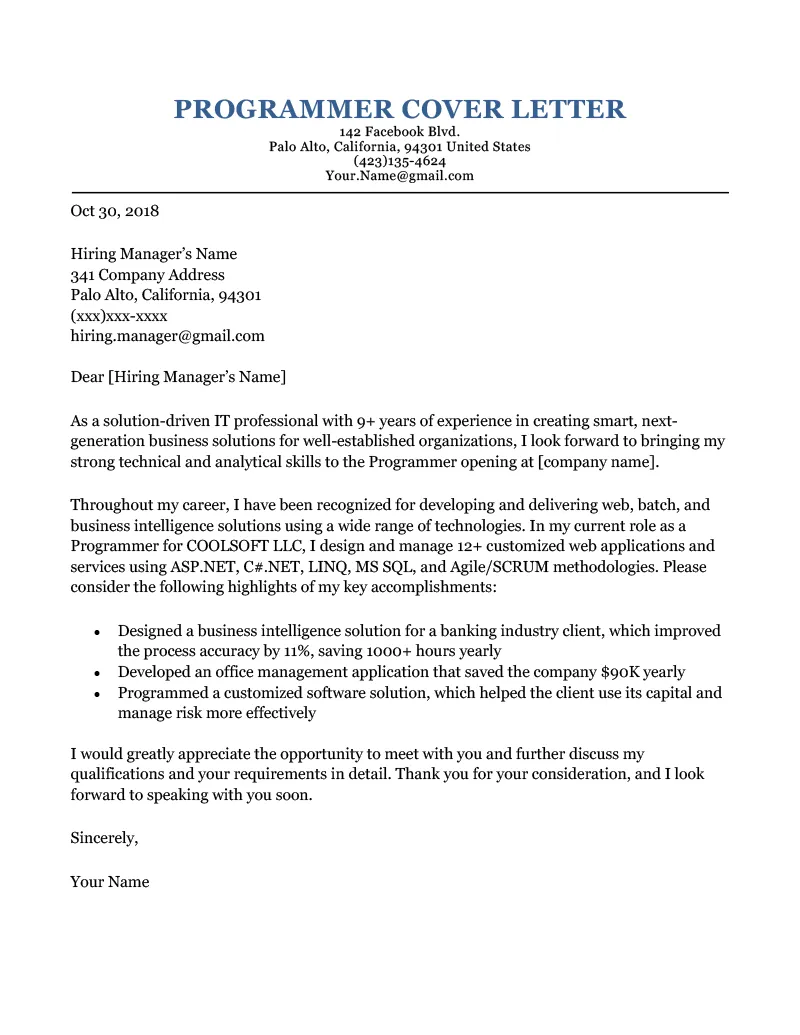
Crafting the Perfect Cover Letter
A well-crafted cover letter is your first opportunity to make a lasting impression on a potential employer. In the competitive field of software engineering, where technical skills are paramount, a strong cover letter can be the key to unlocking your dream job. It’s not merely a formality; it’s a strategic tool to showcase your personality, passion, and unique qualifications. This guide will walk you through the essential steps of creating a cover letter that grabs attention and secures you an interview. Let’s begin the journey to landing that perfect engineering role by mastering the art of the cover letter.
Understanding the Purpose of a Cover Letter
The primary goal of a cover letter is to introduce you to a potential employer and highlight your suitability for the role. It provides a space to elaborate on your skills and experiences that go beyond the bullet points of your resume. Think of it as your personal narrative, where you can connect your qualifications to the specific requirements of the job and demonstrate your genuine interest in the company. Moreover, it is an opportunity to differentiate yourself from other applicants and make a memorable first impression.
Why a Cover Letter is Crucial for Engineers

For software engineers, a cover letter is a chance to demonstrate your communication skills, which are vital for collaboration and project success. It allows you to explain complex technical projects in a concise, understandable manner. A well-written cover letter shows that you can articulate your thoughts effectively and demonstrate your understanding of the job requirements and company’s mission, and it is an important part of the cover letter for a software engineering role. By providing context and showcasing your personality, a cover letter can help you stand out in a stack of resumes.
Highlighting Your Unique Value Proposition
Every applicant brings a unique set of skills and experiences to the table. Your cover letter is the ideal place to highlight what makes you stand out from the crowd. Begin by identifying your core strengths, whether it’s your expertise in a specific programming language, your experience with cloud computing, or your proven ability to lead development teams. Focus on what differentiates you from other candidates, such as your passion for solving complex problems or your commitment to continuous learning.
Showcasing Technical Skills and Experience
Use your cover letter to showcase your technical proficiency. Instead of just listing your skills, provide examples of how you’ve used them in past projects. Describe your experience with relevant technologies and tools, and explain your role and contributions. For instance, if you’re proficient in Python, mention a project where you developed a specific application using this language. Make sure to align your technical skills with the requirements outlined in the job description to show you are a good fit.
Quantifying Achievements and Results

Don’t just tell the employer what you did; show them the impact of your work. Whenever possible, quantify your achievements using data. For instance, instead of saying “Improved website performance,” state “Improved website loading speed by 30%.” Quantifiable results provide concrete evidence of your abilities and demonstrate the value you can bring to the company. Use numbers, percentages, and specific metrics to showcase your accomplishments in a clear and compelling manner.
Tailoring Your Cover Letter to the Job
Generic cover letters are easily spotted and often discarded. To make a lasting impression, tailor each cover letter to the specific job and company. Research the company’s values, mission, and recent projects to understand their priorities. Customize your cover letter to address the specific requirements outlined in the job description and highlight relevant skills and experiences.
Researching the Company and Role
Before you start writing, take the time to research the company and the specific role. Visit the company’s website, read their blog posts, and review their social media profiles to gain insights into their culture and values. Understanding the company’s mission will help you align your cover letter with their goals and demonstrate your genuine interest. Research the role’s responsibilities and requirements to showcase how your skills and experience align with the position.
Using Keywords and Addressing Requirements

Carefully review the job description and identify the key requirements and keywords. Integrate these keywords naturally throughout your cover letter to highlight the relevant skills and experiences. Addressing the requirements directly shows the hiring manager that you’ve carefully considered the role and can deliver what the company needs. Make sure that your language clearly reflects the company’s needs and expectations.
Formatting and Structure for Maximum Impact
A well-formatted cover letter is easy to read and leaves a positive impression. Use a clear, professional font and maintain consistent formatting throughout the document. Structure your cover letter logically, with a clear introduction, body paragraphs, and a strong conclusion. This ensures your message is easily understood and makes it simple for the reader to find the information they need.
Effective Formatting Techniques
Choose a professional font such as Arial, Calibri, or Times New Roman. Maintain consistent font size and spacing for readability. Use clear headings and subheadings to organize your content and make it easy for the reader to scan the document. Use bullet points to highlight your key accomplishments and skills in a clear and concise way. A well-formatted cover letter is a reflection of your attention to detail.
Structuring Your Cover Letter Logically

Begin with a compelling introduction that grabs the reader’s attention. State the position you’re applying for and how you learned about the opportunity. In the body paragraphs, highlight your relevant skills and experience, using specific examples to demonstrate your abilities. Conclude with a strong call to action, expressing your enthusiasm and providing your contact information.
Common Mistakes to Avoid
Avoiding common mistakes is critical to ensure your cover letter is successful. Common mistakes include generic content, typos, poor language, and ignoring the company’s culture and values. Being aware of these common pitfalls will allow you to create a polished and compelling cover letter that stands out from the competition.
Generic Content and Lack of Personalization
Avoid using generic templates or a one-size-fits-all approach. Generic cover letters fail to show the hiring manager that you have genuinely considered the role and the company’s needs. Personalize your cover letter to demonstrate your understanding of the specific job requirements and the company’s mission. Show enthusiasm for the specific role and the company’s goals.
Typos, Grammatical Errors and Poor Language

Typos and grammatical errors can undermine your credibility and create a negative first impression. Proofread your cover letter carefully before submitting it. Ask a friend or mentor to review it as well. Ensure that your language is clear, concise, and professional. Pay attention to sentence structure, spelling, and punctuation. Errors can make you look careless, so a perfectly polished cover letter is crucial.
Ignoring the Company’s Culture and Values
Failing to align your cover letter with the company’s culture and values shows a lack of research and a lack of genuine interest. Research the company’s values, mission, and work environment. Adjust your tone and content to reflect the company’s culture. Show that you understand their values and are a good fit for their team. Demonstrate your enthusiasm for the company’s mission and your understanding of its culture.
Closing and Following Up
A strong conclusion is essential to leave a lasting impression. Use a call to action to express your interest and make it easy for the hiring manager to take the next step. Express your gratitude for their time and consideration. Following up with a thank you note after the interview is also important. Make sure you follow through.
Writing a Strong Call to Action

End your cover letter with a clear call to action. State that you are eager to discuss your qualifications further and welcome the opportunity to interview. Provide your contact information and express your availability for an interview. Make it easy for the hiring manager to take the next step. Ensure your call to action is enthusiastic and confident.
Expressing Enthusiasm and Gratitude
Always end your cover letter by expressing your enthusiasm for the opportunity and your gratitude for the hiring manager’s time and consideration. Thank them for reviewing your application and reiterate your interest in the role. A positive and appreciative tone leaves a favorable impression and increases the chances of securing an interview.
Proofreading and Submitting Your Cover Letter
Before submitting your cover letter, take the time to proofread it meticulously. Check for any typos, grammatical errors, or formatting inconsistencies. Ask a friend, mentor, or career counselor to review your cover letter for feedback. Ensure your cover letter is polished, professional, and error-free. Your attention to detail reflects your commitment to excellence.
In conclusion, crafting a compelling cover letter is an essential step in landing your dream software engineering job. By following the guidelines outlined in this guide, you can create a cover letter that captures the attention of hiring managers and highlights your unique qualifications. Remember to showcase your technical skills, quantify your achievements, and tailor your letter to each job. Avoid common mistakes, and always proofread your work. With a well-crafted cover letter, you’ll significantly increase your chances of securing an interview and ultimately landing the job you desire. Good luck with your job search!