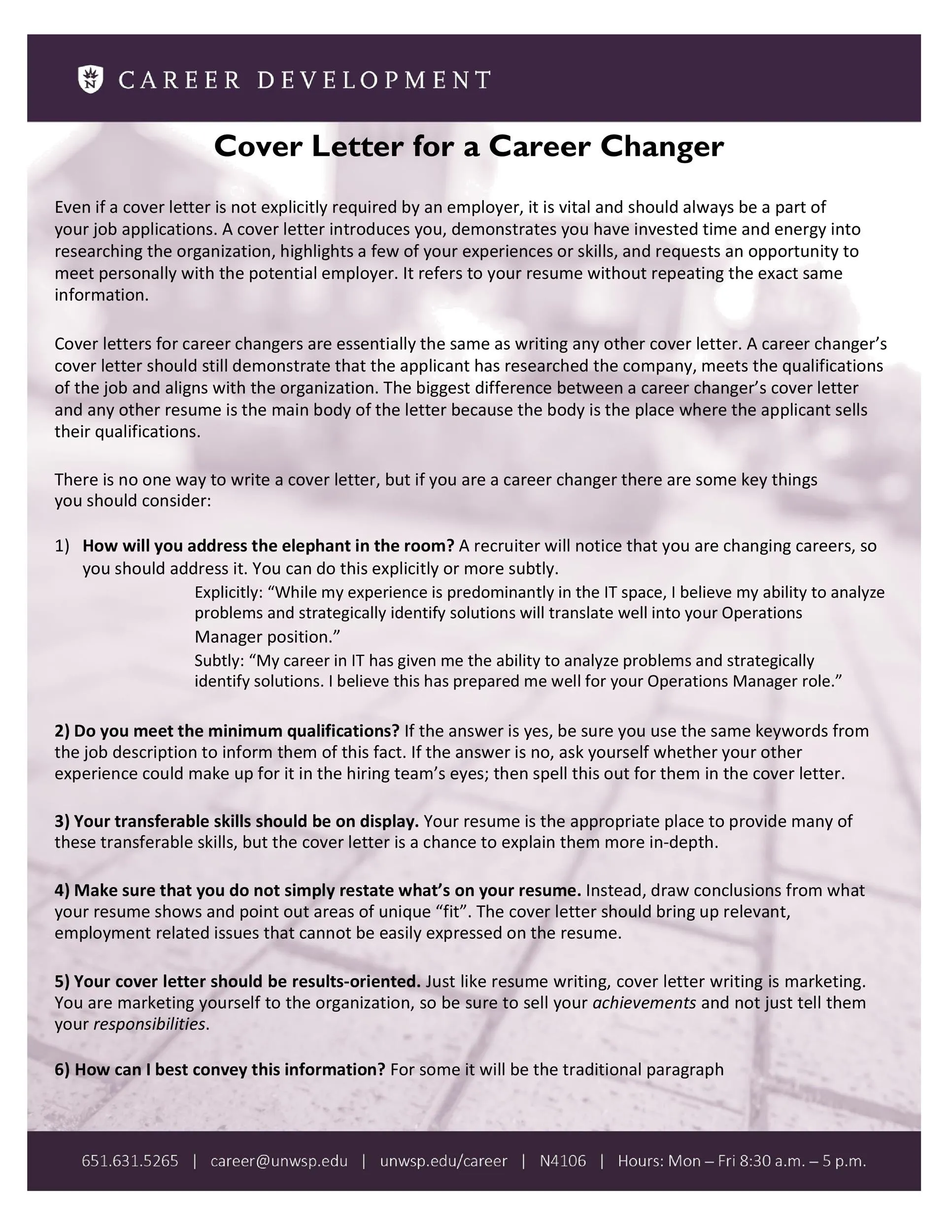
Why a Cover Letter Matters for Career Changers
Changing careers can feel like navigating uncharted territory, and a cover letter is your compass. Unlike a resume that simply lists your experience, a cover letter offers the opportunity to narrate your story, explain your motivations, and highlight the value you bring to a new role. It is a crucial tool to bridge the gap between your past experience and your desired future, especially when transitioning into a different field. This is your chance to show that you understand the new industry and are enthusiastic about making a significant contribution.
Highlighting Transferable Skills
One of the most effective strategies for career changers is to focus on transferable skills. These are the abilities and qualities that are applicable across different industries and roles. Identify the skills you’ve developed in your previous roles that align with the requirements of the new position. These could include communication, problem-solving, leadership, project management, or customer service. By emphasizing these transferable skills, you demonstrate that you possess the core competencies needed to succeed, even if your past experience doesn’t perfectly match the job description. Focus on what makes you, you.
Identifying Relevant Skills and Experience

When highlighting transferable skills, be specific. Don’t just say you have ‘communication skills.’ Instead, provide examples of how you’ve used those skills. For example, ‘In my previous role as a marketing manager, I successfully led a team of five to create and execute a social media campaign that increased brand engagement by 30%.’ Tailor this section to mirror the specific job requirements. Review the job description carefully and identify the key skills and experience the employer is seeking. Then, demonstrate how your previous experiences align with those needs. This targeted approach shows the hiring manager that you understand the role and are prepared to contribute from day one.
Quantifying Achievements for Impact
Quantifying your achievements is a powerful way to demonstrate the impact of your skills and experience. Whenever possible, use numbers and data to support your claims. Instead of saying ‘Improved customer satisfaction,’ say ‘Increased customer satisfaction scores by 15% through implementing a new feedback system.’ This concrete evidence provides a clear picture of your accomplishments and allows the employer to understand the value you bring. Quantifiable results are particularly important when you are transitioning careers, as they help to validate the relevance of your past experience to your new desired role.
Addressing the Career Change Directly
One of the biggest questions a hiring manager will have when reviewing a career changer’s application is: Why? Your cover letter should directly address your career change and provide a clear and concise explanation for your decision. Be honest, but also frame your explanation in a positive light, focusing on your enthusiasm for the new role and industry. A well-crafted explanation shows the hiring manager that you have thoughtfully considered your career goals and are committed to making a successful transition.
The ‘Why’ Behind the Switch

Clearly articulate the reasons behind your career change. This could involve a variety of factors, like a newfound passion, a desire for better work-life balance, or a drive for more growth opportunities. Whatever the reason, be transparent. For example, ‘After five years in the finance sector, I realized my true passion lies in sustainable energy. The opportunity to contribute to a greener future excites me, and I am eager to leverage my analytical skills in this new domain.’ Avoid negative language or criticizing your previous role or employer. The focus should be on what you are moving towards, not what you are moving away from.
Connecting Past Experience to the New Role
Once you’ve explained your ‘why,’ connect your past experience to the new role. Highlight how your previous skills and experiences are relevant and valuable, even if they seem unrelated on the surface. For example, if you are transitioning from teaching to project management, emphasize your skills in organization, communication, and leadership. These skills are easily transferrable and highly valued in project management. By connecting these skills, you demonstrate your ability to adapt and contribute from day one, which significantly increases your appeal to potential employers, showing you can handle the new responsibilities well.
Showcasing Enthusiasm and Motivation
Demonstrating enthusiasm and motivation is crucial when changing careers. Hiring managers want to see that you are genuinely interested in the role and the company. Convey your passion for the new industry and explain why you are excited about the opportunity. Enthusiasm is contagious and shows the employer that you are likely to be a dedicated and engaged employee, something crucial to ensure a smooth transition. This will create a more positive and memorable first impression.
Expressing Passion for the Target Industry

Expressing your passion for the target industry is key to making a successful career change. Show that you’ve done your research and are genuinely interested in the field. Discuss what specifically attracts you to the industry and why you are eager to contribute. For example, if you’re moving into the tech industry, you could mention your excitement about the latest technological advancements or your fascination with a specific company’s products. This will reassure the hiring manager that you are committed to the field and determined to excel. This excitement will make the hiring manager view you as a more suitable candidate.
Demonstrating Research and Understanding
Demonstrate that you have thoroughly researched the company and the role. Mention specific aspects of the company’s mission, values, or recent projects that resonate with you. This shows that you’ve taken the initiative to learn about the organization and are genuinely interested in contributing to its success. Tailor your cover letter to the specific job and company. Generic cover letters that aren’t tailored to the specific opportunity will easily get ignored. This research can easily separate you from other candidates. This research will also make it easier to navigate the interview.
Structuring Your Cover Letter for Clarity
A well-structured cover letter is essential for effectively conveying your message. Structure your cover letter in a way that is easy to read and understand, using clear and concise language. This improves readability and keeps the reader engaged. Follow the standard format for cover letters to maintain professionalism.
The Opening Paragraph: Making a Strong First Impression

The opening paragraph is your first chance to make a strong impression. Immediately state the position you are applying for and where you found the job posting. Briefly mention why you are writing and highlight a key skill or achievement that aligns with the job requirements. This creates a strong hook, grabbing the reader’s attention from the outset. Make it clear what you hope to accomplish. You must also show what you bring to the table and show why you are the perfect fit for this position.
Middle Paragraphs: Detailing Your Skills and Experience
Use the middle paragraphs to provide more details about your skills and experience, focusing on transferable skills and quantifying your achievements. Explain your career change and connect your past experience to the requirements of the new role. Use specific examples and data to demonstrate your value. This section should show the hiring manager how your skills and experience align with the needs of the job and what you bring to the table.
The Closing Paragraph: Call to Action and Thank You
Conclude your cover letter with a strong call to action. Express your enthusiasm for the opportunity and reiterate your interest in the position. Thank the hiring manager for their time and consideration and state that you are available for an interview. Provide your contact information, including your phone number and email address. A well-written closing paragraph leaves a positive impression and increases your chances of moving forward in the hiring process. Make sure to thank the hiring manager.
Formatting and Proofreading for Professionalism

Formatting and proofreading are crucial aspects of a professional cover letter. Use a standard font, such as Arial or Times New Roman, and ensure your letter is easy to read. Proofread your letter carefully for any grammatical errors, spelling mistakes, and typos. A well-formatted and error-free cover letter demonstrates attention to detail and professionalism, which are essential qualities that employers seek. Always proofread your cover letter to ensure that you leave a positive impression.
In conclusion, a cover letter is a crucial tool for career changers. By highlighting transferable skills, addressing the career change directly, showcasing enthusiasm, and structuring your letter effectively, you can create a compelling cover letter that grabs the attention of hiring managers and increases your chances of landing your dream job. Remember that the cover letter is the first impression a hiring manager receives, so it must be perfect. Focus on the steps given above to maximize your chance of success.