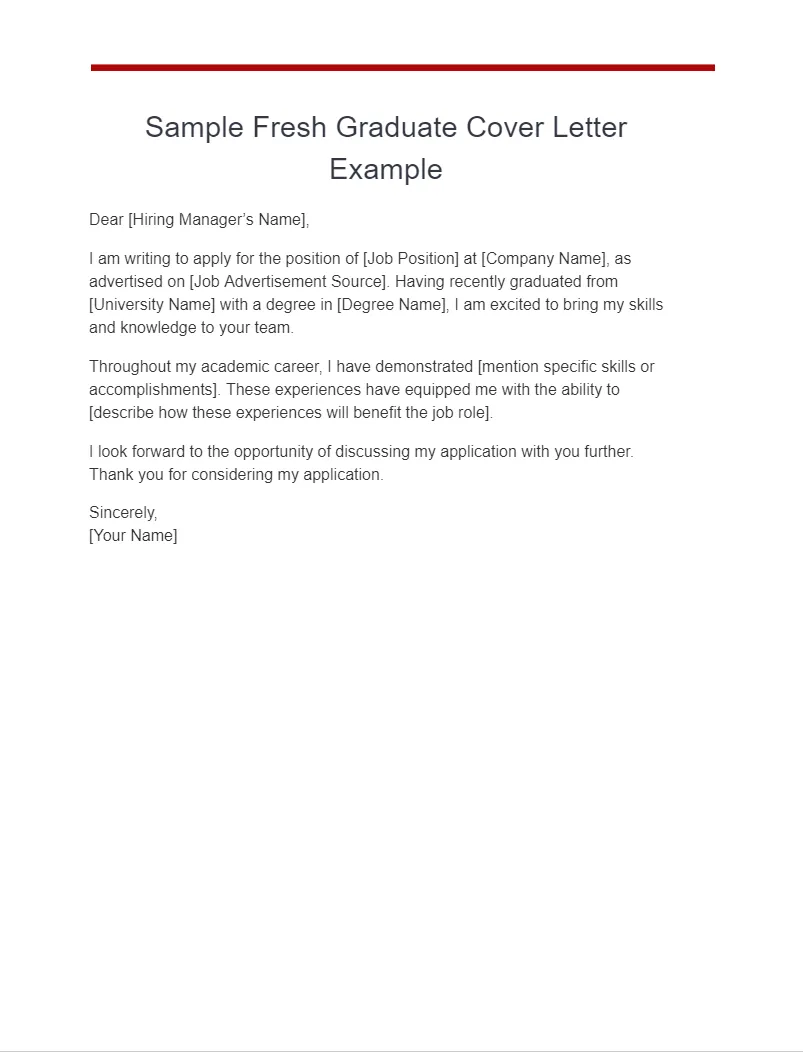
Why a Great Cover Letter Matters
For fresh graduates, a compelling cover letter serves as a crucial introduction to potential employers. It’s often the first detailed look a hiring manager has into your qualifications, personality, and career aspirations. Unlike a resume, which offers a concise summary of your skills and experience, the cover letter allows you to craft a narrative, expressing your enthusiasm for the specific role and the company. A well-written cover letter can differentiate you from other candidates, demonstrating your communication skills, attention to detail, and genuine interest. It showcases your ability to articulate your value proposition, increasing your chances of landing an interview even with limited professional experience. A great cover letter shows you’re prepared and eager to contribute.
Highlight Your Skills & Experience
As a fresh graduate, leverage the transferable skills you’ve acquired through academic projects, extracurricular activities, and volunteer work. These can include communication, teamwork, problem-solving, time management, and leadership abilities. Carefully review the job description and identify the key skills the employer seeks. Provide specific examples of how you’ve demonstrated these skills. For example, if the job requires strong communication, describe a presentation you delivered or a leadership role where you mediated team conflicts. Providing concrete, practical examples is far more effective than simply listing skills. Align your skills with the requirements, and highlight experiences that validate those skills. This enables the hiring manager to see your potential.
Tailoring Your Letter to the Job

Generic cover letters often fail to impress; tailoring your cover letter to each specific job is essential. Study the job description carefully, identifying the key requirements and qualifications. Align your skills, experiences, and achievements with those requirements to show you’re a great fit. Demonstrate your understanding of the role and company by using keywords and phrases from the job description and providing relevant examples. This customization showcases your genuine interest and understanding of the company’s needs. It shows you understand what is needed and demonstrates a proactive approach. Personalization significantly increases your chances of being noticed. Demonstrate that you can and want to succeed.
Research the Company & Role
Researching the company and role demonstrates your genuine interest and initiative. Visit the company website, review their mission statement, and explore their recent news and achievements. Understand their values, products/services, and target market. This research will help you tailor your cover letter and ask informed questions during an interview. Mention specific aspects of the company that resonate with you and explain why you’re excited about the opportunity. In addition, research the role itself to understand the responsibilities and expectations. This will allow you to highlight the skills and experiences most relevant to the position and demonstrate your understanding of the requirements. Showing that you understand the company’s and the role’s needs demonstrates your thoroughness and professionalism.
Showcase Your Academic Achievements
When you lack extensive professional experience, your academic achievements can make a significant impact. Highlight relevant coursework, academic projects, and any honors or awards. Mention specific projects where you excelled or courses directly related to the job requirements. These details demonstrate your knowledge, skills, and your ability to apply them in an academic setting. If you participated in any research projects or published any papers, be sure to mention them, as they showcase your analytical and critical thinking skills. Emphasize projects and coursework that align with the job description, as they provide concrete evidence of your capabilities. A good academic record shows potential and commitment, making you a desirable candidate.
Quantify Your Accomplishments

Whenever possible, use numbers and data to quantify your accomplishments and make them more impactful. Instead of saying you “improved” something, provide specific, measurable results. For example, instead of stating, “Led a team project,” say, “Led a team of five students to complete a project two weeks ahead of schedule, resulting in a 10% reduction in costs.” Quantifying your accomplishments offers concrete evidence of your skills, making your cover letter more persuasive. Think about any projects where you increased sales, reduced costs, or improved efficiency. Use measurable results to demonstrate your tangible value to potential employers. Using measurable results makes your experience more tangible.
Highlight Relevant Coursework
Your coursework provides a direct reflection of your knowledge and skills. Identify specific courses relevant to the job and mention the key concepts and projects you completed. This demonstrates a strong foundation in the necessary skills and knowledge. If the job description requires knowledge of a specific software or methodology, mention any coursework where you gained experience. Emphasize the projects and skills most applicable to the job requirements. Highlighting the courses and experience that best align with the job requirements shows you can immediately contribute to the role. Tailor this to show your understanding and application of the most relevant knowledge.
Address the Hiring Manager by Name
Whenever possible, address your cover letter to the hiring manager by name. This detail shows you’ve done your research and are genuinely interested. It adds a personal touch and demonstrates attention to detail. Find the hiring manager’s name on the company website, LinkedIn, or through online searches. If you can’t find a specific name, use a professional greeting like “Dear Hiring Manager” instead of “To Whom It May Concern.” Addressing the hiring manager by name makes your cover letter stand out and demonstrates that you’ve personalized your application. Showing this level of attention can positively impact the hiring manager.
Perfecting Your Cover Letter

A well-perfected cover letter is concise, organized, and easy to read. Use a professional font and format and avoid jargon or complex language. Keep paragraphs short and use bullet points to highlight key information. Proofread carefully for grammatical errors or typos; these can make a negative impression. Maintain a clear and direct tone and avoid clichés. The goal is to showcase your skills and experience compellingly and understandably. Make sure it’s polished and professional. Your cover letter is a reflection of your ability to communicate, so make it count. Take the time to craft a high-quality document that demonstrates you are the right fit.
Proofread and Edit Carefully
Before submitting your cover letter, meticulous proofreading is essential. Grammatical errors, spelling mistakes, and typos can significantly undermine your credibility and signal a lack of attention to detail. Read your letter aloud to identify any awkward phrasing or sentences that don’t flow smoothly. Get a fresh perspective by having a friend, family member, or career advisor review your letter for clarity and correctness. Pay close attention to sentence structure, punctuation, and the overall coherence of your writing. Make sure your letter is clear, concise, and easy to read. Proofreading demonstrates your dedication and commitment to quality, both highly valued by employers. A polished cover letter shows that you care about the details.
Formatting Your Cover Letter
Proper formatting is crucial for making your cover letter easy to read and visually appealing. Use a professional, readable font like Times New Roman, Arial, or Calibri. Keep the font size between 10 and 12 points. Use standard margins (1 inch on all sides) and single-space the text, with a blank line between paragraphs. Begin with your contact information, followed by the date and the hiring manager’s contact details. Include a clear opening paragraph that specifies the position you’re applying for and how you learned about the opportunity. Use clear headings and bullet points in the body to highlight your skills and experiences. Close with a strong concluding paragraph that expresses your enthusiasm and availability for an interview. Always end with a professional closing, such as “Sincerely” or “Best regards.” A well-formatted cover letter showcases professionalism and attention to detail, which is crucial for a first impression.