Why a Strong Cover Letter Matters for New NPs
As a new Nurse Practitioner (NP) navigating the job market, your cover letter is your first impression and a critical tool in securing an interview. It’s more than just a formality it’s your opportunity to showcase your unique qualifications, passion for patient care, and potential value to a prospective employer. While your resume provides a snapshot of your experience and education, the cover letter allows you to tell your story, connect with the hiring manager on a personal level, and demonstrate why you’re the ideal candidate. In a competitive field, a well-crafted cover letter can set you apart, highlighting your enthusiasm and making you memorable.
Highlighting Your Skills and Experience
Your cover letter should emphasize your skills and experiences relevant to the NP role. This is where you demonstrate your ability to provide high-quality patient care. Even as a new graduate, you’ve likely gained valuable experience through clinical rotations, volunteer work, or previous healthcare roles. Highlight the specific skills and competencies that align with the job requirements. For example, if the position requires experience with electronic health records (EHR) systems, be sure to mention your proficiency and experience with those systems. The goal is to convince the employer you have the foundation to succeed.
Clinical Skills to Emphasize

Focus on clinical skills directly related to patient assessment, diagnosis, and treatment. These skills are the core of your future role as an NP. Mention any experience with specific patient populations, medical procedures, or diagnostic techniques. Quantify your achievements whenever possible; for instance, state the number of patients you’ve seen or the types of procedures you’ve assisted with. Do not be shy about your clinical capabilities, it is the main component of your application.
Soft Skills to Showcase
Don’t overlook soft skills, they’re crucial for success in any healthcare role. Highlight your communication skills, ability to work as part of a team, empathy, and problem-solving abilities. Provide examples of how you’ve demonstrated these skills in previous situations, such as resolving patient conflicts, collaborating with interdisciplinary teams, or adapting to challenging clinical scenarios. Demonstrating these qualities increases your appeal to potential employers, especially as a new graduate.
Addressing the Job Description
Carefully review the job description and tailor your cover letter to match the specific requirements and expectations outlined. This shows you’ve taken the time to understand the position and the needs of the employer. Use the same language and keywords from the job description to demonstrate your understanding and highlight your relevant qualifications. Avoid sending a generic cover letter; personalize it to showcase how your skills and experiences align with the specific role and the employer’s needs.
Keywords to Include

Identify keywords from the job description, such as specific medical procedures, patient populations, EHR systems, or required skills. Incorporate these keywords naturally throughout your cover letter to make it easily searchable by applicant tracking systems (ATS) and to quickly demonstrate your suitability for the role. Use synonyms and related terms to maintain a natural flow while still addressing the essential criteria. Ensure all keywords used accurately reflect your skills and experience.
Tailoring Your Letter
Personalize your cover letter by researching the employer and the specific healthcare setting. Demonstrate your genuine interest in the organization by mentioning specific programs, values, or initiatives that resonate with you. This personalization shows that you’ve done your homework and are genuinely interested in joining their team, increasing your chances of making a positive impression. Tailoring the letter also makes a better connection with the hiring manager.
Formatting Your Cover Letter
A well-formatted cover letter is essential for making a professional impression. Ensure your cover letter is clear, easy to read, and free of errors. Pay close attention to the layout, font, and overall presentation. A clean and organized cover letter reflects your professionalism and attention to detail. Poor formatting can distract the reader from the content.
Header and Contact Information

Begin with a professional header that includes your full name, address, phone number, and email address. Make sure your contact information is up-to-date and accurate, as this is how employers will reach you. Consider using a professional-looking email address. Include the date and the name and title of the hiring manager (if known) and the organization’s address.
Professional Salutation
Use a professional salutation, such as “Dear Mr./Ms./Mx. [Last Name],” if you know the hiring manager’s name. If you’re unsure, use “Dear Hiring Manager” or “Dear [Department Name] Team.” Avoid generic salutations like “To Whom It May Concern,” as they can make your letter seem impersonal. Ensure your salutation aligns with the tone of your cover letter and the organization’s culture.
Body Paragraphs Strategies
The body of your cover letter is where you demonstrate your skills, experience, and enthusiasm for the role. Structure your paragraphs strategically to effectively convey your qualifications. Use clear and concise language. Focus on what you can offer the employer.
First Paragraph Hook

Start your cover letter with a compelling opening that grabs the reader’s attention. State the position you’re applying for and briefly highlight why you’re interested in the role and the organization. If applicable, mention how you learned about the opportunity. Your first paragraph should make a strong first impression and encourage the reader to continue.
Middle Paragraphs Detail
Use the middle paragraphs to showcase your skills, experience, and qualifications. Provide specific examples of how you’ve demonstrated relevant skills and achieved positive outcomes in past experiences. Quantify your achievements whenever possible, using numbers or data to illustrate your impact. Tailor these paragraphs to align with the job description’s requirements and the employer’s needs.
Closing Paragraph Call to Action
Conclude your cover letter with a strong call to action. Reiterate your interest in the position and express your enthusiasm for the opportunity. Include a statement that you’re eager to discuss your qualifications further and are available for an interview. Thank the hiring manager for their time and consideration, and include a professional closing, such as “Sincerely” or “Best regards,” followed by your name.
Cover Letter Examples for Inspiration

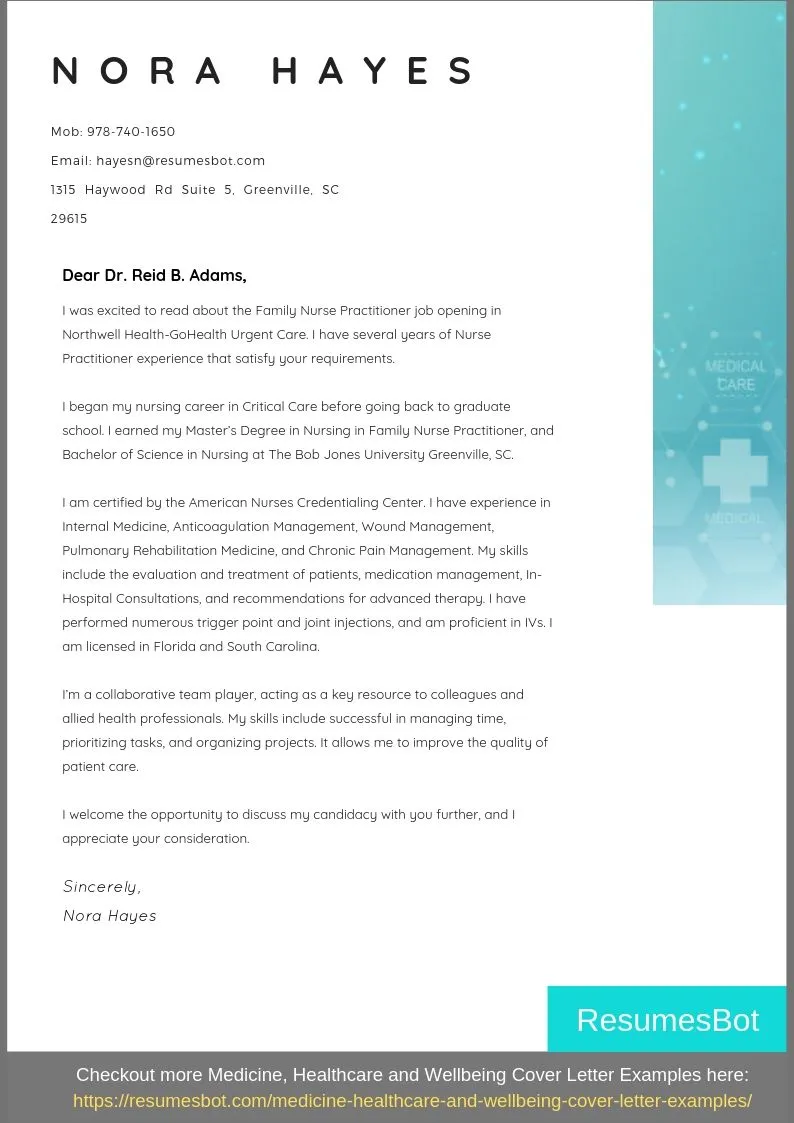
Reviewing cover letter examples can provide valuable insights into how to structure your own. Consider the following examples as inspiration.
Example 1 Focus on Clinical Experience
This example highlights clinical rotations, specific patient populations, and skills. It showcases how you have applied your knowledge and skills in real-world settings. Emphasizing direct experience can greatly impress the employer.
Example 2 Highlighting Volunteer Work
If your clinical experience is limited, highlight volunteer work, shadowing, or other experiences that showcase your commitment to patient care and your understanding of the healthcare environment. This demonstrates your dedication and compassion. It’s a great way to build confidence for new NPs.
Example 3 Emphasizing Leadership Skills

If you have leadership experience (e.g., leading study groups, participating in committees), mention this in your cover letter. Leadership skills can set you apart, as they show you can guide and inspire others. Highlight any achievements.
Common Cover Letter Mistakes to Avoid
Avoid common mistakes that can undermine your application and reduce your chances of getting an interview. Be aware of what you should avoid.
Generic Cover Letters
Avoid sending a generic cover letter that’s not tailored to the specific job or employer. Employers can easily recognize generic letters, and these often demonstrate a lack of interest. Tailor each cover letter for each application. Use information about the role and the organization.
Typos and Grammatical Errors
Proofread your cover letter carefully for typos, grammatical errors, and formatting inconsistencies. These errors can make you appear unprofessional and can negatively affect your credibility. Use spell check and grammar check tools, but also read your cover letter carefully. Ask a friend or colleague to review your cover letter.
Lack of Enthusiasm
Express genuine enthusiasm for the position and the organization. Avoid sounding detached or indifferent. Your cover letter should convey your excitement, passion for patient care, and eagerness to contribute to the healthcare team. Share details as to why you are excited about the position.
Call to Action
When writing a cover letter as a new NP, a call to action is essential to request an interview and express your interest in the role. Clearly stating your availability for an interview. Thank the hiring manager for their time and consideration. Demonstrate that you are ready and excited about the opportunity.
Follow-Up Strategy
After submitting your cover letter and resume, follow up with the hiring manager or recruiter. This shows your continued interest and initiative. Send a polite email or make a phone call a week or two after submitting your application. Be sure to reference the position and reiterate your interest. Thank them again for their time. Following up will make a good impression on the employer.