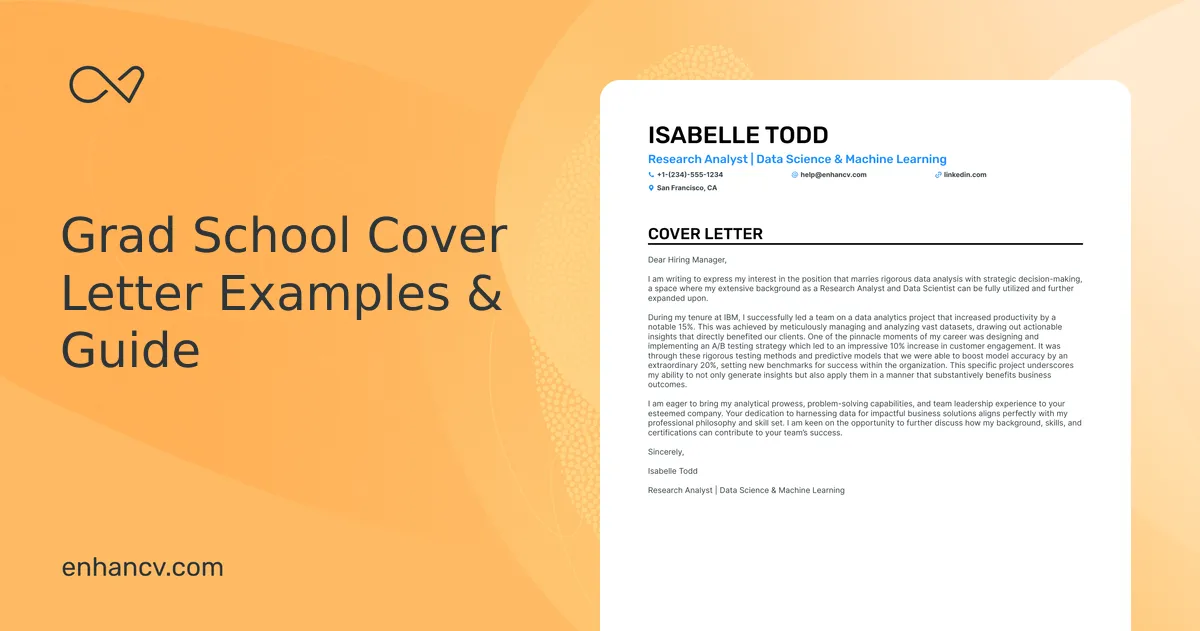
Understanding the Grad School Cover Letter
A cover letter for grad school is your opportunity to introduce yourself to the admissions committee, showcase your personality, and explain why you are a strong candidate for their program. It’s not just a formality; it’s a crucial piece of your application that can significantly influence your chances of acceptance. Think of it as your personal introduction, where you can expand upon the details in your resume and highlight the experiences and skills that make you unique. It should demonstrate your genuine interest in the program and your readiness for the challenges of graduate-level study. Unlike a resume, which provides a summary of your past experiences, the cover letter allows you to tell a story about your academic and professional journey, connect your goals with the program’s offerings, and demonstrate your suitability for the specific research interests of the faculty.
Why a Strong Cover Letter Matters
A well-crafted cover letter can set you apart from other applicants, especially in competitive programs. It gives you a chance to personalize your application and go beyond the standard information presented in your resume. It demonstrates your writing skills, your ability to communicate effectively, and your understanding of the program’s goals and requirements. Admissions committees often use cover letters to assess a candidate’s fit with the program’s culture and faculty research interests. Your cover letter is the place to demonstrate your passion for the field, your understanding of the program, and how your aspirations align with the program’s mission. A weak cover letter, on the other hand, can raise red flags, potentially overshadowing a strong resume or academic record. It’s essential to dedicate sufficient time and effort to create a compelling narrative that showcases your unique qualities and potential.
Highlighting Your Achievements

Your cover letter should highlight your most significant achievements and experiences that are relevant to the grad school program you’re applying for. Focus on quality over quantity, selecting the accomplishments that best illustrate your skills, knowledge, and potential for success in graduate studies. This isn’t just a summary of your resume; it’s an opportunity to provide context and detail, explaining how your past experiences have prepared you for the challenges of the program. Emphasize accomplishments that showcase your research skills, leadership abilities, and any other qualities that align with the program’s requirements. Think about the projects you excelled in, the challenges you overcame, and the impact of your work. Use these examples to demonstrate your potential and convince the admissions committee that you are a valuable addition to their academic community.
Quantify Your Accomplishments
Whenever possible, quantify your achievements to make a stronger impact. Instead of saying ‘I improved sales,’ say ‘I increased sales by 15% in six months.’ Use numbers and data to illustrate your impact and provide concrete evidence of your skills and abilities. For research experience, mention the number of publications, presentations, or grants you’ve been involved with. For academic achievements, include your GPA, any awards or scholarships you’ve received, and the titles of any relevant theses or dissertations you’ve completed. Quantifying your achievements not only adds credibility but also makes it easier for the admissions committee to assess your impact and compare you to other applicants. This provides a clear, concise picture of your accomplishments, reinforcing the value you bring to the program.
Tailoring Your Letter to the Program
Generic cover letters are easily spotted by admissions committees. To make a lasting impression, you must tailor each cover letter to the specific program and institution you are applying to. Research the program’s curriculum, faculty, and research areas. Demonstrate that you understand what the program offers and how it aligns with your academic and career goals. Mention specific courses, professors, or research projects that interest you. Show that you’ve taken the time to understand the program and are genuinely enthusiastic about joining their community. This level of personalization shows that you are serious about attending the program and have a clear vision for your future. It also demonstrates your attention to detail and your ability to adapt your communication style to different audiences, key skills for graduate studies and beyond.
Researching the Program and Faculty

Before writing your cover letter, thoroughly research the program and its faculty. Visit the program’s website, read faculty publications, and identify professors whose research interests align with yours. This research will help you tailor your letter, showing that you understand the program’s mission, values, and research focus. Mention specific faculty members whose work resonates with you and explain why their research is relevant to your interests. If possible, connect your past experiences and future goals with the program’s specific offerings. This will demonstrate your genuine interest and give the admissions committee a clear picture of how you would contribute to the program’s research and intellectual environment. Showing that you’ve taken the time to learn about the program and its faculty makes your application stand out, displaying your proactive approach to your academic journey.
Showcasing Your Skills and Experience
Your cover letter is the ideal place to showcase your relevant skills and experiences. This is where you can connect your past accomplishments with the program’s requirements, highlighting the skills you’ve gained through academic, professional, or volunteer experiences. Tailor the skills you mention to match the specific program you’re applying for, focusing on those that are most relevant to graduate-level study and research. Think about the skills that are crucial for success in your field of study, such as critical thinking, analytical reasoning, communication, research methodology, and problem-solving. Illustrate how you have used these skills in the past, providing concrete examples of your accomplishments. This will convince the admissions committee that you have the skills and experience necessary to thrive in the program.
Demonstrating Relevant Skills
Focus on the skills most relevant to the program you are applying to. These might include research skills, such as data analysis, experimental design, and literature review; communication skills, such as writing, presentation, and public speaking; and critical thinking skills, such as problem-solving and analysis. Provide specific examples of how you have used these skills in your previous academic or professional experiences. For example, if you’re applying for a research-focused program, highlight your experience conducting research, analyzing data, and writing reports. If you’re applying for a program that emphasizes teamwork, provide examples of your leadership and collaboration skills. Be specific and provide context so that the admissions committee can understand your experience and how it aligns with the program’s requirements. This demonstrates your ability to translate your skills into practical application, indicating that you are prepared to take on the challenges of graduate studies.
Explaining Your Academic Journey

Use your cover letter to explain your academic journey, providing context for your application and demonstrating your growth and development. Discuss your motivations for pursuing graduate studies, your academic interests, and your career goals. Explain any gaps or inconsistencies in your academic record or any challenges you have overcome. This will give the admissions committee a more comprehensive understanding of your background and aspirations. This is your chance to articulate how your past experiences have led you to the program you are applying for, and how this program will help you achieve your goals. Be clear about your reasons for pursuing graduate studies, connecting your interests with the program’s offerings. This showcases your self-awareness and your ability to articulate a compelling vision for your future.
Addressing Weaknesses
If you have any weaknesses in your application, such as a low GPA, a gap in your work history, or a lack of certain skills, use your cover letter to address them directly. Be honest and transparent, but also focus on your strengths and what you have learned from your experiences. Explain the circumstances that led to any weaknesses, and highlight the steps you have taken to improve. This shows the admissions committee that you are self-aware, resilient, and committed to your goals. For example, if you have a low GPA, explain the reasons behind it and demonstrate how you have improved your performance since then. If you have a gap in your work history, explain what you were doing during that time and what you learned from it. By addressing weaknesses head-on, you demonstrate your maturity and your ability to learn from challenges.
Writing a Compelling Opening
Your opening paragraph is your first chance to grab the reader’s attention and make a strong impression. Avoid generic greetings and instead, create an opening that is both engaging and relevant. State your purpose clearly and concisely, expressing your interest in the program and highlighting your key qualifications. Consider starting with a compelling anecdote, a thought-provoking question, or a statement about your passion for the field. The goal is to immediately capture the reader’s attention and make them want to read more. Make sure your opening is tailored to the specific program and institution, showing that you’ve taken the time to learn about their mission and values. A memorable opening creates a positive first impression and sets the tone for the rest of your letter. It signals to the admissions committee that you are a serious and dedicated applicant with a clear vision for your future.
Grabbing the Reader’s Attention Immediately

To grab the reader’s attention immediately, avoid generic phrases such as ‘I am writing to express my interest…’ Instead, start with a compelling statement that showcases your unique qualities and passion for the field. Consider using a personal anecdote, a quote, or a question that demonstrates your knowledge and interest in the program. Highlight a specific achievement or experience that aligns with the program’s values or research interests. This will make your opening more memorable and encourage the admissions committee to read the rest of your letter. The best openings immediately convey your enthusiasm and make the reader want to learn more about you. This will set you apart from other applicants and increase your chances of making a positive impression.
Expressing Genuine Enthusiasm
Throughout your cover letter, express genuine enthusiasm for the program and the opportunity to study there. This is your chance to showcase your passion for your chosen field and demonstrate why you are a good fit for the program. Use enthusiastic language to describe your interest in the program, mentioning specific aspects of the curriculum, faculty, or research that appeal to you. Demonstrate your excitement about the prospect of contributing to the program’s research and intellectual environment. Show that you have a clear understanding of the program’s mission and how it aligns with your goals. By expressing genuine enthusiasm, you will convince the admissions committee that you are a dedicated and motivated applicant who is eager to join their community and make a meaningful contribution.
Proofreading and Polishing Your Letter
Before submitting your cover letter, proofread it carefully to ensure it is free of errors in grammar, spelling, and punctuation. A polished cover letter reflects professionalism and attention to detail, which are essential qualities for graduate studies. Consider having someone else review your letter, as a fresh pair of eyes can often catch mistakes that you might have missed. Ensure that your writing is clear, concise, and well-organized. Check for any inconsistencies in your information and make sure the formatting is consistent. A well-proofread cover letter shows the admissions committee that you are serious about your application and that you pay attention to detail.
Ensuring Clarity and Conciseness

Make sure your cover letter is clear, concise, and easy to read. Avoid using jargon or overly complex language that might confuse the admissions committee. Get straight to the point and focus on the most important information. Use strong action verbs to describe your skills and accomplishments. Ensure your writing flows logically, with clear transitions between paragraphs. A clear and concise cover letter is more likely to be read carefully and remembered. The admissions committee is more likely to understand your message and appreciate your ability to communicate effectively. Proofread your letter carefully for any unnecessary words or phrases. Every word should contribute to the overall message and make a positive impact.
Using Professional Formatting
Use professional formatting to enhance the readability and presentation of your cover letter. Choose a standard font like Times New Roman or Arial, and use a font size of 11 or 12 points. Use single spacing within paragraphs and double spacing between paragraphs. Use one-inch margins on all sides of the document. Make sure your name, contact information, and the date are clearly visible at the top of the letter. Use a professional letter format, with a proper salutation (e.g., ‘Dear Admissions Committee’) and closing (e.g., ‘Sincerely’). Formatting shows that you pay attention to detail and that you’re serious about presenting yourself professionally. A well-formatted cover letter is visually appealing and easy to read, making a positive impression on the admissions committee.
Formatting Your Letter
Follow the standard business letter format for your cover letter. Include your contact information (name, address, phone number, email) at the top, followed by the date and the recipient’s information (name, title, department, university). Use a formal salutation, such as ‘Dear Admissions Committee,’ unless you know the name of a specific person, in which case use ‘Dear Dr. [Last Name]’. Write concise paragraphs, keeping each one focused on a single idea. Use a professional closing, such as ‘Sincerely’ or ‘Best regards,’ followed by your typed name. Ensure that the formatting is consistent throughout the letter. A well-formatted cover letter reflects your professionalism and demonstrates your attention to detail, making a strong impression on the admissions committee.
Making the Most of Your Cover Letter

Your cover letter is an essential part of your grad school application and can significantly boost your chances of acceptance. By following these tips, you can create a compelling cover letter that showcases your skills, experiences, and passion for your chosen field. Remember to highlight your achievements, tailor your letter to the program, and express genuine enthusiasm. Proofread and polish your letter, ensuring it is clear, concise, and well-formatted. A strong cover letter is a testament to your preparedness and can help you stand out from the competition, ultimately leading to success in your grad school endeavors. Your hard work, preparation, and attention to detail in crafting your cover letter will significantly influence your chances of admission and set the stage for your future academic journey.
Including a Strong Call to Action
Conclude your cover letter with a strong call to action, expressing your eagerness to learn more about the program and your availability for an interview. Thank the admissions committee for their time and consideration. Reiterate your interest in the program and state your commitment to contributing to the program’s research and intellectual environment. Make it clear that you are ready to move forward with the application process, by expressing your availability for further discussion or an interview. This demonstrates your proactive approach and your enthusiasm for the opportunity. Ending with a strong call to action confirms your genuine interest and positions you favorably in the minds of the admissions committee. It leaves a lasting impression and increases the likelihood of a positive response.