Why a Strong Cover Letter Matters When Changing Jobs
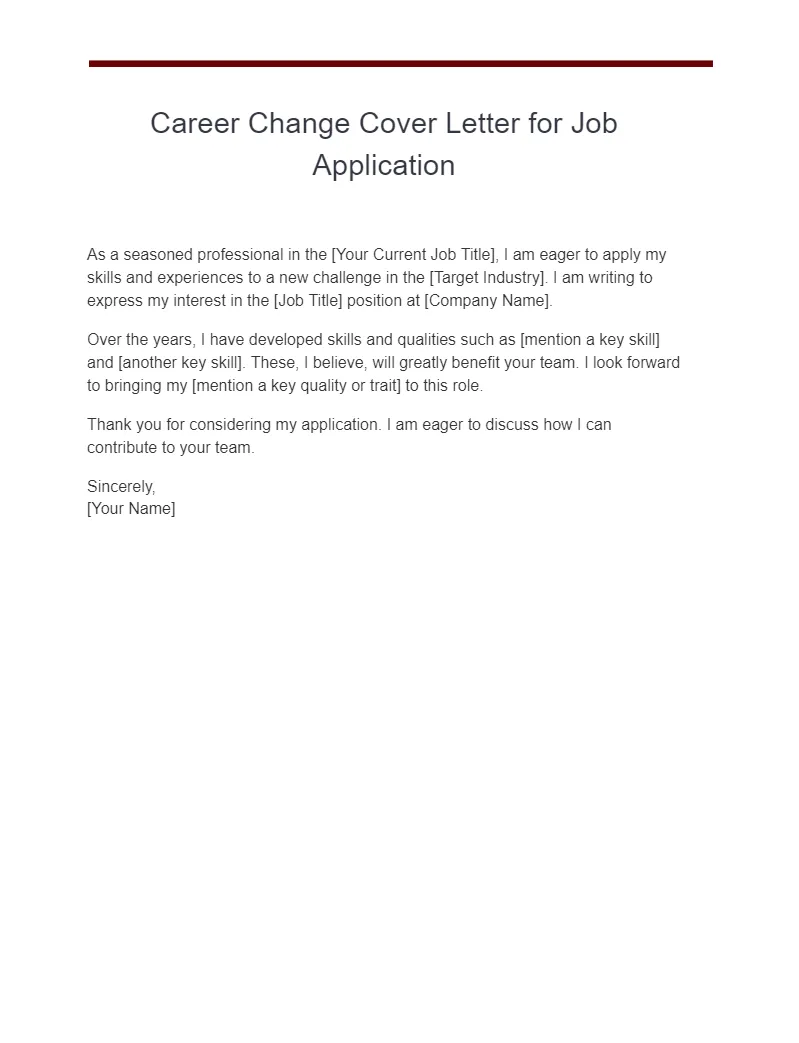
Changing jobs can be a pivotal moment in your career, signaling growth, new opportunities, or a shift in direction. A compelling cover letter is your first handshake with a potential employer, providing you with the chance to make a memorable first impression. When you’re changing jobs, a cover letter becomes even more critical. It allows you to frame your experience in a way that directly addresses the requirements of the new role, highlighting your relevant skills and demonstrating your understanding of the company’s needs. It is your opportunity to tell a story that goes beyond your resume, showcasing your personality, passion, and potential contributions. In a competitive job market, a well-crafted cover letter can significantly increase your chances of landing an interview and ultimately, the job. It helps you differentiate yourself from other candidates and articulate why you are the perfect fit, despite the change in job titles or industries.
Highlighting Relevant Skills
When changing jobs, carefully select and highlight skills most relevant to the new position. This involves a deep dive into the job description, identifying key requirements, and matching them with your abilities. For instance, if the new role emphasizes project management, showcase your project leadership experience, the successful completion of projects, and any relevant certifications. Use action verbs to describe your accomplishments. Instead of saying ‘responsible for project coordination,’ say ‘Spearheaded project coordination, resulting in a 15% reduction in project completion time.’ This approach demonstrates a clear understanding of the role and highlights the value you bring. Remember to avoid generic phrases and focus on specific examples that prove your capabilities. The goal is to show the employer how your skills translate directly to the new role and how you can contribute to their success.
Identifying Transferable Skills

Transferable skills are crucial when changing jobs, especially if the roles or industries are different. These are versatile abilities that can be applied across various roles and industries. Identify skills like communication, problem-solving, leadership, teamwork, and time management. These are highly valued in almost any workplace. For example, if you’re moving from a customer service role to a marketing position, highlight your communication skills and how you utilized them to resolve customer issues effectively. If you have any experience with data analysis or social media management, mention it to provide a clear advantage. You must frame your experience to demonstrate how these skills translate to the new role. Your cover letter is the space to connect the dots for the hiring manager and show how your skills make you a valuable asset.
Quantifying Achievements
Quantifying your achievements is one of the most powerful strategies for making your cover letter stand out. Instead of merely listing your responsibilities, focus on results. For example, instead of saying ‘Managed social media accounts,’ say ‘Grew social media engagement by 40% in six months, resulting in a 25% increase in website traffic.’ Use numbers, percentages, and specific data to showcase your impact in previous roles. This provides concrete evidence of your skills and the value you brought to your previous employers. This data helps the hiring manager understand the tangible benefits of hiring you. Be sure that all the information you provide is accurate and verifiable. In the cover letter, always show, do not just tell, using quantifiable results to illustrate your capabilities and potential contributions to the company.
Demonstrating Company and Role Research
Demonstrating that you have researched the company and the specific role you are applying for is essential to make you stand out as a candidate. This demonstrates a genuine interest in the position and shows that you have put in the effort to understand the company’s mission, values, and goals. Before writing your cover letter, visit the company’s website, review their social media profiles, and read recent news articles about the organization. Identify how your skills and experiences align with the company’s needs and values, and tailor your cover letter to reflect this alignment. Mention specific projects, initiatives, or aspects of the company that resonate with you, to illustrate your understanding and enthusiasm. Your cover letter will become a reflection of your research efforts, helping you create a compelling narrative that highlights why you are the ideal candidate for the role.
Tailoring Your Letter to the New Job

A generic cover letter sent to multiple employers is unlikely to make a significant impact. Tailoring your cover letter to each specific job is a must, because the hiring managers will immediately notice a lack of effort. Start by carefully reading the job description and identifying the key requirements, skills, and qualifications the employer is seeking. Next, customize your cover letter to match these requirements. Highlight the experiences and skills that align with the job description, and provide specific examples of how you have used these skills in the past. If the job description mentions specific software, skills, or projects, be sure to address them in your letter. This shows the hiring manager that you took the time to understand their needs and that you are a good fit for the role. The more specific you are, the more likely you will be to grab their attention.
Showcasing Your Understanding of the Company
Showcasing your understanding of the company is a powerful way to demonstrate your interest and dedication when changing jobs. Before writing your cover letter, conduct thorough research into the company’s mission, values, and recent projects. Show how you align with their values, demonstrating your appreciation for their culture and goals. Mention specific company initiatives, products, or services that interest you. Connect your skills and experiences to their needs. For example, if the company values innovation, highlight any projects or accomplishments that demonstrate your ability to think creatively and solve problems. Doing this shows your interest and makes your application even stronger, helping you stand out from other candidates. This demonstrates your dedication and a proactive approach to the job, increasing your chances of securing an interview.
Formatting and Tone
The formatting and tone of your cover letter are just as important as the content. Your cover letter is your first impression, and it must be clear, professional, and engaging. A well-formatted and properly toned cover letter enhances your chances of success. Maintain professionalism through every aspect of the letter, from the way it is written to the design elements. Attention to detail and a carefully chosen tone can make a difference. Ensure that your cover letter is easy to read and reflects your professionalism.
Professional Formatting

A professional format ensures that your cover letter is easy to read and presents you in the best light. Use a standard business letter format with clear headings, appropriate spacing, and a professional font like Times New Roman, Arial, or Calibri. Keep the letter to one page and use bullet points or short paragraphs to break up the text and make it more readable. Ensure your contact information is at the top of the letter, including your name, phone number, email address, and LinkedIn profile URL. Proofread carefully for any errors in grammar or spelling. A well-formatted cover letter shows attention to detail and a commitment to professionalism. Make sure that the formatting is consistent throughout the document. It will show that you are prepared and professional.
Positive and Enthusiastic Tone
The tone of your cover letter should be positive and enthusiastic. Show your genuine interest in the job and the company. Use enthusiastic language to convey your passion for the role and your excitement to contribute. Use action verbs to demonstrate your capabilities. Avoid overly formal language and try to strike a balance between professionalism and personality. You should be confident without being arrogant and avoid using negative language or criticizing past employers. A positive tone will capture the hiring manager’s attention and make them want to learn more about you. Your cover letter should be a reflection of your personality and excitement for the potential role. It should make the reader want to meet you.
Addressing Employment Gaps
Addressing employment gaps effectively is important when changing jobs. If you have gaps in your employment history, it is essential to address them in your cover letter. It is important to be honest about the reasons behind the gaps, whether it was for personal reasons, travel, or skill development. Frame the gap as a positive experience, highlighting any skills you gained or activities you pursued during that time. This is an opportunity to show that you are a proactive individual who continues to learn and grow. Instead of making it a point of concern, frame it as a period of self-improvement or a chance to explore new avenues. This shows the employer that you are resilient and resourceful. A brief explanation and a positive perspective can help ease any concerns an employer might have. Your cover letter is where you can turn a potential negative into a strength.
Providing a Brief Explanation

When addressing employment gaps in your cover letter, provide a brief and honest explanation of the circumstances. Keep it concise and avoid going into excessive detail. If the gap was due to personal reasons, you can state it simply. If the gap was for skill development or further education, mention any courses or certifications you earned. The key is to be transparent. Provide context to the hiring manager to ease their concerns. You should be straightforward, without making excuses or dwelling on the past. Your explanation should be brief, positive, and directly relevant to your job application. Ensure the tone remains positive and professional. The goal is to provide clarity without making the gap a focal point of your letter.
Focusing on Your Continued Professional Development
Focus on your professional development during any employment gaps. Regardless of the reason behind the gap, highlight how you used that time to enhance your skills or gain new experiences. This could include online courses, certifications, volunteer work, or personal projects. Frame this time as a period of growth and self-improvement. For example, if you took time off for travel, you can highlight the communication and adaptability skills you developed. Focus on what you did during the time off and the skills you acquired, emphasizing how these experiences have prepared you for the new role. This approach not only fills the gap but also shows the employer that you are proactive and eager to learn, making you a stronger candidate overall. Always show that you are determined to succeed in your career.
Call to Action and Contact Information
Including a clear call to action and your contact information is essential in your cover letter. The call to action should encourage the hiring manager to take the next step, such as scheduling an interview. Providing your contact information makes it easy for them to reach you. A strong call to action shows your enthusiasm for the role and your eagerness to discuss your qualifications further. Ensure your contact information is accurate and up-to-date, including your phone number, email address, and LinkedIn profile URL. This makes it easy for the hiring manager to contact you promptly and ensures you do not miss out on potential opportunities. Your goal is to make it simple for the employer to move forward in the hiring process.
Expressing Your Enthusiasm

Express your enthusiasm for the opportunity in your cover letter. Let the hiring manager know how excited you are about the role and the company. Use specific examples to demonstrate your interest, such as mentioning something you admire about the company or how your skills align with their values. Avoid generic statements and instead, show genuine interest in the position. A statement such as ‘I am very excited about the opportunity to contribute to your team’ is much less effective than ‘I am very excited about the opportunity to contribute to your team and leverage my experience in project management to improve your operational efficiency by 15% as I did at XYZ company.’ This enthusiasm will help you stand out from other candidates and leave a lasting impression. It is important to leave a positive impression.
Including Contact Details
Be sure to include your contact details in your cover letter. This makes it easy for the hiring manager to reach you to schedule an interview. Include your full name, phone number, email address, and LinkedIn profile URL. Ensure that your contact information is up-to-date and professional. Proofread it carefully to avoid any errors. Placing your contact details at the top of your letter ensures it is easily accessible to the hiring manager. Make sure that the details are easy to find and clearly visible. This is the last step to complete your application. Always provide your contact information so that the hiring manager has the means to communicate with you.